What Gauge Are Earrings? A Cleaning & Care Guide by Size
Discover what gauge are earrings and how thickness impacts your cleaning routine. Expert care tips for 20G lobes, 14G cartilage, and stretched ears.

The Core Question: What Gauge Are Earrings?
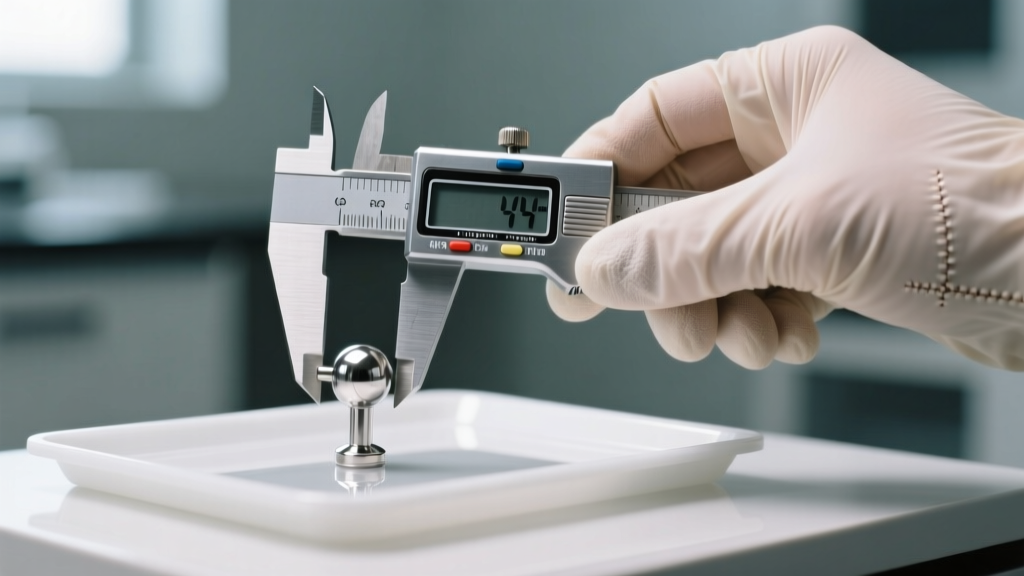
When clients and jewelry enthusiasts ask, "what gauge are earrings?", they are usually trying to figure out if a new piece will fit their piercing. However, as a jewelry care specialist, I look at gauge size through a completely different lens: maintenance. The thickness of your earring post dictates how debris accumulates, how the metal interacts with your skin's microbiome, and the exact mechanical stress the jewelry endures during cleaning.
The jewelry gauge system is counterintuitive to most—the higher the number, the thinner the metal. A standard 20-gauge (20G) earring is a mere 0.81 millimeters thick, while a 14-gauge (14G) cartilage barbell is 1.63 millimeters. This variance in surface area and structural integrity means that a one-size-fits-all cleaning approach will inevitably lead to damaged jewelry, irritated fistulas (the piercing channel), or trapped bacteria. Below, we break down the exact care protocols required for every major earring gauge category.
Standard Lobe Piercings (20G – 18G): The Metal Fatigue Danger
Standard lobe earrings, typically ranging from 20G (0.81mm) to 18G (1.02mm), are the most common jewelry sizes globally. Because the posts are incredibly thin, the primary maintenance concern isn't just hygiene—it is structural preservation.
Cleaning Protocol for Thin Wires
- Avoid Cotton Swabs: Never use Q-tips or cotton balls to clean 20G or 18G posts. The microscopic cotton fibers will wrap around the thin wire, creating a hidden nidus for bacteria and causing micro-abrasions inside the lobe.
- Use Non-Woven Gauze: Spray a sterile 0.9% sodium chloride wound wash (like NeilMed Piercing Aftercare) onto a 4x4 non-woven medical gauze pad. Gently pinch the gauze around the post and wipe downward.
- Prevent Metal Fatigue: When drying thin butterfly-back studs, do not aggressively rub them with a towel. Repeated bending of 20G wires during cleaning causes metal fatigue, leading to the post snapping off inside the earlobe. Always pat dry with a paper towel or use a hair dryer on the "cool" setting.
Cartilage & Helix Piercings (16G – 14G): Managing Lymph and Crusties
Cartilage piercings are generally pierced at 16G (1.29mm) or 14G (1.63mm) to provide structural stability and reduce the "cheese-cutter effect" (where thin jewelry migrates through the tissue). The thicker post means more surface area for lymph fluid and dead skin cells to adhere to, creating the dreaded "crusties" that plague healing and mature cartilage piercings alike.
The APP-Approved Cartilage Cleaning Method
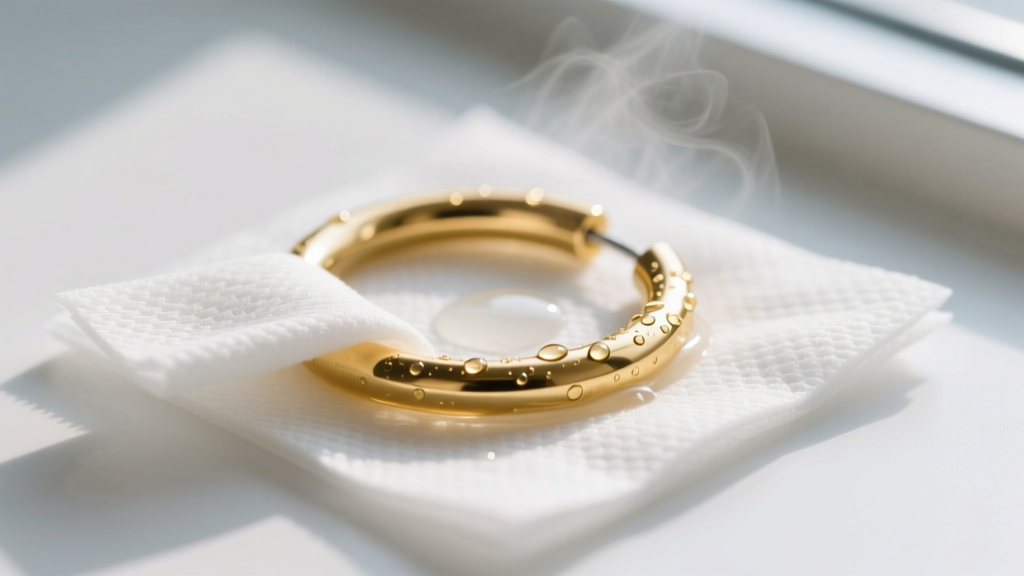
According to the Association of Professional Piercers (APP), cartilage requires a delicate balance of moisture and dryness. Thick 14G posts can trap moisture against the skin if not dried properly, leading to irritation bumps (hypertrophic scarring).
- Soften the Debris: Apply a sterile saline compress using soaked non-woven gauze for 3 to 5 minutes. This softens the lymph buildup on the 1.6mm post without requiring forceful scraping.
- Wipe, Don't Twist: Never twist a 14G cartilage barbell or hoop. Twisting forces dried lymph into the delicate fistula tissue. Instead, gently glide the softened gauze along the thicker post.
- Crucial Drying Step: Because 16G and 14G jewelry sits flush against the folds of the auricle, moisture gets trapped. Use a handheld fan or a hair dryer on the lowest, coolest setting to ensure the thick metal post and the surrounding cartilage are bone dry.
Stretched Lobes & Heavy Gauges (8G – 00G): The Porosity and Sebum Factor
When we enter the realm of stretched earlobes—ranging from 8G (3.26mm) up to 00G (9.27mm) and beyond—the question of "what gauge are earrings" shifts from wire thickness to plug and tunnel maintenance. At these sizes, the primary biological adversary is sebum mixed with dead skin cells, colloquially known in the body modification community as "ear cheese."
Daily Maintenance for Large Gauges
Thick glass, steel, or stone plugs have massive surface areas that collect natural body oils. If left unchecked, this buildup causes contact dermatitis and an unpleasant odor.
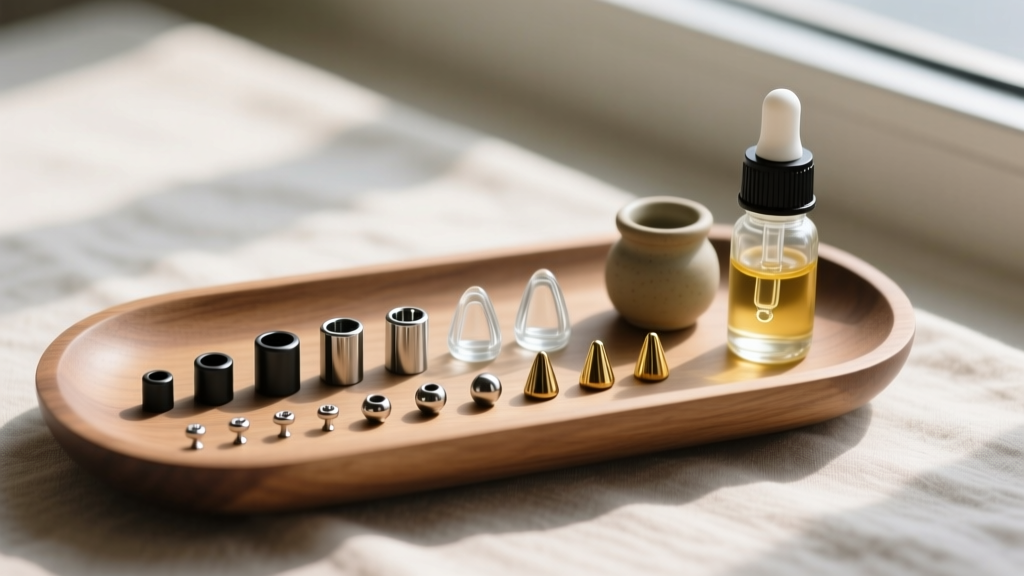
- The Jojoba Oil Massage: For healed stretched lobes, massage the earlobe and the jewelry daily with organic, cold-pressed jojoba oil. Jojoba closely mimics human sebum, helping to break down dead skin cells and keep the tissue elastic.
- Soap and Water Washing: Unlike standard piercings, large gauge plugs (especially non-porous ones like borosilicate glass or 316L surgical steel) should be removed weekly and washed with a mild, fragrance-free liquid soap (like Dr. Bronner's Unscented Baby Mild) and warm water.
- Avoid Silicone in Unhealed Ears: Silicone is porous and can trap bacteria against the skin. The American Academy of Dermatology (AAD) warns against using porous materials in any compromised skin barrier. Only wear silicone O-rings or tunnels in fully mature, healthy stretches.
Earring Gauge Maintenance & Sizing Chart
Use this reference table to identify your jewelry size and implement the correct cleaning protocol. Understanding the exact millimeter conversion prevents accidental tearing when swapping jewelry after a deep clean.
| Gauge Size | Millimeter (mm) | Typical Placement | Primary Cleaning Agent | Maintenance Frequency |
|---|---|---|---|---|
| 20G - 18G | 0.81mm - 1.02mm | Standard Earlobe | Sterile Saline Mist | Weekly deep clean; daily wipe |
| 16G - 14G | 1.29mm - 1.63mm | Cartilage, Helix, Tragus | Sterile Saline Compress | Bi-weekly deep clean; daily mist |
| 12G - 8G | 2.05mm - 3.26mm | Thick Lobes, Conch | Mild Unscented Soap | Weekly removal and wash |
| 6G - 2G | 4.11mm - 6.54mm | Stretched Lobes | Jojoba Oil & Soap | Daily oiling; weekly wash |
| 0G - 00G | 8.25mm - 9.27mm | Heavy Stretched Lobes | Jojoba Oil & Soap | Daily oiling; bi-weekly wash |
Material Porosity and Gauge-Specific Buildup
The gauge of your earring amplifies the effects of material porosity. A 20G porous acrylic post might cause minor irritation, but a 0G (8.25mm) acrylic tunnel acts as a massive sponge for bacteria and sweat, leading to severe blowouts or localized infections.
Non-Porous vs. Porous Materials by Gauge
For any jewelry thicker than 10G (2.59mm), you must strictly adhere to non-porous materials for daily wear. Implant-grade titanium (ASTM F-136), niobium, borosilicate glass, and high-density steel are the gold standards. These materials can be sterilized and do not harbor microscopic bacteria in their surface. Conversely, wood, bone, horn, and acrylic should only be worn in heavy gauges for short periods and require specialized conditioning (like mineral oil for wood) to prevent cracking and bacterial ingress.
Common Cleaning Mistakes Based on Gauge
Even with the best intentions, jewelry owners frequently damage their pieces or their piercings by ignoring the physical realities of their gauge size.
- Using Ultrasonic Cleaners on Thin Gauges: While ultrasonic cleaners are fantastic for removing tarnish from chunky silver rings, the high-frequency vibrations can loosen the microscopic prong settings on 20G and 18G diamond or gemstone studs, causing the stones to fall out.
- Applying Rubbing Alcohol to Thick Cartilage Posts: Alcohol dries out the skin. When applied to a 14G cartilage barbell, the rapid evaporation strips the fistula of its natural moisture barrier, triggering the body to overproduce lymph fluid, resulting in massive, stubborn crusties.
- Ignoring the Threading on Thick Gauges: For 14G and thicker internally threaded or threadless barbells, the threading mechanism itself traps dead skin and soap residue. You must unscrew the end (using rubber gloves for grip) and clean the threads with a soft toothbrush and warm water once a month to prevent the jewelry from seizing up.
Final Thoughts on Gauge-Specific Aftercare
Understanding what gauge your earrings are is the foundational step in establishing a lifelong, irritation-free relationship with your jewelry. Thin 20G wires demand gentle handling to prevent structural failure, mid-range 14G cartilage bars require meticulous moisture management to avoid bumps, and heavy 0G plugs demand a proactive approach to sebum control and material porosity. By tailoring your cleaning supplies, drying methods, and maintenance frequency to the exact millimeter thickness of your jewelry, you ensure both your piercings and your precious metals remain in pristine condition for years to come.