The Ultimate Guide to Cleaning White Rose Earrings
Learn how to safely clean and maintain white rose earrings. Expert tips on caring for white gold, silver, enamel, and mother-of-pearl finishes.

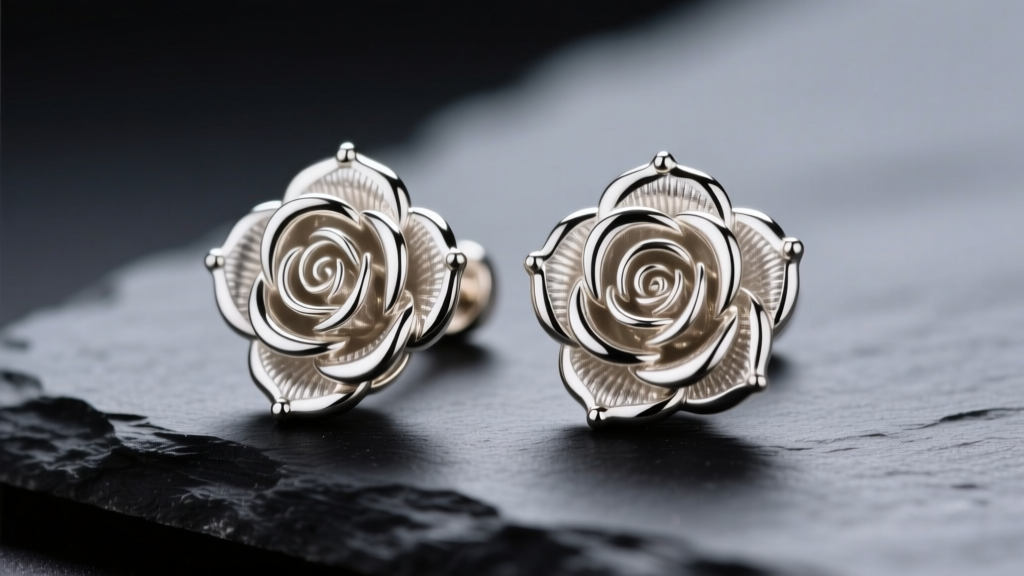
White rose earrings are a sophisticated staple in any jewelry collection, offering a romantic motif rendered in striking, cool-toned materials. Whether your pair features 18-karat white gold, rhodium-plated sterling silver, pristine white enamel, or delicate mother-of-pearl inlays, maintaining their brilliant luster requires a highly specific approach. Unlike standard yellow gold or simple diamond studs, the materials that give white rose earrings their distinct appearance are remarkably sensitive to harsh chemicals, abrasive polishing, and improper storage.
In this comprehensive care guide, we break down the exact metallurgy and material science behind white rose jewelry, providing you with a professional-grade cleaning protocol and long-term maintenance framework to keep your earrings looking flawless for decades.
The Metallurgy and Materials of White Rose Earrings
Before applying any cleaning solution, it is critical to identify the exact materials composing your white rose earrings. The term "white" in jewelry usually refers to one of three distinct material categories, each with unique vulnerabilities:
1. White Gold and Rhodium Plating
White gold is not naturally white; it is an alloy of pure yellow gold mixed with white metals like palladium, nickel, or silver. To achieve the brilliant, mirror-like white finish seen in high-end rose earrings, the metal is electroplated with rhodium—a rare, incredibly hard platinum group metal. This plating is typically applied at a thickness of 0.75 to 1.0 microns. While rhodium is highly resistant to tarnish, it is susceptible to wear from friction and can be stripped by chlorine or abrasive polishing compounds.
2. White Enamel
Many artisan white rose earrings utilize vitreous enamel (fired glass) to create the opaque white petals. Enamel ranks between 5 and 6 on the Mohs hardness scale. While it resists scratching better than silver, it is essentially glass, making it highly vulnerable to micro-fractures from ultrasonic vibrations and thermal shock from sudden temperature changes.
3. Mother-of-Pearl (Nacre)
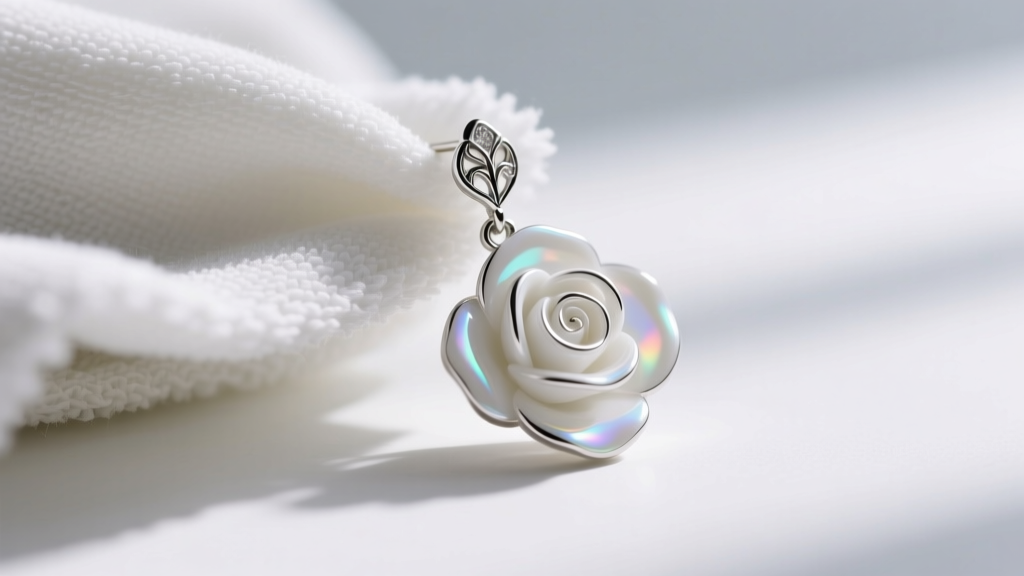
For a softer, iridescent white, jewelers often carve rose motifs from mother-of-pearl. Nacre is an organic-inorganic composite material primarily made of calcium carbonate. It is highly porous and exceptionally sensitive to acids. Exposure to substances with a pH lower than 6 (including vinegar, lemon juice, and even certain skin chemistries) will permanently etch and dull the surface.
The 2026 Safe Cleaning Protocol for White Rose Motifs
To safely clean white rose earrings without compromising rhodium plating, cracking enamel, or etching nacre, follow this strict, pH-neutral protocol recommended by gemological experts.
Step 1: The pH-Neutral Soak
Fill a small glass bowl with lukewarm distilled water (tap water contains trace minerals and chlorine that can cause spotting). Add three drops of a phosphate-free, pH-neutral dish soap (such as Dawn Free & Clear). Submerge your earrings for exactly 3 to 5 minutes. This loosens sebum, dead skin cells, and cosmetic residue trapped in the intricate petal crevices without attacking the metal or inlays.
Step 2: The Micro-Agitation Technique
Remove the earrings from the solution. Using an extra-soft baby toothbrush (bristles rated under 0.15mm in diameter), gently agitate the crevices of the rose design. Brush in the direction of the metal grain or petal curves. Never scrub aggressively, as trapped dust particles can act as micro-abrasives against the rhodium or enamel.
Step 3: The Capillary Drying Method
Rinse the earrings briefly under a gentle stream of distilled water. Do not air dry, as this will leave mineral spots. Instead, place the earrings on a clean, lint-free microfiber cloth. Use the corner of the cloth to gently wick away moisture from the deep crevices of the rose design via capillary action. For stubborn moisture trapped behind the earring post, use a can of compressed air held at least six inches away to blow the water out without subjecting the jewelry to extreme cold.
Critical Maintenance: What to Avoid
The most common cause of irreversible damage to white rose earrings is the use of aggressive, mass-market cleaning methods. Review the table below to understand why certain popular cleaning hacks will destroy your jewelry.
| Cleaning Method | Effect on White Gold / Rhodium | Effect on Enamel / MOP |
|---|---|---|
| Ultrasonic Cleaners | Safe for plain metal, but can loosen gemstone settings. | Destructive. The 40kHz high-frequency vibrations will shatter enamel and fracture MOP inlays. |
| Silver Dip / Tarnish Removers | Destructive. Thiourea-based dips will instantly strip the rhodium plating, exposing the yellowish alloy beneath. | Destructive. Acids in the dip will permanently etch and cloud the enamel and nacre. |
| Toothpaste & Baking Soda | Harmful. These are highly abrasive (Mohs 3-4) and will create micro-scratches, dulling the mirror finish of the rhodium. | Harmful. Will scratch the surface of softer MOP and leave a chalky residue trapped in enamel micro-cracks. |
| Steam Cleaners | Excellent for removing stubborn grease from plain white gold. | Risky. Sudden thermal shock can cause enamel to craze (crack) or pop off the metal base. |
Restoring the White: Rhodium Replating and Enamel Care
Even with meticulous care, white gold rose earrings will eventually require professional intervention. Because rhodium plating is a microscopic surface layer, friction from daily wear, contact with hair, and natural skin oils will eventually wear it away. When this happens, the underlying white gold alloy—which often has a faint yellowish or grayish hue due to its copper and nickel content—will begin to show through, particularly on the high points of the rose petals.
As of 2026, the average cost to have a pair of stud or drop earrings professionally polished and rhodium-replated by a certified bench jeweler ranges from $45 to $85. This process involves stripping the remaining rhodium, polishing out micro-scratches with a soft muslin wheel and rouge compound, and electroplating a fresh 1.0-micron layer of rhodium. It is recommended to have this done every 12 to 18 months for daily-wear studs.
Troubleshooting Common White Rose Earring Issues
Issue: The White Enamel Has a Cloudy Film
Diagnosis: Hard water deposits or hairspray buildup. Hairspray contains polymers that bond to the microscopic pores in enamel over time.
Solution: Do not use harsh solvents. Apply a tiny drop of pure isopropyl alcohol (90% or higher) to a cotton swab and gently roll it over the cloudy enamel. The alcohol will dissolve the polymer buildup without affecting the fired glass. Wipe clean immediately with a damp microfiber cloth.
Issue: The Mother-of-Pearl Inlay is Lifting
Diagnosis: Adhesive degradation. The cyanoacrylate or epoxy resins used to set MOP into the metal bezel break down when exposed to lotions, perfumes, and sweat.
Solution: Stop wearing the earrings immediately to prevent losing the inlay. Do not attempt to glue it yourself with household superglue, which will cloud the nacre and ruin the piece. Take it to a jeweler who will clean the bezel and re-bond the MOP using a specialized, UV-cured optical resin that remains flexible and invisible.
Proper Storage Framework
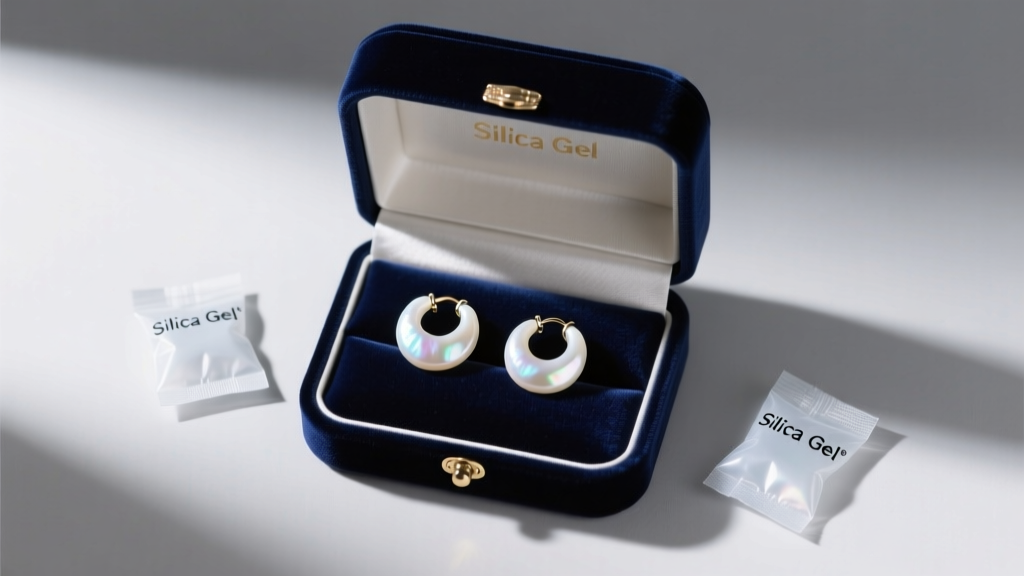
How you store your white rose earrings is just as important as how you clean them. Sterling silver bases will tarnish when exposed to sulfur in the air, and rhodium can be scratched if tossed into a communal jewelry box. Always store white rose earrings in individual, anti-tarnish flannel pouches. For long-term storage, place the pouches inside a sealed acrylic or glass container along with 3M anti-tarnish strips and silica gel packets to control both sulfur exposure and ambient humidity. By following these precise material-specific guidelines, your white rose earrings will retain their breathtaking, cool-toned elegance for a lifetime.
For more information on professional jewelry maintenance, consult the guidelines provided by the Gemological Institute of America (GIA) and the Jewelers of America.


