Material Guide: Choosing the Best Clip On Chandelier Earrings
Discover how metal density and clip mechanics impact comfort. Our material guide helps you choose the perfect lightweight clip on chandelier earrings.

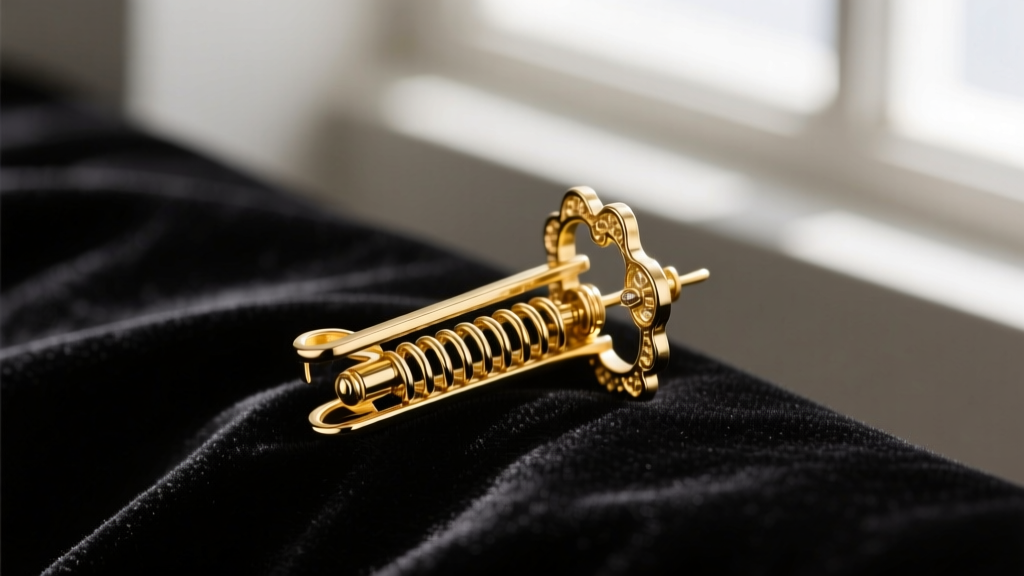
The Physics of Dangle: Why Material Weight Dictates Comfort
When selecting statement jewelry for unpierced ears, the intersection of aesthetic grandeur and biomechanical reality is where most designs fail. Clip on chandelier earrings are inherently top-heavy. Unlike a simple stud that sits flush against the lobule, a chandelier silhouette extends outward and downward, creating a fulcrum effect. In physics terms, this generates rotational torque. The longer the drop and the denser the material, the greater the downward force pulling away from the ear.
To counteract this torque, the clipping mechanism must apply significant compressive force (measured in PSI) to the earlobe. If the earring is cast in a heavy base metal, the clip must pinch harder to stay in place, leading to ischemic pain (restriction of blood flow) within 45 minutes. Therefore, understanding material density and metallurgical properties is not just a matter of aesthetics—it is the fundamental key to wearing elaborate, non-pierced statement pieces comfortably for hours.
Material Density Breakdown for Chandelier Silhouettes
Not all metals are created equal when it comes to weight. A 3-inch chandelier frame cast in solid brass will feel drastically different than the exact same design milled from aerospace-grade titanium. Below is a comparative analysis of common jewelry materials and their impact on clip-on tension.
| Material | Density (g/cm³) | Relative Weight (3-inch Frame) | Ideal Clip Mechanism |
|---|---|---|---|
| Solid Brass / Copper | 8.4 - 8.9 | Heavy (High Torque) | Wide Paddle Clip with Silicone Pad |
| Sterling Silver (925) | 10.4 | Very Heavy | Screw-Back with Adjustable Tension |
| Titanium (Grade 5) | 4.43 | Lightweight (Low Torque) | Standard Hinge Clip or Invisible Clip |
| Aluminum Alloy | 2.7 | Ultra-Lightweight | Mini Paddle or Spring Clip |
| Cast Acrylic / Resin | 1.18 | Featherlight | Any (Minimal tension required) |
As the table illustrates, traditional jewelry metals like sterling silver and brass are surprisingly dense. For expansive clip on chandelier earrings, designers must either hollow out the metal components (using electroforming or thin-sheet stamping) or pivot to lighter alloys like titanium and aluminum to prevent earlobe fatigue.
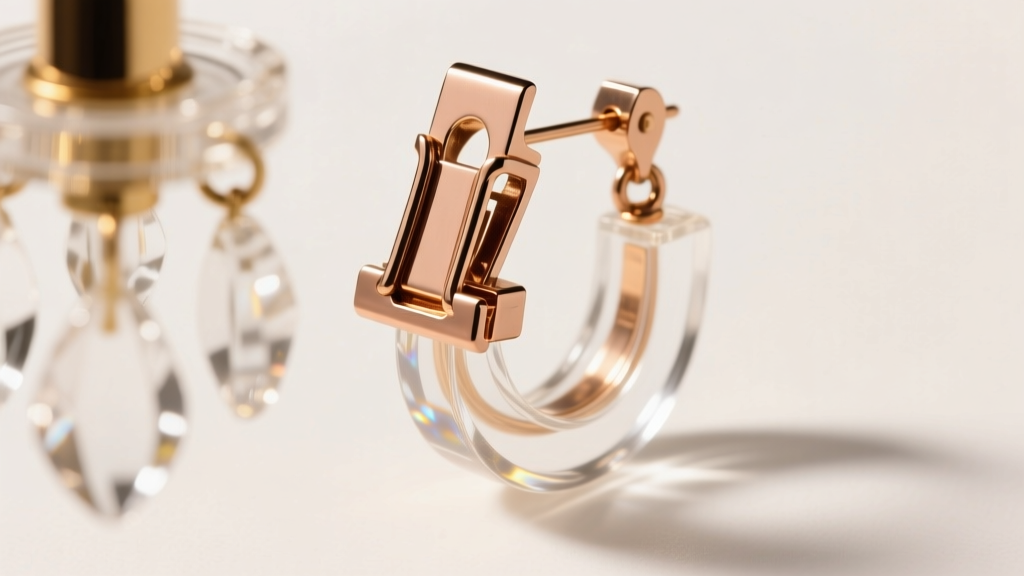
Clip Mechanism Metallurgy: What Holds the Earring in Place?
The body of the earring is only half the equation; the clip mechanism itself requires highly specific metallurgical properties. The spring component of a clip-on must endure thousands of articulation cycles without suffering from metal fatigue or losing its tensile memory.
Beryllium Copper vs. Spring Steel
Premium manufacturers utilize Beryllium Copper (BeCu) for the internal springs of high-end clip-ons. BeCu offers exceptional fatigue resistance and maintains its spring temper far longer than standard stainless spring steel. According to jewelry manufacturing standards, a well-tempered BeCu spring will exert a consistent 1.5 to 2.2 Newtons of clamping force—enough to hold a moderate-weight chandelier earring securely without causing tissue necrosis on the lobule.
Paddle Clips vs. Screw-Backs
- Paddle Clips: Feature a wide, flat surface area that distributes pressure evenly. Best for heavier brass or silver chandeliers, provided they are lined with medical-grade silicone to increase friction and reduce localized PSI.
- Screw-Backs: Allow the wearer to manually adjust the tension via a threaded barrel. Ideal for thick earlobes, but if over-tightened to compensate for a heavy metal frame, they can cause sharp, localized nerve pain.
Hypoallergenic Properties & Plating Degradation
Clip on chandelier earrings present a unique dermatological challenge. Because the mechanism relies on friction and constant pressure, it creates micro-abrasions on the skin's surface. If the base metal contains nickel or lead, these micro-abrasions allow metal ions to penetrate the epidermis, triggering severe allergic contact dermatitis.
The Mayo Clinic identifies nickel as the leading cause of metal-induced contact dermatitis. Furthermore, the American Academy of Dermatology warns that sweat and skin oils accelerate the corrosion of cheap base metals, exacerbating the allergic response. When shopping for non-pierced statement earrings, pay strict attention to the plating methodology:
- Gold Vermeil: A thick layer of gold (minimum 2.5 microns) over sterling silver. Safe for most, but the friction of a tight clip can wear the gold away over time, exposing the silver beneath.
- PVD Coating (Physical Vapor Deposition):strong> A vacuum-deposited titanium nitride layer that is up to 10 times more durable than traditional electroplating. PVD-coated titanium clip-ons are the gold standard for allergy sufferers requiring lightweight, high-tension jewelry.
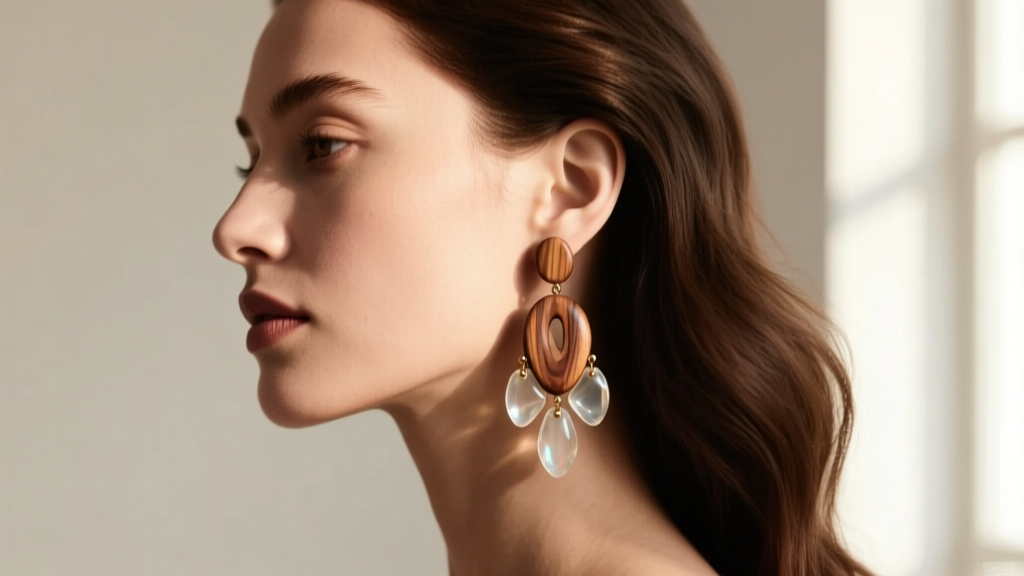
Alternative Lightweight Materials: Acrylic, Resin, and Wood
To bypass the density issues of metal entirely, many contemporary designers are engineering clip on chandelier earrings from advanced polymers and natural organics. Laser-cut acrylic and cast epoxy resins offer a density of roughly 1.18 g/cm³—nearly a tenth of the weight of solid brass.
This dramatic reduction in mass allows for massive, architectural chandelier designs that exert almost zero rotational torque on the earlobe. The trade-off lies in the material's thermal properties and surface hardness. Acrylic scratches easily and lacks the premium, cold-to-the-touch thermal conductivity of metal. However, for events requiring 6+ hours of continuous wear, a high-quality resin chandelier mounted on a BeCu spring clip is biomechanically superior to a heavy metal alternative.
Expert Buying Framework: Matching Material to Earlobe Thickness
Choosing the right material and clip combination requires an honest assessment of your own anatomy. Earlobe thickness (the anterior-posterior depth of the lobule) dictates how much compressive force your tissue can safely absorb.
Expert Insight: If you have thin earlobes (under 4mm thick), avoid heavy metal chandeliers with narrow screw-backs. The localized pressure will exceed capillary refill pressure, causing numbness. Opt for hollow-stamped aluminum or acrylic designs paired with wide, silicone-padded paddle clips to distribute the load across a larger surface area.
Ultimately, the perfect pair of clip on chandelier earrings is an exercise in material engineering. By prioritizing low-density metals like titanium, advanced polymers, and fatigue-resistant spring mechanisms, you can achieve the dramatic, sweeping elegance of a chandelier silhouette without compromising your comfort or skin health.


