Cluster Diamond Earring Settings: A Technical Deep Dive
Explore the technical anatomy of a cluster diamond earring. Learn about melee grades, setting types, structural integrity, and pricing.

The Engineering Behind the Optical Illusion
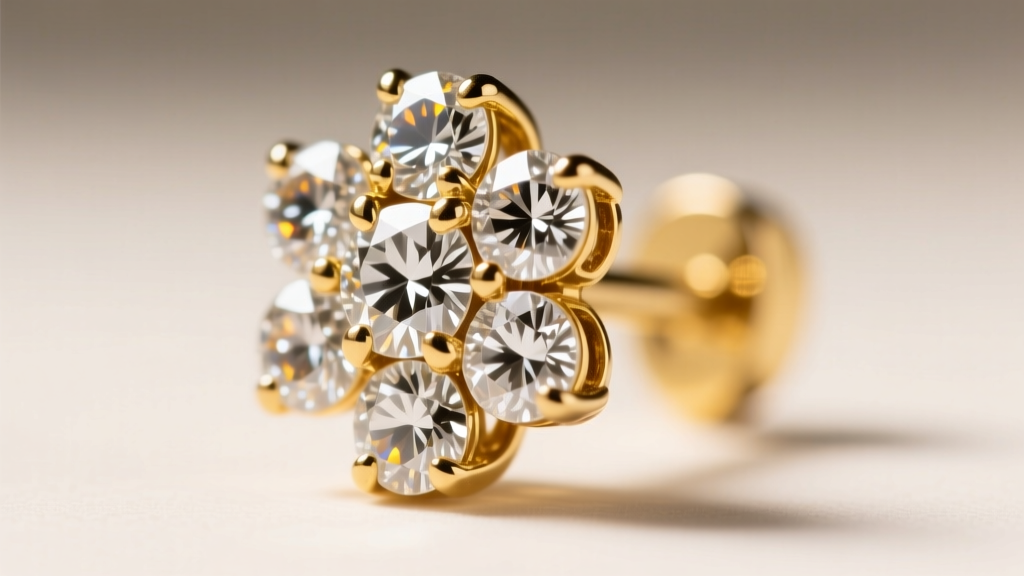
When evaluating fine jewelry, the untrained eye often conflates total carat weight with visual impact. A cluster diamond earring represents a masterclass in optical engineering, designed to manipulate light return and maximize perceived surface area without the exponential cost of a single large solitaire. Unlike a traditional stud that relies on a single, continuous pavilion to reflect light back through the table, a cluster utilizes multiple adjacent pavilions. The optical challenge for the jeweler is managing the 'dead zones'—areas of light extinction that naturally occur between the girdles of adjacent stones.
By precisely calculating the table percentages and pavilion angles of the melee stones used, master setters can create a unified dome of brilliance. The metal matrix separating the stones is often rhodium-plated or polished to a mirror finish to act as a secondary reflector, bouncing stray light back into the diamond facets. This synergy between metallurgy and gemology is what elevates a high-quality cluster diamond earring above a mere aggregation of small stones.
Melee Diamond Grading: The Hidden Metrics
The foundation of any cluster design is melee—diamonds weighing between 0.001 and 0.18 carats (roughly 1.0mm to 3.8mm in diameter). According to the Gemological Institute of America (GIA), melee diamonds are rarely graded with full laboratory reports due to the prohibitive cost relative to their individual value. However, the collective quality of these stones dictates the overall fire and scintillation of the earring.
Manufacturers sort melee by millimeter size, color, and clarity. In premium cluster diamond earring designs, you will find melee in the F-G color range and VS-SI clarity. Lower-tier commercial clusters often utilize I-J color and I1-I2 clarity melee, which can exhibit a milky or heavily included appearance that severely restricts light return. Understanding the cut quality of these micro-stones is where true expertise lies.
Full Cut vs. Single Cut Melee
The most critical technical distinction in cluster manufacturing is the facet arrangement of the melee. Smaller stones are often single cut, while larger melee stones are full cut.
| Metric | Single Cut Melee | Full Cut Melee |
|---|---|---|
| Facet Count | 17 to 18 facets | 57 to 58 facets |
| Typical Size Range | 0.01 ct - 0.05 ct (1.3mm - 2.4mm) | 0.06 ct - 0.18 ct (2.5mm - 3.8mm) |
| Light Return Profile | Broader, chunkier flashes of light | Complex scintillation, high fire |
| Cost Premium | Base market rate | 15% - 30% premium over single cut |
For a cluster diamond earring to mimic the look of a large round brilliant solitaire, full-cut melee is mandatory. Single-cut stones lack the lower pavilion facets required to create the intricate 'arrows and hearts' optical symmetry, often resulting in a flat, glassy appearance when clustered together.
Setting Architectures: Prong, Bezel, and Illusion
The structural framework of a cluster diamond earring dictates both its security and its aesthetic profile. The three primary setting architectures each present unique manufacturing challenges.
Shared Prong Settings: This is the most common architecture for high-end clusters. Instead of using four prongs per stone (which would result in a heavy, metallic look), the setter uses a single prong to secure the girdles of two or three adjacent diamonds. This maximizes the visible diamond surface area but requires absolute precision in stone calibration; a variance of just 0.1mm between stones can cause uneven tension and eventual stone loss.
Illusion Settings: Often used in vintage-inspired or 'snowflake' cluster designs, an illusion setting features a metal head that is cut and polished to mimic the facets of a diamond. The melee stone is set into the center of this reflective metal halo. From a distance, the eye blends the metal and the diamond, creating the illusion of a much larger single stone.
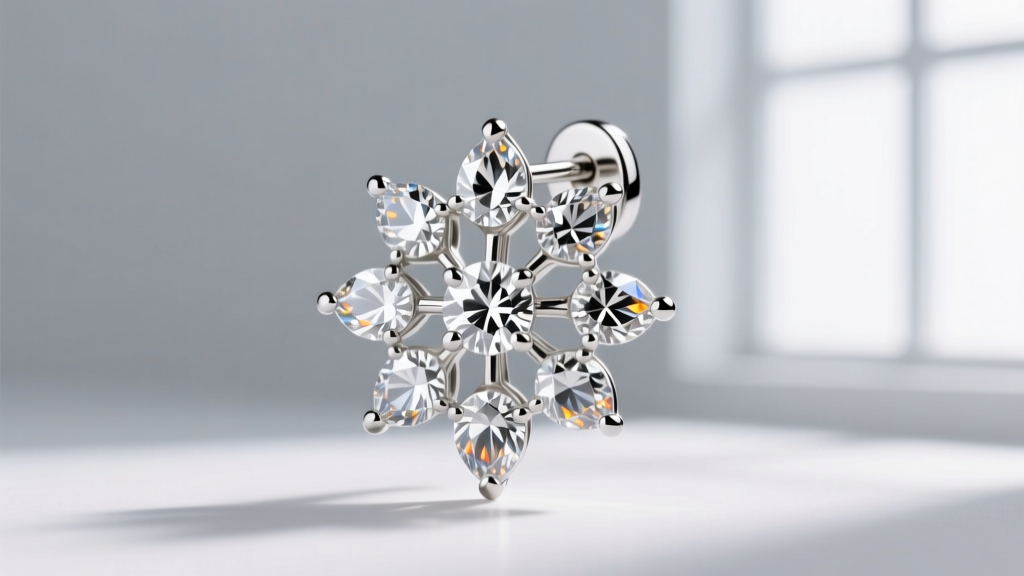
Bright-Cut Micro-Pavé: In this technique, stones are set into holes drilled directly into the metal shank or base. The setter uses a graver to push the surrounding metal over the girdle of the diamond, creating tiny, polished metal beads that hold the stone. This provides excellent security for the girdle but requires a highly skilled artisan to ensure the metal beads do not obstruct the diamond's table.
Structural Failure Modes in Cluster Settings
Because cluster settings rely on a high density of small stones and minimal metal, they are susceptible to specific failure modes that buyers and appraisers must monitor:
- Casting Porosity: If the gold or platinum alloy was not properly degassed during the casting process, microscopic air bubbles can form inside the prongs. Over time, the stress of daily wear causes these porous prongs to snap cleanly at the base.
- Prong Shear from Friction: In shared-prong clusters, the metal is stretched thin. If the earring backing is too tight, or if the wearer frequently adjusts the earring by pinching the cluster head, the repetitive stress can work-harden the prongs until they become brittle and shear off.
- Rhodium Depletion: White gold clusters rely on rhodium plating to maintain a bright white color. As the plating wears thin (typically 0.1 to 0.5 microns thick), the underlying yellowish-gray alloy is exposed, creating dark, muddy shadows between the diamonds that kill the optical illusion.
Light Return and Optical Geometry
To achieve a unified face-up appearance, the diamonds in a cluster diamond earring must be matched not just in color and clarity, but in optical geometry. The GIA Diamond Quality Factors emphasize that cut is the most critical element of a diamond's beauty. In a cluster, if one melee stone has a shallow pavilion angle (e.g., 38 degrees) and the adjacent stone has a steep pavilion angle (e.g., 43 degrees), the light will leak out of the bottom of the shallow stone while reflecting properly in the steep one.
This mismatch creates a 'flickering' effect that breaks the illusion of a single large stone. Premium manufacturers use automated optical sorting machines to group melee diamonds by their light-return profiles, ensuring that every stone in the cluster extinguishes and illuminates at the exact same frequency when the earring moves.
Metal Alloys and Gauge Specifications
The choice of metal alloy is a critical structural decision in cluster manufacturing. While 18k gold and platinum are prized for their purity and prestige, they are not always the optimal choice for micro-setting.
14k White Gold: With a Vickers hardness rating of approximately 130-150, 14k white gold offers superior stiffness. This makes it the ideal alloy for shared-prong cluster settings, as the prongs will resist bending and maintain their tension on the diamond girdles over decades of wear.
18k White Gold: Softer and more malleable (Vickers ~110-125), 18k gold is easier for setters to manipulate but more prone to prong deformation if the earring is dropped or snagged.
Platinum: While platinum is highly durable and does not require rhodium plating, it has a high 'memory' and tends to bend rather than snap. However, platinum's density makes it heavier, which can cause a large cluster diamond earring to droop forward on the earlobe unless the post is engineered with a specialized friction-back or a stabilizing saddle.
Pricing Frameworks and Valuation Metrics
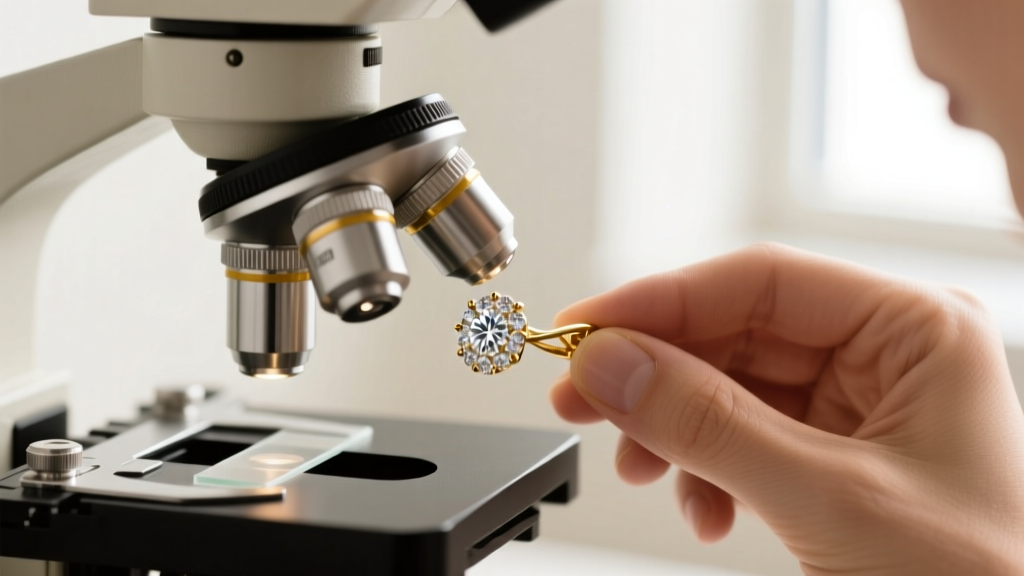
Valuing a cluster diamond earring requires a departure from standard solitaire pricing matrices. The industry uses Carat Total Weight (CTW) to describe the combined weight of all diamonds in the piece. However, the price per carat of melee diamonds is exponentially lower than that of single large diamonds due to their abundance and lower cutting costs.
Here is a technical pricing framework for 1.00 CTW cluster earrings versus a 1.00 ct solitaire (based on 2026 market averages for fine retail):
- 1.00 CTW Cluster (I1-I2 Clarity, I-J Color, Single Cut): $600 - $1,100
- 1.00 CTW Cluster (VS Clarity, F-G Color, Full Cut): $2,200 - $3,800
- 1.00 ct Solitaire Stud (VS Clarity, F-G Color, Excellent Cut): $5,500 - $8,500+
Expert Appraisal Note: Never accept an appraisal that values a 1.00 CTW cluster diamond earring at the same replacement cost as a 1.00 ct single-stone solitaire. The secondary market liquidity and intrinsic rarity of melee diamonds are vastly inferior to calibrated, certified single stones. Always demand an itemized breakdown of the metal weight, setting labor, and aggregate melee value.
By understanding the intricate balance of melee cut quality, metallurgical hardness, and optical geometry, collectors and buyers can accurately assess the true craftsmanship and value of a cluster diamond earring, separating mass-produced commercial jewelry from genuine horological-grade micro-pavé artistry. For further technical specifications on diamond grading and light performance, refer to the comprehensive guides provided by GIA Diamond Grading.


