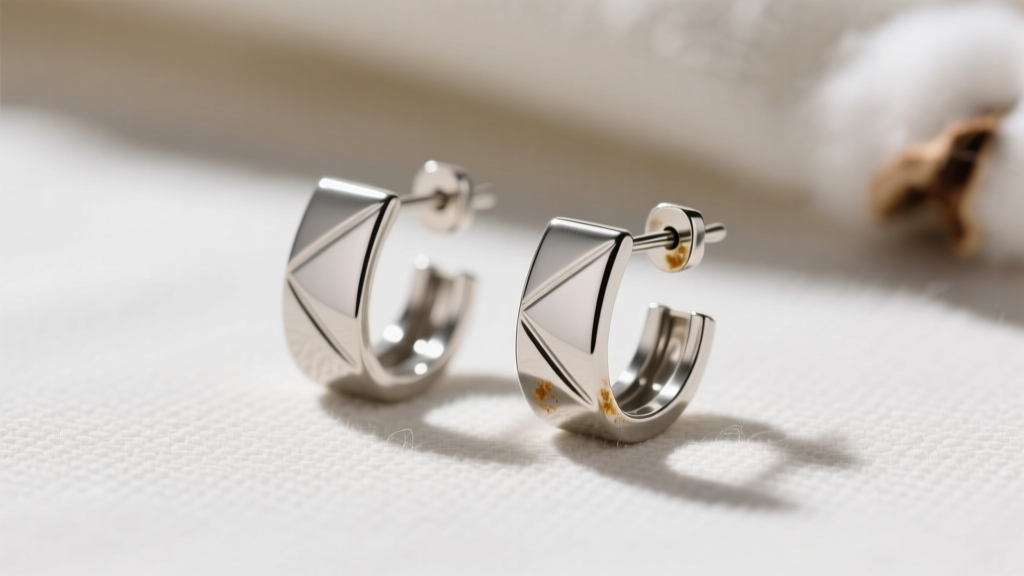
Conch Shell Earrings: Material Grading & Piercing Specs
Explore the technical grading of genuine conch shell earrings, carving methods, and exact gauge specifications for conch cartilage piercings.

The Material Science of Genuine Conch Shell
When evaluating conch shell earrings, it is critical to distinguish between jewelry designed for the conch cartilage piercing and jewelry crafted from genuine conch shell material. This guide addresses both, providing a comprehensive technical deep dive into the biomineralization of shell materials and the precise anatomical specifications required for cartilage piercings. Genuine queen conch (Aliger gigas) is composed primarily of calcium carbonate in the form of aragonite. Unlike nacreous pearls, conch shell exhibits a unique cross-lamellar microstructure, where microscopic aragonite needles are arranged in intersecting layers. This structure grants the material remarkable fracture toughness despite its relatively low Mohs hardness, making it a fascinating but demanding medium for high-end lapidaries.
Visual Grading and the Flame Structure
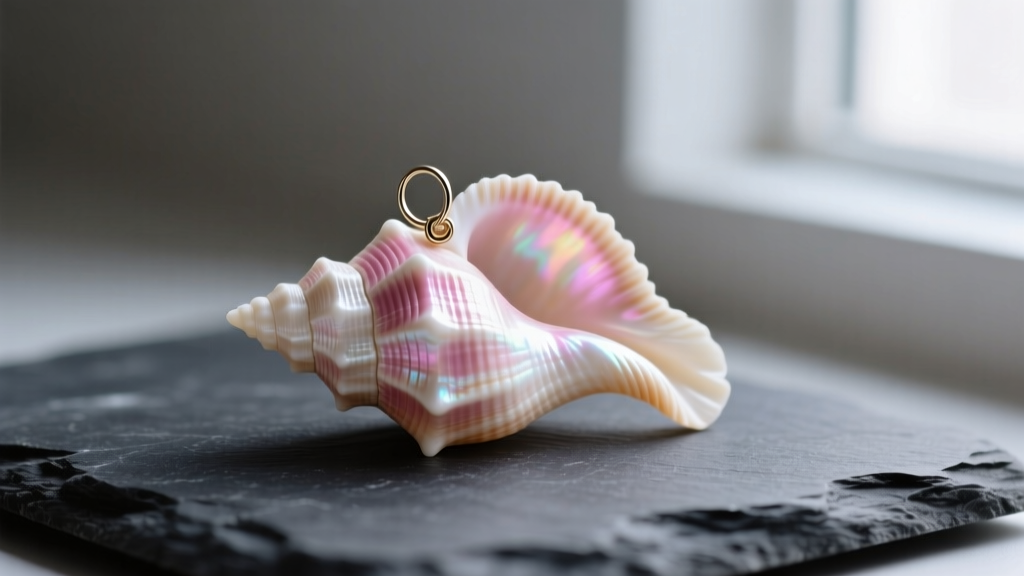
In gemology, the value of conch shell material is heavily dictated by its color saturation and the presence of a phenomenon known as chatoyancy, often referred to as the "flame structure." This optical effect is caused by the interaction of light with the tightly packed, parallel aragonite needles. Master gem cutters must carefully orient the raw shell fragment before cutting to ensure the flame pattern is visible on the face of the earring. The most highly prized specimens exhibit a vivid "flamingo pink" hue with distinct, white, wave-like flame patterns. Pale peach or heavily calcified white sections are considered lower grade and are typically relegated to inlay work rather than being used as the primary focal point of a stud or drop earring.
CITES Regulations and Ethical Sourcing
The queen conch is strictly listed under Appendix II of the Convention on International Trade in Endangered Species (CITES). This means that the harvesting and export of genuine conch shell for jewelry manufacturing are heavily regulated to prevent overexploitation. Expert jewelers must source shell fragments from certified, sustainable fisheries, primarily located in the Caribbean. Any genuine conch shell earring lacking proper CITES documentation is not only legally questionable but often indicative of poached material, which can suffer from poor structural integrity due to improper post-harvest curing and sun-bleaching.
Manufacturing, Carving, and Sealing Protocols
Transforming raw conch shell into precision earring components requires specialized lapidary techniques. Because of the cross-lamellar structure, cutting against the grain can cause micro-fractures and delamination. Master carvers utilize water-cooled diamond saws operating at low RPMs to prevent thermal shock, which can cause the aragonite to undergo a phase transition to calcite, resulting in a chalky, brittle finish that ruins the optical properties of the shell.
The Mohs Hardness Factor and Skin pH
Conch shell registers between 3.0 and 3.5 on the Mohs hardness scale. While this makes it relatively easy to carve into intricate cameos or geometric studs, it also renders the material highly susceptible to chemical etching. Human skin has an average pH ranging from 4.7 to 5.75, and the lactic acid present in sweat will actively dissolve the calcium carbonate matrix over time. To counteract this, high-end conch shell earrings undergo a proprietary sealing process. The carved shell is submerged in a micro-thin, UV-cured jewelry epoxy or a specialized cyanoacrylate resin. This creates an impermeable barrier that preserves the shell's signature banding without altering its optical refractive index, ensuring the earrings can withstand daily wear.
Technical Specifications for Conch Cartilage Piercings
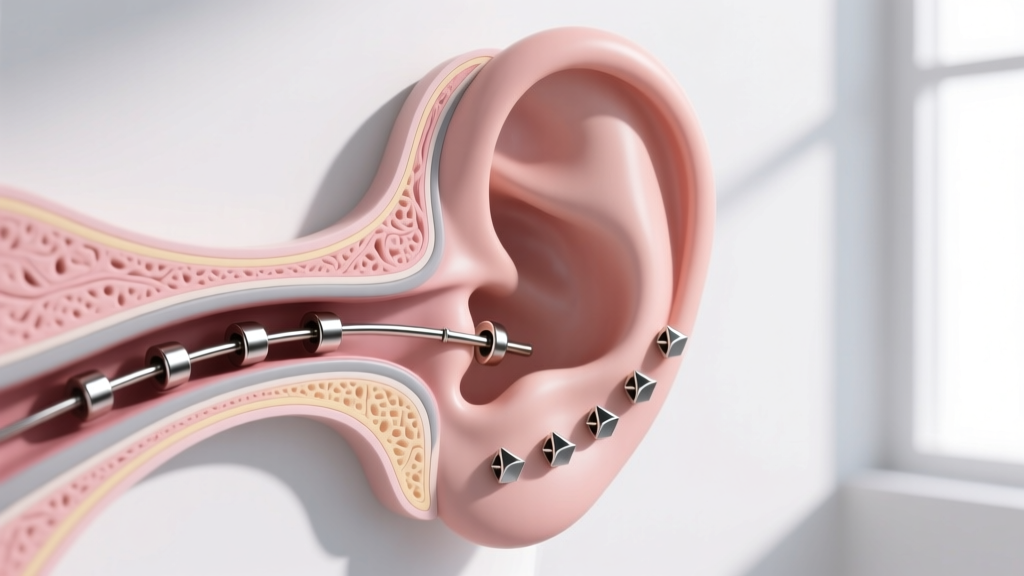
If your interest lies in the anatomical placement rather than the shell material, the conch piercing requires exact technical specifications to ensure proper healing and long-term tissue health. The concha is the deep, bowl-shaped cartilage of the outer ear, anatomically divided into the inner conch (cymba conchae) and outer conch (cavum conchae). Piercing this dense avascular tissue demands specific jewelry geometries and an exact 90-degree needle insertion angle to prevent migration and rejection.
| Parameter | Initial Piercing Spec | Healed Piercing Spec | Material Requirement |
|---|---|---|---|
| Gauge (Thickness) | 14G (1.6mm) or 16G (1.2mm) | 16G or 14G | ASTM F136 Titanium |
| Post Length | 8mm - 10mm (accommodates swelling) | 6mm - 8mm (snug fit) | Internally Threaded |
| Jewelry Style | Flat-Back Labret | Flat-Back, Clicker, or Hoop | Mirror Polish Finish |
| Threading Type | Internal or Threadless | Internal or Threadless | Zero External Threads |
According to the Association of Professional Piercers (APP), initial conch piercings should never be performed with hoops or captive bead rings. The rotational movement of a ring introduces bacteria into the fresh fistula and causes irritation bumps. A flat-back labret with a threadless or internally threaded end is the absolute gold standard. The flat disc base distributes pressure evenly against the back of the ear, preventing the jewelry from embedding into the cartilage during the inevitable 4-to-8-week swelling phase. Downsizing to a shorter post at the 8-week mark is mandatory to prevent the post from catching on hair and causing angle shifts in the healing fistula.
Metallurgy: Pairing Shell with Implant-Grade Hardware
When genuine conch shell is used as the decorative end for a conch piercing, the hardware connecting it to the ear must meet strict metallurgical standards. The shell is typically inlaid or bezel-set into a titanium housing. You must verify that the base metal is certified ASTM F136 implant-grade titanium (Ti6Al4V ELI). Avoid surgical steel (ASTM F138) for fresh cartilage piercings, as the nickel content can trigger contact dermatitis, which is notoriously difficult to manage in the dense cartilage of the conch.
Anodization and Custom Color Matching
One of the distinct advantages of using titanium for the backings and posts of conch shell earrings is the ability to anodize the metal. By applying a specific voltage to the titanium in an electrolytic bath, jewelers can alter the oxide layer thickness to produce vibrant colors without using dyes or paints. A deep rose-gold or purple anodized titanium bezel can perfectly complement the natural pink flame structure of the conch shell, creating a cohesive, high-end aesthetic that is entirely biocompatible and safe for long-term cartilage wear.
Long-Term Maintenance and Degradation Prevention
Expert Insight: Never use ultrasonic cleaners or steamers on genuine conch shell earrings. The high-frequency cavitation bubbles will aggressively erode the aragonite layers, causing irreversible pitting and clouding of the pink banding.
To maintain the optical brilliance and structural integrity of conch shell earrings, adhere to a strict, low-impact cleaning protocol. Use a soft, lint-free microfiber cloth dampened with distilled water and a single drop of pH-neutral baby shampoo. Gently wipe the surface to remove sebum and environmental particulates, then dry immediately. For the titanium hardware, a separate cleaning routine using a sterile saline solution is recommended to keep the threading free of debris. If the epoxy sealant on the shell begins to wear thin after several years of daily wear, a professional lapidary can lightly buff the surface with a 10,000-grit diamond compound and reapply the UV-cured protective layer, effectively restoring the earring to factory specifications.