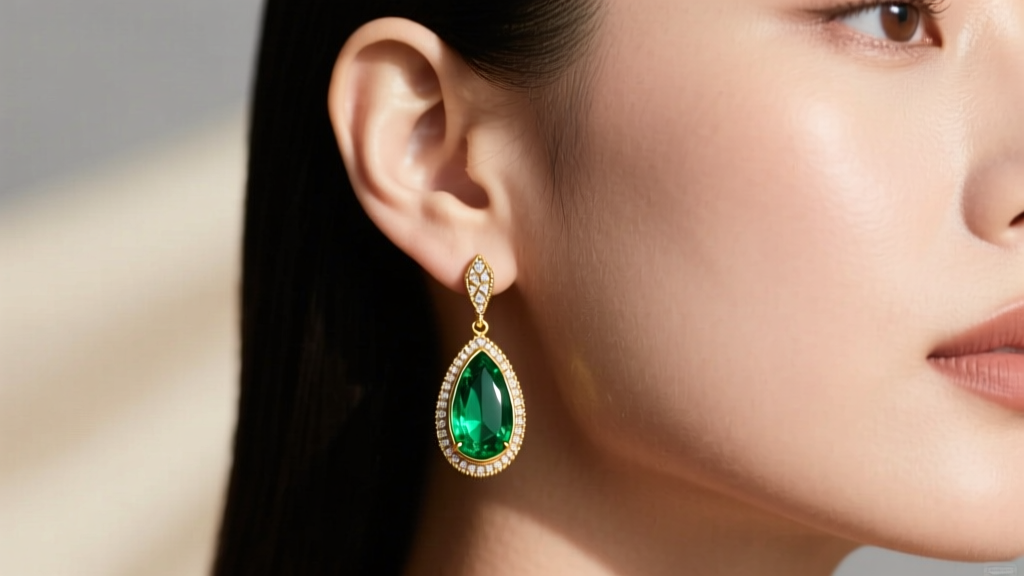
Cool Earring Ideas: Technical Guide to Curated Ear Stacks
Explore advanced cool earring ideas through a technical lens. Master cartilage biomechanics, gauge sizing, and metallurgical grades for curated stacks.

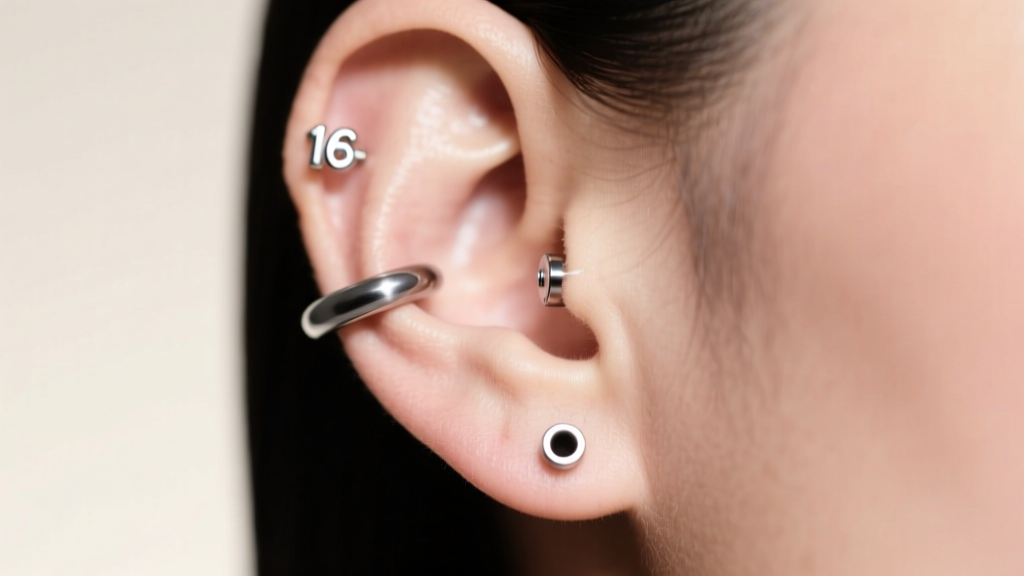
When searching for cool earring ideas, most style guides offer superficial visual mood boards that completely ignore the anatomical and structural realities of the human ear. As we navigate the jewelry landscape in 2026, the industry standard has firmly shifted away from fast-fashion plated metals toward implant-grade aesthetics and biomechanical precision. A truly exceptional curated ear stack is not just about matching gemstones; it is an exercise in structural engineering, metallurgical compatibility, and tissue preservation.
This expert deep dive bypasses the fluff to explore the technical architecture behind advanced ear curation. Whether you are planning a multi-piercing cartilage project or troubleshooting a failing helix, understanding the hardware beneath the aesthetic is mandatory for long-term wearability.
The Biomechanics of Cartilage: Why Standard Cool Earring Ideas Fail
Cartilage is an avascular tissue, meaning it lacks a direct blood supply. It relies entirely on the perichondrium (the connective tissue membrane surrounding it) for nutrient delivery and waste removal. When you introduce a foreign object—like a 16-gauge (1.2mm) titanium barbell—through the auricular cartilage, you are creating a controlled wound that requires strict biomechanical stability to form a healthy fistula (the tissue tube around the jewelry).
Many trendy, visually striking earring ideas fail because they ignore pressure necrosis. Heavy, elaborate dangles or oversized hoop earrings placed in fresh or healing cartilage piercings create pendulum-like kinetic energy. This micro-movement tears the fragile epithelial lining of the fistula, leading to chronic inflammation, hypertrophic scarring ("piercing bumps"), and eventual tissue rejection. For any cartilage piercing under 12 months of age, the total weight of the jewelry should not exceed 2.5 grams to prevent tensile stress on the healing tract.
Metallurgical Grades for Multi-Piercing Setups
The concept of a "curated ear" usually implies multiple piercings healing simultaneously or sitting in close proximity. In 2026, the metallurgical baseline for high-end body jewelry has been strictly defined by implant-grade standards. Fashion alloys, surgical steel (which contains up to 10% nickel), and plated brass are entirely obsolete for professional setups.
| Material | Alloy Standard | Nickel Release | Best Application | Price Range (USD) |
|---|---|---|---|---|
| Ti-6Al-4V ELI | ASTM F136 | <0.05% | Fresh piercings, Daith/Rook/Conch | $45 - $130 |
| Commercially Pure Ti | ASTM F67 | Trace | Surface anchors, flexible barbells | $35 - $90 |
| Niobium | C103 Unalloyed | 0% | Hypersensitive ears, Huggies/Hoops | $40 - $110 |
| 14k Palladium Gold | Au585/Pd | Trace (Nickel-Free) | Healed stacks, Threadless ends | $180 - $650+ |
According to the Association of Professional Piercers (APP), ASTM F136 titanium remains the gold standard for initial jewelry due to its biocompatibility and highly polished mirror finish, which prevents bacterial adhesion inside the fistula. Niobium is the only acceptable alternative for clients with severe polymetallic contact dermatitis, as it is an elemental metal with zero nickel content.
Gauge Sizing and Thread Standards: The Hidden Hardware
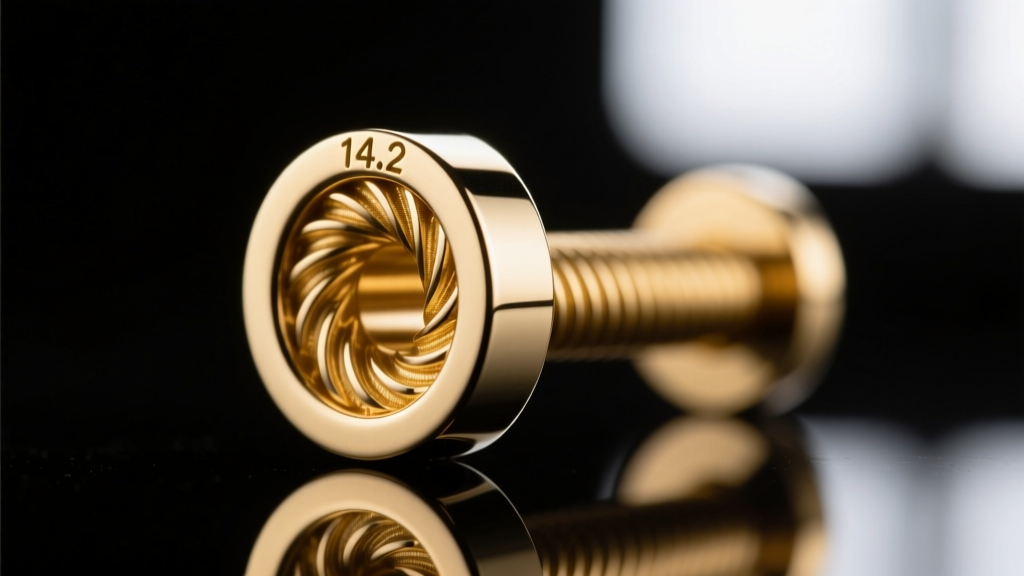
The structural integrity of your earring stack relies heavily on how the decorative end connects to the post. The era of externally threaded jewelry—where the screw is on the post and must be forced through the piercing—is over. Forcing external threads through a cartilage fistula acts like a cheese wire, causing micro-lacerations and scar tissue buildup.
Internally Threaded vs. Threadless (Push-Pin)
- Internally Threaded: The screw mechanism is housed inside the decorative end. The post passes smoothly through the tissue. Standard thread pitches for body jewelry are M0.9 (for 18G/1.0mm posts) and M1.2 (for 16G/1.2mm and 14G/1.6mm posts).
- Threadless (Push-Pin): Pioneered by brands like Neometal, this system uses a slightly bent titanium pin that inserts into a hollow post. The tension created by the 10-to-15-degree bend on the pin holds the jewelry securely in place. This is currently the preferred method for intricate conch and helix clusters, as it eliminates the risk of threaded ends unscrewing during sleep.
Architectural Blueprints: Advanced Ear Stack Configurations
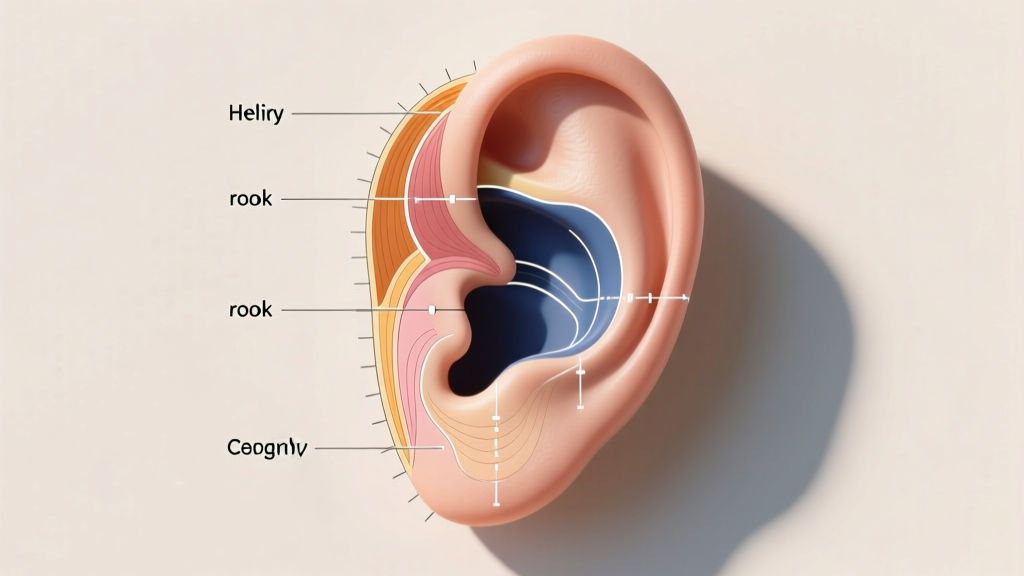
Executing cool earring ideas requires an understanding of spatial geometry. The ear is a topographical map of ridges and valleys; jewelry must complement these contours rather than fight them.
The Helix-Forward Conch Bridge
This configuration balances the negative space of the outer helix rim with the deep cavity of the inner conch. If you place a large 10mm or 12mm gemstone in the flat conch area, the helix jewelry must be visually lightweight to prevent the ear from looking "bottom-heavy." Opt for a constellation of three 3mm bezel-set diamonds along the helix ridge, spaced exactly 4mm apart, to draw the eye upward and create a balanced visual bridge.
The Daith-Rook Tension Setup
The daith (crus of the helix) and the rook (antihelix fold) sit in close anatomical proximity. Using bulky clicker rings in both areas simultaneously often results in physical crowding, where the jewelry rubs together, causing acoustic clicking and mechanical irritation. The technical solution is to use a 16G curved barbell with 5mm ends in the rook, paired with a snug, 8mm inner-diameter seamless ring in the daith. This maintains a minimum 2mm clearance zone between the two pieces.
Lobe Tensile Stress and Heavy Gauge Stretching
While cartilage requires strict weight limits, the earlobe is composed of dense fibrofatty tissue capable of handling significant tensile stress. However, transitioning from standard 20G (0.8mm) fashion earrings to heavy, statement-making lobe pieces requires a structural approach. Stretching the lobe to a 6G (4.0mm) or 4G (5.0mm) allows for the insertion of solid brass or stone plugs that act as anchors for heavy dangling ear cuffs. Attempting to hang 15-gram brass dangles from a standard 18G lobe piercing will result in rapid tissue thinning, migration, and eventual lobe tearing (cheese-cutter effect).
Troubleshooting Rejection and Hypertrophic Scarring
Even with perfect jewelry, anatomical variations can lead to complications. It is vital to differentiate between a hypertrophic scar and a keloid. Hypertrophic bumps are localized, raised rings of tissue confined to the piercing site, usually caused by incorrect piercing angles (e.g., a helix pierced at a 45-degree angle rather than a perfect 90-degree perpendicular axis to the tissue plane). Keloids, conversely, are genetic tumors of scar tissue that grow beyond the boundaries of the original wound and require clinical dermatological intervention, as noted in research published by the National Center for Biotechnology Information (NCBI).
"Proper downsizing is the most critical step in preventing cartilage bumps. A post that is too long (e.g., 1/4 inch) allows the jewelry to snag and move, disrupting the fragile healing matrix. Downsizing to a 3/16 inch or 5/32 inch post once initial swelling subsides (typically 3-4 weeks) stabilizes the tract."
Conclusion
Curating a visually stunning ear stack is a marriage of aesthetic design and anatomical respect. By prioritizing ASTM-certified implant-grade metals, utilizing threadless or internally threaded hardware, and respecting the biomechanical limits of avascular cartilage, you elevate your jewelry choices from fleeting trends to permanent, structural art. True style in 2026 isn't just about what you wear; it's about the engineering of how you wear it.