Cote d'Argent Earrings: Expert Guide to French Silver
Master the technical details of Cote d'Argent earrings. Explore French silver hallmarks, metallurgy, omega clip structures, and authentication.

The Metallurgy of French Silver: 800 vs. 925 vs. 950
When evaluating Cote d'Argent earrings, understanding the underlying metallurgy is non-negotiable. The "Silver Coast" (Côte d'Argent) of France, stretching from Biarritz to Arcachon, has long been a hub for artisanal silversmithing, heavily influenced by the resort culture of the 1920s and 1930s. However, unlike the American and British standard of 925 sterling silver, French silver jewelry operates on a distinctly different purity framework that directly impacts the structural integrity and wearability of earrings.
French silver is primarily categorized into two standards under the Minerve hallmark system. The Minerve 1st Title denotes a purity of 950 parts per 1000 (95% silver, 5% copper). This higher silver content yields a brilliant luster but slightly reduces the tensile strength compared to standard 925 sterling. Conversely, the Minerve 2nd Title and older Crabe hallmarks indicate an 800/1000 purity (80% silver, 20% copper). The higher copper content in 800 silver makes it significantly harder and more resistant to bending, which is why many vintage French clip-on earrings utilize this alloy for their tension mechanisms.
For modern collectors and jewelers, this metallurgical distinction dictates how the earrings must be handled. An 18-gauge post made of 950 Minerve silver will bend under less lateral stress than a standard 20-gauge 925 sterling post. Therefore, authentic Cote d'Argent pieces featuring 1st Title silver often employ thicker 16-gauge or 18-gauge posts, or rely entirely on pressure-fit omega clips to avoid post-shearing failure modes.
French Silver Purity and Structural Applications
| Hallmark | Purity | Era/Usage | Tensile Strength & Earring Application |
|---|---|---|---|
| Minerve 1st Title | 950/1000 | 1838-Present | High ductility; requires 16g-18g posts to prevent bending. |
| Minerve 2nd Title | 800/1000 | 1838-Present | High hardness; ideal for omega clips and structural galleries. |
| Crabe | 800/1000 | 1798-1838 | Brittle if overworked; requires thick, cast components. |
| Cygne (Swan) | 800/1000+ | 1838-Present (Import/Export) | Variable; used on imported pieces or repaired vintage items. |
Authenticating Cote d'Argent Earrings: Hallmark Identification
Authentication of regional French silver requires more than a simple acid test; it demands a forensic approach to hallmark placement. According to the Lang Antiques University, French assay marks are struck by the state after the piece is finished, meaning the stamp must be located on a structurally sound, integral part of the jewel.
On Cote d'Argent drop earrings and dangles, the Tête de Minerve (Minerva head in profile) is rarely stamped on the delicate decorative elements. Instead, look for the hallmark in three specific zones:
- The Omega Clip Hinge: On vintage 1940s-1960s clip-ons, the hallmark is almost always stamped on the flat exterior of the clip paddle or the hinge barrel.
- The Gallery Wall: For stud or button earrings, the mark is often struck on the interior wall of the silver gallery (the basket holding the stone or enamel), requiring a 10x jeweler's loupe to read.
- The Solder Joint: If an earring post has been replaced, the original Minerve mark will be on the earring body, while the new post may bear a modern 925 stamp or no stamp at all. A mismatch in oxidation color between the post and the body is a primary indicator of a later modification.
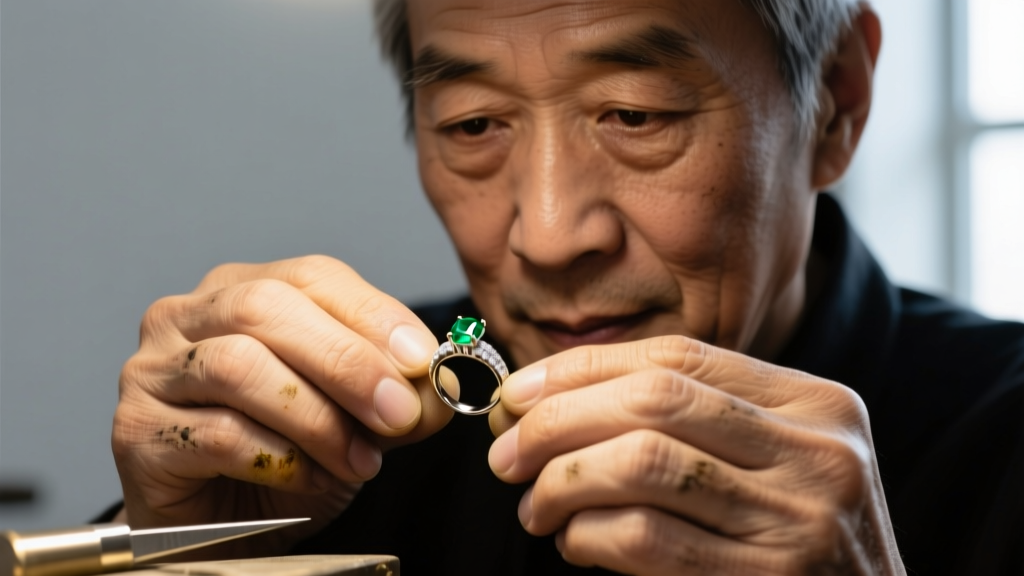
Counterfeiters often laser-engrave a Minerve profile onto the back of a stud post. Authentic French hallmarks are struck with a steel punch, displacing the metal and leaving a microscopic raised burr around the edges of the stamp. Under magnification, a laser mark will appear perfectly flush or slightly recessed with burnt edges, immediately disqualifying the piece as a genuine mid-century French artifact.
Structural Integrity: Omega Clips vs. Modern Posts
The transition from the French Riviera resort culture of the 1930s to the post-war era saw a massive shift in earring mechanics. Pierced ears were temporarily out of fashion among the European elite, leading Cote d'Argent silversmiths to perfect the omega clip. Understanding the mechanics of these clips is vital for assessing the value and wearability of vintage pieces today.
An authentic French omega clip relies on a hidden, hardened steel or beryllium-copper tension spring inside the silver paddle. Over decades of wear, this spring suffers from metal fatigue. When evaluating a pair, perform a tension test: open the clip to a 45-degree angle and release it. It should snap back with an audible, sharp click and sit completely flush against the earring body. If the paddle wobbles or fails to close entirely, the internal spring has lost its temper. Repairing this requires a master jeweler to disassemble the hinge pin, which is often peened (mushroomed) at the ends, making non-destructive repair incredibly difficult.
For modern wearers who prefer pierced ears, converting these clips to posts requires careful engineering. Because 800 silver is harder, drilling through the original gallery to solder a new 950 silver post requires localized heat control to prevent melting the adjacent guilloché enamel or thermal-shattering any set paste stones. Jewelers typically use a laser welder to attach a 1.0mm (18-gauge) titanium or 950 silver post to the exterior gallery, preserving the internal clip mechanism for historical integrity.
Restoration and Patina Management
Silver sulfide tarnish is the nemesis of any silver collector, but with Cote d'Argent earrings, aggressive polishing is a critical error. The "French Gray" patina—a deliberate oxidation left in the recesses of filigree and engraved motifs by the original silversmith—provides the contrast necessary to highlight the Art Deco geometry of the design.
According to conservation guidelines referenced by the Victoria and Albert Museum, mechanical polishing with abrasive dips or rotary Dremel tools will strip this intentional patina and round the crisp edges of hand-engraved milgrain. Instead, expert restoration relies on chemical precision and gentle abrasives.
The Precipitated Calcium Carbonate Protocol
- Degreasing: Submerge the earrings in a mild, non-ammoniated ultrasonic bath to remove sebum and cosmetic residue. (Note: Never use ultrasonics if the earrings feature emeralds, opals, or cold-painted enamel).
- Targeted Abrasion: Create a slurry of precipitated calcium carbonate and distilled water. Using a microfiber swab, gently work the slurry only over the high-polish surfaces of the silver.
- Recess Protection: Avoid the swab in the deep grooves of the guilloché or filigree. The calcium carbonate is fine enough to lift surface silver sulfide without scratching the 950 or 800 silver base.
- Passivation: Rinse in deionized water and dry immediately with compressed air to prevent water spots. Finish with a micro-crystalline wax coating to inhibit future sulfur bonding.
Market Valuation and Investment Data
The market for Cote d'Argent and broader French regional silver earrings has bifurcated into distinct tiers based on condition, hallmark clarity, and stylistic era. As of current market analyses, pricing structures are heavily influenced by the presence of original, unmodified components.
- Tier 1: Art Deco Masterworks (1920s-1930s): Featuring 950 Minerve silver, hand-cut guilloché enamel, and diamond or marcasite accents. Unmodified clip-ons with crisp hallmarks command between $450 and $1,200 per pair. Provenance linking the piece to specific Biarritz or Hossegor boutiques adds a 20-30% premium.
- Tier 2: Mid-Century Modernist (1950s-1970s): Characterized by heavy, sculptural 800 silver designs, often utilizing the Crabe or 2nd Title Minerve marks. These structural, brutalist or organic forms typically range from $200 to $400. Omega clip tension is the primary value detractor here; a broken clip reduces value by up to 40%.
- Tier 3: Contemporary Artisan Revivals: Modern silversmiths operating in the Nouvelle-Aquitaine region producing new pieces using traditional Minerve stamping. These retail between $120 and $280, offering the metallurgical benefits of French silver without the structural vulnerabilities of vintage mechanics.
Ultimately, collecting Cote d'Argent earrings is an exercise in horological-level attention to detail. By prioritizing hallmark forensics, respecting the metallurgical limits of French silver alloys, and employing conservative restoration techniques, collectors can preserve both the financial value and the historical narrative of these exceptional coastal artifacts.


