How to Craft Custom Floral Beaded Earrings Step-by-Step
Learn how to craft custom floral beaded earrings with our step-by-step guide. Master seed bead petals, wire gauges, and assembly.

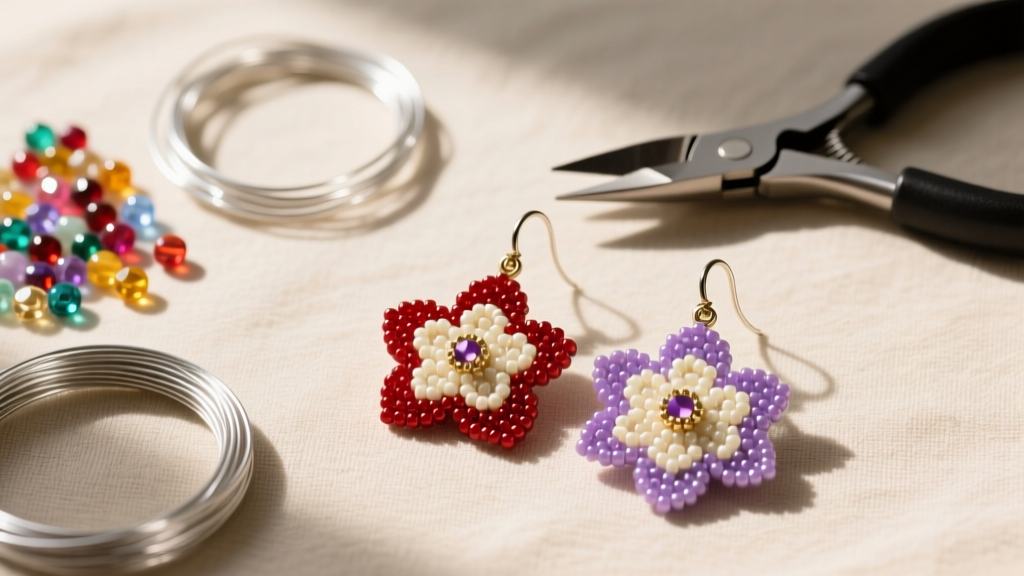
The resurgence of botanical jewelry has made floral beaded earrings a staple in contemporary accessory design. Unlike mass-produced stamped metal florals, hand-woven seed bead petals offer unparalleled dimensionality, vibrant color gradients, and featherlight wearability. However, crafting professional-grade floral beaded earrings requires more than just stringing beads; it demands a precise understanding of thread tension, structural wire gauges, and hypoallergenic metallurgy. This comprehensive guide will walk you through the exact specifications and step-by-step brick-stitch techniques required to build durable, high-end floral earrings from your home studio.
Essential Materials and Tool Specifications
To achieve crisp, uniform petals that mimic the delicate structure of real flowers, you must select materials with strict manufacturing tolerances. Avoid generic craft store beads, which suffer from inconsistent sizing that will warp your floral geometry.
Selecting the Right Seed Beads
For floral beadweaving, cylindrical beads are superior to round ones. Miyuki Delica 11/0 (DB) beads are the industry standard. Their uniform 1.3mm diameter and large 0.8mm hole allow for multiple thread passes without fraying. According to Fire Mountain Gems, Delicas snap together like tiny bricks, creating a flat, flexible fabric ideal for petal structures. For the center of your flowers (the stamen), use Toho Round 15/0 seed beads or 2mm Swarovski crystal bicones to introduce contrasting texture and light refraction.
Thread and Tension Tools
Do not use nylon monofilament or standard cotton thread. You need Berkley Fireline 6lb (0.006 inch) braided beading thread. Its gel-spun polyethylene core resists the sharp edges of glass seed beads and holds tension without stretching. Pair this with a size 10 or 12 English beading needle. For cutting, invest in Lindstrom 8141 flush cutters to achieve zero-tail snips close to the beadwork.
Wire Gauge and Metallurgy for Sensitive Ears
When designing earrings, the ear wire is the critical point of contact. For hypoallergenic floral beaded earrings, bypass sterling silver and opt for ASTM F136 implant-grade titanium or niobium. As detailed by jewelry supply experts at Rio Grande, these metals are entirely nickel-free and biocompatible. Use 20-gauge (0.81mm) wire for the ear wire itself, as it provides the necessary structural memory to stay in the lobe without bending, while fitting comfortably through standard 18-gauge healed piercings.
| Material Component | Specification | Primary Function | Estimated Cost |
|---|---|---|---|
| Miyuki Delica 11/0 | Cylindrical, 1.3mm | Main petal body and structural weave | $4.50 / 7g tube |
| Berkley Fireline | 6lb test, 0.006" | High-tension, fray-resistant weaving | $12.00 / 50yd spool |
| Titanium Ear Wire | 20-gauge, ASTM F136 | Hypoallergenic lobe suspension | $18.00 / pair |
| Swarovski Bicone | 3mm or 4mm | Floral center (stamen) accent | $6.00 / 12-pack |
Color Theory and Finish Selection for Botanical Depth
Real flowers derive their visual depth from varied surface textures. To replicate this in floral beaded earrings, mix bead finishes within the same petal. Use opaque matte beads for the outer edges of the petal to absorb light and create a soft, velvety boundary. Transition to galvanized or metallic-lined beads near the base of the petal to reflect light and draw the eye toward the earring's center. This interplay of matte and reflective surfaces elevates the beadwork from a flat craft project to a dimensional piece of wearable art.
Step-by-Step Assembly: The Brick-Stitch Petal Method
The brick stitch is the optimal technique for floral earrings because it allows for natural tapering, creating the teardrop or spade shapes characteristic of botanical petals.
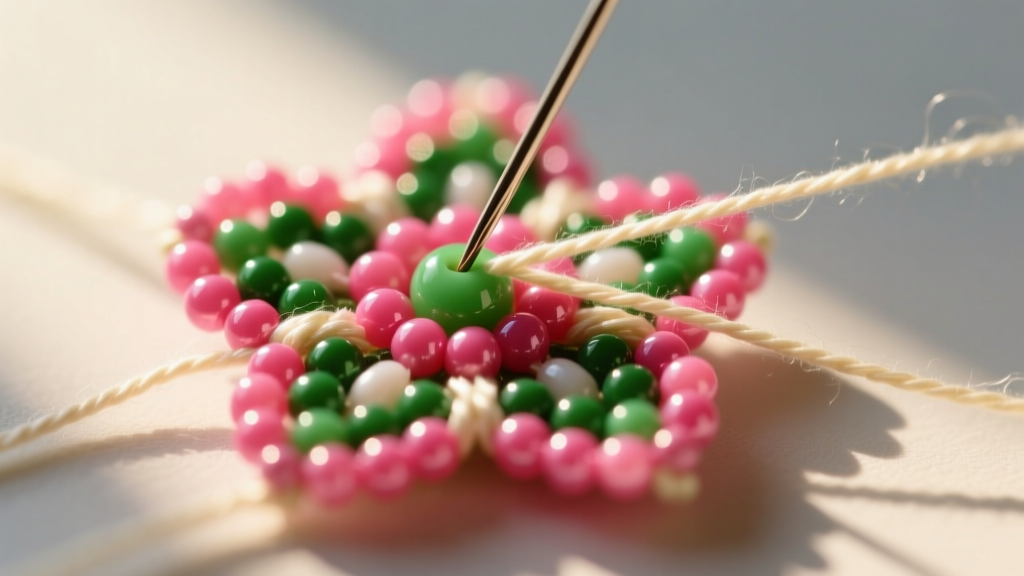
Step 1: Creating the Ladder Stitch Foundation
Begin by cutting an arm's length of Fireline thread. Thread your needle and pick up 4 to 6 Delica beads (depending on the desired width of your petal's base). Pass the needle back through the first bead, then up through the second, creating a tight, flat ladder. This base row will serve as the anchor for your petal. Ensure the tension is exceptionally tight; a loose foundation will cause the entire floral structure to collapse inward.
Step 2: Building the Brick Stitch Taper
- Pick up two beads. Pass your needle under the exposed thread loop between the first two beads of your foundation row.
- Pass the needle back down through the second bead you just picked up, pulling the thread taut so the beads snap flat against the foundation.
- Continue across the row. To create a tapered petal shape, decrease by one bead on each subsequent row. Pick up only one bead for the final rows to form the pointed tip of the petal.
Step 3: The Picot Edge Finish
To give your floral beaded earrings a delicate, organic edge, add a picot border. Pick up three 15/0 seed beads, skip one edge bead on your petal, and pass down through the next. Pull tight to form a tiny, raised loop. Repeat this around the entire perimeter of the petal. This not only softens the geometric lines but also adds a subtle, ruffled texture reminiscent of real flower petals.
Attaching Hypoallergenic Ear Wires and Weight Balancing
The structural integrity of floral beaded earrings relies heavily on how the beadwork connects to the ear wire. Never sew the beadwork directly to the ear wire loop; the friction of the metal will eventually saw through the polyethylene thread.
Instead, weave a 24-gauge dead-soft sterling silver or titanium wire through the top row of your petal's ladder stitch base. Wrap this wire tightly around a 4mm closed jump ring, creating a secure, metal-to-metal connection. Attach the jump ring to the loop of your 20-gauge titanium ear wire using chain-nose pliers.
Weight Balancing: The human earlobe can comfortably support up to 15 grams before experiencing fatigue or stretching. A standard three-petal seed bead floral dangle weighs between 3 and 5 grams, making it exceptionally comfortable. However, if you incorporate heavy glass cabochons or brass cores into your floral centers, you must reinforce the ear wire by wrapping the base of the hook with 28-gauge wire to prevent it from pulling forward and stretching the piercing.
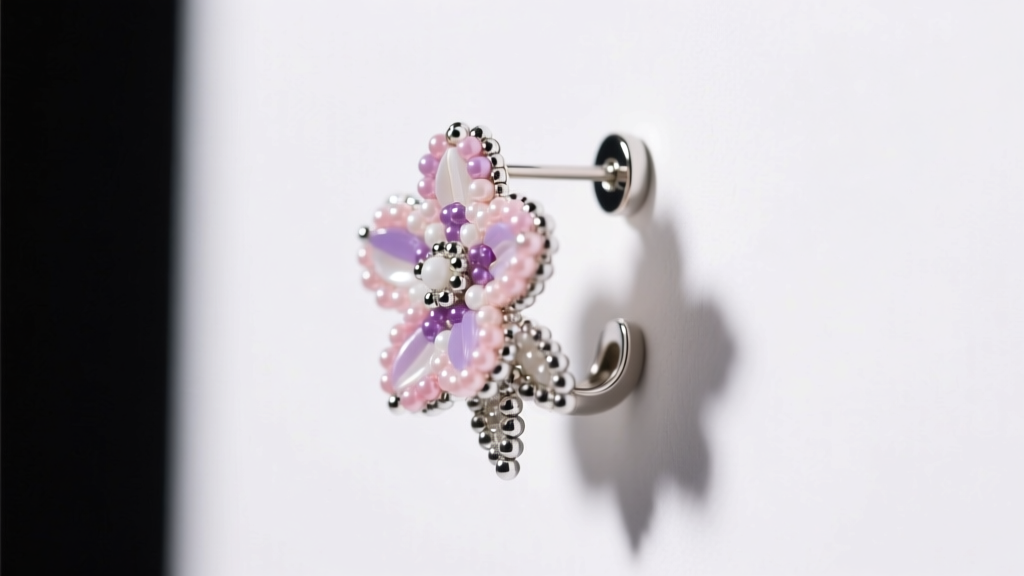
Troubleshooting Common Beading Failures
Even experienced jewelers encounter structural issues when weaving complex floral geometries. Here is how to diagnose and correct the most frequent failures:
- Thread Fraying at the Bead Edge: If your Fireline thread snaps during weaving, you are likely using beads with sharp, unpolished holes. Switch to Miyuki or Toho brands, which feature heat-polished, rounded holes. Alternatively, condition your thread with a light coat of synthetic beeswax to reduce friction.
- Warped or Cupped Petals: Cupping occurs when your edge tension is tighter than your center tension. When adding a new row, ensure you are pulling the thread straight up, not at an angle. Use nylon jaw pliers to gently flatten the beadwork if minor warping occurs.
- Jump Ring Deformation: When opening the jump ring that connects your petal to the ear wire, never pull it apart laterally. This distorts the circle and weakens the metal. Always use two pairs of pliers to twist the ring open and closed along its vertical axis, ensuring a flush, seamless closure that won't catch on hair or clothing.
"The difference between amateur beadwork and fine jewelry lies entirely in the finishing. Concealing your thread paths, securing your knots with micro-drops of flexible jeweler's epoxy, and utilizing biocompatible metals transforms a simple craft into a luxury accessory."
By adhering to these precise material specifications and mastering the brick-stitch taper, you can create custom floral beaded earrings that are not only visually stunning but structurally resilient and comfortable for all-day wear. Whether you are designing for a boutique collection or personal wear, the intersection of botanical aesthetics and precision beadweaving offers endless creative potential.


