How to Style Legend of Zelda Earrings for Cosplay & Daily Wear
Learn how to choose, craft, and style Legend of Zelda earrings for everyday wear or convention cosplay, featuring material guides and gauge tips.

The Rise of Hyrule-Core: Styling Legend of Zelda Earrings in 2026
As we navigate the fashion landscape of 2026, the intersection of fantasy lore and everyday jewelry has never been more prominent. The enduring legacy of the franchise has solidified Hyrule-core as a staple in alternative and geek-chic fashion. When it comes to legend of zelda earrings, fans are no longer limited to cheap, heavy convention props. Today, jewelry artisans and 3D-printing enthusiasts are crafting sophisticated, lore-accurate pieces that transition seamlessly from a weekend cosplay to a subtle office-friendly accessory. Whether you are channeling the royal elegance of Princess Zelda or the rugged utility of a Hylian knight, understanding the nuances of gauge sizes, metallurgy, and structural support is critical for both aesthetics and ear health.
Decoding Iconic Designs: Which Character Are You?
The first step in styling your jewelry is identifying the specific regional or character motifs that resonate with your personal aesthetic. The lore offers a massive variety of metalwork and gemstone inspirations.
Princess Zelda: Royal Elegance & Sapphire Drops
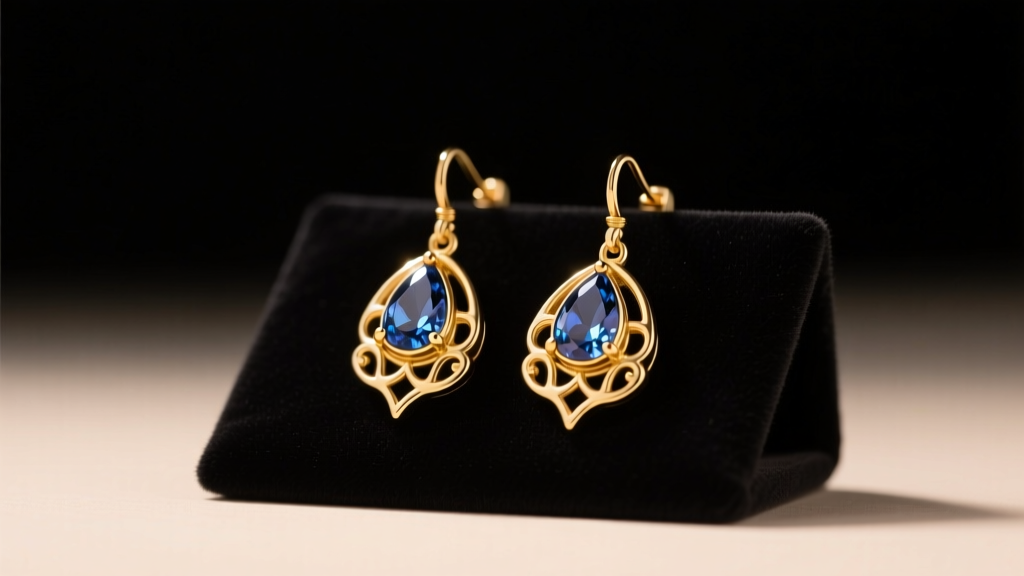
Zelda's jewelry is defined by royalty, symmetry, and the recurring use of deep blue sapphires and gold filigree. For daily wear, opt for 18-gauge gold-plated vermeil studs featuring a minimalist Triforce of Wisdom or a tiny bezel-set sapphire. For full cosplay, articulated drop earrings that mimic the dangling ornaments seen in her Breath of the Wild and Tears of the Kingdom ceremonial gowns are ideal. However, these dangles can easily exceed 15 grams per ear, requiring reinforced lobe support.
Link & The Hylians: Subtle Utility
Link's iconic blue earring from his Skyward Wardrobe and various tunic iterations offers a masterclass in subtle character signaling. A simple, 20-gauge niobium hoop anodized to a vibrant cobalt blue is perfect for the workplace. Alternatively, silver-toned feather motifs or shield-shaped huggies provide a rugged, masculine-leaning aesthetic that pairs well with everyday streetwear.
The Zora & Gerudo: Avant-Garde Cartilage & Gold
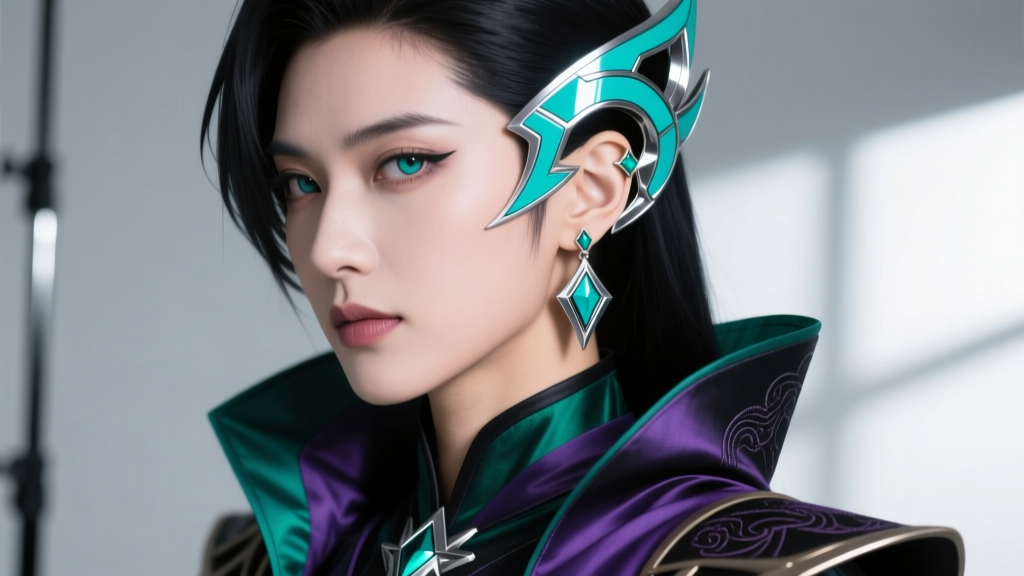
If you prefer ear cuffs and cartilage clusters, look to the Zora and Gerudo tribes. Zora designs utilize turquoise, silver, and sweeping organic curves that wrap around the helix and tragus without requiring additional piercings. Gerudo jewelry, conversely, is characterized by heavy, ornate gold hoops and sun motifs. These statement pieces often require a 16-gauge or 14-gauge wire for structural integrity, meaning they are best suited for stretched lobes or reinforced standard piercings.
Material & Gauge Guide for Convention Comfort
Wearing heavy cosplay props for 12 hours on a concrete convention center floor is a recipe for contact dermatitis and lobe tearing if you ignore metallurgy. According to the Association of Professional Piercers, the presence of nickel in cheap base metals is the primary culprit behind allergic reactions. Below is a breakdown of materials you should look for when sourcing or crafting your legend of zelda earrings.
| Material | Nickel Content | Max Wear Time | Best Use Case |
|---|---|---|---|
| Implant-Grade Titanium (ASTM F136) | 0% | 24+ Hours | Sensitive ears, heavy convention days, fresh piercings |
| Niobium | 0% | 24+ Hours | Anodized colorful pieces (e.g., Zora turquoise, Link blue) |
| 316L Surgical Steel | Trace | 4-6 Hours | Budget-friendly daily wear for non-sensitive ears |
| Zinc Alloy / Raw Brass | High | 1-2 Hours | Photo shoots only (must be sealed or plated) |
Gauge Note: Standard lobe piercings are typically 20G (0.81mm) or 18G (1.02mm). If you are buying heavy Gerudo hoops, ensure the post is no thicker than 18G, or you risk micro-tearing the fistula. For ear cuffs, look for 22G (0.64mm) adjustable wire to ensure a snug fit on the helix without cutting off circulation.
Step-by-Step: Modifying Heavy Cosplay Earrings for Sensitive Lobes
Often, the most accurate legend of zelda earrings available online are cast in cheap zinc alloys with nickel-laden steel hooks. You can easily modify these for all-day convention comfort by swapping the findings. Here is a professional jeweler's method for upgrading your cosplay gear.
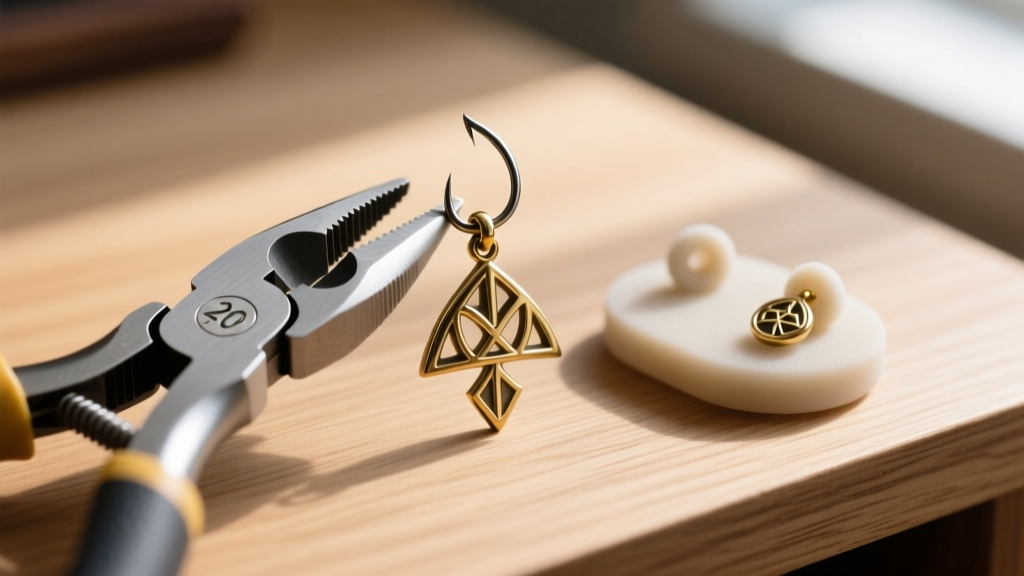
- Gather Your Tools: You will need chain-nose pliers, flush cutters, two 20G implant-grade titanium fishhook wires, two 6mm 22G titanium jump rings, and clear silicone earring lifters (supports).
- Remove the Base Metal Hook: Using your flush cutters, snip the loop of the cheap steel hook just above the earring body. Do not attempt to bend it open, as this can warp the casting or snap brittle zinc alloys.
- Open the Jump Ring Laterally: Grip the 6mm titanium jump ring with two pairs of pliers. Twist one hand toward you and the other away, opening the ring laterally. Never pull the ring apart outward, as this weakens the metal and ruins the circular shape.
- Attach the Titanium Findings: Thread the titanium fishhook and the earring body onto the open jump ring. Ensure the hook faces the correct direction (pointing forward when worn).
- Close and Support: Twist the jump ring closed until you hear a faint 'click' indicating the ends are perfectly flush. Finally, slide a clear silicone earring lifter onto the post behind your lobe. This distributes the weight of heavy props across a wider surface area, preventing the dreaded 'stretched lobe' droop.
Sourcing vs. 3D Printing: A Maker's Breakdown
For highly specific regional designs, like the intricate Sheikah Slate circuitry patterns or the exact geometry of the Master Sword hilt, commercial options may fall short. In 2026, desktop SLA (Stereolithography) resin printing has become the gold standard for cosplay jewelry makers.
The 3D Printing Workflow for Earrings
If you are modeling your own legend of zelda earrings in CAD software like Blender or Fusion 360, keep the wall thickness above 1.2mm to prevent snapping during post-processing. Print using a tough, flexible resin rather than standard brittle resin. Standard resin will shatter if dropped on a convention floor.
Post-processing is where the magic happens. Wet-sand your prints starting at 400 grit and moving up to 1500 grit. Apply a high-build automotive primer to fill any microscopic layer lines. For a metallic finish, avoid cheap spray paints which rub off on skin and hair. Instead, use a metallic wax paste (like Rub 'n Buff) for a quick antique gold look, or invest in a small electroplating setup to deposit a real layer of copper and 24k gold over a conductive paint base. As noted by the official Nintendo Zelda portal, the visual fidelity of the games relies heavily on material textures; replicating that worn, ancient gold look requires physical patinas, not just flat yellow paint.
Styling for the Real World
Integrating fantasy jewelry into a modern wardrobe requires balancing scale and subtlety. Pair a delicate, 10mm gold Triforce stud with a crisp blazer for a subtle nod that only fellow fans will recognize. If you are wearing elaborate Zora ear cuffs, keep your necklace and ring game minimal to let the cartilage arrangement serve as the focal point of your outfit. By prioritizing biocompatible materials and precise gauge sizing, you can ensure your love for Hyrule remains both stylish and physically comfortable, no matter how long your journey lasts.


