The Ultimate 3 Earring Set Buying Guide for Ear Stacking
Discover how to choose the perfect 3 earring set for your ear stack. Learn about gauge sizes, metal grades, and placement strategies for sensitive ears.

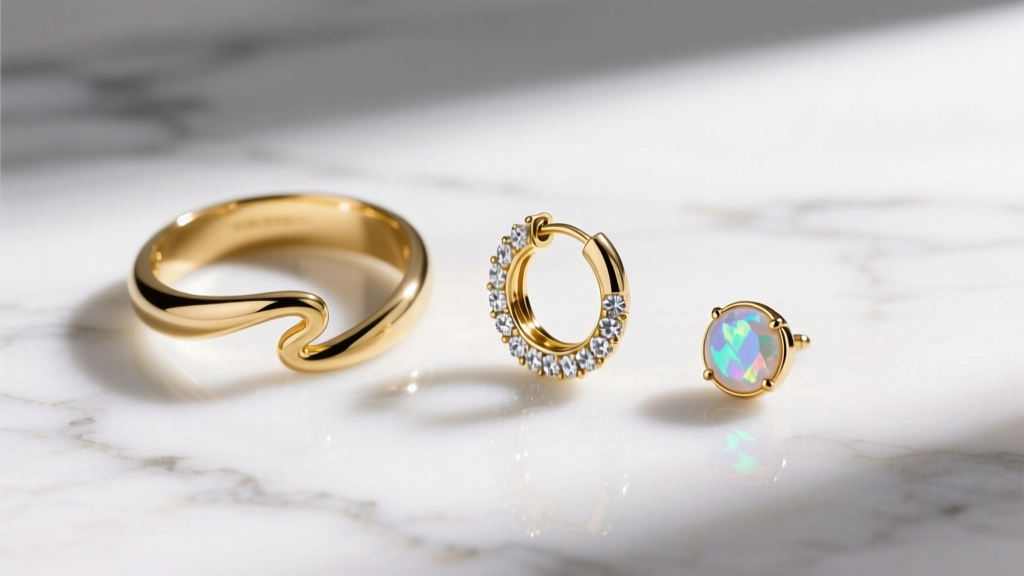
Building a curated ear stack is one of the most expressive forms of modern body modification, but achieving that effortless, cohesive look requires more than just picking three random pieces of jewelry. As we navigate the styling landscape of 2026, the emphasis has shifted heavily toward anatomical precision, biocompatible materials, and intentional visual weight. Whether you are building a stack from scratch or upgrading your current lineup, investing in a high-quality 3 earring set is the most strategic way to ensure your piercings remain healthy, comfortable, and visually balanced.
This comprehensive buying guide will walk you through the technical specifications, material grades, and placement strategies you need to know before purchasing your next ear stack. We are bypassing the generic fashion advice and diving straight into the metallurgy and anatomy that professional piercers prioritize.
The Anatomy of a Perfect 3 Earring Set
A well-designed 3 earring set is not just a collection of matching metals; it is a carefully engineered visual hierarchy. When mapping out your ear, professional piercers typically divide the stack into three distinct roles:
- The Focal Point: This is your largest or most intricate piece. It anchors the visual weight of the stack. In a standard lobe-to-helix setup, this is usually a diamond huggie in the primary lobe piercing or a prominent gemstone cluster in the flat piercing.
- The Bridge: This piece connects the focal point to the rest of the ear. It should have moderate visual weight—such as a textured hoop or a mid-sized geometric stud—and is typically placed in the upper lobe or lower helix.
- The Anchor (or Accent): The smallest and most subtle piece, designed to draw the eye inward. Think tiny bezel-set diamonds, seamless clicker rings, or delicate threadless ends placed in the tragus, rook, or forward helix.
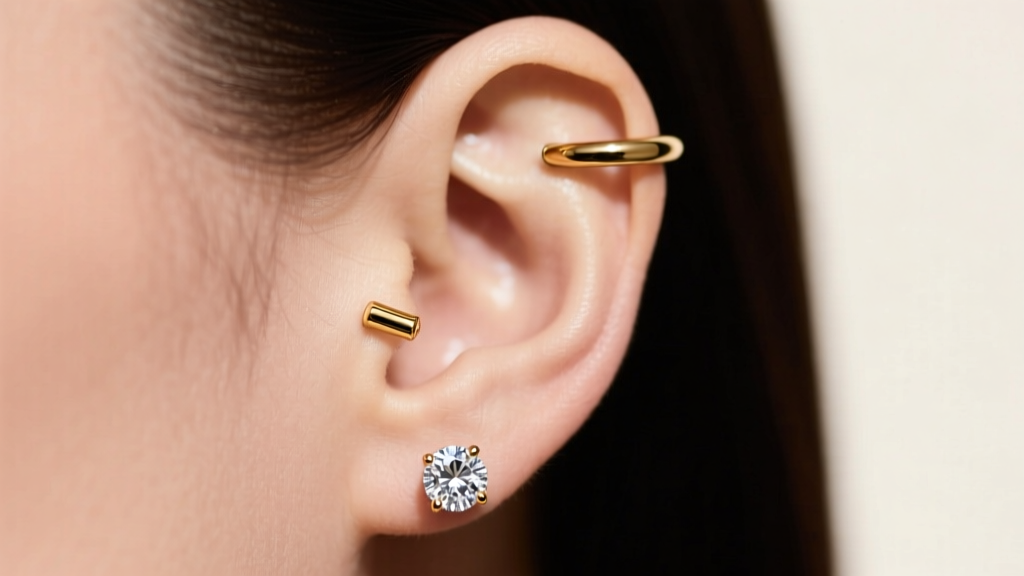
When shopping for a pre-curated 3 earring set, ensure the manufacturer has varied the scale of the pieces. If all three earrings are the exact same millimeter width, your stack will look flat and visually monotonous.
Material Grades: What to Look For in 2026
The jewelry market is flooded with misleading terms like "hypoallergenic" and "surgical steel." If you have sensitive ears, healing piercings, or a history of contact dermatitis, you must look for specific metallurgical standards. According to the Association of Professional Piercers (APP), only a handful of materials are truly safe for long-term wear and initial healing.
The Gold Standard: Solid 14k and 18k Gold
For fully healed piercings, solid 14k or 18k gold remains the premium choice. However, you must verify that the gold is nickel-free. Many lower-grade white gold alloys are mixed with nickel to achieve a silver color, which triggers severe allergic reactions in up to 20% of the population. Opt for yellow or rose gold, or ensure the white gold is alloyed with palladium instead of nickel.
The Biocompatible King: ASTM F-136 Titanium
If you are buying a 3 earring set that includes pieces for unhealed cartilage piercings, implant-grade titanium is non-negotiable. Look specifically for ASTM F-136 or ASTM F-1295 certifications. This is the exact grade of titanium used in medical joint replacements and pacemakers. It contains zero nickel and is highly resistant to corrosion from bodily fluids.
Material Comparison Chart for Ear Stacks
| Material | Industry Standard | Nickel Content | Avg. Price (3-Set) | Best Use Case |
|---|---|---|---|---|
| Implant-Grade Titanium | ASTM F-136 | 0% | $80 - $180 | Fresh piercings, highly sensitive ears |
| 14k Solid Gold | Nickel-Free Alloy | 0% | $350 - $800+ | Healed lobes, luxury everyday wear |
| Niobium | Commercially Pure | 0% | $60 - $120 | Color-anodized hoops, healing cartilage |
| "Surgical" Stainless Steel | ASTM F-138 | 8% - 12% | $30 - $70 | Fully healed lobes only (avoid for cartilage) |
Gauge Sizes and Post Lengths: The Technical Fit
A beautiful 3 earring set will fail if the hardware does not match your specific piercing anatomy. Buying off-the-rack fashion jewelry often results in posts that are too long (causing snagging and irritation bumps) or too short (causing pressure necrosis and embedding).
Understanding Gauge Thickness
The gauge refers to the thickness of the post or wire. The lower the number, the thicker the jewelry.
- 20g (0.81mm) & 18g (1.0mm): Standard for traditional earlobe piercings done with a needle. Most fashion huggies and lightweight studs use 18g.
- 16g (1.2mm): The gold standard for cartilage piercings (helix, flat, conch, tragus). Using 18g or 20g jewelry in a cartilage piercing can lead to the "cheese-cutter effect," where the thin wire slowly migrates through the tissue due to the weight of the jewelry or accidental snagging.
Post Length and the "Downsize" Rule
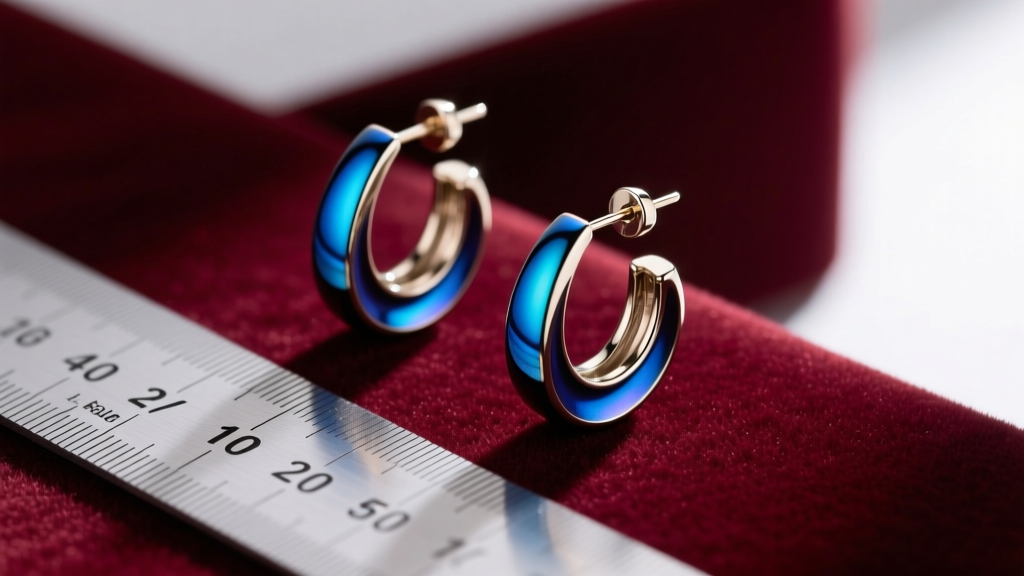
If your 3 earring set includes labret studs for a flat or helix piercing, you must account for swelling. Initial jewelry should be 8mm (5/16") to 9.5mm (3/8") to accommodate swelling. However, leaving a long post in permanently will cause the jewelry to sit at an angle, leading to irritation bumps. Once healed (usually 3 to 6 months for lobes, 9 to 12 months for cartilage), you must downsize to a 6mm (1/4") or 5mm (3/16") post for a flush, comfortable fit.
Placement Strategies for Different Ear Shapes
Not every 3 earring set will suit every ear shape. Your ear's unique topography dictates which configurations will look intentional rather than cluttered.
Small or Flat Ears
If your ear has a smaller surface area or lacks a prominent helix fold, avoid large, bulky hoops that will overwhelm your anatomy. Instead, opt for a 3 earring set that features threadless ends and huggies. A tiny 5mm gem in the flat, a seamless 8mm hoop in the upper lobe, and a snug diamond huggie in the lower lobe will elongate the ear without hiding its natural shape.
Prominent or Protruding Ears
For ears that project further from the head, you can use visual weight to create balance. A 3 earring set featuring slightly larger, front-facing focal pieces (like a 7mm or 8mm starburst or flower cluster) in the primary lobe and helix will draw the eye forward, minimizing the perception of protrusion. Avoid tight cuffs that wrap entirely around the helix edge, as these can accentuate the ear's outward angle.
Red Flags: What to Avoid When Buying
Protect your investment and your tissue by immediately disqualifying any 3 earring set that features the following design flaws:
- Externally Threaded Posts: If the screw threads are on the post itself (rather than the gem ball), the sharp threads will tear through your delicate fistula (piercing channel) every time you insert it. Always demand internally threaded or threadless (push-pin) jewelry.
- Butterfly Backs (Friction Backs): These trap dead skin, bacteria, and moisture against the back of the earlobe, frequently causing cysts and contact dermatitis. Furthermore, they apply uneven pressure to the tissue. Flat-back labrets are the only hygienic choice for studs.
- PVD Coating on Unknown Base Metals: While PVD (Physical Vapor Deposition) coating is safe when applied over implant-grade titanium, many cheap brands apply it over brass or copper. Once the microscopic coating wears off from friction and sweat, the base metal will oxidize and turn your skin green or black.
"When a client brings in a matching set they bought online, the first thing I check is the threading and the back of the post. A beautiful gemstone on a poorly machined, externally threaded post is just a future irritation bump waiting to happen." — Senior Piercer, APP Member
Final Verdict: Investing in Your Ear Stack
Curating the perfect ear stack is a marathon, not a sprint. When purchasing a 3 earring set, prioritize biocompatible materials like ASTM F-136 titanium or nickel-free 14k gold, ensure the gauge thickness matches your specific piercing placement, and always opt for flat-back, internally threaded or threadless hardware. By focusing on these technical details, you guarantee a stack that not only looks stunning but allows your piercings to thrive for decades to come. For more information on how precious metals are graded and alloyed for jewelry, consult the educational resources provided by the Gemological Institute of America (GIA).


