Dancing Diamond Earrings: A 2026 Value & Pricing Guide
Are dancing diamond earrings worth the premium? We break down track mechanics, 18k gold durability, and 2026 pricing to help you assess true value.

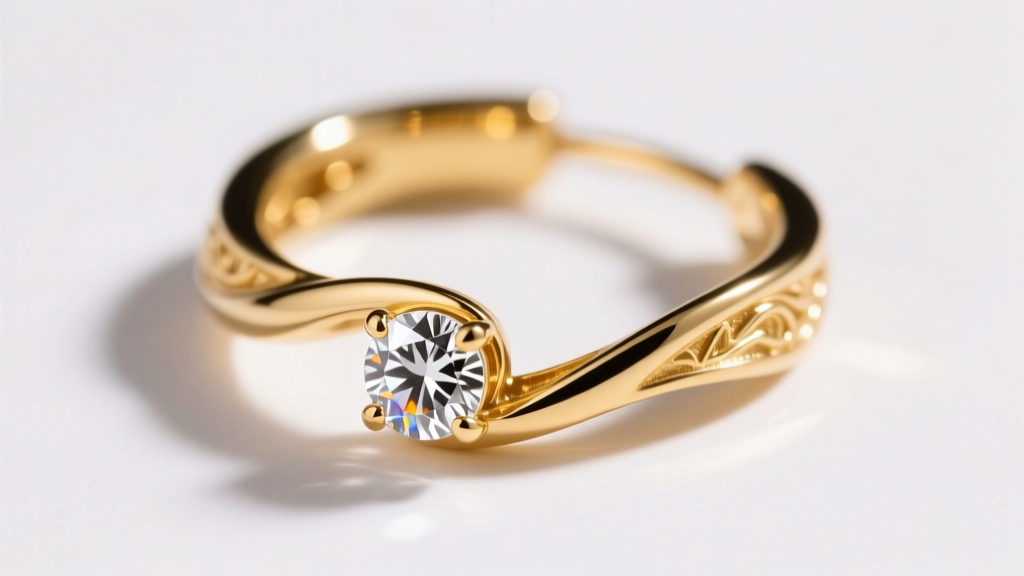
Kinetic jewelry has dominated the luxury earring market for the better part of a decade, but as we navigate the 2026 landscape, consumers are asking a critical question: are dancing diamond earrings actually worth the premium? Popularized by high-end Parisian houses, the "dancing" or "sliding" diamond mechanism features a brilliant-cut stone that glides freely within a curved gold track. It is a mesmerizing optical effect that catches light with every turn of the head. However, beneath the mesmerizing sparkle lies a complex intersection of micro-engineering, material science, and heavy brand markups.
As a senior analyst for Jewel Style Radar, I have dismantled dozens of kinetic earring designs to evaluate their intrinsic value, structural longevity, and pricing fairness. Whether you are eyeing a luxury designer pair or considering a custom bench-jeweler replica, this comprehensive value assessment will help you determine exactly what you are paying for.
The Engineering Behind the Kinetic Track
The magic of a dancing diamond earring is not optical illusion; it is precision micro-milling. Unlike a static prong setting, a kinetic track requires the diamond to be suspended by a specialized bail or a hollowed-out girdle loop that slides along a continuous metal rail. For the movement to appear fluid and "dance" rather than snag, the manufacturing tolerances are incredibly tight.
The track wire itself is typically forged at 1.2mm to 1.4mm in thickness (roughly 16 to 15 gauge), providing enough structural rigidity to prevent bending when the earring is put on or taken off. The diamond's sliding loop is usually milled to 0.8mm. This leaves a clearance of just 0.2mm to 0.3mm on either side. If the tolerance is too wide, the diamond wobbles laterally, killing the kinetic illusion and creating an audible, cheap-sounding rattle. If the tolerance is too tight, skin oils, lotion, and microscopic dust will quickly jam the mechanism.
"The true mark of a high-quality dancing diamond earring isn't just the carat weight; it's the internal polishing of the track. A master jeweler will hand-polish the inside of the U-curve to a mirror finish to reduce friction coefficients, ensuring the diamond glides rather than drags."
Pricing Breakdown: Brand Premium vs. Intrinsic Value
When assessing value, we must separate the intrinsic melt-and-stone value from the design and brand premium. The dancing diamond market in 2026 is segmented into three distinct tiers. Below is a comparative analysis based on a standard 0.15ct to 0.25ct round brilliant diamond set in 18k gold.
| Category | Typical Carat Weight | Metal Purity | Average 2026 Retail Price (Pair) | Estimated Intrinsic Value | Markup Multiplier |
|---|---|---|---|---|---|
| Luxury Designer (e.g., Messika Move PM) | 0.15ct - 0.25ct (Natural) | 18k Gold (750) | $2,600 - $3,200 | $450 - $600 | 5x - 6x |
| Mid-Tier Boutique Brand | 0.20ct - 0.30ct (Natural/Lab) | 14k or 18k Gold | $1,100 - $1,600 | $350 - $500 | 2.5x - 3.5x |
| Custom Bench Jeweler (Lab-Grown) | 0.25ct - 0.50ct (Lab-Grown) | 14k or 18k Gold | $550 - $850 | $300 - $450 | 1.5x - 2x |
The data reveals a stark reality: luxury designer dancing earrings carry a markup of 500% to 600%. You are paying primarily for the brand cachet, the iconic status of the design, and the luxury unboxing experience. If your goal is purely the kinetic visual effect and diamond sparkle, a custom-made pair utilizing high-quality lab-grown diamonds offers a vastly superior return on investment, allowing you to double the carat weight for a fraction of the designer price.
Material Durability: 18k Gold and Track Wear
One of the most frequent failure modes in kinetic jewelry is track degradation. Because the diamond is in constant motion, the bottom curve of the track acts as a friction point. Over 3 to 5 years of daily wear, the gold will slowly wear away.
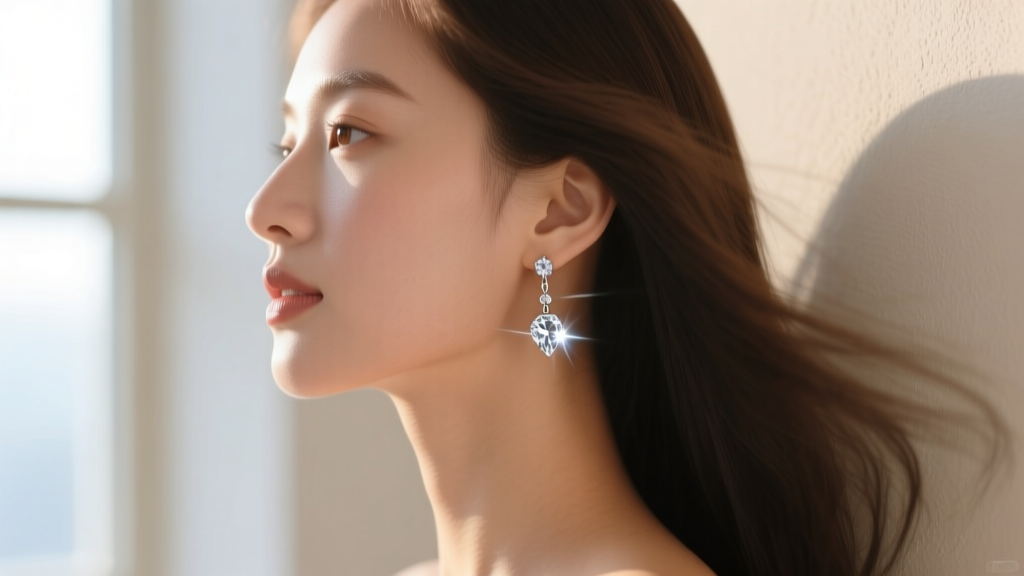
This is where metal purity becomes a critical value factor. Luxury houses almost exclusively use 18k gold (75% pure gold, 25% alloy). While 18k gold offers a rich, warm color and hypoallergenic properties, it is inherently softer than 14k gold (58.5% pure). A softer metal means the friction point at the base of the track will thin out faster. If you are investing in a luxury pair, it is highly recommended to have your jeweler inspect the track thickness annually after the third year of wear.
Furthermore, if you prefer white gold, be aware of the rhodium plating issue. White gold is naturally yellowish and requires rhodium plating to achieve a bright white finish. In a static ring, this plating lasts a year or two. In a dancing diamond earring, the constant friction of the diamond's bail will strip the rhodium from the inside of the track within weeks, leaving a dull, yellowish-grey streak that cannot be easily re-plated without risking the diamond's setting. Value Tip: For kinetic earrings, always opt for 18k yellow gold, 18k rose gold, or platinum to avoid the inevitable frustration of rhodium wear.
Diamond Grading for Kinetic Jewelry
Evaluating a diamond that never sits still requires a different approach than grading a static solitaire. According to the Gemological Institute of America (GIA), the interplay of light, cut, and clarity dictates a stone's overall brilliance. But how do the 4Cs translate when the stone is sliding down a gold track?
- Cut (The Priority): Because the diamond is constantly changing angles relative to the light source, an "Excellent" or "Ideal" cut is non-negotiable. A poorly cut diamond will show dead zones and light leakage the moment it tilts inside the track. Prioritize cut above all other metrics.
- Clarity (VS2 or Higher): When a dancing diamond tilts to a 45-degree angle as it slides, the pavilion facets are exposed to the naked eye. Inclusions that are normally hidden by prongs in a static setting (like SI1 or SI2 carbon spots near the girdle) will suddenly flash into view. Stick to VS2 or higher to ensure the stone looks clean from all dynamic angles.
- Color (G-H is Sufficient): The kinetic movement disperses color perception. The human eye registers rapid flashes of spectral light (fire) rather than the subtle body color of the stone. Furthermore, the reflections of the surrounding gold track will warm up the stone's appearance anyway. Paying a premium for D or E color grades in a dancing diamond earring yields virtually zero visual return on investment. A near-colorless G or H grade is the smart buyer's sweet spot.
For a deeper understanding of how laboratory grading accounts for dynamic light performance, the GIA Laboratory Services documentation provides excellent insights into how proportion and facet alignment dictate brilliance in motion.
Maintenance and Real-World Troubleshooting
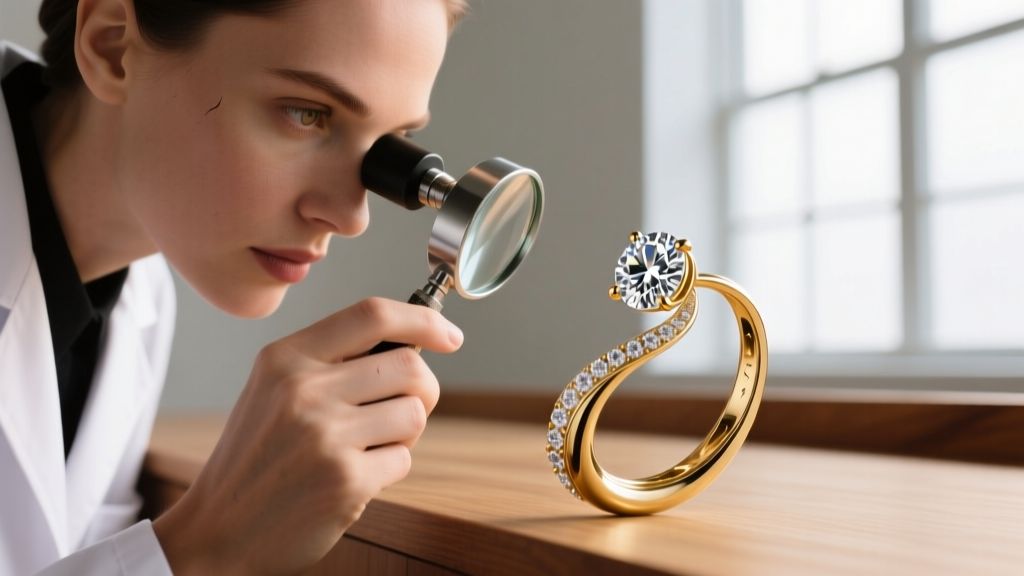
Owning kinetic earrings requires a shift in your jewelry maintenance routine. The most common complaint from owners is that the diamond "gets stuck" and stops dancing. This is rarely a mechanical failure and almost always a hygiene issue.
Because the clearance between the bail and the track is less than a millimeter, everyday substances like hand lotion, sunscreen, and even natural skin sebum will accumulate in the bottom curve of the track, acting like glue. Do not use ultrasonic cleaners. The high-frequency vibrations can force microscopic debris deeper into the clearance gap, permanently jamming the mechanism or causing the bail to scratch the interior of the gold track.
Instead, clean your dancing diamond earrings using a gentle steam cleaner or a soft baby toothbrush with warm water and a drop of mild dish soap. Gently brush the interior of the track while moving the diamond back and forth to dislodge any trapped oils. Dry thoroughly with a microfiber cloth.
The Verdict: Are They a Smart Investment?
From a purely financial and intrinsic standpoint, luxury dancing diamond earrings are not an "investment" in the traditional sense; the resale value will drop significantly the moment you leave the boutique, mirroring the 5x markup. However, value in jewelry is also measured by emotional resonance, design innovation, and daily wearability.
If you are drawn to the iconic status, the heavy 18k gold feel, and the specific aesthetic of a luxury designer piece, the premium is the cost of admission for that brand experience. But if your primary goal is to capture the mesmerizing, light-catching kinetic effect on your earlobes, the 2026 market offers incredible alternatives. By utilizing a trusted custom bench jeweler and opting for high-cut-grade lab-grown diamonds in 14k or 18k yellow gold, you can achieve the exact same visual magic, with a larger stone, for less than a third of the designer price.


