Engineering Dangle Bar Earrings: Gauge, Weight, and Metal Fatigue
Explore the structural engineering of dangle bar earrings. Learn about gauge sizing, weight distribution, hinge mechanics, and metal fatigue prevention.

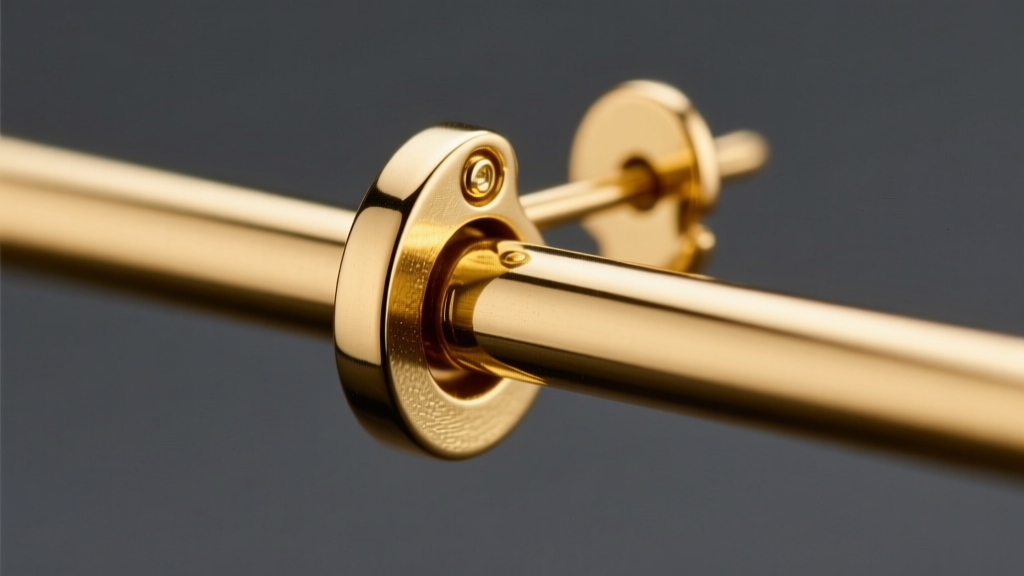
When evaluating fine jewelry, consumers often focus exclusively on gemstone clarity or precious metal purity. However, for kinetic jewelry—specifically dangle bar earrings—the structural engineering, metallurgy, and biomechanics of the design are far more critical to longevity and wearer comfort. A poorly engineered dangle bar will not only warp and snap under cyclic loading but can also cause irreversible tissue damage to the earlobe. This technical deep dive explores the physics, material science, and failure modes inherent in dangle bar earring design.
The Biomechanics of the Earlobe: Torque and Tissue Ptosis
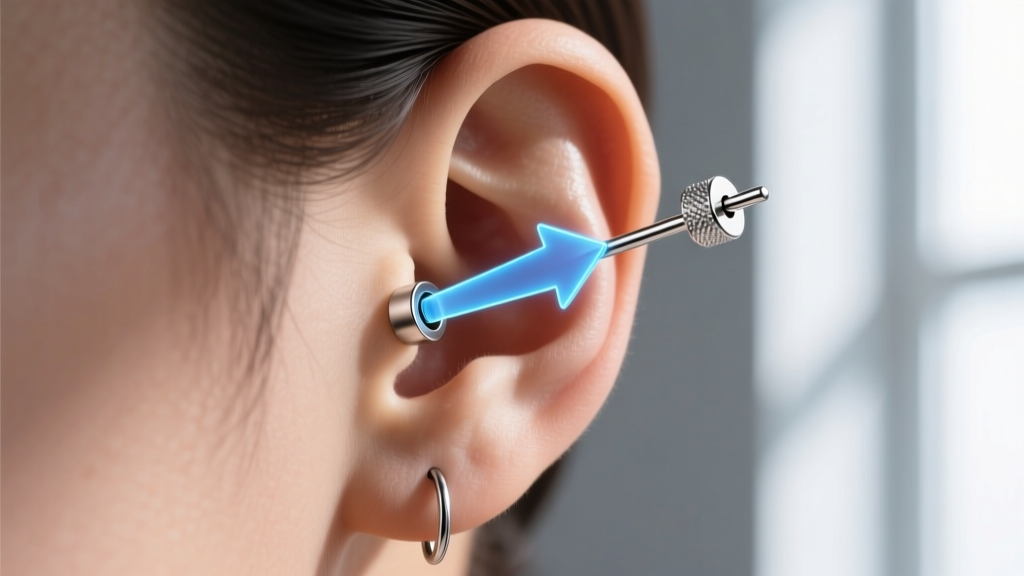
The human earlobe is devoid of cartilage, composed primarily of adipose (fat) tissue and dense fibrous connective tissue. When a dangle bar earring is worn, it acts as a lever. The fistula (the piercing hole) serves as the fulcrum, while the weight of the bar and its terminal embellishments generate a continuous downward torque vector.
Torque is calculated as Force multiplied by Distance. Therefore, a lightweight 50mm dangle bar exerts significantly more rotational force on the fistula than a heavy but compact 10mm drop earring. Over time, this continuous micro-tension causes the collagen fibers in the lobe to stretch and micro-tear, leading to a condition known as lobe ptosis (drooping) or fistula elongation. To mitigate this, expert jewelers employ counterweighting techniques, ensuring the center of mass rests as close to the earlobe as possible, or utilize wider, flatter ear wires that distribute the shear stress across a broader surface area of the tissue.
Gauge Sizing and Shear Stress Limits
The wire gauge of the ear hook or post is the primary determinant of a dangle bar earring's structural integrity. Standard lobe piercings are typically performed at 20-gauge (0.81mm) or 18-gauge (1.02mm). When designing or purchasing dangle bars, the gauge must be matched not just to the piercing size, but to the static and dynamic weight of the bar itself.
| Wire Gauge (AWG) | Thickness (mm) | Max Dangle Length | Max Static Weight | Primary Failure Risk |
|---|---|---|---|---|
| 22G | 0.64mm | 25mm | 2.5g | Shear deformation at the hook bend |
| 20G | 0.81mm | 40mm | 4.5g | Fistula elongation / tissue tearing |
| 18G | 1.02mm | 65mm | 8.0g | Metal fatigue at the jump ring |
| 16G | 1.29mm | 90mm+ | 14.0g | Clasp mechanism failure |
As noted by the Association of Professional Piercers (APP), exceeding these weight thresholds for prolonged periods accelerates tissue migration. For dangle bar earrings exceeding 50mm in length, upgrading the ear wire to 16-gauge or utilizing a specialized flat-back labret post with a threadless end is highly recommended to eliminate the lever effect entirely.
Metallurgy: Yield Strength and Cyclic Loading
Dangle bar earrings are subjected to continuous cyclic loading. Every time the wearer walks, turns their head, or removes a sweater, the bar swings, transferring kinetic energy into the metal's crystalline structure. This dynamic stress tests the material's yield strength and fatigue limit.
Material Comparison for Bar Connectors
- 316L VM Surgical Steel (ASTM F138): Offers high tensile strength and excellent corrosion resistance. However, its higher density makes long dangle bars uncomfortably heavy, increasing the torque on the earlobe.
- Implant-Grade Titanium (Ti6Al4V ELI, ASTM F136): The gold standard for kinetic jewelry. Titanium boasts a superior strength-to-weight ratio and a high fatigue limit, meaning it can endure millions of swing cycles without developing micro-fractures. It is also entirely nickel-free, preventing contact dermatitis.
- 14k vs. 18k Gold Alloys: Pure 24k gold is far too soft for dangle mechanisms. 14k gold (58.5% gold alloyed with copper, silver, and zinc) provides the necessary Vickers hardness for hooks and jump rings. 18k gold, while richer in color, is softer and more prone to bending under the lateral stress of a heavy dangle bar.
According to manufacturing guidelines published by the Gemological Institute of America (GIA), the specific alloy mix in karat gold drastically alters its work-hardening rate. Jewelers must carefully anneal (heat and cool) gold ear wires to relieve internal stresses before bending them into French hooks, otherwise, the metal will become brittle and snap.
Structural Failure Modes at the Connection Points
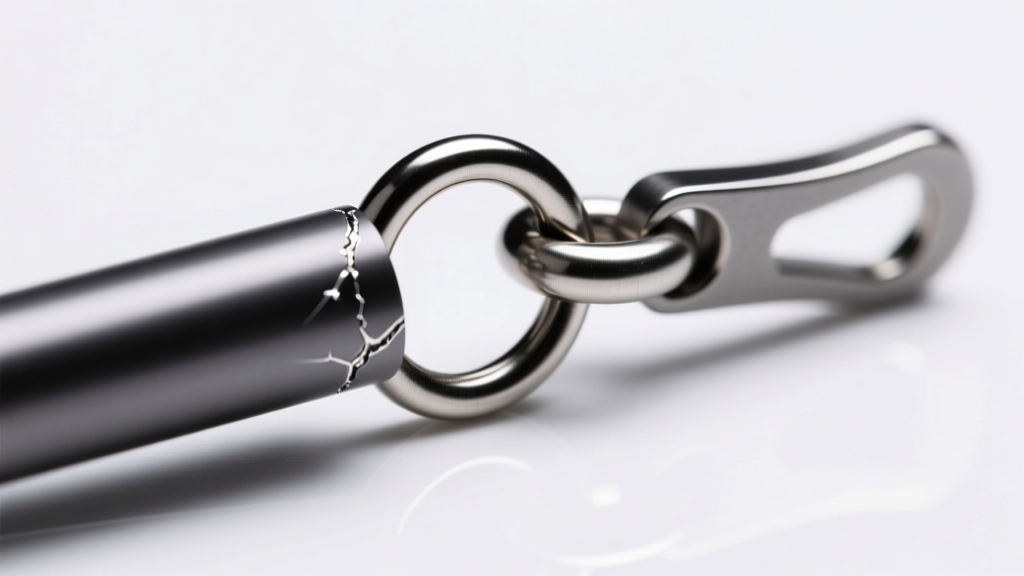
The most catastrophic failure point on any dangle bar earring is the connection joint—typically a jump ring linking the ear wire to the vertical bar.
Unsoldered vs. Laser-Welded Joints
Mass-produced dangle bars frequently utilize unsoldered jump rings. Under lateral stress, the gap in an unsoldered ring will pry open, resulting in the immediate loss of the earring. High-end structural jewelry employs laser-welded jump rings or solid D-rings. Laser welding provides a localized, high-heat fusion that penetrates the entire cross-section of the wire without annealing the surrounding work-hardened metal, preserving the structural integrity of the joint.
The Work Hardening Phenomenon
When a dangle bar is repeatedly bent or caught on clothing, the metal undergoes plastic deformation. This causes dislocations in the metal's crystal lattice to pile up, a process known as work hardening. While work hardening increases the metal's yield strength, it drastically reduces its ductility. Eventually, the bar or hook becomes entirely brittle and will experience a sudden, catastrophic snap without prior warning. This is why straightening a severely bent 18k gold dangle bar at home is ill-advised; the metal must be professionally annealed to restore its ductility.
The Engineer’s Purchasing Framework
When sourcing or designing dangle bar earrings that will endure daily wear without compromising the earlobe, apply the following technical checklist:
- Verify the Joint: Inspect the jump ring under a 10x jeweler's loupe. If a seam is visible and not fused, reject the piece for daily wear.
- Calculate the Lever Arm: If the vertical bar exceeds 45mm, ensure the ear wire is at least 18-gauge, or opt for a leverback clasp that grips a wider surface area of the lobe.
- Demand Material Certifications: For titanium pieces, request ASTM F136 certification to ensure you are receiving ELI (Extra Low Interstitial) implant-grade alloy, not commercially pure Grade 2 titanium, which lacks the necessary fatigue resistance.
- Assess the Center of Gravity: Hold the earring by the top of the hook. If the bar swings wildly forward, the design lacks a rear counterweight and will pull the fistula forward, causing chronic irritation.
By treating jewelry not merely as decoration, but as a micro-engineered mechanical system, collectors and designers can ensure their dangle bar earrings remain both structurally sound and biologically harmonious for decades.


