Dangle Square Earrings: 2026 Geometric Trend & Style Guide
Discover the 2026 trend of dangle square earrings. Explore geometric styling, face-shape matching, and material guides for modern drop designs.

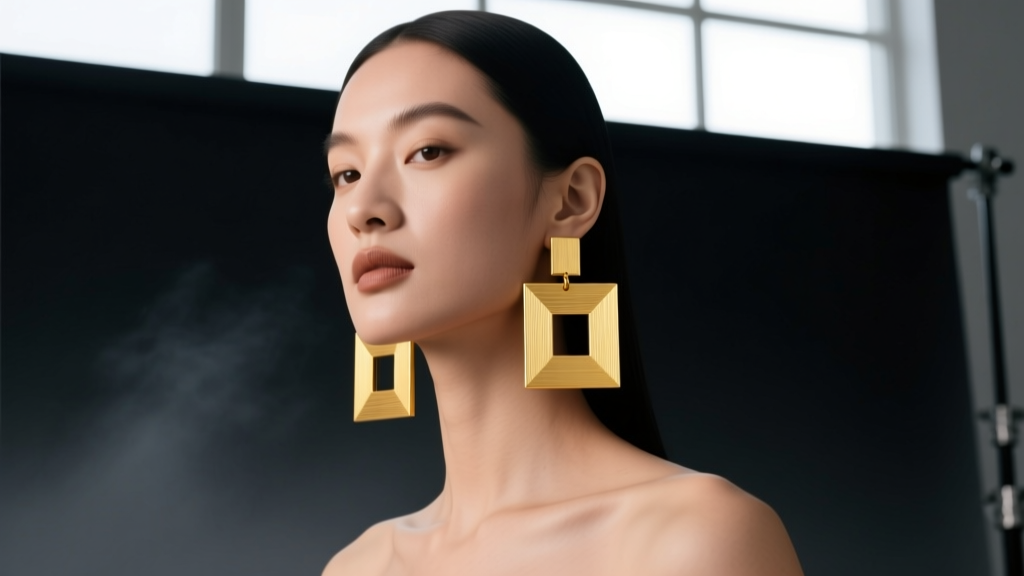
The jewelry landscape of 2026 has decisively pivoted away from the fluid, molten-metal silhouettes that dominated the early 2020s. In their place, a structured, architectural renaissance has taken hold of the earwear market. At the forefront of this movement are dangle square earrings, a design category that merges the kinetic energy of drop earrings with the unapologetic geometry of brutalist and neo-Art Deco aesthetics. For style enthusiasts and collectors alike, understanding the nuances of this trend—from biomechanical weight distribution to face-shape architecture—is essential for mastering the modern ear curation.
The 2026 Geometric Revival: Why Square Dangles Are Dominating
According to industry analysts at JCK Online, the consumer shift toward geometric earwear is driven by a broader cultural desire for structure and precision in an increasingly chaotic digital world. Dangle square earrings offer a sharp, deliberate silhouette that frames the face with mathematical intention. Unlike circular hoops or organic teardrops, the hard 90-degree angles of a square drop demand attention and project a sense of modern authority.
The sweet spot for 2026’s most coveted square dangles lies in specific dimensional ratios. Designers are favoring drops that measure between 1.5 inches and 2.2 inches in total length, featuring square faces that are 0.75 inches to 1 inch wide. This proportion ensures the earring is substantial enough to be noticed from a distance, yet streamlined enough to avoid catching on high-collared garments or scarves.
Material Innovations: Beyond Standard Gold and Silver
The geometric nature of square dangles requires materials that can hold a crisp edge without warping. Furthermore, because the visual weight of a square is inherently "heavier" than a circle of the same volume, material density plays a critical role in wearability. Below is a breakdown of the premier materials driving the 2026 square dangle market.
| Material | Density (g/cm³) | Best Finish for 2026 | Avg. Price Tier | Hypoallergenic |
|---|---|---|---|---|
| Titanium (Grade 23) | 4.43 | Matte / Sandblasted | $80 - $250 | Yes |
| Recycled Brass | 8.45 | High Polish / Patina | $40 - $120 | No (Requires coating) |
| 14k Yellow Gold | 12.91 | Brushed / Satin | $600 - $1,400 | Yes |
| Niobium | 8.57 | Anodized (Dark Grey) | $60 - $180 | Yes |
Grade 23 Titanium (Ti-6Al-4V) has emerged as a hero material for oversized square dangles. Its exceptionally low density allows designers to create chunky, 1-inch solid square drops that weigh less than 3 grams per earring, completely eliminating lobe fatigue. For those investing in precious metals, 14k gold remains the standard, but 2026 trends heavily favor brushed or satin finishes over high-polish, as the matte texture absorbs light and emphasizes the sharp, architectural edges of the square.
Biomechanics of the Dangle: Hinge vs. Fixed Drops
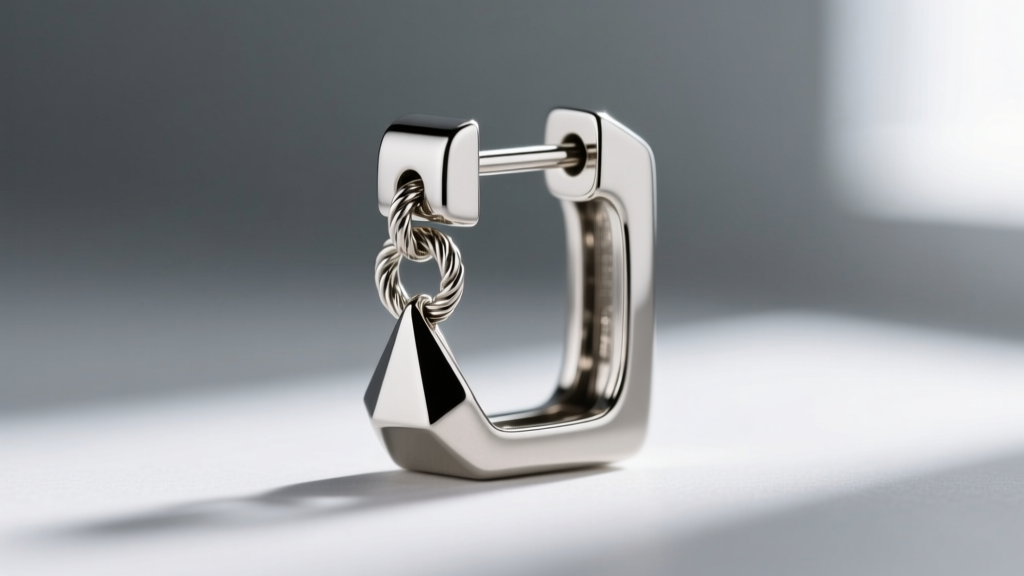
Not all dangle square earrings are engineered equally. The physics of how a square hangs from the earlobe dictates both its comfort and its visual impact. There are two primary engineering methods used in modern square drops:
1. The Fixed Drop (Rigid Connection)
In a fixed drop design, the square element is soldered directly to the bottom of the ear wire or post. While this offers a sleek, continuous line, it presents a major visual flaw: as the wearer moves, the earring rotates, frequently showing the thin side-profile of the square rather than the broad face. Additionally, rigid square drops are prone to "corner-snagging" on clothing.
2. The Hinged Drop (Kinetic Connection)
The superior engineering choice for 2026 is the hinged square drop. By utilizing a 2mm micro-jump ring or a hidden horizontal bail, the square face hangs freely. Gravity naturally pulls the widest, heaviest part of the square downward, ensuring the geometric face remains forward-facing and parallel to the jawline. This kinetic movement also prevents the earring from pulling aggressively on the piercing hole during sudden head movements.
Gauge and Post Thickness Considerations
Standard earlobe piercings are typically 20G (0.81mm) or 18G (1.02mm). When wearing heavy dangle square earrings—especially those crafted from dense metals like solid brass or 14k gold—an 18G post is mandatory. Using a thin 20G or 22G wire with a heavy square drop will result in the "cheese-cutter effect," where the wire slowly migrates downward through the lobe tissue, causing micro-tears and permanent stretching. Always pair heavy square dangles with silicone O-ring backs or heavy-duty friction backs featuring a 6mm support pad to distribute the weight across a wider surface area of the earlobe.
Face Shape Architecture: Styling Square Dangles
Because squares introduce harsh, definitive lines to the face, styling them requires an understanding of facial architecture. The goal is either to harmonize with the wearer's natural bone structure or to provide a deliberate, striking contrast.
- Round Faces: Avoid perfectly symmetrical 1:1 ratio squares (e.g., 1" x 1"). Instead, opt for elongated rectangular-square dangles (e.g., 0.5" x 1.5"). The verticality draws the eye downward, creating an illusion of length and slimming the cheekbones.
- Square Faces: Wearing sharp square dangles can over-emphasize a strong, angular jawline. To soften this, look for squares with chamfered (beveled) edges, or designs that feature a circular gemstone inlay in the center of the square to break up the harsh geometry.
- Heart-Shaped Faces: Heart faces are characterized by a wider forehead and a narrow, pointed chin. Chunky, wide square dangles (1" x 1" or larger) that terminate exactly at the jawline are ideal. They add necessary visual weight and width to the lower third of the face, balancing the proportions.
- Oval Faces: The universal canvas. Oval faces can pull off virtually any iteration of the dangle square earring, from minimalist wire-frame squares to heavy, solid brutalist blocks.
Gemstone Inlays: Adding Depth to the Geometry
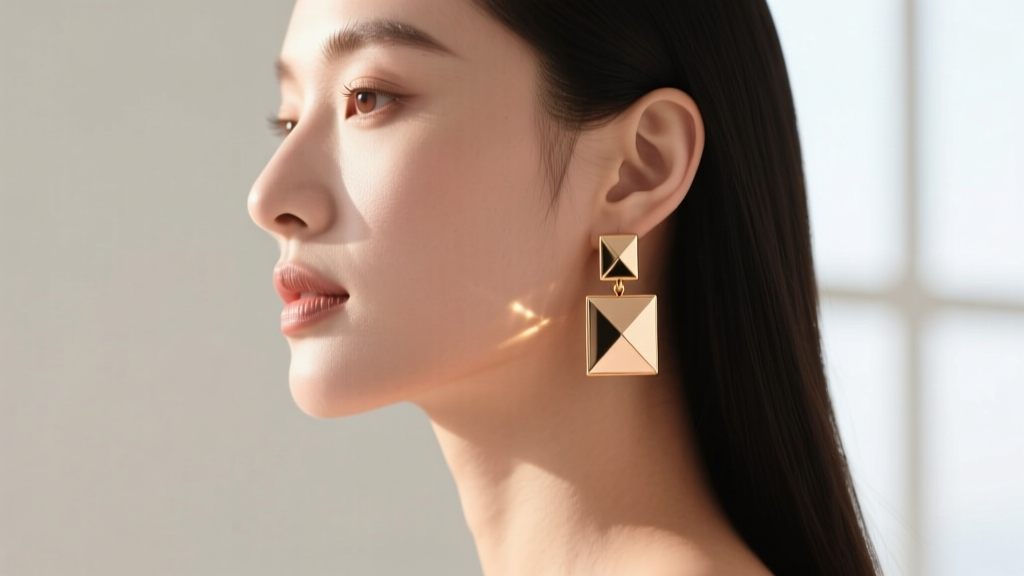
The flat, expansive surface of a square drop serves as the perfect canvas for gemstone inlay work. In 2026, the trend has moved away from faceted, light-reflecting diamonds and sapphires in favor of opaque, cabochon-cut stones that emphasize color blocking. Black onyx, deep green malachite, and vibrant lapis lazuli are currently dominating the luxury square dangle market.
However, when selecting gem-inlaid square dangles, one must consider the Gemological Institute of America (GIA) Mohs scale of hardness. Because the corners of square earrings are highly susceptible to micro-impacts (bumping against phones, mirrors, or desks), stones with a Mohs hardness below 6 (such as turquoise or opal) are prone to chipping at the edges. For daily-wear square dangles, insist on onyx (Mohs 7) or lapis lazuli (Mohs 5.5-6) set in bezels with slightly recessed edges to protect the stone's perimeter.
"The modern consumer views geometric earwear not just as an accessory, but as structural framing for the face. The precision required to cast a flawless, sharp-cornered square drop in gold requires advanced CAD hollow-form techniques, reducing weight by up to 40% without sacrificing the visual footprint." — Senior CAD Jewelry Designer, 2026 Manufacturing Report
Curating Your Collection: Price Tiers and Sourcing
Whether you are entering the market at the accessible tier or investing in heirloom pieces, the dangle square earring category offers diverse entry points:
The Accessible Tier ($40 - $120): Look for PVD-coated stainless steel or recycled brass. Brands in this tier often utilize stamping techniques rather than casting, resulting in lightweight, hollow-back squares. Ensure the edges are tumbled to remove sharp burrs that can scratch the neck.
The Artisan Tier ($200 - $500): This is where you find hand-forged titanium, anodized niobium, and small-batch sterling silver. Artisans often introduce hand-hammered textures onto the square faces, creating a beautiful juxtaposition between the rigid outer silhouette and the organic, light-catching interior.
The Fine Jewelry Tier ($800+): Solid 14k or 18k gold, often featuring intricate enamel work (guilloché) or precision-cut gemstone inlays. At this level, expect seamless hinge mechanics and custom-engineered ear nuts designed specifically to support the weight of the geometric drop.
Final Verdict on the Square Dangle Movement
Dangle square earrings represent a maturation of contemporary jewelry design. They reject the overly casual, unstructured trends of the past decade in favor of intentionality, precision, and bold architectural statements. By paying close attention to the biomechanics of the hinge, the density of the chosen metal, and the specific dimensional ratios that flatter your unique facial structure, you can seamlessly integrate this defining 2026 trend into your permanent jewelry rotation.


