Dangle Stud Earrings Buying Guide: What to Look For in 2026
Explore our 2026 dangle stud earrings buying guide. Learn about gauge sizes, locking backings, jump ring mechanics, and weight distribution.

The Anatomy and Physics of Dangle Stud Earrings
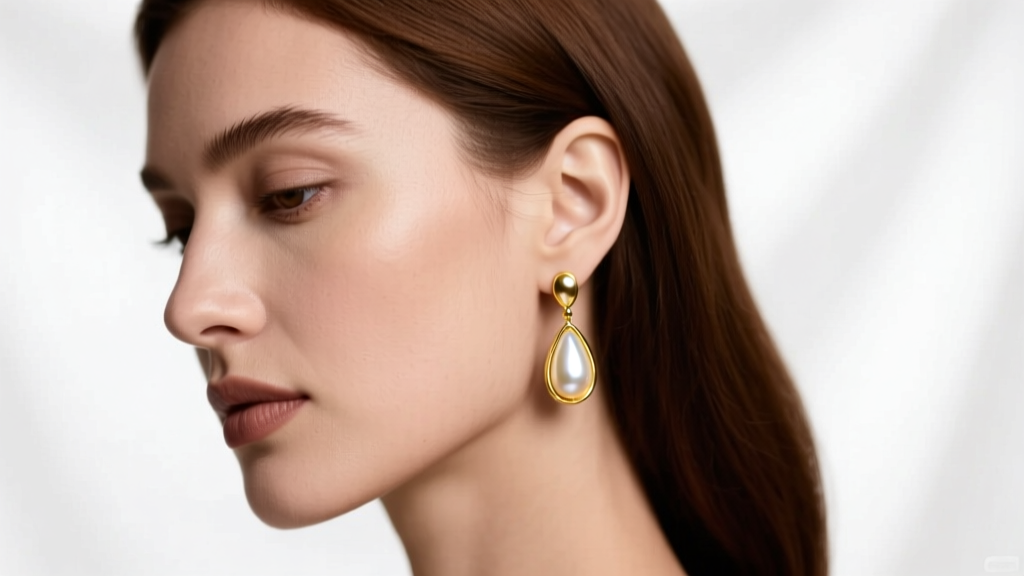
The term 'dangle stud earrings' refers to a highly specific hybrid design: an earring that utilizes a traditional stud post piercing through the earlobe, but features a dangling or dropping element suspended from or attached directly to that stud base. Unlike wire hooks or lever-backs that rely on the curve of the wire for security, dangle studs offer the unmatched stability of a post-and-clutch system combined with the kinetic movement of a drop earring.
When shopping for dangle stud earrings in 2026, understanding the physics of this design is critical. The primary challenge jewelry designers face is the center of gravity. If the dangling element hangs too far below the piercing hole without adequate support, the earring will 'droop' forward, pointing toward the floor rather than resting flush against the earlobe. High-quality dangle studs counteract this by utilizing wider stud bases, integrated hinge mechanisms, or 'jacket' designs that sit behind the earlobe to distribute weight evenly.
The 'Cheese-Cutter' Effect: Why Post Gauge Matters
One of the most overlooked aspects of buying drop or dangle earrings is the post thickness, measured in gauges. Standard stud earrings are typically 20-gauge (0.81mm). However, when you add the kinetic weight of a dangle component—especially those featuring gemstones, pearls, or solid gold drops—the downward pull increases significantly.
A thin 20-gauge post supporting a heavy dangle will create a 'cheese-cutter effect,' where the thin metal slowly slices through the earlobe tissue, causing discomfort, elongation of the piercing hole, and eventual tearing. For any dangle stud earring weighing more than 3 grams, you must look for an 18-gauge (1.02mm) or even a 16-gauge (1.29mm) post. According to the Association of Professional Piercers (APP), thicker posts are essential for maintaining tissue health when wearing weighted jewelry.
Weight-to-Gauge Ratio Guidelines
- Under 2 grams: 20-gauge (0.81mm) is safe for all-day wear.
- 2 to 4 grams: 18-gauge (1.02mm) is highly recommended to prevent lobe fatigue.
- Over 4 grams: 16-gauge (1.29mm) or hollow-tube structural posts are required.
Backing Mechanisms: Securing the Drop
The backing (or clutch) is the only thing keeping your expensive dangle stud earrings from falling out and getting lost. Standard 'butterfly' push-backs rely on friction and tension, which easily degrades over time. When a dangle earring swings, it creates lateral torque that slowly wiggles a standard friction back off the post.
The La Pousette and Screw-Back Advantage
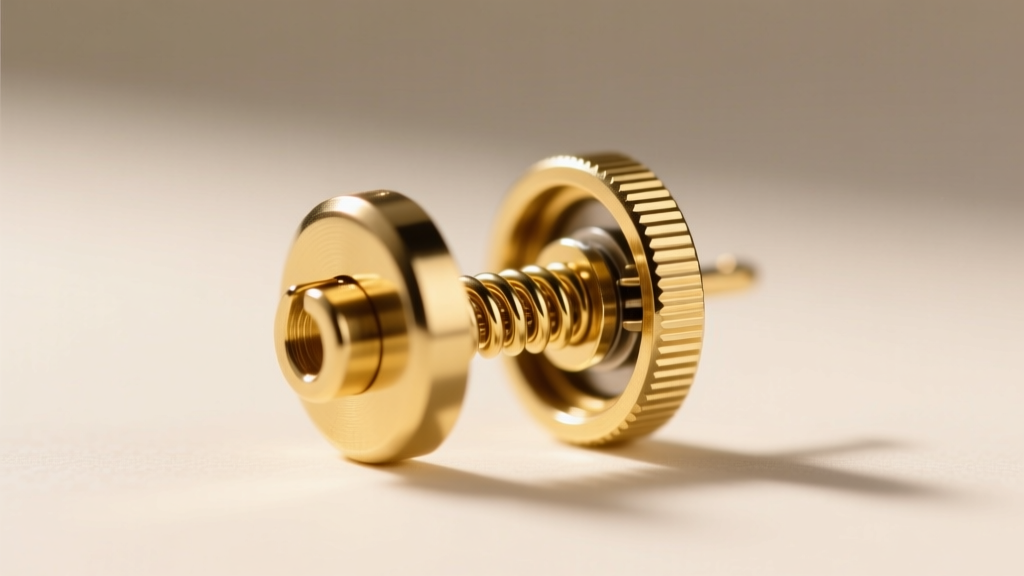
For dangle studs, you should exclusively seek out La Pousette backings or screw-backs. A La Pousette back features a tiny internal spring mechanism with dual side-tabs. When you push it onto the post, the tabs lock securely into a grooved notch on the post itself. It cannot be pulled off; it must be pinched to release. Screw-backs, which thread onto a grooved post, offer similar security. If a retailer only offers standard butterfly backs for heavy dangle studs, consider it a red flag regarding their structural engineering.
Earring Backing Security Chart for Dangles
| Backing Type | Security Level | Torque Resistance | Best For |
|---|---|---|---|
| Standard Butterfly (Friction) | Low | Poor | Lightweight micro-studs only |
| Silicone O-Rings | Medium | Fair | Temporary security, casual wear |
| Screw-Back (Threaded) | High | Excellent | Medium-weight dangles, active days |
| La Pousette (Locking Clutch) | Very High | Superior | Heavy dangles, high-value gems |
The Weakest Link: Jump Ring and Hinge Mechanics
In a dangle stud earring, the connection point between the stud base and the hanging element is the most common failure point. This connection is usually a jump ring or a micro-hinge.
Never buy dangle earrings with unsoldered split jump rings. A split ring (like a tiny keyring) will eventually catch on hair or clothing and pull open, causing the dangle to detach and be lost forever. High-end jewelers use soldered jump rings, where the seam is fused shut with laser or torch welding. If the design uses a hinge, ensure it features a secure snap-clasp or a tension pin that requires a deliberate push to open. Inspect the connection point with a jeweler's loupe or macro camera on your phone before purchasing.
Material Grades for Longevity and Hypoallergenic Needs
Because dangle earrings experience constant movement, the friction at the post and hinge points can quickly wear away cheap plating. Avoid 'gold-plated brass' or 'vermeil' for everyday dangle studs if you want longevity. The friction will expose the base metal within months, leading to tarnishing and allergic reactions.
Instead, look for solid metals. The Jewelers of America recommends solid 14k or 18k gold for fine jewelry longevity. For those with severe metal sensitivities, ASTM F136 implant-grade titanium is the gold standard. It is completely nickel-free, lightweight (reducing the overall weight of the dangle), and highly resistant to corrosion. Niobium is another excellent, lightweight alternative for hypoallergenic dangle bases.
The 2026 Trend: Convertible Dangle Jackets
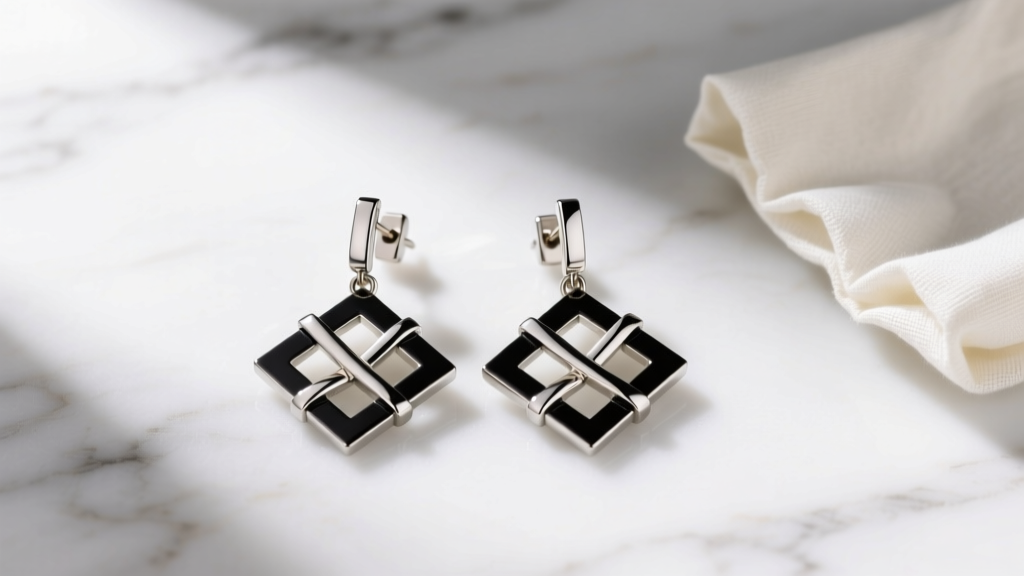
A massive trend dominating the 2026 jewelry market is the convertible dangle jacket. These ingenious designs feature a standard stud that passes through the earlobe, while the 'dangle' portion actually attaches to the post from the back of the ear, framing the lower lobe. The primary benefit is modularity: you can wear the front stud alone for a minimalist look, or slide the dangle jacket onto the post for evening wear. When buying convertible jackets, ensure the post is long enough (usually 11mm or 12mm) to accommodate both the earlobe thickness and the jacket's backing tube.
Face Shape Proportions and Styling
The length and volume of the dangle element should be chosen to complement your facial structure:
- Round Faces: Opt for long, linear dangle studs that drop below the jawline. The vertical lines create an elongating illusion, slimming the face.
- Square Faces: Choose dangles with curved, teardrop, or oval elements. The soft curves offset strong, angular jawlines.
- Heart-Shaped Faces: Look for dangles that are wider at the bottom (like chandeliers or inverted triangles) to add visual weight to a narrower chin.
- Oval Faces: Almost any dangle length works, but medium-length geometric drops highlight the natural symmetry of the face.
Final Buying Checklist
Before finalizing your purchase, run the earrings through this expert checklist:
- Is the post at least 18-gauge if the earring feels heavy?
- Does it utilize a La Pousette, screw-back, or secure locking mechanism?
- Are all jump rings connecting the dangle fully soldered shut?
- Is the metal solid (14k/18k gold, platinum, or ASTM F136 titanium) rather than thinly plated?
- Does the center of gravity allow the stud to sit flush without drooping forward?
By prioritizing structural engineering and material integrity over fleeting fast-fashion designs, you will secure a pair of dangle stud earrings that offer both kinetic beauty and lifelong wearability.


