Earring Boxes: Expert Storage and Maintenance Guide
Discover expert tips on cleaning, organizing, and preserving your collection using the right earring boxes to prevent tarnish and damage.

The Hidden Chemistry of Earring Degradation
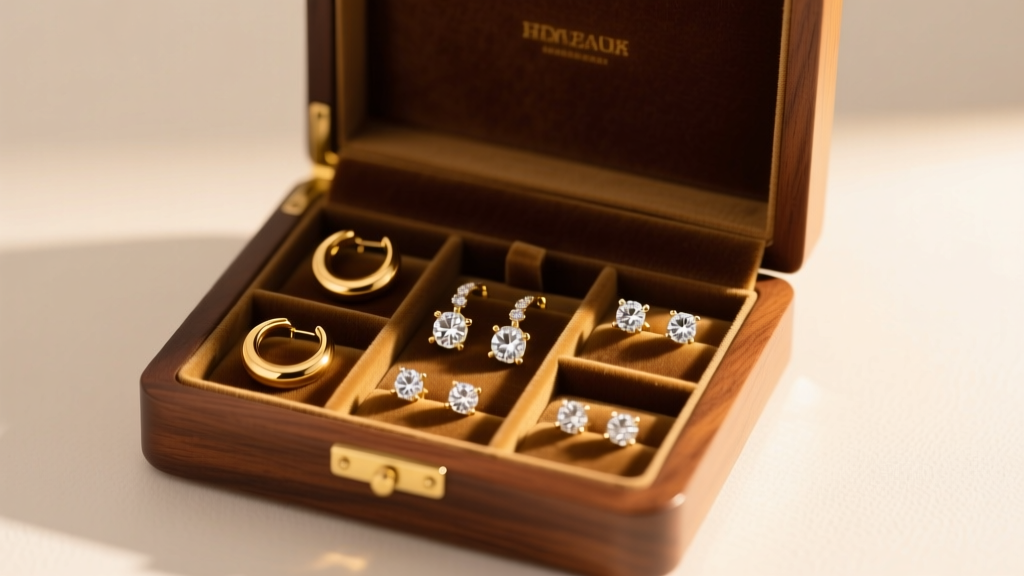
Many jewelry enthusiasts view earring boxes merely as decorative containers or gift packaging. However, from a metallurgical and gemological perspective, your storage environment is the primary defense against chemical degradation, micro-abrasions, and structural warping. Sterling silver, for instance, does not tarnish from oxygen; it reacts with hydrogen sulfide in the ambient air to form silver sulfide, a dull black layer. Similarly, the copper and zinc alloys present in 14k and 18k gold can oxidize or develop surface spotting when exposed to the volatile organic compounds (VOCs) off-gassed by cheap synthetic storage materials.
Investing in high-quality earring boxes is not just about aesthetics; it is a critical maintenance protocol. According to the Gemological Institute of America (GIA), improper storage is one of the leading causes of preventable damage to fine jewelry, resulting in scratched gemstone girdles and bent earring posts. This guide breaks down the exact materials, cleaning protocols, and organizational frameworks required to preserve your collection in pristine condition.
Decoding Earring Box Materials: What Actually Protects Your Metals?
The interior lining and structural plastics of your earring boxes dictate the chemical microclimate surrounding your jewelry. Many mass-market organizers use materials that actively accelerate tarnishing. Below is a breakdown of common materials and their chemical compatibility with fine metals.
| Material | Chemical Properties | Best For | Verdict |
|---|---|---|---|
| Polyethylene (PE) | Chemically inert, non-off-gassing, moisture-resistant. | Long-term archival storage, humid climates. | Excellent |
| Polyvinyl Chloride (PVC) | Emits hydrogen chloride gas and sulfur-based plasticizers over time. | None. Avoid entirely. | Toxic to Metals |
| Pacific Silvercloth | Cotton flannel embedded with microscopic silver particles that trap H2S gases. | Sterling silver hoops, studs, and ear cuffs. | Superior |
| Acid-Free Cardboard | Neutral pH (7.0), prevents acid migration that causes metal pitting. | Custom inserts, travel earring boxes. | Very Good |
| Standard Synthetic Velvet | Often dyed with sulfur-based compounds; traps dust and moisture. | Short-term display only. | Poor |
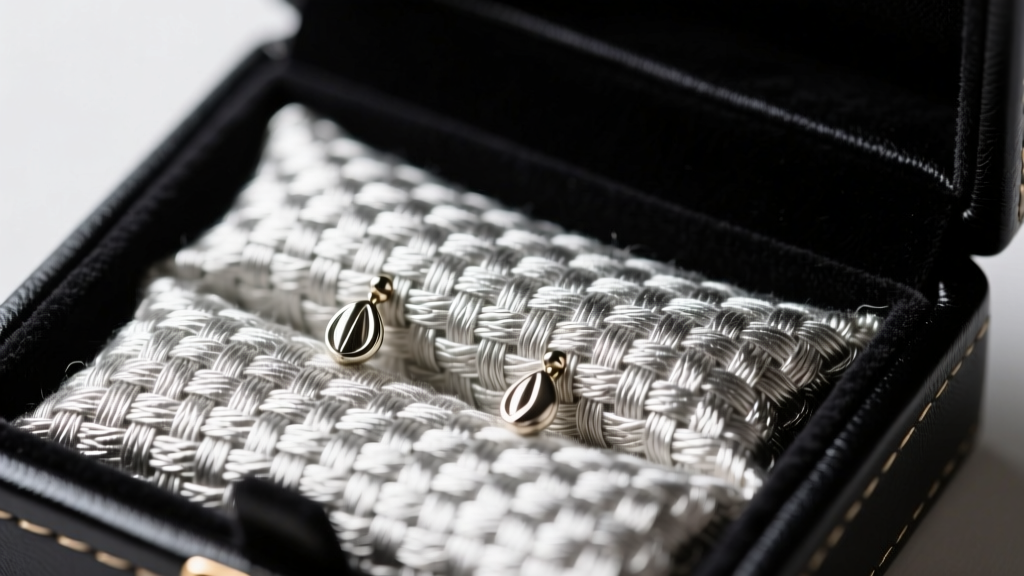
When selecting earring boxes, always inspect the packaging for 'archival quality' or 'acid-free' certifications. The American Institute for Conservation strongly recommends inert plastics like polyethylene or polypropylene for long-term artifact and jewelry storage, as they do not degrade into corrosive acids like PVC or cellulose acetate.
Pre-Storage Cleaning Protocols by Metal Type
Never place worn earrings directly into your earring boxes. Sebum, dead skin cells, cosmetic residues, and environmental pollutants create an acidic film that will etch metals and dull gemstones over time. Before storage, execute a targeted cleaning protocol based on your earring's composition.
14k/18k Gold and Platinum
Use a solution of lukewarm distilled water and a few drops of phosphate-free dish soap (such as Dawn). Distilled water is crucial; tap water contains chlorine and dissolved minerals that can leave microscopic calcium deposits on high-polish finishes. Soak for 10 minutes, gently agitate with a baby-soft toothbrush, and dry completely with a lint-free microfiber cloth. Ensure the earring posts and clutch backs are bone-dry before placing them in the box to prevent trapped moisture.
Sterling Silver and Oxidized Finishes
For standard polished silver, use a dedicated silver polishing cloth impregnated with jeweler's rouge. Never use liquid silver dips on earrings with porous gemstones like turquoise, opals, or pearls, as the thiourea chemicals in dips will permanently ruin the stone's luster. For intentionally oxidized (blackened) silver earrings, skip the polishing cloth and use only a mild soap wash to preserve the darkened recesses.
The Ultrasonic Cleaner Exception
While ultrasonic cleaners operating at 40-45 kHz are excellent for removing debris from diamond stud settings and intricate filigree hoops, they are catastrophic for fracture-filled diamonds, emeralds, and enamel work. Always remove gemstone earrings before ultrasonic cleaning and only use the machine for solid metal bands and huggies.
Strategic Organization: Preventing Structural Damage
The physical architecture of your earring boxes must accommodate the specific mechanics of different earring styles. Tangled chains and bent posts are the direct result of poor spatial planning.
- Stud Earrings (18g to 20g posts): Store studs in designated perforated pads or individual shallow slots. Forcing a 20-gauge (0.81mm) post into a tight, unyielding slit will warp the metal, making it painful to insert into the ear lobe later. Always secure the backing, but leave a millimeter of breathing room on the post.
- Huggies and Hoops: These require vertical clearance. Store them laid flat in shallow, wide compartments rather than hanging them, which can put stress on the hinge mechanisms and weaken the solder joints over time.
- Dangle and Drop Earrings: Use earring boxes with deep, partitioned wells or specialized hanging hooks. If using a flat box, lay the drop parallel to the stud back, ensuring the chain or wire does not cross over the primary post to avoid kinking.
- Ear Cuffs and Climbers: These lack standard posts and are prone to scratching other pieces. Dedicate a specific, soft-lined zone in your box exclusively for non-pierced and cartilage jewelry.
Environmental Controls: Managing Humidity and Airflow
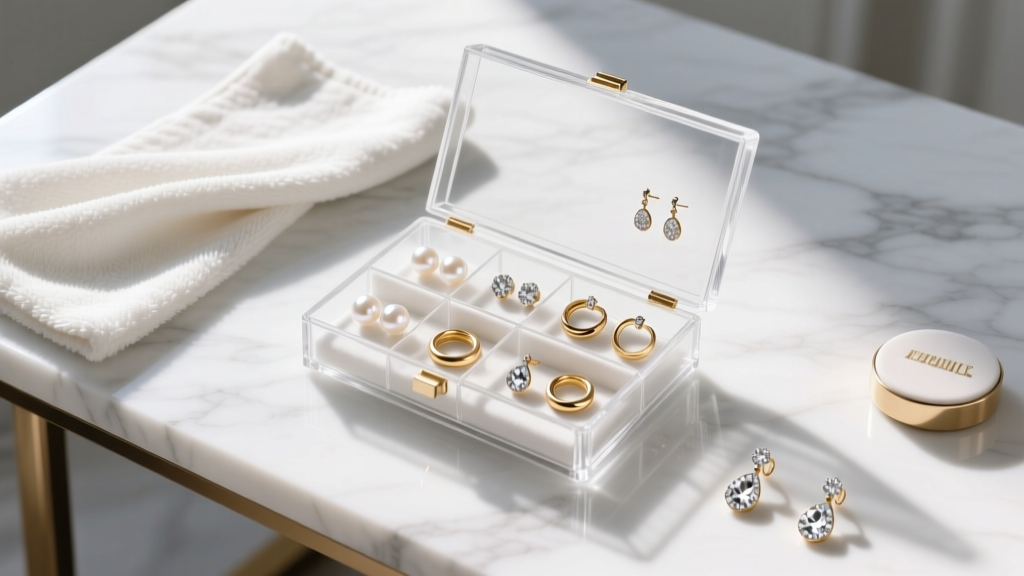
Even the best earring boxes cannot combat high ambient humidity without environmental interventions. Moisture acts as a catalyst for both tarnishing and the degradation of pearl nacre. To maintain an optimal microclimate inside your storage boxes, implement the following controls:
Pro Tip: Never store your earring boxes in the bathroom. The rapid fluctuations in temperature and humidity from showers create a condensation cycle that will rapidly accelerate silver sulfide formation and degrade adhesive gemstone settings.
Silica Gel vs. Activated Charcoal
Include small packets of indicating silica gel (which changes color when saturated) inside the main compartments of your earring boxes. Silica gel adsorbs moisture but does not remove airborne sulfur compounds. For comprehensive protection, pair silica gel with 3M Anti-Tarnish Strips. These strips utilize a copper-based polymer that chemically binds to sulfur and chlorine gases, neutralizing them before they reach your jewelry. Replace these strips every six months for maximum efficacy.
Troubleshooting Common Storage Failures
Despite meticulous care, issues can arise. If you open your earring boxes and notice a chalky white residue on your sterling silver, this is likely aluminum oxide or zinc oxide migration from cheap earring backs or friction clasps. Always upgrade to solid 14k gold, platinum, or medical-grade titanium friction backs and butterfly clasks. If your gold earrings appear 'spotty' or dull, inspect the interior velvet of your box; degraded synthetic dyes can transfer onto porous gold alloys. In such cases, discard the lining and replace it with acid-free tissue paper or polyethylene foam.
Ultimately, treating your earring boxes as active preservation tools rather than passive drawers will drastically extend the lifespan, brilliance, and structural integrity of your jewelry collection. By controlling the chemical environment, executing proper pre-storage cleaning, and organizing by structural vulnerability, you ensure every piece remains ready to wear at a moment's notice.


