Deer Earrings Buying Guide 2026: Budget & Value Check
Discover if deer earrings are worth the price. Our 2026 value guide compares base metals, silver, and gold options to help you buy smart.

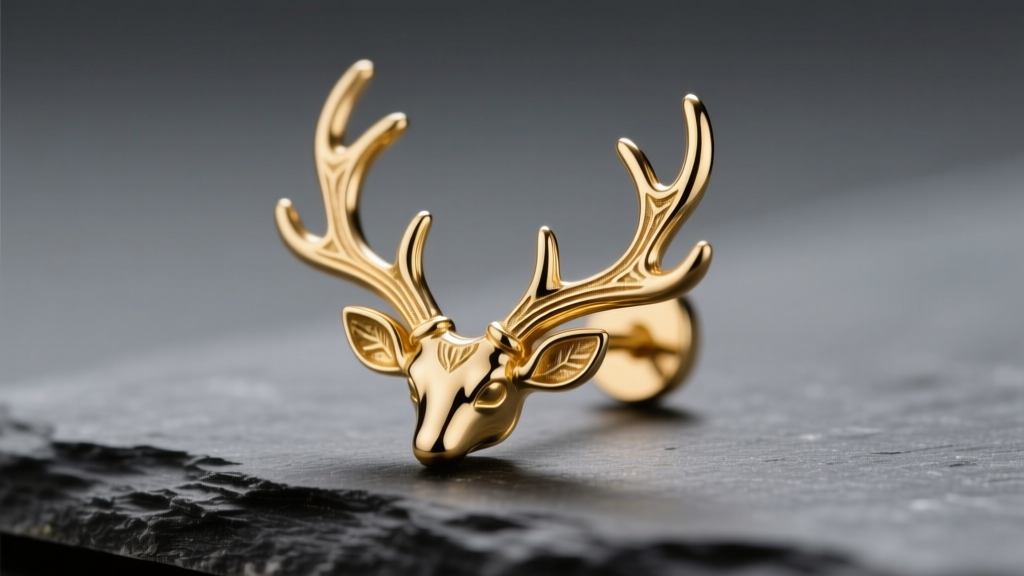
The Allure of Nature-Inspired Jewelry: Why Deer Motifs?
Nature-inspired jewelry has maintained a dominant position in the accessories market for decades, but deer earrings occupy a unique niche. Symbolizing grace, intuition, and a deep connection to the forest, these motifs range from delicate antler studs to intricate fawn silhouettes. However, as we navigate the 2026 jewelry market, the aesthetic appeal of woodland motifs often masks vast discrepancies in metallurgical quality and structural integrity.
When assessing the true value of deer-themed ear adornments, consumers must look past the romanticized design and scrutinize the underlying materials. A $15 pair of die-stamped brass fawns and a $600 pair of lost-wax cast 14k gold antlers may share a visual silhouette, but their cost-per-wear, allergy risks, and longevity are worlds apart. This comprehensive budget and value assessment breaks down exactly what you are paying for across the three primary pricing tiers.
Material Breakdown: What You Are Actually Paying For
The price of deer earrings is rarely dictated by the complexity of the design alone; it is fundamentally anchored in the base metal, the plating thickness, and the casting method. Here is how the market segments these pieces in 2026.
Tier 1: Fast Fashion & Plated Base Metals ($12 - $35)
At the entry level, deer earrings are typically mass-produced using die-stamping or basic rubber mold casting. The base metals are usually brass, copper, or zinc alloys, finished with a "flash plating" of gold or rhodium.
- Plating Thickness: Usually between 0.1 and 0.5 microns. This microscopic layer wears off rapidly, often within 3 to 6 months of regular wear.
- Failure Modes: The most common issue is copper oxidation. When the plating breaches, your skin's natural acidity reacts with the copper base, leaving a green residue on your earlobes. Furthermore, the posts are often a flimsy 22-gauge (0.64mm), making them highly prone to bending when inserted into the ear.
- Design Limitations: Intricate antler tines are often blurred or poorly defined due to the limitations of cheap rubber molds.
Tier 2: Solid Sterling Silver & Enamel ($45 - $140)
Stepping into the mid-tier, 925 sterling silver becomes the standard. This tier frequently incorporates color through enamel work to depict fawn spots or autumn foliage accents.
- Material Integrity: Solid 925 silver is hypoallergenic for the vast majority of wearers, eliminating the risk of nickel-induced contact dermatitis. Posts are generally a sturdy 20-gauge (0.81mm) or 18-gauge (1.02mm).
- Enamel Types: Pay close attention to the coloring technique. Cold enamel (epoxy resin) is cheaper but will yellow after 2-3 years of UV exposure. Vitreous enamel (fired glass) is permanent and vibrant but can shatter if dropped on a hard tile surface.
- Failure Modes: Sterling silver is a relatively soft metal. Intricate, spindly antler branches on silver dangles can easily snap if caught on a sweater or hairbrush.
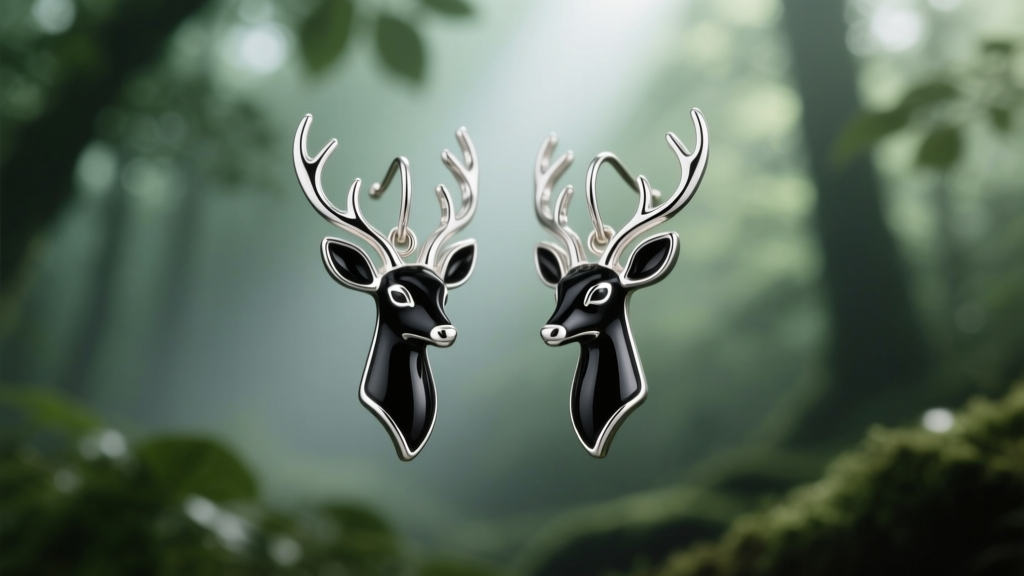
Tier 3: Solid Gold & Ethical Gemstones ($280 - $850+)
Fine jewelry iterations of deer earrings utilize solid 14k or 18k gold, employing the ancient lost-wax casting method. This allows for breathtaking 3D depth, capturing the exact bark-like texture of antlers and the organic curves of woodland leaves.
- Structural Superiority: Gold alloys (mixed with copper, silver, or zinc for hardness) provide immense tensile strength. Delicate antler tips can be cast incredibly thin without sacrificing durability.
- Stone Setting: High-end pieces often feature micro-pavé melee diamonds (typically SI clarity, G-H color) set along the antler ridges. Because the prongs are solid gold, the risk of stone loss is drastically reduced compared to silver or plated alternatives.
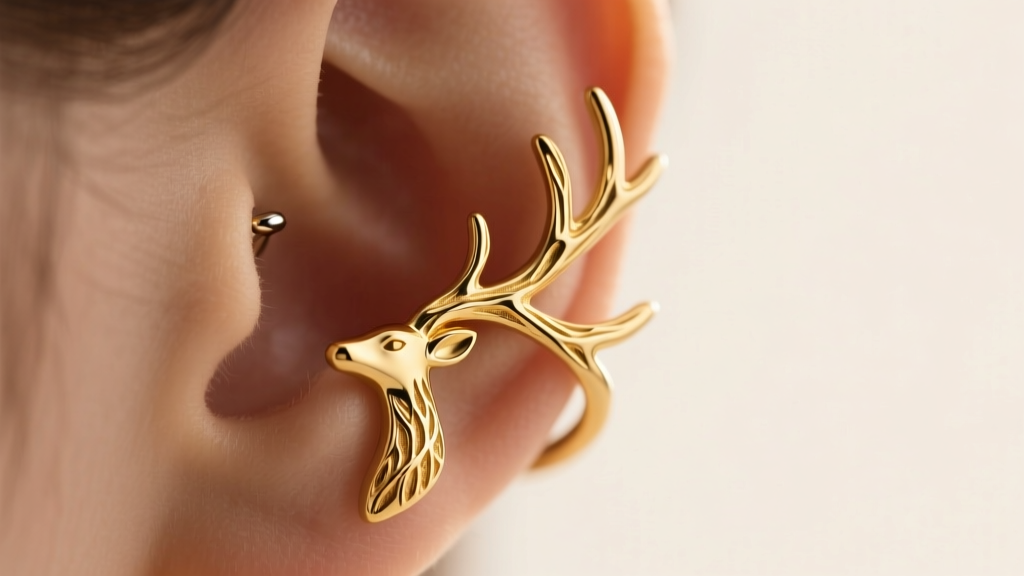
- Cartilage Compatibility: Many fine deer ear cuffs or helix studs are crafted at 16-gauge (1.29mm) to properly fit cartilage piercings without causing irritation or migration.
2026 Pricing Matrix: Deer Earring Value Comparison
To help you benchmark your next purchase, we have compiled a data matrix reflecting current 2026 market averages for woodland-themed ear jewelry.
| Tier | Base Material | Finish / Plating | Avg. Price Range | Expected Lifespan |
|---|---|---|---|---|
| Fast Fashion | Brass / Zinc Alloy | Flash Plate (<0.5µm) | $12 - $35 | 6 - 12 Months |
| Mid-Tier | 925 Sterling Silver | Rhodium / E-Coat | $45 - $140 | 5 - 10 Years |
| Gold Vermeil | 925 Sterling Silver | 2.5µm 14k/18k Gold | $85 - $180 | 2 - 4 Years |
| Fine Jewelry | Solid 14k / 18k Gold | High Polish / Matte | $280 - $850+ | Lifetime / Heirloom |
Hidden Costs: Maintenance, Tarnish, and Allergy Risks
When evaluating the budget for deer earrings, the initial purchase price is only half the equation. Long-term maintenance can quickly erode the perceived value of mid-tier pieces if you are not prepared for the upkeep.
"According to the Federal Trade Commission Jewelry Guides, a piece can only be legally marketed as 'gold vermeil' if the sterling silver base is plated with gold that is at least 10 karat and 2.5 microns thick. Anything less is merely gold-plated and will degrade significantly faster."
The Tarnish Tax: Sterling silver deer earrings, especially those with deep crevices in the antler textures, trap moisture, lotions, and dead skin cells. This accelerates silver sulfide formation (tarnish). While a simple polishing cloth works for flat surfaces, cleaning deep textures requires a specialized ultrasonic cleaner or professional steam cleaning, which can cost $25 to $40 per session.
The Re-Plating Trap: If you opt for gold vermeil deer huggies or hoops, the friction from taking them on and off will inevitably wear away the 2.5-micron gold layer at the hinge and post. Re-plating vermeil jewelry at a local bench jeweler typically costs between $35 and $60. If you have to re-plate a $90 pair of earrings twice over three years, you would have been better off investing in solid 10k or 14k gold initially.
Allergy Risks: Base metal earrings frequently contain nickel as a hardening agent in the underlying brass alloy. The Gemological Institute of America (GIA) and dermatological associations consistently warn that prolonged exposure to nickel-leaching jewelry can trigger a lifelong contact allergy, effectively locking you out of wearing affordable fashion jewelry forever.
The Verdict: How to Maximize Your Investment
Are deer earrings worth the investment? The answer depends entirely on your wearing habits and material expectations. If you view jewelry as a seasonal, disposable accessory to match a specific autumn wardrobe, Tier 1 base metals offer high visual impact for minimal capital. However, for daily wearers seeking true value, the mid-to-high tiers offer a vastly superior cost-per-wear ratio.
Actionable Buying Checklist for Deer Motif Earrings
Before checking out, run your prospective purchase through this rigorous quality-assurance checklist:
- Verify the Hallmark: Look for "925", "14k", or "18k" stamped on the post or the back of the deer silhouette. If it only says "Tibetan Silver" or "Alpaca," you are buying copper-nickel alloys that will tarnish rapidly.
- Check the Post Gauge: Ensure the post is at least 20-gauge (0.8mm). Anything thinner (like 22g) will bend under the weight of a dangling fawn or branch motif.
- Inspect the Antler Tips: If buying pave-set antlers, examine the prongs under a macro lens or jeweler's loupe. Glued-in stones (common in Tier 1 and 2) will fall out upon contact with alcohol-based perfumes or hand sanitizers.
- Ask About E-Coating: For sterling silver pieces, ask the retailer if the earrings feature an anti-tarnish e-coating (electrophoretic lacquer). This invisible layer can extend the time between required polishes by up to 18 months.
- Assess the Enamel: If the fawn design uses black or brown enamel, confirm whether it is vitreous (fired) or cold (resin). Resin will scratch and yellow; vitreous glass will last a lifetime if handled with basic care.
By prioritizing metallurgical transparency over fleeting fast-fashion trends, you can curate a collection of deer earrings that not only captures the magic of the forest but also stands the test of time, wear, and budget constraints.


