How to Define Earring Anatomy to Troubleshoot Fit and Allergy Issues
Learn how to define earring anatomy to troubleshoot fit, allergic reactions, and embedding. Expert guide on post gauges, metals, and backing mechanics.

The Core Problem: Why Misunderstanding Earring Anatomy Causes Pain
When most consumers search to define earring components, they receive superficial dictionary definitions: a post, a backing, and a decorative front. However, in professional body modification and dermatological troubleshooting, how we define earring anatomy dictates whether a piece heals beautifully or causes chronic irritation, embedding, and allergic contact dermatitis. If your earlobes are constantly red, or your cartilage piercings refuse to settle, the issue rarely lies with your aftercare. It lies in a fundamental mismatch between your ear's anatomy and the structural definition of the jewelry you are wearing.
To solve these persistent fitting and allergy issues, we must move beyond basic fashion jewelry terminology and define earring mechanics through the lens of anatomical precision. This guide breaks down the exact gauge sizes, metal grades, and structural components you need to troubleshoot your most frustrating earring failures.
How to Define Earring Post and Back Mechanics
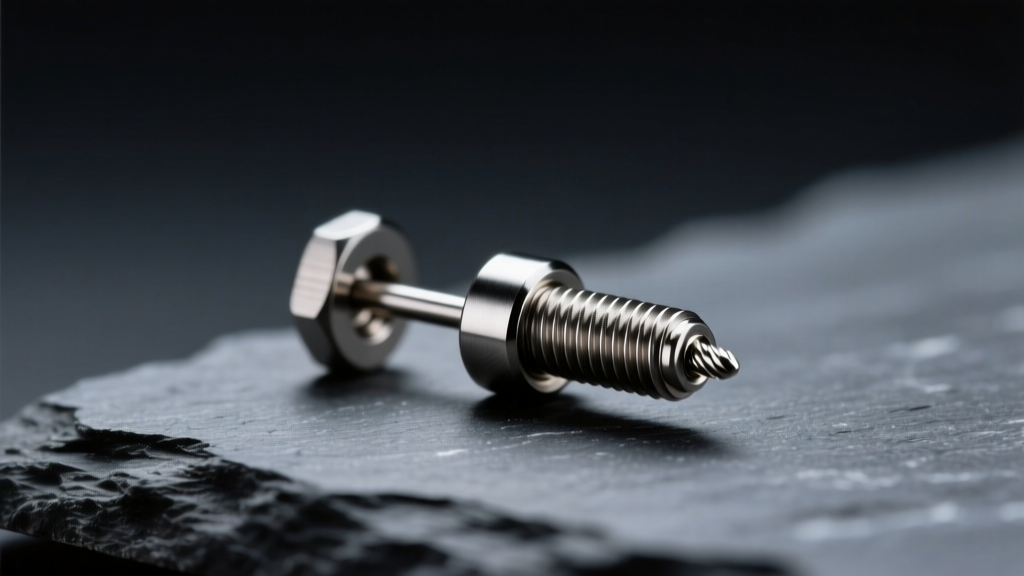
The post is the structural bridge between the decorative end and the backing. Troubleshooting earring discomfort almost always begins here. The industry standard for a healed earlobe is a 20-gauge (0.81mm) or 18-gauge (1.02mm) post, while cartilage typically requires a thicker 16-gauge (1.29mm) or 14-gauge (1.6mm) post to prevent the "cheese-cutter effect," where thin metal migrates through the tissue under pressure.
Equally critical is how the post connects to the decorative end. If you are experiencing micro-tears during insertion, you are likely using externally threaded jewelry.
| Connection Type | Definition | Best Application | Common Failure Mode |
|---|---|---|---|
| External Threading | Screw threads are cut into the post itself. | Low-end fashion jewelry (Not recommended). | Threads tear the fistula (piercing channel) upon insertion, causing scar tissue. |
| Internal Threading | Screw threads are on the decorative end; the post is smooth. | Standard lobe and cartilage upgrades. | Can unscrew over time if not fitted with a thread-locking compound. |
| Threadless (Push-Pin) | Uses a slightly bent pin that creates tension inside a hollow post. | Cartilage, helix, and conch piercings. | Pins can snap if bent too aggressively during removal. |
Defining Metal Purity: Troubleshooting Contact Dermatitis
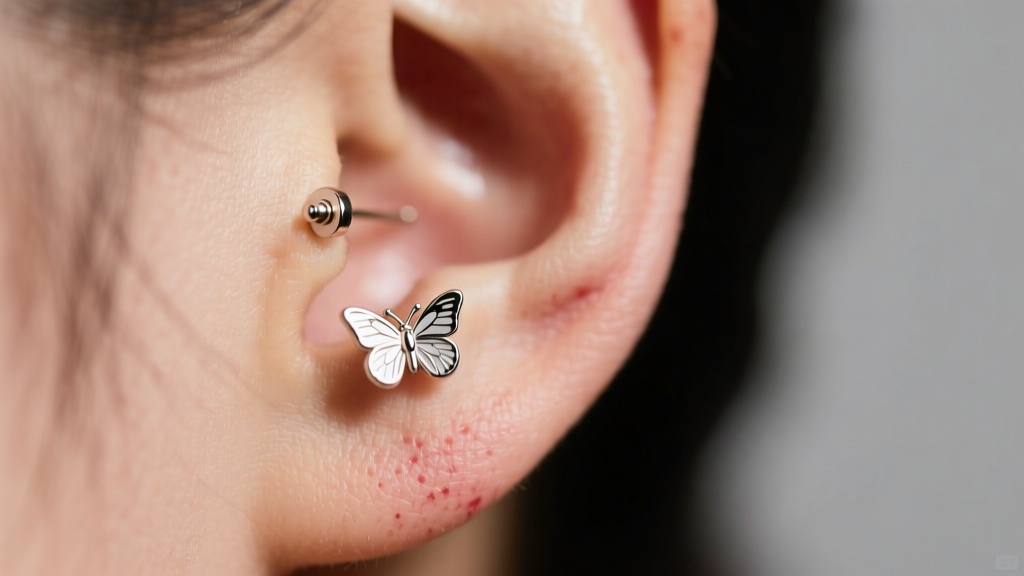
If you are treating an itchy, weeping, or flaky piercing, you are likely dealing with Allergic Contact Dermatitis (ACD). To solve this, we must strictly define earring materials beyond marketing buzzwords. The term "surgical steel" is largely unregulated and often refers to 316L stainless steel, which contains up to 10% nickel. According to the Mayo Clinic, nickel is the most common trigger for metal allergies, and prolonged exposure can lead to systemic sensitization.
The Safe Metal Hierarchy
- Implant-Grade Titanium (ASTM F136): The absolute gold standard for troubleshooting allergies. It contains zero nickel and is highly biocompatible.
- Niobium: A highly reactive metal that is naturally hypoallergenic, though softer than titanium, making it better for hoops than straight posts.
- 14k or 18k Solid Gold: Must be nickel-free and alloyed with silver or copper. Avoid gold-plated or gold-filled jewelry for sensitive ears, as the microscopic pores in the plating trap bacteria and eventually wear down to expose base metals.
For a comprehensive breakdown of acceptable initial piercing metals, the Association of Professional Piercers (APP) maintains strict guidelines that explicitly ban surgical steel for fresh or highly reactive piercings.
Cartilage vs. Lobe: Defining the Correct Earring Length
One of the most frequent troubleshooting inquiries we receive involves "embedding"—a condition where the skin swells over the earring backing or decorative front, effectively swallowing the jewelry. This happens when the post length is incorrectly defined for the specific tissue type.
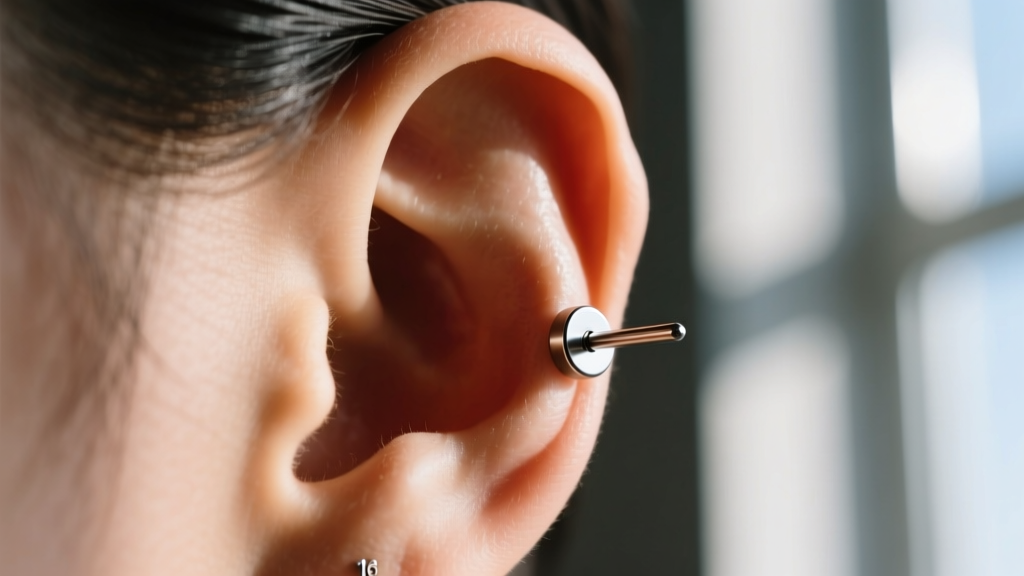
Standard lobe studs typically feature a post length of 6mm to 8mm. However, cartilage tissue is dense, avascular, and prone to severe swelling when irritated. If you place a 6mm post in a freshly pierced or irritated helix, the tissue will expand, leaving no room for drainage. This creates a pressure chamber that leads to hypertrophic scarring (piercing bumps).
Troubleshooting Rule of Thumb: For any cartilage piercing exhibiting redness or bump formation, immediately upsize to an 8mm or 10mm flat-back labret post. The extra 2-4 millimeters of clearance allows swelling to subside and enables proper saline flushing of the fistula.
Troubleshooting Weight and Sagging in Heavy Dangles
When defining earring styles like heavy drop earrings or oversized hoops, the center of gravity shifts dramatically. Over time, the continuous downward drag elongates the piercing channel, leading to permanent lobe sagging. To troubleshoot this without sacrificing your favorite statement pieces, you must alter the backing mechanics.
Standard metal friction backs (butterfly clutches) offer a tiny surface area that concentrates the weight of a heavy earring onto a 2-millimeter point on the back of your earlobe. Instead, swap to silicone disc backs or flat-back locking clutches. These distribute the gravitational load across a 10mm to 15mm surface area, drastically reducing localized pressure necrosis and preventing the earring from drooping forward.
Quick Troubleshooting Matrix for Common Earring Failures
Use this rapid-reference matrix to diagnose and solve your most persistent earring issues based on anatomical definitions:
- Symptom: Piercing bump on the back of the cartilage.
Solution: The post is too long, causing the flat-back to press at an angle. Downsize the post by 1mm so it sits perfectly flush and parallel to the tissue. - Symptom: Earring constantly falls out during sleep.
Solution: Switch from friction backs to internally threaded flat-back labrets. The screw mechanism prevents accidental dislodging. - Symptom: Itchy, dark discoloration around the lobe hole.
Solution: Nickel allergy from white gold or surgical steel. Remove immediately and replace with ASTM F136 titanium; apply a topical corticosteroid if approved by a dermatologist. - Symptom: Front of the stud sinks into the earlobe.
Solution: The decorative end is too heavy for the gauge. Upsize from a 20G to an 18G post to provide a wider structural pillar that resists sinking.
By taking the time to properly define earring anatomy, you transition from passively wearing jewelry to actively engineering your comfort. Whether you are managing a stubborn cartilage heal or upgrading your daily lobe studs, respecting the intersection of metallurgy and human tissue is the ultimate key to trouble-free wear.


