Dennis Rodman Earrings: Ultimate Style & Buying Guide
Discover how to buy and style Dennis Rodman earrings. Our guide covers industrial barbells, gauge sizes, titanium grades, and cartilage placement.


The Anatomy of the Rodman Aesthetic
When discussing the intersection of sports, pop culture, and avant-garde body modification, few figures loom as large as Dennis Rodman. Long before gender-fluid fashion and maximalist grunge became mainstream runway staples in 2026, Rodman was pioneering a fearless approach to self-expression. His ear curation was a masterclass in chaotic brilliance: a mix of heavy industrial barbells, mismatched hoops, safety pin motifs, and dense cartilage clusters. If you are looking to buy Dennis Rodman earrings today, you aren't just shopping for jewelry; you are investing in heavy-duty, statement-making hardware that requires a deep understanding of body jewelry mechanics, material grades, and piercing anatomy.
Recreating this iconic look requires moving beyond standard mall-kiosk studs. The Rodman aesthetic relies on structural integrity, bold silhouettes, and deliberate asymmetry. This comprehensive buying guide will walk you through the exact gauge sizes, material specifications, and placement strategies needed to curate an authentic, safe, and visually striking ear setup inspired by the ultimate 90s rebel.
Essential Hardware: What to Actually Buy
To capture the essence of Rodman's ear curation, you need to focus on specific categories of body jewelry that prioritize visual weight and industrial motifs. Here is the core shopping list for this aesthetic.
1. The Industrial Barbell (The Centerpiece)
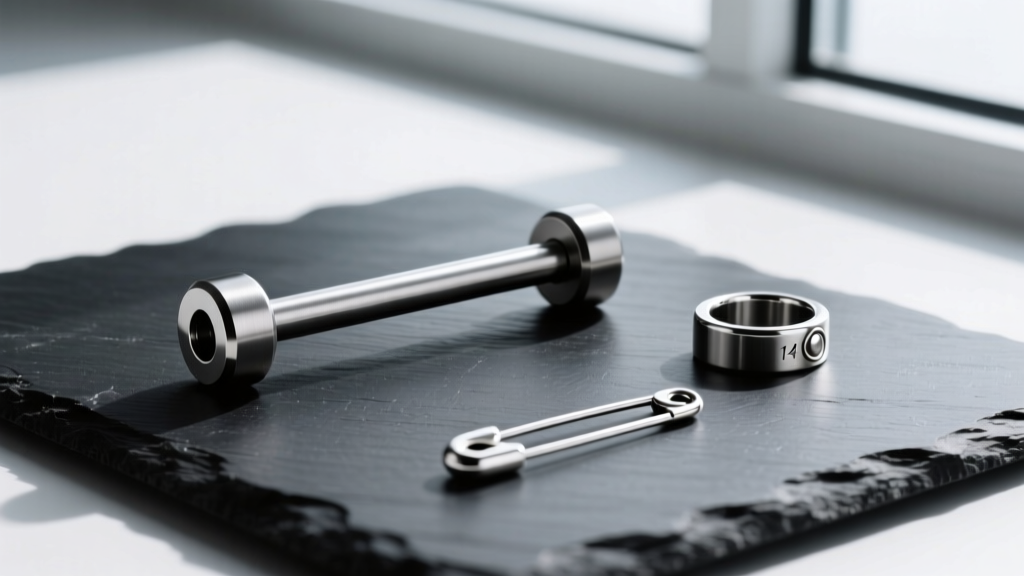
The industrial piercing—a single barbell connecting two forward helix cartilage piercings—is the undisputed anchor of the Rodman look. When shopping for an industrial barbell, you must look for internally threaded or threadless (push-pin) ends. Externally threaded jewelry will tear the delicate fistula (the piercing channel) upon insertion. Look for barbells with spiked, spiked-ball, or geometric ends to match the aggressive, punk-inspired vibe of the 90s Chicago Bulls era.
2. Captive Bead Rings (CBRs) and Segment Rings
Rodman frequently stacked thick silver hoops along his helix and lobes. For an authentic look, avoid thin, flimsy wire hoops. Instead, purchase 14-gauge or 12-gauge Captive Bead Rings or seamless segment rings. The thickness of the metal provides the necessary visual weight and reduces the risk of the jewelry migrating or causing the 'cheese-cutter effect' (where thin wire slowly slices through the tissue).
3. Motif and Novelty Pieces
Safety pins, crucifixes, and miniature chains were staples of Rodman's rotation. When buying novelty earrings, ensure the post that actually enters the skin is made of implant-grade materials, even if the decorative motif is cast in sterling silver or brass. The Association of Professional Piercers (APP) strictly recommends that only the post material matters for biocompatibility, allowing you to safely wear heavier, ornate motifs on the visible ends.
Material Grades & Gauge Sizing Matrix
The biggest mistake buyers make when pursuing heavy, grunge-inspired ear setups is ignoring metallurgy. Heavy jewelry exerts more downward force on the fistula, making material purity and thickness non-negotiable. Below is the definitive matrix for selecting your Dennis Rodman earrings.
| Material | Grade / Standard | Best Application | Estimated Price Range |
|---|---|---|---|
| Implant-Grade Titanium | ASTM F-136 | Industrials, fresh cartilage, heavy lobes | $45 - $120+ |
| Niobium | Unalloyed / Reactive | CBRs, seamless rings, anodized colors | $30 - $80 |
| Surgical Steel | 316L (Mirror Polish) | Healed lobes, temporary statement pieces | $15 - $40 |
| Solid Gold | 14k or 18k (Nickel-Free) | Threadless ends, luxury motif upgrades | $90 - $350+ |
Understanding Gauge Thickness
Gauge refers to the thickness of the metal post. The higher the number, the thinner the jewelry. Standard lobe earrings are usually 20G or 18G. However, the Rodman aesthetic demands thicker hardware. 14-gauge (1.6mm) is the gold standard for industrial barbells and heavy cartilage hoops, providing the structural rigidity needed to prevent bending and tissue rejection. For standard helix or tragus placements, 16-gauge (1.2mm) is ideal. Always verify your piercing gauge with a professional before ordering custom lengths.
Strategic Ear Mapping: Placement is Everything
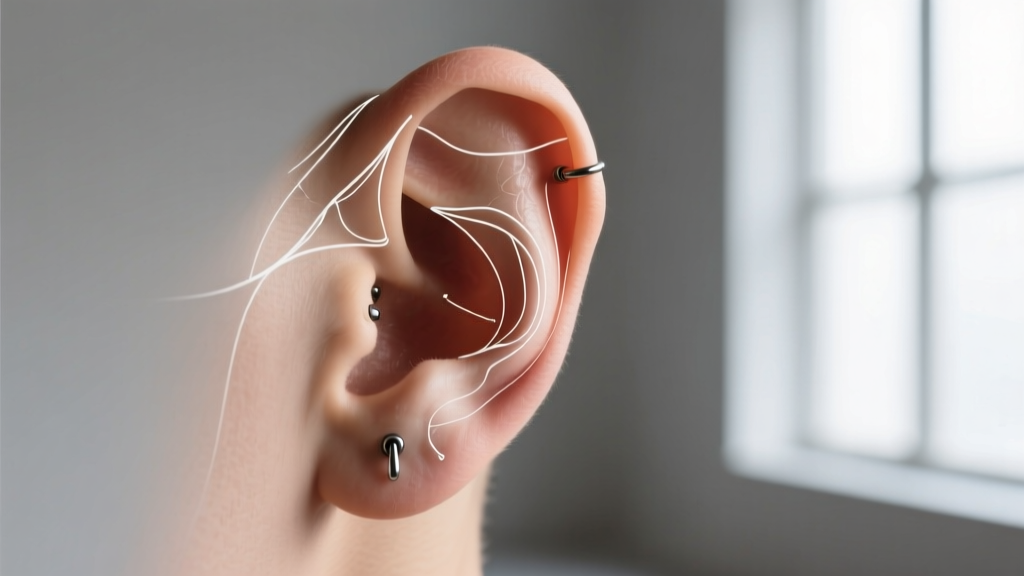
You cannot achieve the Dennis Rodman look with a single standard lobe piercing. His style was defined by 'ear mapping'—the deliberate, staggered placement of multiple piercings that create a cohesive, asymmetrical composition. If you are planning a multi-piercing project to accommodate these earrings, follow this anatomical hierarchy:
- The Anchor: Start with the Industrial barbell across the upper helix. This dictates the spatial awareness of the entire ear.
- The Mid-Ear Cluster: Add a conch stud or a 14G hoop in the inner ear cartilage to create depth and contrast against the long industrial bar.
- The Lower Stack: Rodman often featured 2 to 3 lobe piercings per ear. Gradually stretch your lower lobes to 12G or 10G to accommodate thicker, heavier silver hoops without causing tissue fatigue.
- The Accent: A tragus piercing featuring a small, spiked captive bead ring adds the necessary edge to the inner ear profile.
"When mapping an ear for heavy, maximalist jewelry, always account for the healing vectors. An industrial piercing requires a perfectly straight angle between the two entry points; otherwise, the rigid barbell will cause chronic irritation and pressure necrosis." — Body Art Forms Educational Guide
Maintenance & Troubleshooting Heavy Hardware
Wearing heavy, avant-garde jewelry requires a commitment to aftercare and lifestyle adjustments. The Dennis Rodman aesthetic is high-impact, and the hardware reflects that.
Sleeping with Industrials and Hoops
The most common failure mode for industrial piercings is sleeping on them. The pressure of your head against a pillow forces the rigid barbell to twist inside the healing fistula, leading to hypertrophic scarring (irritation bumps). To combat this, invest in a travel neck pillow and sleep with your ear positioned in the center hole, completely suspending the hardware in empty space. For heavy lobe hoops, switch to smaller, snug-fitting huggies or flat-back labret studs while sleeping to prevent the metal from catching on bedding and tearing the lobe.
Cleaning Protocols for Complex Setups
When your ear is densely packed with CBRs, chains, and barbells, standard cleaning methods fall short. You must use a sterile, 0.9% sodium chloride saline solution. Avoid cotton swabs (Q-tips), as the cotton fibers will inevitably snag on the threads, hinges, and bead closures of your jewelry, introducing microscopic debris into the piercing channel. Instead, use non-woven gauze soaked in saline to gently wipe around the entry and exit points of your hardware twice daily.
Managing Snag Hazards
Novelty pieces like safety pin earrings or chain-linked helixes are notorious for catching on hair, clothing, and headphones. To mitigate this, reserve the most elaborate, protruding motif pieces for events, evenings out, or photoshoots. For daily wear, swap the novelty ends for threadless titanium spikes or smooth bezel-set onyx stones. Threadless jewelry (where a bent pin creates tension inside a hollow post) is vastly superior for daily wear, as it eliminates the unscrewing hazard that leads to lost jewelry and damaged threads.
Final Thoughts on Curating the Look
Buying Dennis Rodman earrings is an exercise in embracing bold, unapologetic self-expression. By prioritizing ASTM F-136 titanium, respecting the biomechanics of 14-gauge hardware, and strategically mapping your cartilage, you can safely achieve this iconic, maximalist aesthetic. Remember that true style, much like Rodman's legendary basketball career, is about breaking the rules—but doing so with absolute precision and unwavering confidence.


