Diamond Flower Stud Earrings: The Ultimate Material Guide
Compare metals and diamond grades for diamond flower stud earrings. Learn which alloys, prong settings, and stone types offer the best durability.

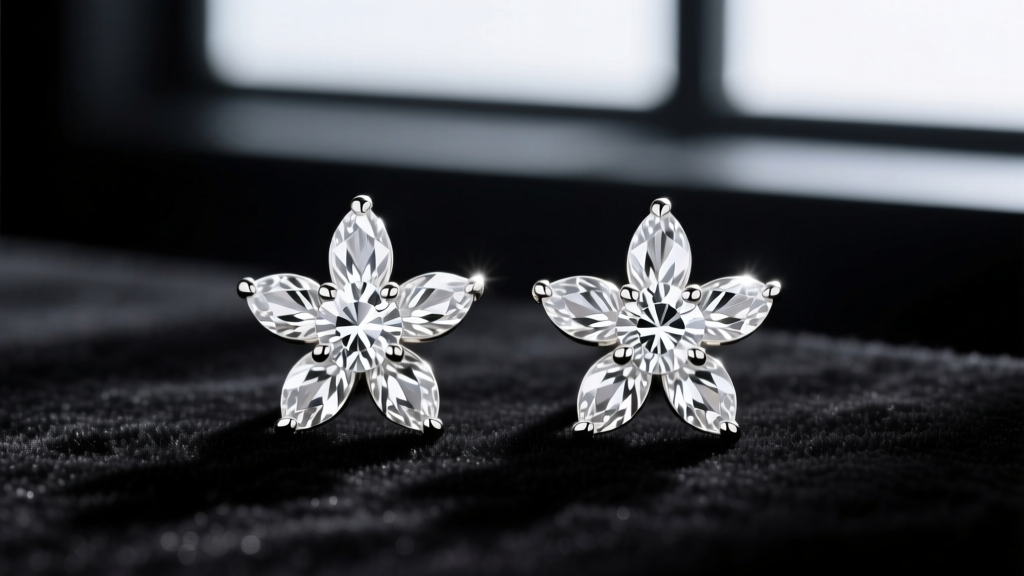
The Anatomy of Diamond Flower Stud Earrings
Diamond flower stud earrings remain a timeless staple in fine jewelry, celebrated for their intricate symmetry and brilliant light return. Unlike simple solitaire studs, a floral design requires a complex architectural approach. The anatomy typically consists of a central focal stone—ranging from 0.25 to 1.00 carats—surrounded by five to eight 'petals.' These petals are usually crafted from marquise, pear, or round brilliant melee diamonds. Because floral studs feature a high density of small stones and delicate metalwork, the choice of materials is not merely aesthetic; it dictates the lifespan, structural integrity, and maintenance requirements of the earrings.
As we navigate the jewelry market in 2026, buyers are presented with an expanding array of metal alloys and diamond origins. Understanding the metallurgical properties of precious metals and the gemological nuances of melee diamonds is critical. This guide breaks down the exact material specifications you need to evaluate before investing in a pair of diamond flower studs, ensuring your jewelry withstands daily wear while maintaining its optical brilliance.
Metal Alloys: Platinum vs. Gold vs. Titanium
The intricate nature of floral designs demands a metal that balances malleability for the setter with tensile strength to protect tiny prongs. A single bent prong on a shared-prong floral setting can result in the loss of multiple diamonds.
Platinum (950 Pt): The Prong Protector
Platinum, specifically the 950 Pt alloy (95% platinum, 5% ruthenium or cobalt), is the undisputed champion for intricate diamond settings. With a density of 21.45 g/cm³, it is significantly heavier than gold, giving the earrings a premium, substantial feel on the earlobe. More importantly, platinum possesses high tensile strength and malleability. When a platinum prong is bent, it does not snap or experience metal fatigue; it simply displaces. This makes it the safest choice for the ultra-fine prongs required to secure delicate marquise and pear-shaped diamond petals. Furthermore, platinum is naturally white and hypoallergenic, eliminating the need for rhodium plating.
14K vs. 18K Gold: The Durability Trade-off
Gold is alloyed with metals like copper, zinc, silver, and nickel to increase its hardness. 18K gold (75% pure gold) offers a richer, warmer color for yellow gold enthusiasts but sits lower on the Vickers hardness scale (approx. 120 HV). For complex floral galleries, 18K gold prongs are more susceptible to bending and catching on hair. Conversely, 14K gold (58.5% pure gold) boasts a hardness of around 150 HV, making it the industry standard for durable, intricate diamond studs. If you prefer white gold, be aware that 14K and 18K white gold are alloyed with palladium or nickel and plated with rhodium (typically 0.75 to 1.0 microns thick). This plating will wear off in 1 to 3 years, requiring periodic re-plating to maintain a bright white appearance that matches the diamonds.
Titanium: The Modern Alternative
Grade 5 Titanium (Ti-6Al-4V) has gained traction for its extreme strength-to-weight ratio and hypoallergenic properties. However, it is notoriously difficult to work with. Titanium cannot be easily cast into intricate floral molds and is usually CNC machined. If a melee diamond falls out of a titanium floral stud, traditional jewelers often lack the specialized laser welding equipment required to retip the prongs, rendering the earring difficult to repair.
| Metal Alloy | Composition | Hardness (Vickers) | Prong Durability | Maintenance Needs |
|---|---|---|---|---|
| 950 Platinum | 95% Pt, 5% Ru/Co | ~135 HV | Exceptional (Bends, won't break) | Low (Polishing removes patina) |
| 18K Yellow Gold | 75% Au, 25% Ag/Cu | ~120 HV | Moderate (Prone to bending) | Low (No plating required) |
| 14K White Gold | 58.5% Au, Pd/Ni/Zn | ~150 HV | High (Stiff and resilient) | High (Rhodium replating every 1-3 yrs) |
| Grade 5 Titanium | 90% Ti, 6% Al, 4% V | ~350 HV | Extreme (But brittle under stress) | Low (But nearly impossible to repair) |
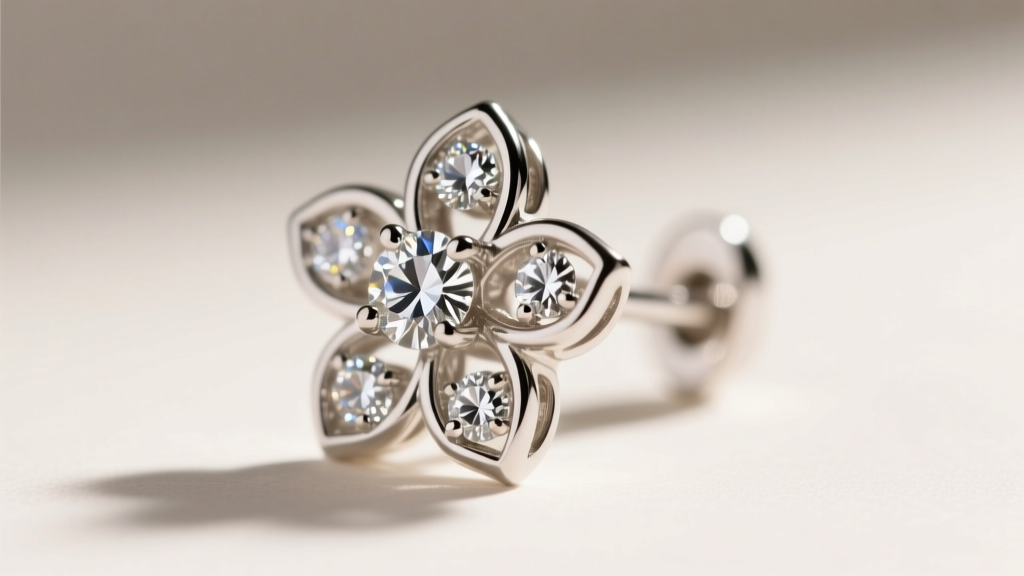
Diamond Properties: Melee, Lab-Grown, and Naturals
The visual impact of diamond flower stud earrings relies heavily on the harmony between the center stone and the surrounding petals. Because the petals are constructed from 'melee' diamonds, the grading criteria shift significantly compared to purchasing a single large solitaire.
Selecting Melee Diamonds for Petals
The Gemological Institute of America (GIA) defines melee diamonds as those weighing less than 0.15 carats, often dropping down to 0.01 carats for intricate floral designs. When evaluating melee for flower petals, color is far more critical than clarity. The human eye easily detects color mismatches between the center stone and the petals, which can make the entire piece look dull or mismatched. Aim for G-H color melee diamonds. Conversely, clarity can be safely downgraded to SI1 or even SI2. Because melee diamonds are heavily faceted and secured by multiple prongs, minor inclusions are completely obscured to the naked eye. Cut quality should be 'Very Good' or better; poor cut melee will create dark, dead zones in the petals, ruining the floral illusion.
Lab-Grown vs. Natural: The Market Reality
Lab-grown diamonds (LGDs) have revolutionized the floral stud market, allowing buyers to afford larger center stones and higher quantities of melee petals for a fraction of the cost of natural diamonds. According to GIA's comprehensive guide on lab-grown diamonds, LGDs possess the exact same physical, chemical, and optical properties as mined stones. However, the growth method matters. Chemical Vapor Deposition (CVD) diamonds can sometimes exhibit brown or gray tinges if not carefully monitored, while High Pressure High Temperature (HPHT) stones may show a blue nuance. When purchasing lab-grown diamond flower studs, always request a GIA Diamond Grading Report standards certificate for the center stone to verify its origin, color grade, and ensure it has not undergone post-growth treatments that could affect long-term stability.
Setting Architecture and Failure Modes
The way the metal interacts with the diamonds in a floral setting dictates the earring's vulnerability to daily hazards. Jewelers typically use one of two setting architectures for flower studs: independent prongs or shared prongs.
- Shared Prong Settings: This technique uses a single prong to secure the edges of two adjacent diamonds. It maximizes light exposure and minimizes metal visibility, creating a seamless 'ribbon' of diamonds. However, it introduces a critical failure mode: if one shared prong catches on a sweater and lifts, you risk losing two stones instead of one.
- V-Prongs for Marquise/Pear Petals: If your floral design utilizes marquise or pear-cut diamonds for the petals, the sharp tips of these stones are highly susceptible to chipping. High-quality manufacturers will use 'V-prongs'—a small V-shaped wedge of metal that caps the sharp point of the diamond, protecting it from impact.
- Snagging and Hair Tangling: The low-profile nature of flower studs means they sit close to the earlobe, but the gaps between the petals can easily trap long hair. To mitigate this, look for designs with a 'closed gallery' or a smooth under-bezel that prevents hair from wrapping around the earring post and basket.
Care, Maintenance, and Prong Tightening
Because diamond flower stud earrings contain dozens of tiny prongs, their maintenance routine differs vastly from simple solitaire studs. The most common cause of stone loss in floral earrings is the improper use of ultrasonic cleaners. Ultrasonic machines operate at frequencies around 40kHz, creating microscopic cavitation bubbles. While excellent for removing lotion and sebum, these high-frequency vibrations can easily rattle a slightly loose melee diamond right out of its worn prong.
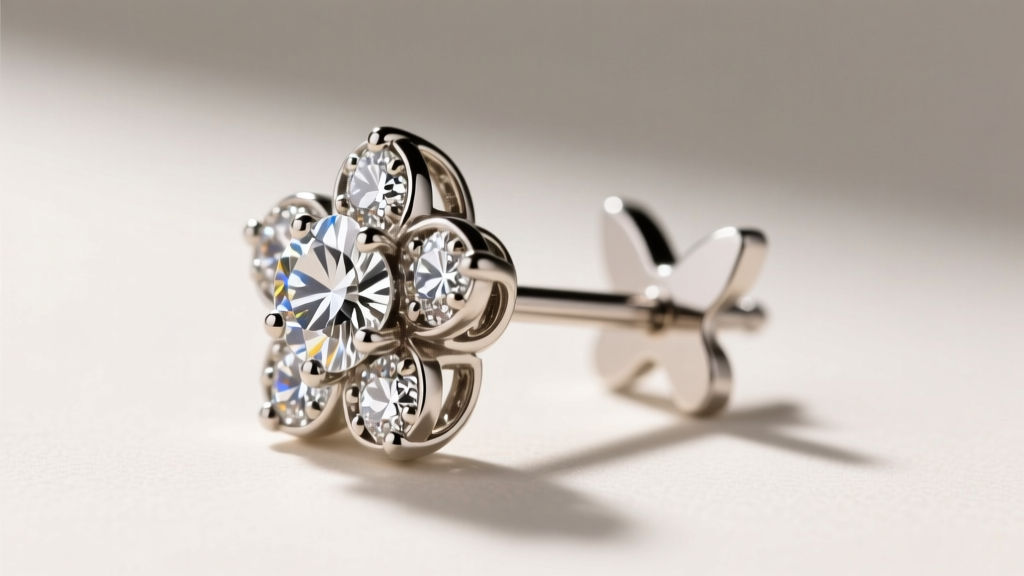
For daily cleaning, stick to a soft-bristled baby toothbrush, warm water, and a few drops of mild, ammonia-free dish soap. Avoid harsh chemicals like bleach or chlorine, which can degrade the alloy metals in 14K gold, leading to microscopic stress fractures in the prongs over time. Furthermore, the backing mechanism is crucial. Standard butterfly friction backs often fail to support the weight of a heavy, multi-carat floral stud, causing the earring to droop and the post to bend. Upgrade to 'La Pousette' (locking) backs or jumbo silicone discs to distribute the weight evenly across the earlobe and keep the flower perfectly upright.
Final Verdict: Building Your Perfect Pair
Selecting the ideal diamond flower stud earrings requires looking past the initial sparkle and evaluating the engineering beneath the surface. For heirloom-quality pieces meant to be worn daily, 950 Platinum paired with G-H color, SI1 clarity natural or lab-grown melee diamonds offers the ultimate balance of security and brilliance. If budget constraints point you toward 14K white gold, ensure the design features independent or heavily reinforced shared prongs, and commit to a bi-annual prong inspection by a master jeweler. By prioritizing structural integrity and precise material grades, your floral studs will remain a blooming testament to fine craftsmanship for decades to come.


