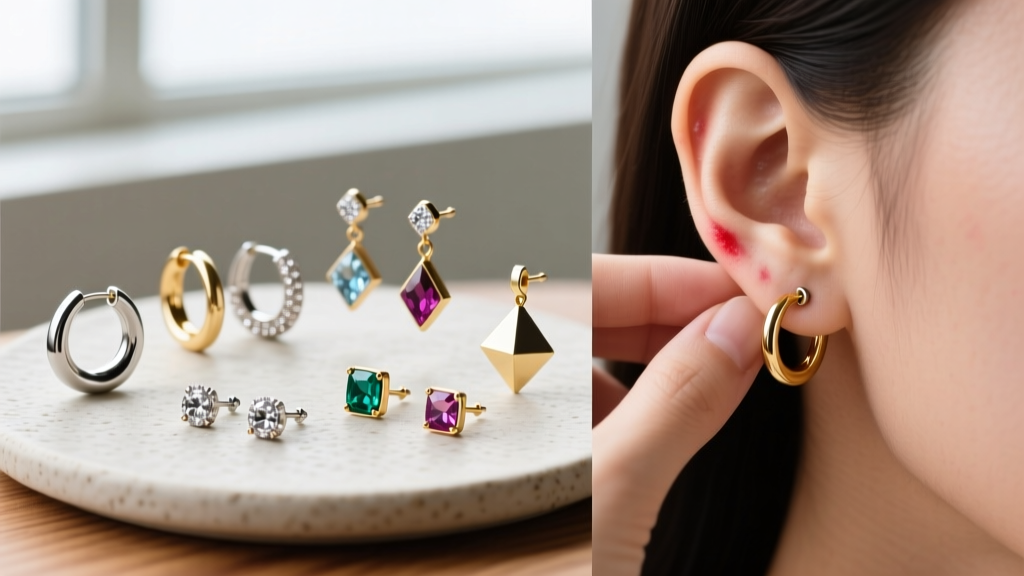
The Beginner's Guide to Choosing a Diamond Heart Earring
Learn how to choose the perfect diamond heart earring. We cover the 4Cs, metal settings, gauge sizes, and pricing to help beginners buy with confidence.

The Anatomy of a Heart-Cut Diamond
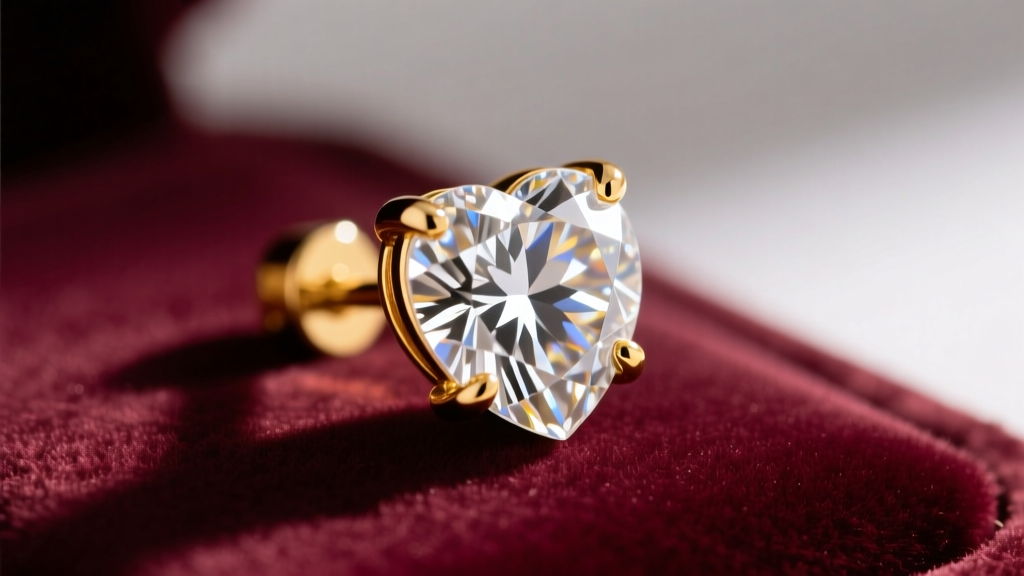
The heart shape is widely considered the most complex of all fancy diamond cuts. It is essentially a modified brilliant cut, meaning it shares the same facet structure as a round brilliant diamond, but stretched and shaped into a romantic silhouette. When shopping for a diamond heart earring, understanding the anatomy of the stone is your first line of defense against poor craftsmanship. A well-proportioned heart consists of five main parts: the cleft (the V-shaped dip at the top), the lobes (the two rounded top edges), the belly (the widest part of the stone), the wings (the sides tapering down), and the point (the sharp bottom tip).
According to the Gemological Institute of America (GIA), symmetry is the single most critical factor in fancy shapes. In a heart-cut diamond, the two lobes must be perfectly identical in size and curve, and the cleft must be sharply defined but not so deep that it creates a structural weakness. For a classic, balanced look, aim for a length-to-width ratio between 0.90 and 1.10. Ratios below 0.90 will make the heart look stubby and wide, while ratios above 1.10 will elongate the stone, making it resemble a distorted pear shape.
Decoding the 4Cs for Heart Shapes
Applying the standard 4Cs (Cut, Color, Clarity, Carat) requires a tailored approach when dealing with heart-shaped diamonds. What works for a round stud will not necessarily work for a heart.
Cut and the 'Bowtie Effect'
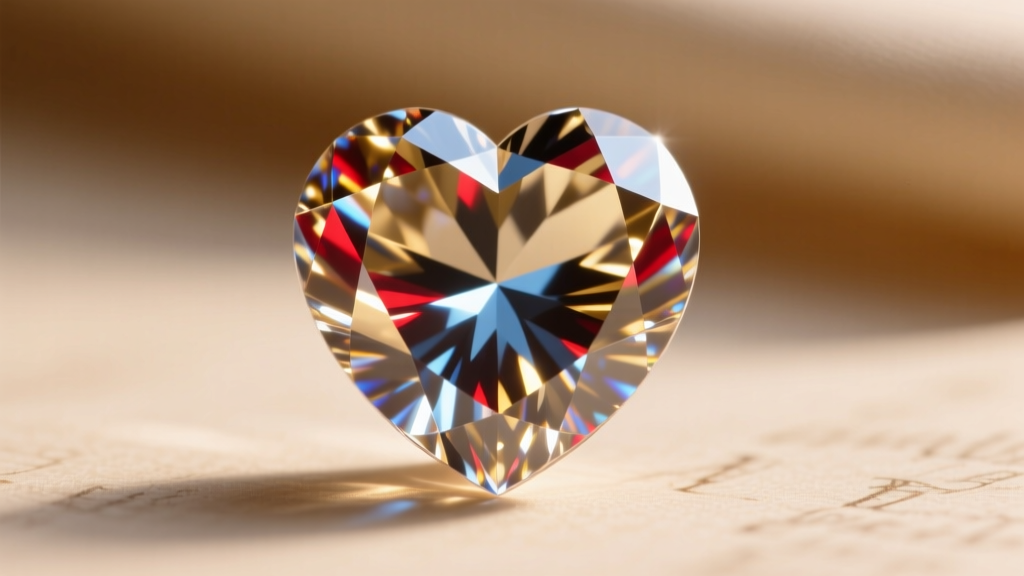
Because heart diamonds are cut from irregular rough crystals, achieving optimal light return is challenging. A common issue in poorly cut heart diamonds is the 'bowtie effect'—a dark, bowtie-shaped shadow that stretches across the center of the stone due to light obstruction. While a faint bowtie is almost unavoidable in elongated fancy shapes, a prominent dark shadow will make your earring look dull. Always request high-resolution 360-degree videos before purchasing to inspect the stone's light performance.
Color and Clarity Minimums
Heart-shaped diamonds tend to retain more color than round brilliants due to their unique facet arrangement. If you are setting your diamond heart earring in white gold or platinum, aim for a color grade of G or H to ensure the stone faces up completely colorless. For yellow or rose gold settings, you can safely drop down to a J or K color, as the warm metal will mask any faint yellow tints.
Regarding clarity, the brilliant facet pattern does an excellent job of hiding inclusions. A VS2 or even an eye-clean SI1 clarity grade is usually sufficient. However, you must ensure that no dark inclusions are located directly under the cleft or the point, as these areas are already structurally vulnerable.
Prong Configurations and Metal Choices
The setting of a heart diamond is not just an aesthetic choice; it is a structural necessity. A heart-shaped diamond requires a minimum of five prongs to be secured safely. You need two prongs on the lobes, two on the wings, and one specialized prong at the bottom point. The International Gem Society strongly recommends a V-prong for the bottom tip. The point of a heart diamond is incredibly sharp and prone to chipping if bumped against a hard surface; a V-prong wraps around the apex, offering vital protection.
| Metal Type | Durability | Maintenance | Best For |
|---|---|---|---|
| Platinum | Extremely High | Develops a patina; requires occasional polishing | Heirloom pieces, securing high-carat stones |
| 18k White Gold | High | Requires rhodium plating every 1-2 years | Classic, bright white aesthetic |
| 14k Yellow Gold | Very High | Low maintenance; easy to polish | Warm skin tones, vintage styles |
| 14k Rose Gold | Very High | Low maintenance; hides minor scratches | Romantic, modern aesthetic |
Post Gauges and Backing Mechanics
Beginners often overlook the hardware that actually keeps the earring in the earlobe. The post gauge (thickness) and the backing mechanism dictate both comfort and security.
- 20-Gauge (0.81mm): The industry standard for most diamond studs. It is thin enough to slide comfortably through standard earlobe piercings without causing friction or stretching the hole.
- 18-Gauge (1.02mm): Slightly thicker, often used for heavier stones (over 1.5 carats total weight) to prevent the earring from drooping or sagging forward on the lobe.
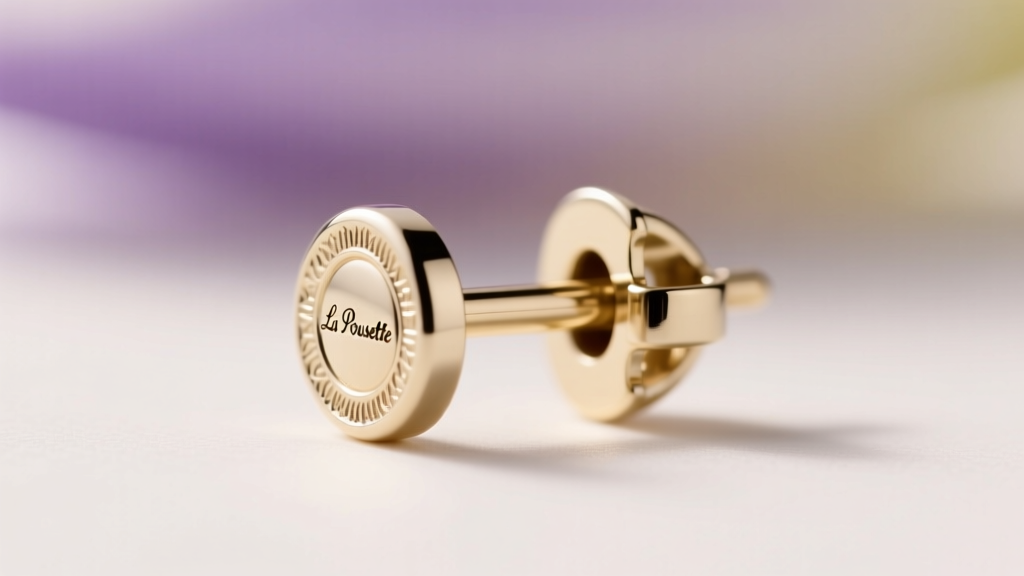
For backings, avoid standard 'butterfly' friction backs for valuable diamond heart earrings. The friction grooves wear down over time, leading to lost stones. Instead, opt for La Pousette backings, which utilize a dual-spring locking mechanism that clicks securely into place, or screw-backs, which thread onto the post and are virtually impossible to dislodge accidentally.
Pricing Expectations: Lab-Grown vs. Natural
The market for diamond heart earrings has shifted dramatically with the rise of lab-grown diamonds. Lab-grown stones possess the exact same chemical, physical, and optical properties as mined diamonds but are priced significantly lower. Below is a general pricing framework for a single, high-quality (G/VS2) heart-cut diamond earring in 2026, excluding the metal setting.
| Carat Weight | Natural Diamond Price (Approx.) | Lab-Grown Diamond Price (Approx.) |
|---|---|---|
| 0.50 ct | $1,200 - $1,600 | $350 - $500 |
| 0.75 ct | $2,100 - $2,800 | $600 - $850 |
| 1.00 ct | $3,500 - $5,000 | $900 - $1,300 |
Keep in mind that heart-shaped diamonds yield less from the rough crystal than round diamonds, which can sometimes make larger natural heart stones command a premium per carat due to their rarity.
The Final Inspection Checklist
Before finalizing your purchase, run through this expert checklist to ensure you are getting a high-quality piece of jewelry:
- Verify the Ratio: Confirm the length-to-width ratio is between 0.90 and 1.10.
- Check the Prongs: Ensure there are at least five prongs, with a V-prong protecting the bottom tip.
- Inspect the Cleft: The top dip should be distinct but not so deep that it threatens to split the stone.
- Review the Bowtie: Look for minimal light obstruction in the center belly of the diamond.
- Upgrade the Backing: Swap standard friction backs for La Pousette or screw-back clutches for maximum security.
Choosing a diamond heart earring is an investment in both sentiment and craftsmanship. By prioritizing symmetry, protecting the vulnerable points with proper prong work, and selecting the right hardware, you ensure your earrings remain secure and brilliant for a lifetime.