Diamond Hoop Earrings White Gold: Expert Technical Guide
Master the technical specs of diamond hoop earrings white gold settings. Expert insights on karat purity, melee grading, and clasp mechanics.

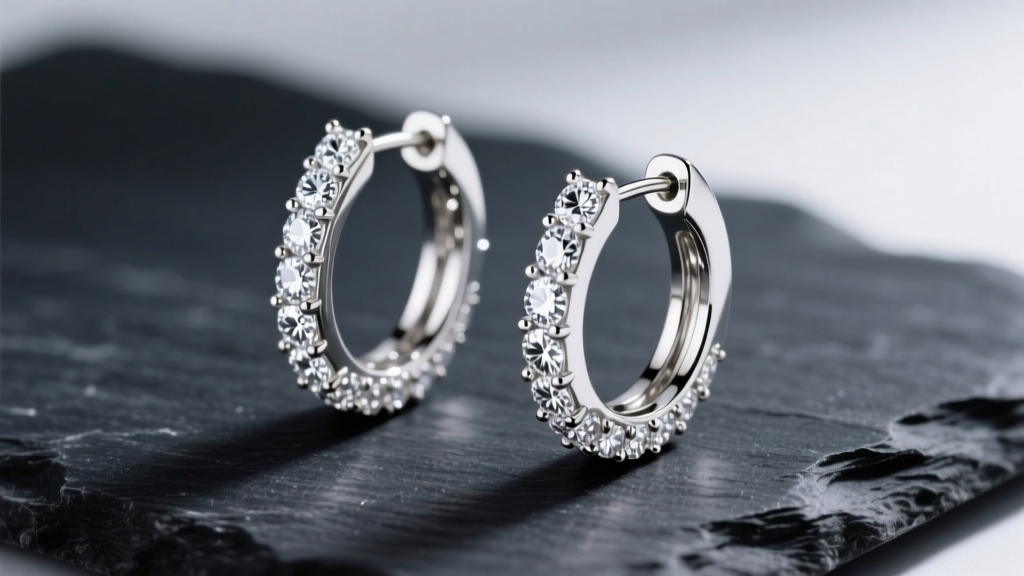
The intersection of radial geometry and precious metallurgy makes hoops one of the most complex earring categories to engineer. Unlike static studs, hoops are in constant motion, subjecting their setting and clasp mechanisms to continuous kinetic stress. When evaluating diamond hoop earrings white gold models, buyers must look beyond superficial carat weights and examine the structural integrity of the alloy, the facet structure of the melee diamonds, and the precision of the clasp tolerances. This guide deconstructs the technical specifications that separate heirloom-grade hoops from mass-market iterations.
The Metallurgy of White Gold Alloys in Curved Structures
White gold is not a naturally occurring metal; it is an alloy of yellow gold and bleaching metals. For fine jewelry, the two primary standards are 14K (58.3% pure gold) and 18K (75% pure gold). The remaining percentage consists of alloying metals like nickel, zinc, copper, or palladium. In the context of hoops, structural rigidity is paramount.
14K white gold, particularly when alloyed with nickel and zinc, exhibits a Vickers hardness of approximately 135 HV. This makes it exceptionally resistant to bending, which is critical for thin, micro-pavé hoops that lack a thick metal core. Conversely, 18K white gold is softer (around 125 HV) but is typically alloyed with palladium to achieve a naturally whiter base color. Palladium-based 18K white gold requires less frequent rhodium plating, a crucial factor for hoops where the inner curvature constantly rubs against the neck and hair, accelerating surface wear. However, the softer nature of 18K means the shank must be milled slightly thicker to prevent oval deformation over years of wear.
Diamond Melee Specifications: Full-Cut vs. Single-Cut
The diamonds used in hoops almost exclusively fall into the melee category, defined by the Gemological Institute of America (GIA) as stones weighing less than 0.18 carats. The critical technical distinction here is between single-cut and full-cut melee. Single-cut diamonds possess only 17 or 18 facets. While cheaper to produce, they lack the optical complexity required to return light dynamically. Because hoops swing and rotate, single-cut stones will frequently appear flat, glassy, or dead in motion.
Full-cut melee diamonds feature the standard 57 or 58 facets of a larger brilliant cut. When set along a curved axis, full-cut stones create a continuous ribbon of scintillation. Furthermore, color matching is highly sensitive in white gold settings. The rhodium plating on white gold is a stark, brilliant white. If the melee diamonds drop to a J or K color, the contrast will make the stones look visibly yellow against the metal. Expert jewelers strictly limit melee in white gold hoops to the G-H color range to ensure seamless visual integration.
- Color Grade: G-H (Near Colorless) is mandatory to prevent yellow contrast against rhodium.
- Clarity Grade: VS2-SI1 is optimal; smaller tables naturally mask minor inclusions.
- Cut Style: Full-cut (57-58 facets) is required for kinetic light return.
- Diameter Tolerance: Melee should be calibrated to within 0.05mm for uniform pavé lines.
Setting Architectures for Radial Axes
Setting diamonds along a curve introduces structural vulnerabilities. The metal must be manipulated to secure the stones without compromising the hoop's tensile strength. There are three primary setting techniques utilized in modern manufacturing, each with distinct trade-offs regarding light return and durability.
| Setting Style | Light Return | Durability | Snag Risk | Best Application |
|---|---|---|---|---|
| Shared Prong | Excellent | Moderate | High | Low-profile, inside-out hoops |
| Channel Set | Good | Excellent | None | Thicker, everyday wear hoops |
| Scalloped Pavé | Very Good | Good | Low | Modern, lightweight continuous hoops |
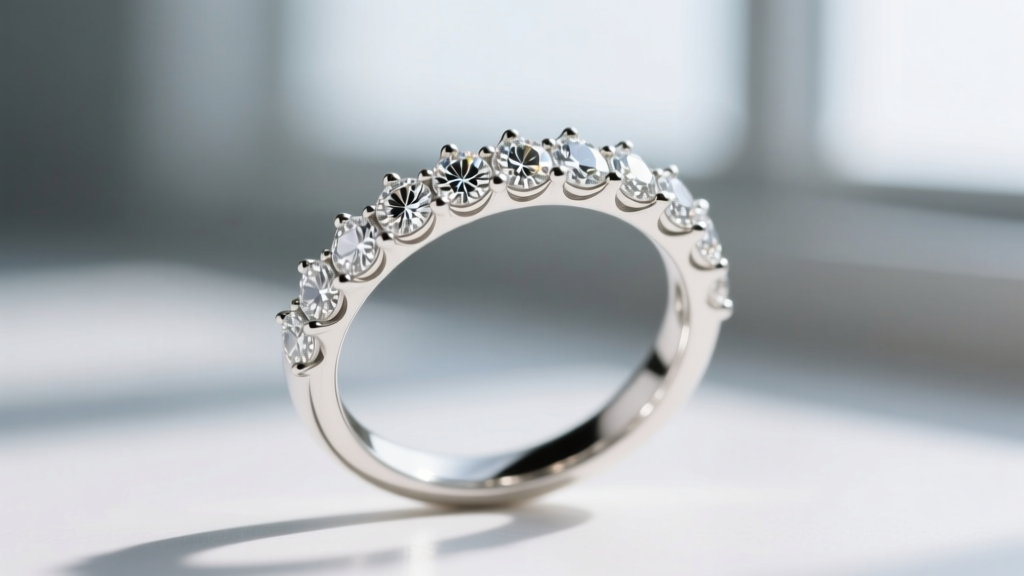
Scalloped pavé has become the industry standard for high-end diamond hoop earrings white gold designs. By carving away the metal beneath the diamonds into a scalloped gallery, jewelers maximize side-light entry while maintaining a secure bead or micro-prong grip on the girdle. This technique reduces the overall metal weight, making larger diameter hoops comfortable for extended wear without sacrificing structural integrity.
Clasp Mechanics and Tensile Failure Points
The clasp is the most frequent point of failure in hoop earrings. The kinetic energy generated by walking, turning the head, and brushing hair places immense shear stress on the hinge and locking mechanism. Mass-market hoops often rely on simple friction-fit wire inserts, which loosen over time as the metal fatigues.
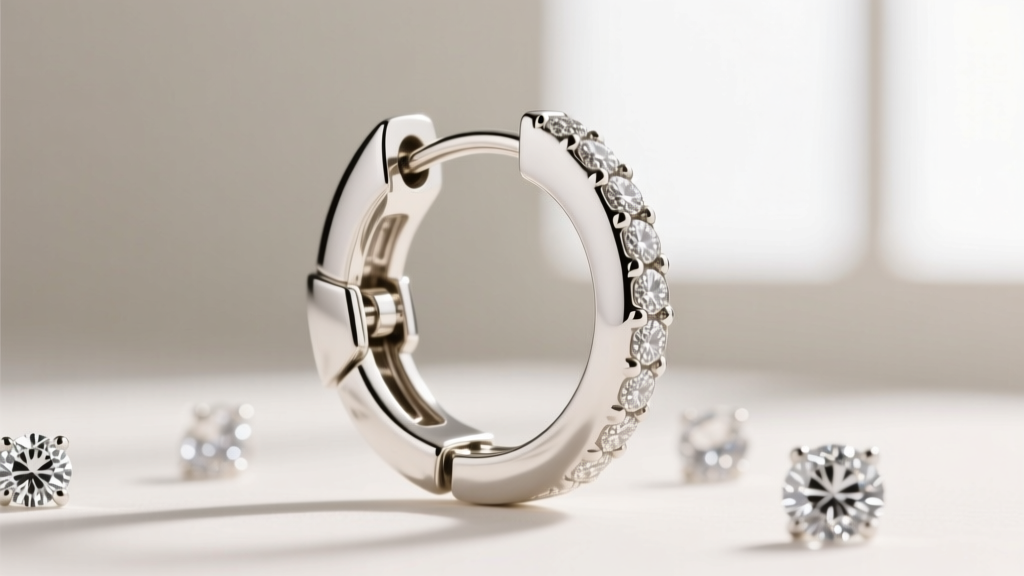
For secure retention, a hinged snap clasp with a hidden click mechanism is mandatory. This design features a precision-milled tongue that snaps into a grooved receptor, producing an audible click when fully seated. The tension is maintained by the spring-like properties of the 14K or 18K gold alloy itself. For hoops exceeding 15mm in diameter or featuring over 2.00 total carat weight, an omega-back or a secondary silicone friction guard should be integrated to prevent accidental unclasping during high-movement activities.
Pricing Matrix and Carat Weight Distribution
Understanding the pricing structure of diamond hoops requires analyzing the carat weight distribution. A 2.00 carat total weight (CTW) pair of hoops will vary wildly in price depending on whether the diamonds are graduated (larger at the bottom, tapering to the clasp) or uniform.
Uniform sizing requires perfectly matched, larger melee diamonds, which command a premium due to the rarity of finding hundreds of identical 0.10ct stones. Graduated settings utilize smaller stones near the ear, reducing the overall material cost while creating an optical illusion of greater size from a frontal perspective.
As a baseline for 2026 market rates, a well-crafted 14K white gold hoop with 1.00 CTW of G-H/VS full-cut melee starts around $1,800. Stepping up to 18K palladium-alloyed white gold with 2.00 CTW pushes the entry price to approximately $4,200, while inside-out designs featuring dual-row pavé can easily exceed $8,500 due to the doubled labor and setting complexity.
Long-Term Maintenance and Rhodium Depletion
White gold requires ongoing maintenance to preserve its aesthetic. The rhodium plating that gives white gold its bright, reflective finish wears away over time, revealing the slightly yellowish or grayish base alloy beneath. According to Jewelers of America, the friction from hair and clothing accelerates this depletion on the inner and outer edges of hoops.
Owners should anticipate replating every 12 to 18 months. However, frequent ultrasonic cleaning can loosen the micro-prongs in pavé settings. The high-frequency vibrations can cause the tiny metal beads to fatigue and fracture, leading to lost melee diamonds. The safest maintenance protocol involves soaking the hoops in a mild, ammonia-free degreasing solution and gently agitating with a soft-bristled brush, followed by a professional prong-tightening inspection once annually.


