Diamond Nugget Earrings: 2026 Value & Budget Guide
Discover the true value of diamond nugget earrings in 2026. Compare raw vs. lab-grown pricing, setting security, and expert buying tips.

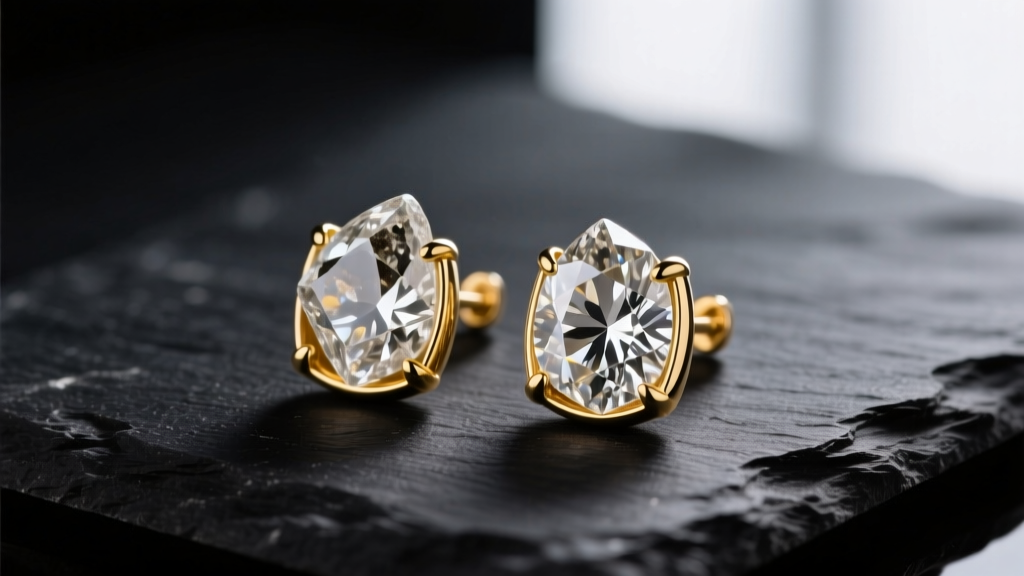
The Rise of Raw: Defining Diamond Nugget Earrings
In the ever-evolving landscape of fine jewelry, the demand for organic, unrefined aesthetics has pushed diamond nugget earrings into the spotlight for 2026. But before you allocate your jewelry budget, it is crucial to understand what a 'diamond nugget' actually is. In the gemological trade, this term generally refers to one of two things: genuine rough (uncut) diamonds that retain their natural crystalline structure, or heavily included, irregularly chunky polished stones designed to mimic a raw, rugged appearance.
True diamond nuggets are celebrated for their unique geometric crystal habits—most commonly octahedrons (two pyramids joined at the base), macles (flat, triangular twins), or dodecahedrons. Unlike traditional brilliant-cut studs that prioritize light return and symmetry, nugget earrings prioritize individuality, texture, and a connection to the earth. However, this departure from traditional faceting completely rewrites the rules of diamond valuation, making it a minefield for uneducated buyers. According to the Gemological Institute of America (GIA), evaluating rough diamonds requires an entirely different skill set than grading polished stones, focusing heavily on structural integrity rather than optical brilliance.
2026 Market Pricing: Natural vs. Lab-Grown Nuggets
The most significant factor in your budget assessment is the origin of the diamond. The proliferation of lab-grown rough diamonds has drastically altered the pricing landscape, offering the exact same chemical composition and crystal habits at a fraction of the cost of mined stones. Below is a comprehensive value matrix for 2026, detailing what you should expect to pay per pair based on origin, weight, and quality.
| Diamond Origin | Avg. Carat Weight (Per Pair) | Typical Color / Clarity | 2026 Price Range | Best Setting Type |
|---|---|---|---|---|
| Lab-Grown Rough | 0.50ct - 1.00ct | Near Colorless / SI1-I1 | $150 - $350 | Sterling Silver Bezel |
| Natural Commercial Rough | 0.25ct - 0.75ct | Fancy Yellow-Brown / I2 | $400 - $800 | 14k Gold Semi-Bezel |
| Natural Gem-Quality Rough | 1.00ct - 2.00ct | White / VS2-SI1 | $1,200 - $3,500+ | 18k Gold Full Bezel |
| 'Salt & Pepper' Chunky Cut | 0.80ct - 1.50ct | Grey-Black / Included | $600 - $1,100 | 14k Gold Prong/Bezel |
When assessing value, remember that natural rough diamonds are subject to the Kimberley Process certification to ensure they are conflict-free. Always request this documentation from the retailer. The Natural Diamond Council emphasizes that traceability is paramount when purchasing uncut stones, as their lack of standardized grading reports makes provenance the primary indicator of ethical sourcing.
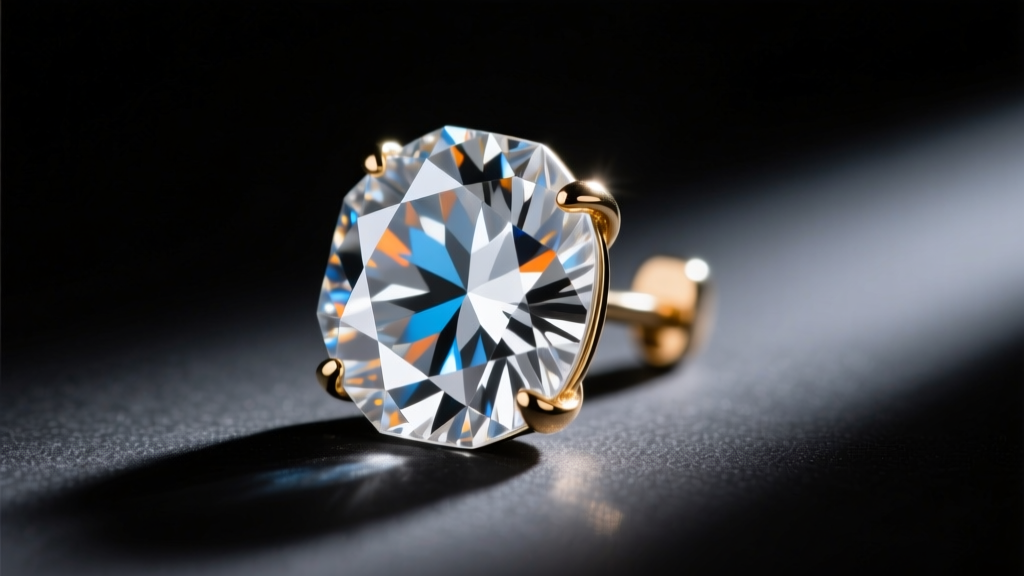
The 4Cs Reimagined for Rough Diamonds
If you are applying traditional 4C grading logic to diamond nuggets, you will overpay for characteristics that do not matter and underpay for those that do. Here is how the value assessment shifts:
- Cut: Irrelevant in the traditional sense. Instead, evaluate the 'crystal habit.' A well-formed octahedron with sharp, natural edges commands a premium over a fractured, asymmetrical macle.
- Clarity: Inclusions are expected and often desired for their 'earthy' aesthetic. However, you must differentiate between aesthetic inclusions (like black carbon spots) and structural threats (like deep cleavage fractures). A surface-reaching fracture will cause the nugget to split if subjected to the pressure of a tight setting.
- Color: While white rough diamonds are rare and expensive, fancy colors like cognac, champagne, and olive green are highly prized in the nugget market and offer exceptional value compared to their polished counterparts.
- Carat: Rough diamonds retain their original weight. A 1-carat rough diamond will look significantly smaller in physical dimensions than a 1-carat polished round brilliant, as the weight is distributed in the depth of the crystal pyramid.
Budget Tiers: What Your Money Actually Buys
To maximize your investment, align your budget with the correct tier of craftsmanship and material quality. Here is a breakdown of what to expect at different price points in the current market.
Tier 1: The Entry-Level Explorer (Under $300)
At this price point, you are looking almost exclusively at lab-grown rough diamonds or very small natural 'boart' (industrial-grade) diamonds that have been lightly tumbled. The settings will typically be 925 sterling silver or 10k gold. While these offer the rugged aesthetic, the silver settings may oxidize over time, requiring regular polishing. Ensure the posts are at least 20-gauge to prevent bending during insertion.
Tier 2: The Everyday Enthusiast ($400 - $900)
This is the sweet spot for value. You can secure natural, ethically sourced rough diamonds in the 0.30ct to 0.60ct range per ear, set in solid 14k yellow or rose gold. The gold provides the necessary structural rigidity to hold the irregular shapes securely. Look for brands that utilize a 'flush' or 'bezel' setting, where the metal wraps entirely around the perimeter of the nugget, protecting its fragile natural edges from chipping.
Tier 3: The Collector's Investment ($1,200+)
High-budget buyers can acquire 'gem-quality' rough diamonds. These are stones that possess the clarity and color to be faceted into traditional brilliant cuts, but have been deliberately left in their raw state. These are exceptionally rare and often feature custom, heavy-weight 18k gold settings. They serve as excellent conversation pieces and hold intrinsic value due to the high quality of the raw material.
Structural Red Flags & Setting Security
The most common failure mode for diamond nugget earrings is not the diamond itself, but the setting. Because rough diamonds lack a uniform 'girdle' (the narrow band around the widest part of a polished diamond), traditional prong settings are incredibly risky. Prongs rely on uniform pressure points; on an irregular nugget, a prong can easily slip off a sloping crystal face, resulting in a lost stone.
'Never trust a four-prong setting on a true raw diamond nugget. The natural cleavage planes of the carbon crystal structure require the 360-degree support of a bezel or a heavily structured semi-bezel to prevent catastrophic splitting upon impact.' — Master Bench Jeweler Assessment
Furthermore, pay close attention to the earring post and backing. For standard lobe piercings, a 20-gauge (0.8mm) or 18-gauge (1.0mm) post is standard. However, because rough diamonds are denser and often heavier than their polished equivalents of the same visual size, the earring can become top-heavy. Always opt for secure friction backs, screw-backs, or jumbo silicone stoppers to prevent the earring from drooping or falling out entirely. If you are wearing nugget huggies or cartilage studs, ensure the post is a thicker 16-gauge (1.2mm) to support the weight without irritating the cartilage.
Final Verdict: Are Diamond Nuggets a Smart Purchase?
From a strict budget and value assessment perspective, diamond nugget earrings offer a compelling alternative to traditional studs. You are essentially bypassing the massive labor costs associated with diamond cutting and polishing. By opting for lab-grown rough diamonds, you can achieve the coveted organic aesthetic for under $300, freeing up capital for other investments. If you prefer natural stones, focusing on 'champagne' or 'cognac' colored rough diamonds provides the best price-per-carat ratio, delivering striking visual contrast without the premium attached to gem-white rough stones. Ultimately, the value lies in the security of the setting and the transparency of the stone's origin.


