Double Piercing Earrings: The Ultimate Buyer's Guide
Discover how to choose the perfect double piercing earrings. Learn about spacing, gauge sizes, hypoallergenic metals, and styling combinations.

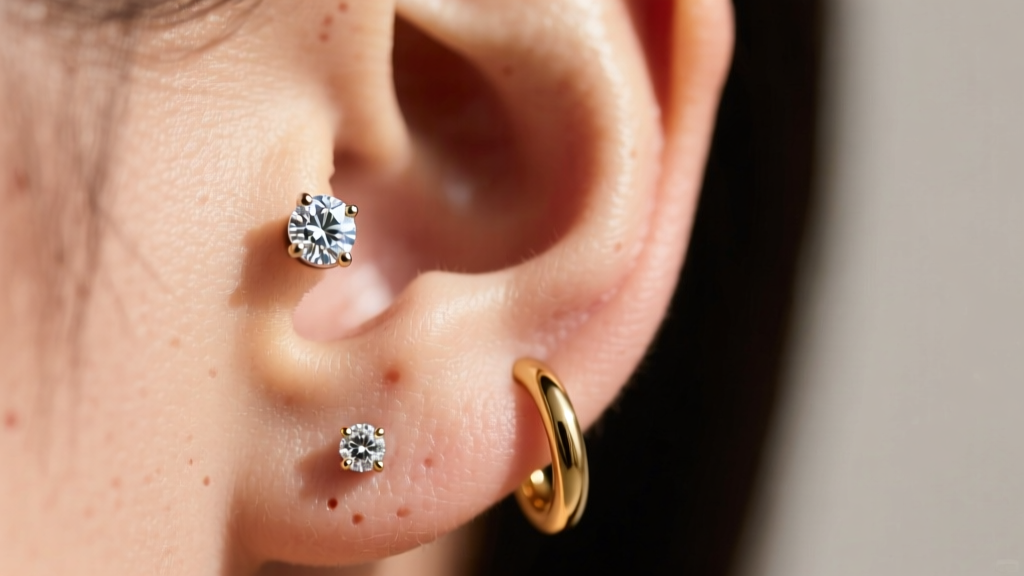
The Geometry of the Double Lobe: Spacing and Gauge
Getting a second lobe piercing opens up a world of aesthetic possibilities, but shopping for double piercing earrings requires more than just picking two pretty studs. In 2026, the art of the ear curation has evolved from simple matching sets to highly calculated, asymmetrical micro-styling. However, the unique anatomy of a double lobe setup introduces specific geometric and metallurgical challenges. If you have ever experienced irritation, overlapping jewelry, or a cluttered look, the issue likely stems from ignoring spacing constraints or material grades.
The most critical factor when buying double piercing earrings is the physical distance between your two fistulas (the pierced holes). Standard professional piercers typically place the second hole between 5mm and 8mm directly above or diagonally from the first. If your piercings are spaced at a tight 5mm, wearing two standard 6mm round studs will result in physical overlap. This not only looks cluttered but causes friction that can lead to contact dermatitis or hypertrophic scarring. For 5mm spacing, your maximum earring diameter should not exceed 4mm to maintain a clean visual gap.
Verifying Your Gauge Size
Furthermore, you must verify your gauge size before purchasing. While standard professional lobe piercings are usually done at 18 gauge (1.0mm) or 16 gauge (1.2mm), mall kiosks and piercing guns often use 20 gauge (0.8mm) needles. Buying 18g earrings for a 20g hole can cause micro-tears during insertion. Conversely, wearing thin 20g jewelry in a 16g hole allows the jewelry to move excessively, leading to the dreaded cheese-cutter effect, where the thin wire slowly migrates downward through the tissue over time. Always measure your current jewelry with a digital caliper or consult your piercer to confirm your exact gauge before investing in new pieces.
Material Science: Beyond the Hypoallergenic Marketing Myth
When shopping for double piercing earrings, ignore the term surgical steel. It is a largely unregulated marketing buzzword that often masks 316L stainless steel, which contains up to 10% nickel. According to the Association of Professional Piercers (APP), nickel is the leading cause of contact allergies in body jewelry. Because double piercings sit closely together, an allergic reaction in one hole can easily cause localized swelling that irritates the adjacent piercing.
For 2026, the undisputed standard for sensitive or healing double piercings is ASTM F-136 implant-grade titanium. It contains zero nickel and boasts a mirror-polished surface that resists bacterial biofilm buildup. If you prefer the warmth of gold, the Gemological Institute of America (GIA) notes that pure gold is too soft for body jewelry and must be alloyed with other metals. Ensure your 14k or 18k gold earrings are explicitly alloyed with silver, copper, or palladium—not nickel. High-end body jewelry brands engineer nickel-free gold alloys specifically designed for long-term, 24/7 wear in multi-piercing setups.
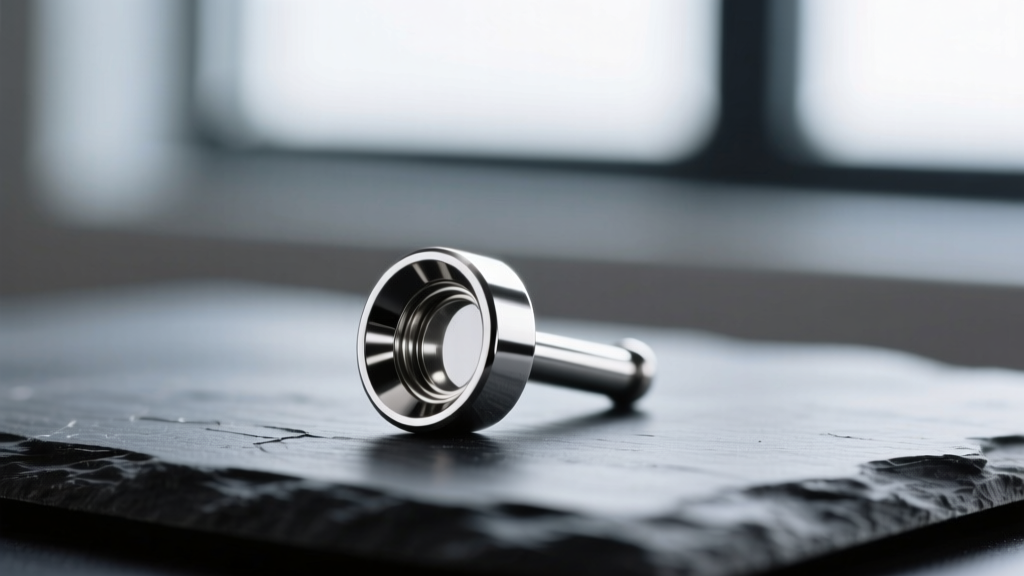
The Mechanics of Closure: Threadless vs. Internally Threaded
The backing mechanism of your earrings plays a massive role in the comfort of a double lobe setup. Traditional friction backs (butterfly clutches) are highly discouraged for double piercings. They trap dead skin, sebum, and moisture, and their bulky prongs often dig into the skin or catch on the post of the adjacent earring.
- Threadless (Press-Fit) Jewelry: This is the modern gold standard. A slightly bent pin on the decorative end is pushed into a hollow titanium post, creating tension that holds it securely in place. It allows for seamless, flush styling and eliminates the bulky screw mechanism that can irritate adjacent holes.
- Internally Threaded Jewelry: The threading is on the decorative end, and the post is smooth. This prevents tissue damage during insertion and offers a secure screw-fit that is vastly superior to friction backs, though slightly bulkier than threadless options.
- Flat-Back Labrets: Regardless of the threading style, always opt for flat-back discs rather than rounded or pointed posts. Flat backs sit flush against the back of the earlobe, eliminating the poke factor when you sleep or wear over-ear headphones.
The Anchor and Accent Framework (2026 Styling Trends)
Styling a double lobe in 2026 relies heavily on the Anchor and Accent framework. Instead of buying two identical studs, which can look dated and visually heavy, treat the lower piercing as your Anchor and the upper as your Accent. This creates a deliberate visual hierarchy that draws the eye upward.
Curating the Combination
- The Classic Anchor: A 4mm to 5mm bezel-set diamond, moissanite, or high-quality cubic zirconia stud in the lower hole. This provides visual weight and grounds the ear.
- The Minimalist Accent: A 2mm to 3mm micro-stud, a tiny seamless hoop, or a delicate threadless end (like a tiny star or opal cabochon) in the upper hole.
- The Chain Connector: For piercings spaced exactly 6mm to 8mm apart, ear chains that drape from the upper to the lower hole are highly sought after. These require a specific post length on the upper hole to allow the chain to hang naturally without pulling on the lower fistula.
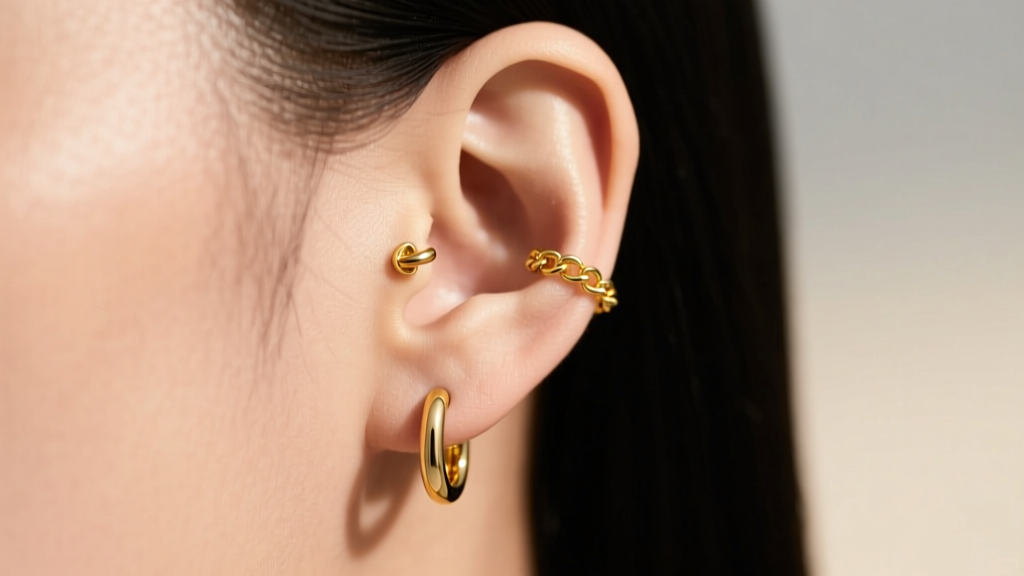
The Double Piercing Sizing Matrix
Use the following matrix to determine which earring styles are safe and aesthetically pleasing based on your specific piercing spacing.
| Spacing Distance | Lower Hole (Anchor) Recommendation | Upper Hole (Accent) Recommendation | Styles to Avoid |
|---|---|---|---|
| 5mm (Tight) | 3mm - 4mm Micro Stud | 2mm - 3mm Micro Stud or 5mm Huggie | Any stud over 4mm; Large hoops |
| 6mm - 7mm (Standard) | 4mm - 5mm Standard Stud | 3mm - 4mm Stud or 8mm Seamless Ring | Chunky geometric shapes |
| 8mm+ (Wide) | 5mm - 7mm Statement Stud | 4mm - 5mm Stud or 10mm Hoop | Short ear chains (will pull) |
Common Purchasing Pitfalls and How to Avoid Them
Even experienced jewelry buyers make mistakes when transitioning to a multi-piercing setup. Avoid these common pitfalls to ensure your double piercings remain healthy and stylish.
Ignoring the Upper Lobe Tissue Density: The upper lobe tissue is often thinner and less structurally supported than the primary lower lobe. Wearing heavy, thick-gauge hoops or large gemstone clusters in the second hole can cause the piercing to stretch and migrate over time. Stick to lightweight, thin continuous segment rings (CSRs) or huggies for the upper piercing to preserve the integrity of the fistula.
Buying Externally Threaded Jewelry: Externally threaded jewelry (where the screw threads are on the post that passes through your skin) acts like a microscopic cheese grater, tearing the delicate epithelial lining of your piercing. In a double setup where you might be swapping jewelry frequently to find the right fit, external threading will cause chronic inflammation. Only purchase internally threaded or threadless options.
Mismatching Metal Tones Poorly: While mixing metals is a popular trend in 2026, doing it haphazardly across just two adjacent holes can look like a mistake rather than a choice. If you mix metals, do it intentionally by using a two-tone earring in one hole, or ensure the undertones (e.g., rose gold and yellow gold) complement your specific skin undertone.
Price Tiers and Where to Invest
When building your double piercing collection, allocate your budget based on how often you plan to wear the pieces and the sensitivity of your skin.
- Budget Tier ($20 - $50): PVD-coated titanium or high-quality sterling silver. PVD (Physical Vapor Deposition) coating over titanium provides a hypoallergenic barrier and is excellent for everyday wear. Sterling silver should only be worn in fully healed, non-sensitive ears, as the copper content can cause oxidation and irritation in the tight spaces of a double lobe.
- Mid-Range Tier ($60 - $150): Solid 14k gold micro-studs, high-quality seamless hoops, and threadless ends from reputable contemporary jewelry brands. This is the sweet spot for durable, everyday luxury that will not tarnish or trigger nickel allergies.
- Luxury Tier ($200+): Internally threaded, solid 18k gold ends from specialized body jewelry manufacturers featuring genuine VS-clarity diamonds or precious gemstones like sapphires and emeralds. These pieces are engineered with precise tolerances to ensure the decorative end sits perfectly flush against the skin without gaps where bacteria can hide.
Ultimately, mastering the art of double piercing earrings comes down to respecting your unique anatomy and prioritizing material integrity over fast-fashion trends. By measuring your spacing, investing in implant-grade metals, and utilizing the Anchor and Accent styling framework, you can curate a double lobe that is both visually striking and biologically harmonious.


