How Eagles Sparkling Earrings Lay: Expert Care Tips
Discover how to clean, maintain, and perfect the fit of your eagle motif crystal earrings. Expert tips on gauge sizes, cleaning agents, and preventing droop.

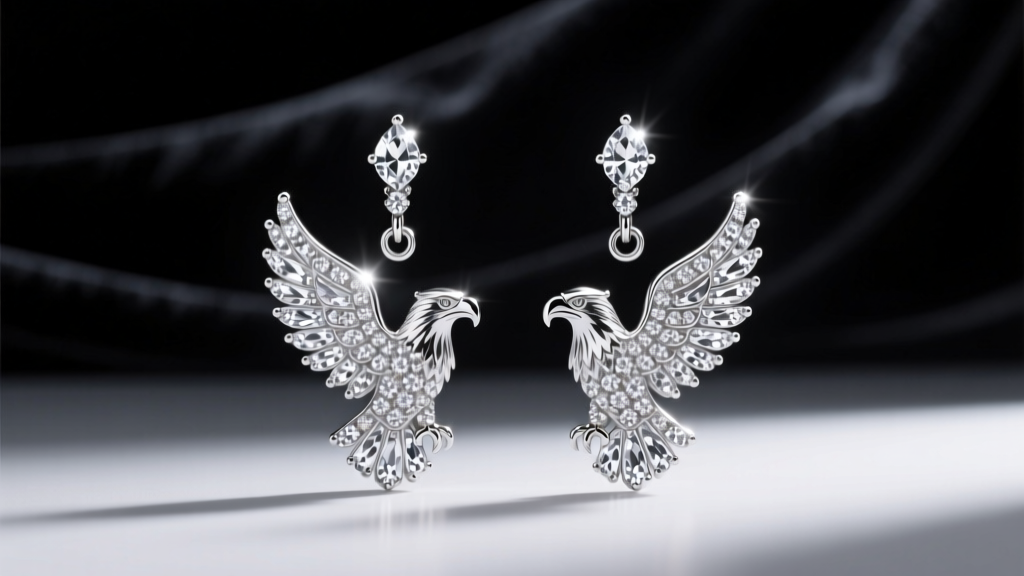
When investing in intricate, nature-inspired jewelry, understanding the mechanics of how your pieces sit on the ear is just as important as their visual appeal. The way eagles sparkling earrings lay against the earlobe dictates not only their aesthetic drape but also their long-term structural integrity. Avian motifs—characterized by expansive wingspans and top-heavy pavé crystal arrangements—present unique challenges in weight distribution, post gauge selection, and cleaning protocols.
In this comprehensive care guide, we break down the metallurgy, physics, and maintenance routines required to keep your eagle motif earrings sitting flush, sparkling brilliantly, and free from tarnish or setting damage.
The Physics of the Lay: Why Top-Heavy Motifs Droop
The "lay" of an earring refers to its center of gravity relative to the piercing fistula. Eagle designs often feature wide, horizontal wingspans that shift the weight forward and downward. If the earring post is too thin, the motif will tilt forward, causing the sparkling crystals to face the floor rather than catching the light.
Gauge Size and Post Thickness
Standard fashion earrings typically use 20-gauge (0.81mm) or 22-gauge (0.64mm) posts. However, for a heavy eagle motif, these thin wires will bend under the weight, leading to a drooping lay and potential stretching of the earlobe piercing over time.
- Optimal Gauge: Look for 18-gauge (1.02mm) or 16-gauge (1.29mm) posts. The thicker wire provides the structural rigidity needed to keep the eagle design upright.
- Post Length: Ensure the post is at least 10mm to 12mm long to accommodate thicker earlobes and heavy-duty backing mechanisms.
Securing the Fit
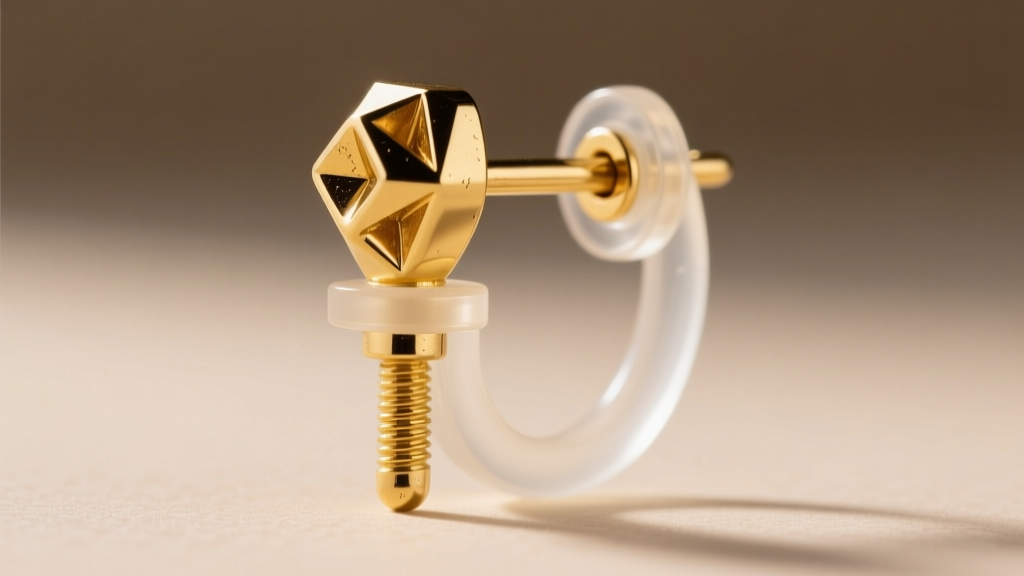
To ensure your earrings lay perfectly flush, discard standard butterfly friction backs. They offer insufficient surface area and slip easily. Instead, utilize silicone O-clutches or jumbo metal friction backs (minimum 8mm diameter). The wider base distributes the weight across a larger area of the earlobe, preventing the "forward tilt" effect.
Material Grades and Crystal Setting Integrity
The cleaning method you choose must align with the specific materials and setting techniques used in your earrings. Most sparkling eagle motifs fall into two categories: fine jewelry (prong-set diamonds or sapphires in solid gold) or fashion/bridge jewelry (pavé cubic zirconia or crystals in rhodium-plated sterling silver).
Rhodium Plating and Base Metals
If your earrings are crafted from 925 sterling silver, they are likely plated with rhodium to mimic white gold and prevent tarnishing. Rhodium plating typically ranges from 0.1 to 0.5 microns in thickness. Aggressive polishing or ultrasonic cleaning will strip this microscopic layer, exposing the silver beneath to rapid oxidation.
Prong vs. Glue Settings
According to the Gemological Institute of America (GIA), the setting method dictates the cleaning solvent. High-end eagle earrings use microscopic prongs to hold pavé stones. Lower-priced alternatives often use jeweler's epoxy or UV-cured resins. Submerging glue-set stones in harsh chemicals or hot water will dissolve the adhesive, causing the "sparkle" to fall out.
Step-by-Step Cleaning Protocol
To maintain maximum light refraction in your crystals without compromising the metal or settings, follow this gentle, pH-neutral cleaning protocol. Avoid commercial silver dips, which contain thiourea and hydrochloric acid—both of which will permanently cloud foil-backed crystals.
The Surfactant Bath Method
- Prepare the Solution: Mix 1 cup of distilled water (tap water contains chlorine and hard minerals that can leave spots) with 3 drops of pH-neutral dish soap, such as original Dawn.
- Soak: Submerge the earrings for exactly 3 to 5 minutes. This loosens sebum, dead skin cells, and cosmetic residue trapped beneath the eagle's wings.
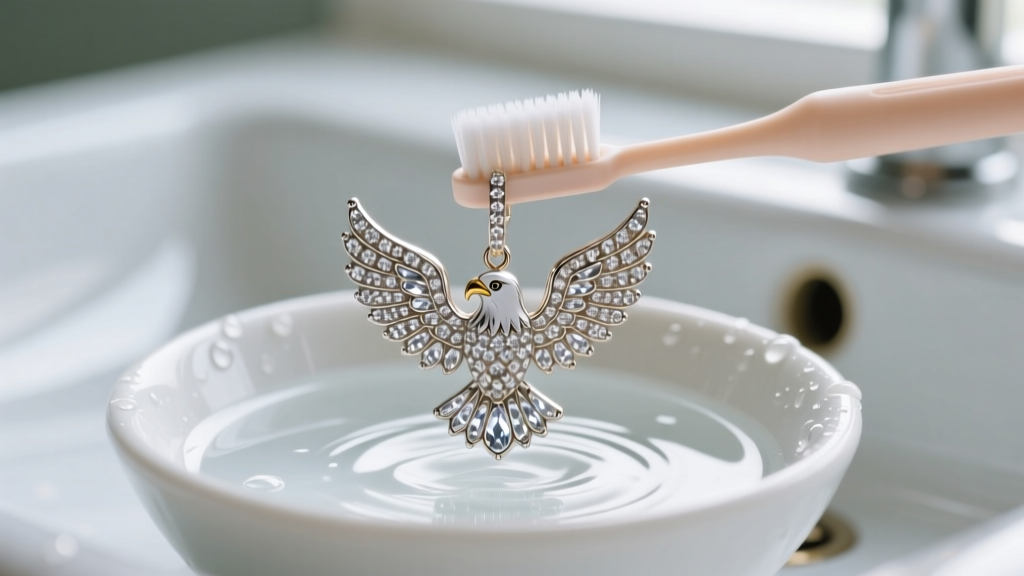
- Agitate: Using a brand-new, extra-soft baby toothbrush, gently sweep the bristles across the pavé crystals. Always brush in the direction of the setting to avoid catching and lifting the microscopic prongs.
- Rinse and Dry: Rinse under a gentle stream of lukewarm distilled water. Pat dry with a lint-free microfiber cloth. Never use paper towels, as their wood pulp fibers can scratch softer crystals and leave micro-lint in the settings.
Cleaning Agents vs. Material Safety Matrix
Not all cleaning solutions are created equal. Use this reference table to avoid catastrophic damage to your jewelry. For more baseline care standards, refer to the Jewelers of America care guidelines.
| Cleaning Agent | Rhodium-Plated Silver | Glue-Set Crystals | Prong-Set Diamonds |
|---|---|---|---|
| Mild Dish Soap & Distilled Water | ✅ Safe | ✅ Safe | ✅ Safe |
| Ultrasonic Cleaner | ⚠️ Risk of Plating Peel | ❌ Will Dislodge Glue | ✅ Safe |
| Commercial Silver Dip | ❌ Strips Rhodium | ❌ Clouds Foil Backing | ⚠️ Risk to Porous Gems |
| Isopropyl Alcohol (70%) | ✅ Safe | ❌ Dissolves Adhesive | ✅ Safe |
| Steam Cleaner | ✅ Safe | ❌ Melts Epoxy Resin | ✅ Safe |
Storage and Tarnish Prevention
How you store your earrings when they are not laying on your ear is critical to their lifespan. Sterling silver reacts with sulfur compounds in the air to form silver sulfide (tarnish). Furthermore, tossing multiple pieces into a communal jewelry box will result in the harder crystals scratching the softer metal posts.
- Individual Polyethylene Bags: Store each pair in its own airtight, anti-tarnish polyethylene bag. Avoid PVC plastics, which can off-gas chemicals that accelerate metal degradation.
- 3M Anti-Tarnish Strips: Place a small strip of 3M anti-tarnish paper inside your storage container. These strips absorb airborne sulfur and can protect your jewelry for up to 12 months.
- Silica Gel Packets: Moisture accelerates both tarnishing and the breakdown of crystal adhesives. Include a desiccant packet in your jewelry drawer to maintain a low-humidity environment (ideally below 40% relative humidity). Never store fine motif jewelry in a bathroom cabinet.
Troubleshooting Common Fit Issues
Even with the correct gauge and backing, you may find your eagles sparkling earrings lay slightly crooked. Here is how to troubleshoot the most common fit issues:
The Earring Tilts to One Side
This usually indicates that the piercing fistula has healed at a slight angle, or the earring post was bent during manufacturing. Do not attempt to bend the post with pliers, as this will work-harden the metal and cause it to snap. Instead, use a slightly looser silicone backing that allows the post to pivot naturally until the heavy wingspan finds its center of gravity.
The Earring Sags Forward
If the top of the eagle's head pulls away from the earlobe, the center of gravity is too far forward. You can counteract this by using a plastic earring lifter (a small, curved disc that sits between the earlobe and the earring head) or by switching to a heavier, wider metal clutch back to anchor the rear of the post more securely.
Earlobe Stretching and Recovery
If you have worn heavy, thick-gauge eagle earrings for prolonged periods, you may notice the piercing hole stretching or the lobe thinning. Give your ears a rest by switching to lightweight titanium studs for a few weeks. Gently massage the earlobe daily with pure jojoba oil or vitamin E oil to promote tissue elasticity and cellular turnover, helping the fistula tighten back to its original diameter.


