The Best Ear Infection From Earrings Remedy: A Beginner Guide
Discover the most effective ear infection from earrings remedy. Learn to identify allergies vs. infections and choose safe, implant-grade metals.


You put on a new pair of earrings, and within hours, your earlobe is throbbing, red, and swollen. When searching for an ear infection from earrings remedy, most beginners immediately reach for the medicine cabinet or panic about losing their piercing. However, treating the issue effectively requires understanding exactly what is happening beneath the skin. The piercing channel, known as a fistula, is a delicate tube of tissue that is highly susceptible to both bacterial invasion and allergic contact dermatitis. In 2026, professional piercers and dermatologists emphasize that the right remedy depends entirely on accurate diagnosis, proper material science, and correct aftercare protocols.
Is It an Infection or an Allergy? (The First Step to a Remedy)
Before applying any ear infection from earrings remedy, you must determine if you are dealing with a bacterial infection or an allergic reaction. According to the American Academy of Dermatology, nickel allergy is one of the most common causes of contact dermatitis, and it is frequently misdiagnosed by beginners as an infection. Many commercial earrings, even those labeled "hypoallergenic," contain trace amounts of nickel in their alloys or soldering points. When your skin's moisture interacts with the metal, it creates nickel salts that trigger an immune response.
| Symptom | Bacterial Infection (Staph/Pseudomonas) | Contact Dermatitis (Nickel Allergy) |
|---|---|---|
| Onset Time | 24 to 72 hours post-exposure | Minutes to 12 hours post-exposure |
| Discharge | Thick, opaque yellow or green pus | Clear, weeping fluid or dry flaking |
| Sensation | Throbbing pain, deep heat, swelling | Intense surface itching, burning |
| Resolution | Requires saline, time, or antibiotics | Resolves quickly upon metal removal |
Immediate Ear Infection From Earrings Remedy Steps
If you have confirmed that your symptoms align with a bacterial infection rather than an allergy, follow this clinical-grade protocol. The Association of Professional Piercers (APP) strongly advises against using harsh home remedies like tea tree oil, hydrogen peroxide, or antibiotic ointments, which can trap bacteria and destroy healing cells.
- Do Not Remove the Jewelry (If Fresh): If the piercing is less than a year old, removing the earring can cause the surface holes to close, trapping the infection inside and forming a painful abscess. If it is a fully healed lobe and the metal is causing the issue, you may remove it to clean the area, but you must keep the channel open with a sterile glass or titanium retainer.
- Apply Sterile Saline: Spray a 0.9% sterile sodium chloride solution (with no additives or preservatives) directly onto the entry and exit points. Do this twice daily. The isotonic nature of the saline gently flushes out lymph and bacteria without damaging the delicate fistula tissue.
- Use a Warm Compress: Soak a clean, non-woven gauze pad in warm, sterile saline and hold it against the ear for 5 to 10 minutes. The heat increases local blood circulation, bringing white blood cells to the area to fight the infection and encouraging any trapped fluid to drain naturally.
Why You Should Never Use Rubbing Alcohol
A common beginner mistake is applying 70% isopropyl alcohol to an infected piercing. Alcohol is a desiccant; it strips the skin of its natural lipid barrier, causing micro-tears and severe dryness. These micro-tears actually create new entry points for Staphylococcus aureus, worsening the infection and delaying the healing process significantly.
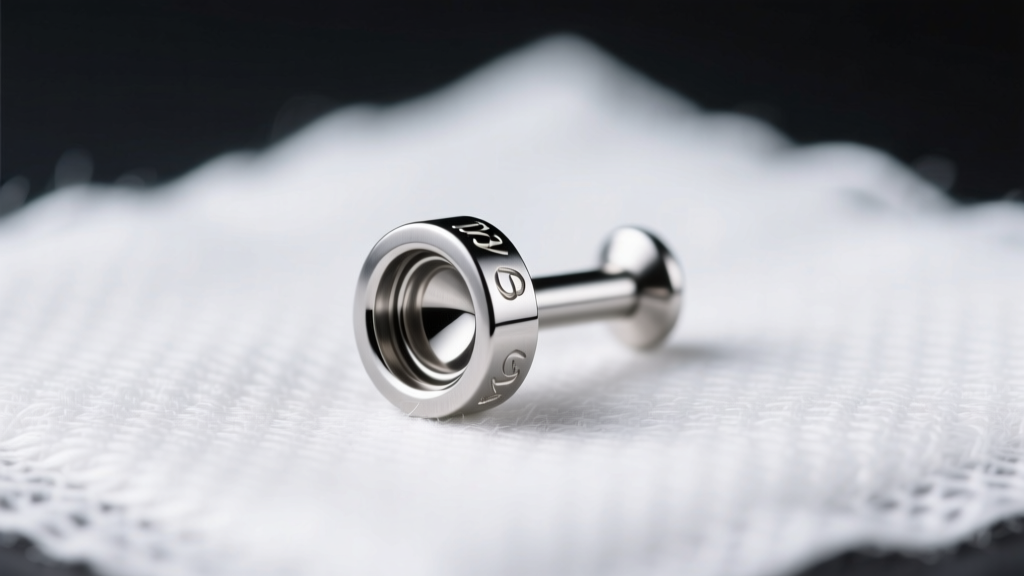
The Hidden Culprits: Jewelry Materials and Gauge Sizes
The most effective long-term ear infection from earrings remedy is prevention through proper jewelry selection. The metal resting inside your piercing channel must be biocompatible. Here is what you need to know about material grades and sizing to prevent recurrent infections:
- Implant-Grade Titanium (ASTM F136): This is the gold standard for sensitive ears and fresh piercings. It is entirely nickel-free, highly polished, and biocompatible, meaning the body does not recognize it as a foreign threat.
- Solid 14k or 18k Gold: Ensure it is solid, not plated. Gold-plated or vermeil earrings have a microscopic porous surface that harbors bacteria. Furthermore, the plating eventually flakes off inside the piercing channel, causing severe irritation and infection.
- Avoid "Surgical Steel": This is a marketing term, not a regulated metal grade. Most cheap surgical steel contains 8% to 10% nickel, which will trigger a reaction in sensitive individuals.
- Gauge Size Matters: Standard lobe piercings are usually 20-gauge (0.81mm) or 18-gauge (1.02mm), while cartilage piercings are typically 16-gauge (1.29mm). Wearing jewelry that is too tight or has a rough post can cause micro-trauma to the fistula every time you move, inviting bacteria into the wound.
The "Butterfly Back" Trap and Cheese Ear
Traditional friction-back earrings, commonly known as butterfly backs, are a primary cause of localized lobe infections. The small metal scroll creates a tight, dark, and moist environment against the back of the earlobe. This traps dead skin cells, sebum, and sweat, creating an anaerobic breeding ground for Pseudomonas aeruginosa. This bacteria produces the notorious "cheese ear" odor and frequently leads to localized infections. The modern remedy is to switch to flat-back labret studs, which feature a smooth, flat titanium disc that sits flush against the skin, allowing the area to breathe and be easily cleaned.
Cartilage vs. Lobe Infections: A Critical Warning
"Cartilage piercings are uniquely vulnerable because cartilage is avascular—it lacks its own direct blood supply. An infection here cannot be fought off as easily by the immune system and can rapidly develop into perichondritis, a severe condition that can cause permanent cosmetic deformity of the ear."
— Adapted from Mayo Clinic Guidelines on Perichondritis
If your cartilage piercing (such as a helix, tragus, or conch) is hot to the touch, swollen, and radiating pain down your neck, do not rely on home remedies. Seek medical attention immediately. A doctor may need to prescribe oral antibiotics that can reach the avascular tissue through the surrounding capillary networks. Never attempt to squeeze or drain a cartilage bump, as this can push bacteria deeper into the cartilage matrix.
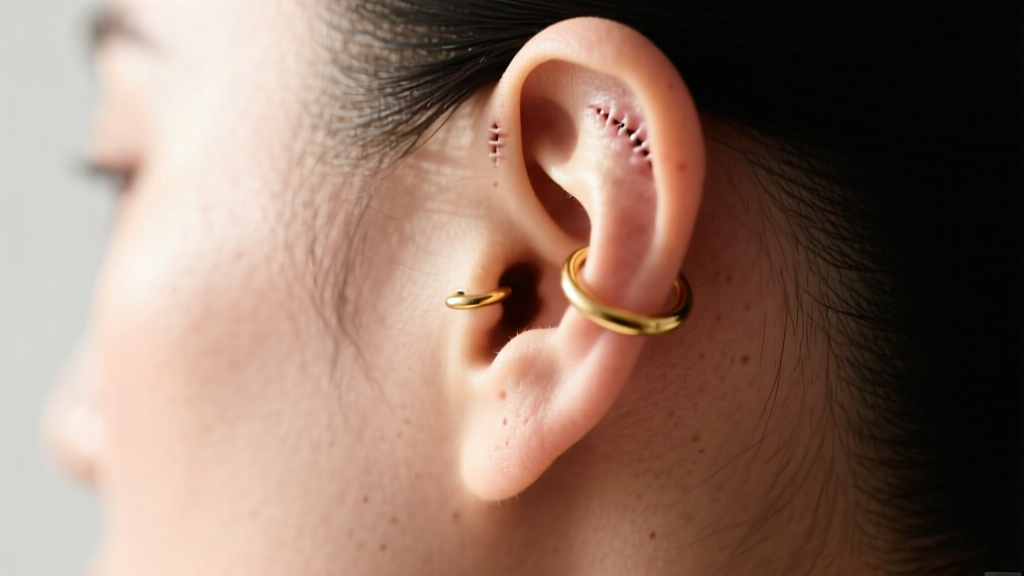
Long-Term Prevention: Building a Safe Jewelry Wardrobe
Once you have resolved the immediate issue using the correct ear infection from earrings remedy, you must audit your jewelry box. Invest in an ultrasonic cleaner (operating at 40kHz frequency) to safely dislodge microscopic biofilm and sebum from the crevices of your earring posts and clasps before every wear. Transition your daily wearers to high-quality, internally threaded or threadless titanium jewelry from reputable brands that guarantee ASTM F136 compliance. By understanding the biology of your piercings and respecting the materials that interact with your body, you can enjoy your favorite earrings without the fear of recurring infections.


