Ear Ripped from Earring? Prevention & Safe Jewelry Guide
Learn how to prevent a torn earlobe and what to do if your ear ripped from earring trauma. Expert buying guide for safe, lightweight jewelry.

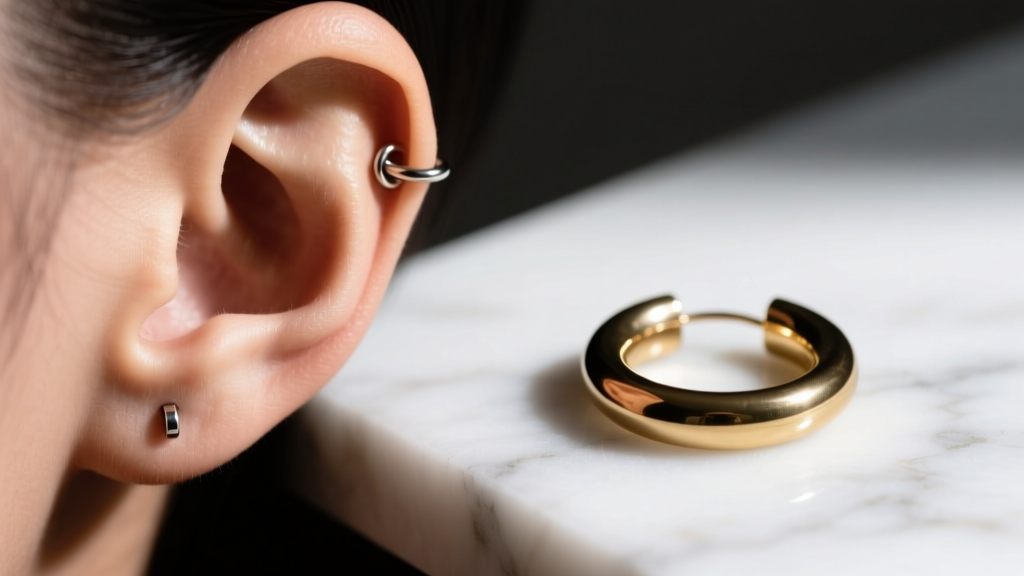
The Biomechanics of a Torn Earlobe: Understanding the Trauma
Experiencing an 'ear ripped from earring' trauma is a sudden, painful event that can permanently alter your piercing anatomy. This specific type of injury occurs when the downward force or sudden torque applied to an earring exceeds the tensile strength of the earlobe tissue. The result is a migration of the piercing hole downward, a partial slit, or a complete bifurcation (splitting) of the lobe.
To buy jewelry safely, you must understand the 'cheese-cutter effect'. This biomechanical phenomenon happens when a thin wire (like a 22-gauge or 20-gauge post) supports a heavy load. The pressure concentrates on a microscopic surface area, slowly slicing through the collagen and elastin fibers of the earlobe over time, even without a sudden snag. According to dermatological guidelines from the American Academy of Dermatology, chronic micro-tearing from heavy jewelry is the leading precursor to sudden, catastrophic lobe splitting.
Critical Buying Metrics: How to Choose Lobe-Safe Earrings
When shopping for everyday earrings, aesthetics must be balanced with structural safety. If you want to avoid the nightmare of a torn lobe, you must evaluate three primary metrics: weight, gauge thickness, and center of gravity.
1. The Weight Threshold
For standard, healed lobe piercings, the general consensus among professional piercers and dermatologists is to keep daily-wear earrings under 7 to 10 grams per ear. Statement pieces exceeding 15 grams should be reserved for short-term wear (under 4 hours) to prevent ligament stretching.
2. Gauge Thickness and Force Distribution
Standard commercial earrings are typically 20-gauge (0.81mm) or 18-gauge (1.0mm). However, a thicker post distributes shear force across a wider surface area of tissue. If you frequently wear heavier dangles, consider having your piercer upgrade your fistula (the piercing tunnel) to 16-gauge (1.2mm). This 50% increase in surface area drastically reduces the risk of the cheese-cutter effect.
3. Center of Gravity and Profile
Earrings with a top-heavy design or those that sit far away from the earlobe act as a lever. The further the mass of the earring hangs below the piercing hole, the greater the torque applied to the bottom of the fistula. Opt for designs that hug the lobe or feature a balanced, centered drop.
Earring Weight vs. Lobe Stress Tolerance
| Earring Weight | Gauge Recommendation | Wear Time Limit | Trauma Risk Level |
|---|---|---|---|
| 1g - 5g (Studs, Small Huggies) | 20G or 18G | Unlimited (24/7) | Negligible |
| 6g - 10g (Medium Hoops, Drops) | 18G or 16G | 12 - 16 Hours | Low to Moderate |
| 11g - 20g (Statement Dangles) | 16G or 14G | 4 - 6 Hours | High (Stretching) |
| 20g+ (Heavy Chandeliers) | 14G+ / Support Required | Under 2 Hours | Severe (Tear Risk) |
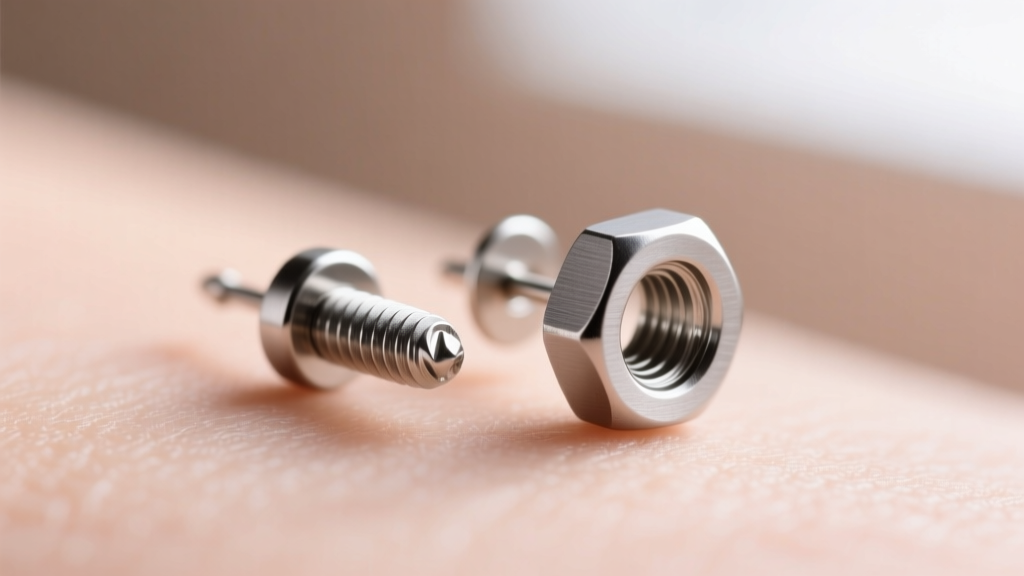
Backing Systems Ranked by Tear-Prevention Efficacy
A common cause of an ear ripped from earring snags is a loose backing that allows the earring to slide down the post. When the earring rests at the very bottom of the post, it creates maximum leverage against the lower edge of the piercing. Securing the earring flush against the lobe is vital.
- Locking Backs (e.g., La Pousette): The gold standard for security. These feature a mechanical locking mechanism that clicks into a grooved post, making it impossible for the earring to slide down or be pulled off by a snag.
- Screw-Backs: Excellent for security, requiring the backing to be threaded onto the post. They keep the jewelry flush to the ear, but the threads can occasionally irritate the fistula if not perfectly smooth.
- Silicone O-Rings / Discs: A modern favorite. These flat, medical-grade silicone discs grip the post via friction and provide a wide, soft surface area against the back of the ear, distributing pressure and preventing the earring from drooping.
- Standard Butterfly Friction Backs: The least secure. Over time, the metal loops lose tension, allowing the earring to slide down the post and increasing the risk of tearing.
Material Innovations: Lightweight Alloys and 2026 Tech
If you love the look of massive, oversized hoops but fear the physical toll, material science is your best defense. In 2026, the jewelry industry has heavily adopted 3D-printed lattice structures in cast metals. This allows designers to create voluminous, chunky-looking hoops that are actually hollow or porous, reducing the weight by up to 60% compared to solid cast equivalents.
When buying lightweight alternatives, look for these specific materials:
- Grade 23 Titanium (Ti-6Al-4V ELI): Not only is it highly biocompatible and hypoallergenic, but it also possesses an incredible strength-to-weight ratio, allowing for ultra-thin, lightweight posts that won't bend under pressure.
- Aerospace-Grade Aluminum: Often used in large, avant-garde statement pieces. Aluminum is remarkably light, though it must be anodized or coated to prevent skin oxidation.
- Hollow 14k/18k Gold Tubing: Traditional for large hoop earrings. Ensure the tubing has a seamless weld to prevent the wire from snapping under stress.
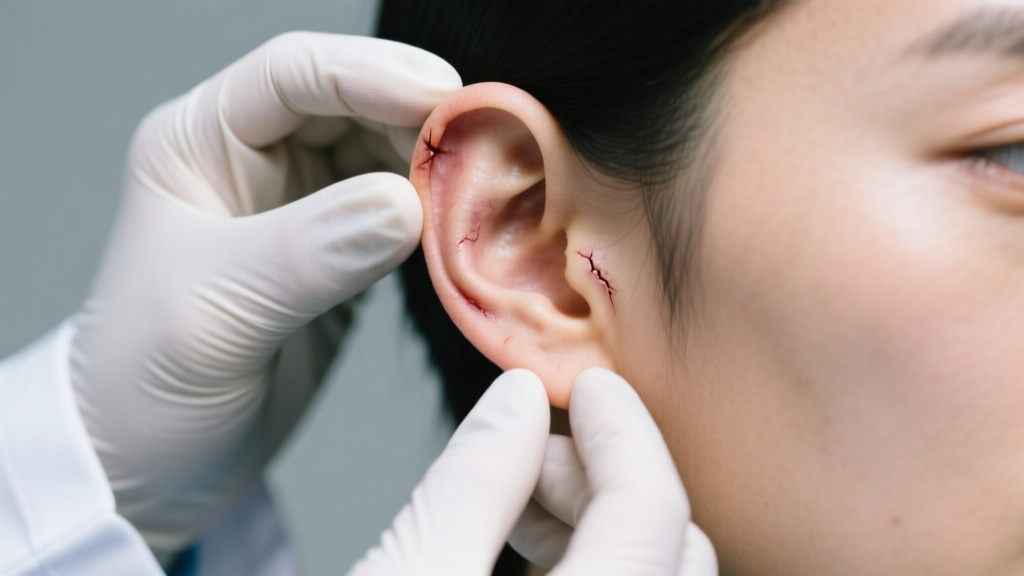
Emergency Protocol: What to Do If Your Lobe Tears
If you suffer a sudden trauma where your ear is ripped from earring entanglement (such as a child grabbing the jewelry or catching a hoop on a sweater), immediate and correct action is required to save the tissue for future repair.
Immediate First Aid
- Remove the Jewelry: Do not leave a dangling earring in a partially torn lobe; the weight will exacerbate the tear.
- Apply Pressure: Use a sterile gauze pad to apply firm, continuous pressure for 10 to 15 minutes to achieve hemostasis (stop the bleeding).
- Do NOT Use Superglue: A dangerous internet myth suggests using cyanoacrylate (superglue) to seal the wound. This introduces toxic chemicals into an open wound and causes severe contact dermatitis, complicating future surgical repair.
Surgical Repair (Lobuloplasty)
If the lobe is completely split or significantly elongated, it will not heal back together on its own. You will need a minor in-office surgical procedure known as a lobuloplasty. According to the American Society of Plastic Surgeons, this procedure involves excising the skin lining the old fistula and suturing the fresh edges of the dermis together. As of 2026, the average cost for a professional earlobe repair ranges from $100 to $250 per ear, depending on the complexity of the tear and the surgeon's expertise. Healing takes 6 to 8 weeks, after which the lobe can typically be re-pierced slightly adjacent to the original scar line.
Expert Checklist for Your Next Earring Purchase
Before checking out with your next pair of earrings, run them through this safety audit to ensure your lobes remain intact and healthy:
- [ ] Weight Check: Is the earring under 10 grams for daily wear?
- [ ] Backing Security: Does it utilize a locking, screw, or wide silicone backing to prevent drooping?
- [ ] Post Thickness: Is the wire thick enough (18G or 16G) to prevent the cheese-cutter effect?
- [ ] Leverage Test: Does the earring sit flush, or does it hang far below the lobe, creating a pendulum effect?
- [ ] Sleep Safety: Can you comfortably sleep in them without the post digging into your neck or catching on pillows? (If not, they must be removed nightly to prevent sleep-tearing).
By prioritizing biomechanical safety alongside aesthetic beauty, you can enjoy a lifetime of piercing wear without the fear of traumatic lobe damage.


