Ear Wire Earrings: Technical Guide to Gauges, Metals & Fit
Explore the technical anatomy of ear wire earrings. An expert guide covering gauge sizes, wire hardness, metallurgy, and mechanical variations.

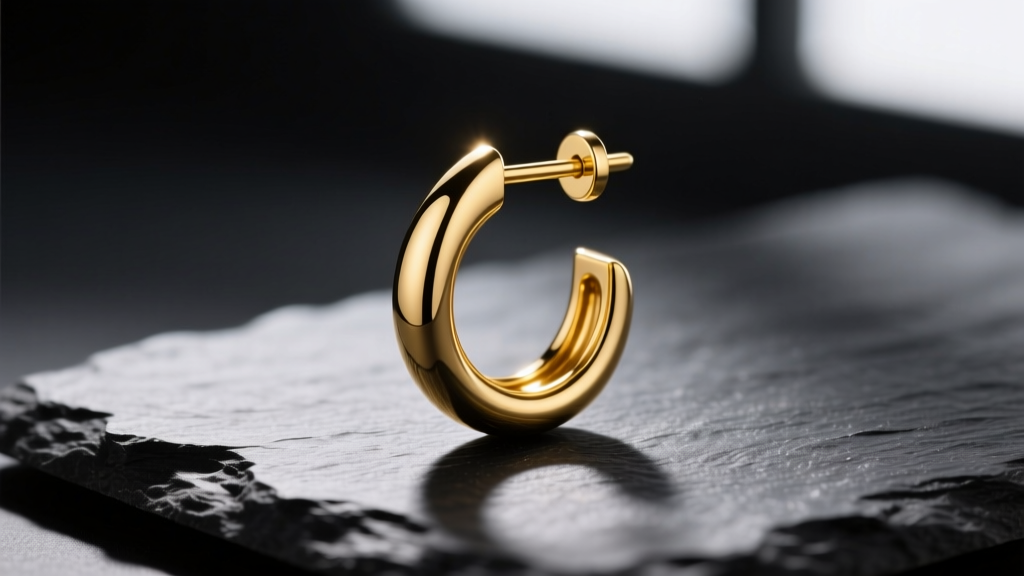
When evaluating fine jewelry, consumers and bench jewelers alike often obsess over gemstone clarity or precious metal purity, yet the structural integrity of the finding itself is frequently overlooked. Ear wire earrings represent one of the most ubiquitous and mechanically demanding categories of jewelry findings. Unlike a simple friction-back post that relies on a straight axis and a clutch, an ear wire must navigate the complex topology of the human earlobe, support dynamic weight distribution, and maintain precise metallurgical tension over years of use. In this expert deep dive, we dissect the anatomy, metallurgy, and mechanical physics of ear wire earrings, providing actionable data for jewelers, designers, and informed collectors.
The Metallurgy of Ear Wire Earrings: What Actually Touches the Fistula
The portion of the ear wire that passes through the fistula (the piercing channel) is subjected to a harsh biological environment. Human sebum, sweat, and cosmetic products create a mildly acidic, highly corrosive microclimate. Furthermore, the mechanical friction of insertion and removal demands a metal with high scratch resistance and a mirror finish to prevent micro-tearing of the epithelial tissue. According to the Association of Professional Piercers (APP), only specific implant-grade metals are suitable for long-term wear, particularly for sensitive or newly healed lobes.
While 14k and 18k gold are industry standards for luxury ear wire earrings, their alloy composition matters immensely. Standard 14k yellow gold (58.5% gold, alloyed with copper and silver) offers excellent tensile strength. However, 14k white gold is frequently alloyed with nickel to achieve its color, which can trigger severe contact dermatitis. Palladium-alloyed white gold is the superior, albeit more expensive, alternative. For maximum biocompatibility, ASTM F138 implant-grade titanium and pure niobium remain the gold standards, though they present unique challenges in work-hardening and soldering at the bench.
| Material Grade | Nickel Content | Tensile Strength | Relative Cost (Wholesale) | Best Use Case |
|---|---|---|---|---|
| ASTM F138 Titanium | 0% | Very High | $ | Sensitive lobes, fresh piercings, lightweight dangles |
| 14k Yellow Gold | 0% | High | $$$$ | Premium fine jewelry, heavy gemstone drops |
| 14k White Gold (Nickel) | 10-15% | High | $$$ | Avoid for ear wires; use only for decorative tops |
| Niobium (Anodized) | 0% | Medium | $$ | Hypoallergenic fashion jewelry, colorful custom runs |
| Gold-Filled (14/20) | Varies (Brass core) | Medium-High | $ | Mid-tier commercial production, healed piercings only |
Gauge Thickness and Wire Hardness: The Physics of the Hook
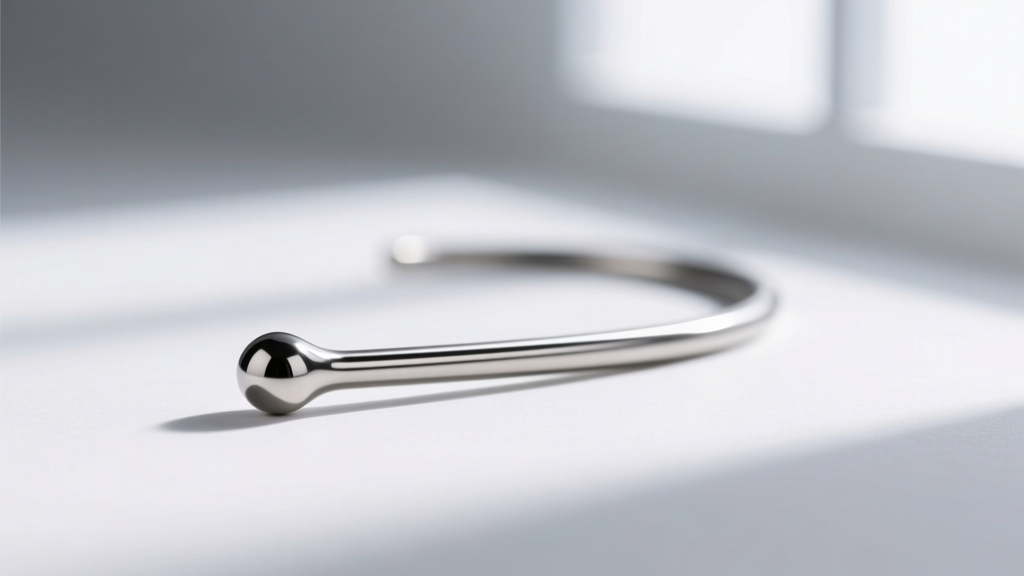
The gauge of the wire dictates not only the visual delicacy of the earring but also its structural yield strength. In the North American wire gauge system, a higher number indicates a thinner wire. The vast majority of commercial ear wire earrings are produced in 20-gauge or 22-gauge thicknesses. However, the physical dimension is only half the equation; the temper or hardness of the wire is what dictates its mechanical behavior.
Standard Gauge Dimensions for Ear Wires
- 22-Gauge (0.64mm): The most common size for lightweight, delicate dangles. It slides effortlessly through standard lobe piercings but will easily deform if used to support heavy gemstones (e.g., a 10-carat quartz briolette), causing the hook to pull forward and stretch the fistula.
- 20-Gauge (0.81mm): The industry workhorse. Provides an optimal balance of structural rigidity and piercing comfort. Ideal for medium-weight drops and standard hoop-style ear wires.
- 18-Gauge (1.02mm): Rarely used for standard French wires due to the discomfort of inserting a 1mm+ wire through a standard 20g/18g lobe piercing. Primarily reserved for heavy-duty leverbacks or cartilage-specific hooks.
Bench jewelers and suppliers like Rio Grande categorize wire by temper: dead soft, half-hard, and full-hard. Dead soft wire has been annealed and lacks the memory required to hold the fishhook curve; it will pull open under the weight of a dangle. Full-hard wire is highly brittle and will snap if bent repeatedly, and its rigid tip can scratch the piercing channel. Therefore, half-hard temper is the absolute technical requirement for manufacturing ear wire earrings. Half-hard wire has been cold-worked to increase its yield strength, allowing it to spring back to its original shape after the minor flexing required during insertion and removal.
Mechanical Variations: French Wire vs. Leverback vs. Kidney
The term "ear wire" encompasses several distinct mechanical profiles, each engineered to solve specific ergonomic and aesthetic challenges. Understanding the failure modes of each design is critical for both jewelry designers and consumers.
The Classic French Wire (Fishhook)
The French wire relies entirely on gravity and the geometry of its curve to stay in the ear. The wire passes up through the front of the lobe, arcs over the top, and hangs down behind. The primary failure mode of the French wire is snagging. When removing a garment like a sweater, the exposed rear hook easily catches on textile fibers, bending the wire out of its parabolic curve and potentially tearing the earlobe. To mitigate this, designers often pair French wires with silicone friction stoppers (ear nuts), though this defeats the purpose of the wire's seamless, invisible profile.
The Leverback Mechanism
Leverback ear wire earrings incorporate a hinged, spring-loaded clasp that snaps shut against the front of the wire, creating a closed loop. This design completely eliminates the snagging hazard and provides exceptional security for high-value gemstone drops. The technical challenge with leverbacks lies in the hinge tension. Over time, the internal spring mechanism or the friction fit of the clasp can degrade, leading to accidental opening. High-quality leverbacks feature a distinct, audible "click" and are cast or stamped from a single piece of metal with a precision-riveted hinge.
The Kidney Wire
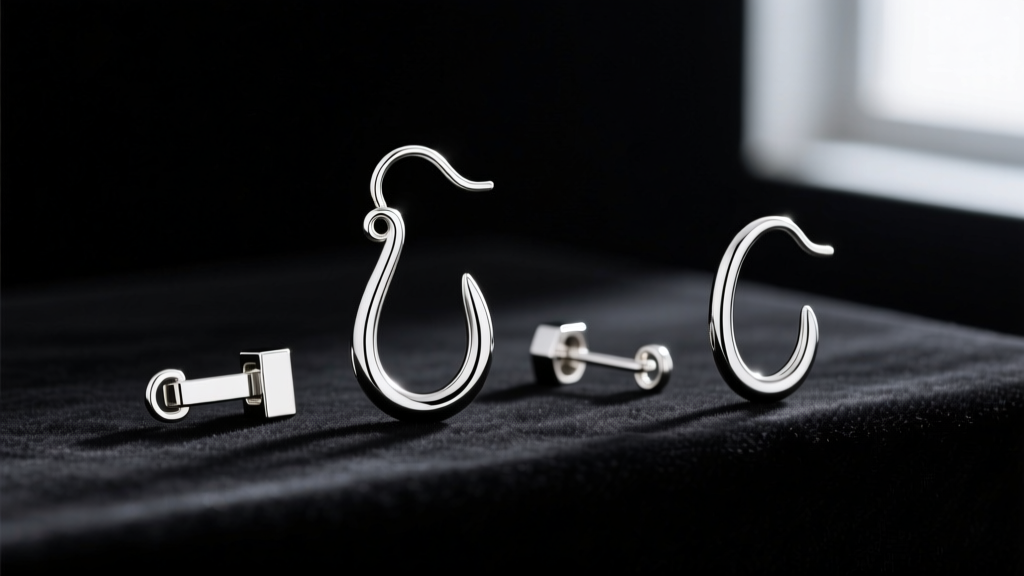
Shaped like an elongated, asymmetrical oval, the kidney wire secures itself by passing the pointed tip through a small loop at the opposite end. While highly secure when properly tensioned, kidney wires suffer from a high rate of user error. If the loop is squeezed too tightly during manufacturing, the wearer will struggle to open it, eventually bending the main body of the wire out of its planar alignment. Furthermore, the large surface area of the kidney wire resting against the neck can cause irritation for individuals with metal sensitivities, as more of the alloy is in prolonged contact with the skin.
Ergonomic Troubleshooting: Why Ear Wire Earrings Fall Out or Irritate
Even perfectly manufactured ear wire earrings can fail if the physics of the dangle are not properly calibrated to the wire's dimensions. The most common complaint from consumers is that French wire earrings constantly tilt forward, pressing the decorative element against the cheek while the rear wire pokes outward.
Expert Troubleshooting Tip: Forward-tilting ear wires are almost always a center-of-gravity issue, not a wire defect. If a dangle is too heavy or sits too far forward on the soldered loop, it acts as a lever, pulling the top of the wire through the fistula. To correct this, bench jewelers can add a discreet counterweight bead to the rear curve of the wire, or redesign the bail to sit closer to the earlobe's center axis.
Another frequent issue is localized contact dermatitis limited to the rear of the earlobe. This is often caused by microscopic burrs left on the inside of the wire curve during the tumbling and polishing process. When drawing wire through a draw plate, the metal's crystalline structure aligns longitudinally. If the wire is cut with dull flush cutters, it leaves a sharp, work-hardened burr that acts like a microscopic saw against the delicate posterior skin of the earlobe. Jewelers must always use cup burrs or silicone polishing wheels to ensure the wire tip and inner curve are perfectly rounded and smooth.
Sourcing and Pricing Benchmarks for Jewelers and Consumers
For independent jewelers and small-batch designers, sourcing high-quality ear wire findings is a critical business decision. Purchasing pre-made, machine-stamped ear wires from wholesale suppliers typically costs between $0.40 and $1.20 per pair for gold-filled or sterling silver, and $8.00 to $25.00+ per pair for solid 14k gold, depending on the gram weight and current spot prices. While cost-effective, mass-produced wires often lack the hand-finished polish of custom-drawn wires.
For bespoke fine jewelry, fabricating ear wire earrings from raw half-hard wire spools is the preferred method. This allows the jeweler to customize the length of the drop, the exact diameter of the fishhook curve to match the client's earlobe thickness, and the size of the bottom loop to accommodate specific jump rings or bails. A spool of 1-ounce 20-gauge half-hard 14k gold wire yields dozens of custom pairs and ensures that the metallurgical integrity of the finding perfectly matches the heirloom quality of the attached gemstones.
Ultimately, the ear wire is the critical bridge between the human body and the art of jewelry. By respecting the metallurgical properties, gauge dimensions, and mechanical physics of these findings, designers can create ear wire earrings that are not only visually stunning but ergonomically flawless and built to last generations.


