Earring Backings Types: A Technical Guide to Secure Fits
Discover all earring backings types with our technical deep dive. Compare friction, screw, and locking mechanisms for optimal security and comfort.

The Biomechanics of Earring Retention
When evaluating different earring backings types, most consumers focus solely on aesthetics, overlooking the complex biomechanics required to keep jewelry securely anchored to the ear. The human earlobe is primarily composed of adipose tissue and dense connective tissue, lacking the rigid cartilage structure found in the upper ear. This anatomical reality means that any backing must counteract not just the downward pull of gravity, but the rotational torque generated by the earring's center of mass. A heavy 15-gram drop earring, for instance, creates a lever effect that can cause lobe ptosis (drooping) if the backing's surface area and clamping force are insufficient. In this expert deep dive, we analyze the engineering, material science, and failure modes of the most common earring backings types to help you make technically informed decisions for your jewelry collection.
Friction Backs: Tension, Scrollwork, and Metal Fatigue
Friction backs, universally known as butterfly or push backs, are the industry standard for stud earrings. Their retention relies entirely on the elastic deformation of the metal scrollwork gripping the earring post. From a metallurgical standpoint, the effectiveness of a friction back is dictated by the yield strength of the alloy used. Sterling silver and 14k gold possess adequate springback properties, but they are susceptible to work hardening and metal fatigue over years of repeated compression and release.
Gauge Tolerances and Clamping Force
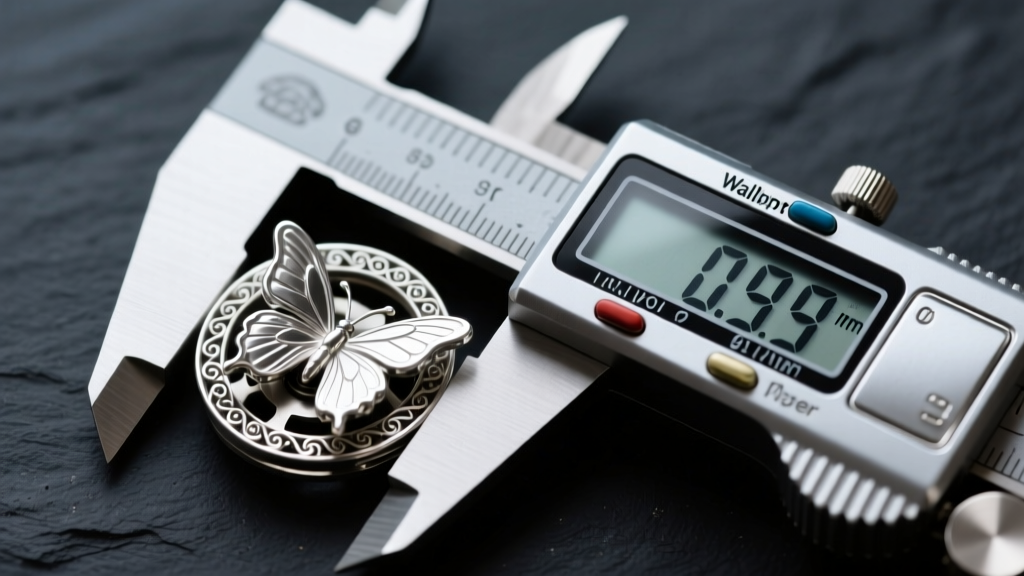
A critical, often ignored variable is the post gauge. Standard friction backs are engineered for 20-gauge (0.81mm) or 18-gauge (1.02mm) posts. If a 20-gauge backing is forced onto a thicker 16-gauge (1.29mm) post, the scrollwork stretches beyond its elastic limit, permanently deforming the metal. Conversely, using an 18-gauge backing on a 22-gauge (0.64mm) post results in insufficient radial clamping force, leading to the earring sliding off during sleep or physical activity. For heavy earrings, jewelers often recommend 'jumbo' friction backs, which feature a wider 10mm to 12mm base pad to distribute the gravitational load across a larger surface area of the earlobe, preventing localized tissue necrosis or tearing.
Screw Backs: Thread Pitch and Precision Engineering
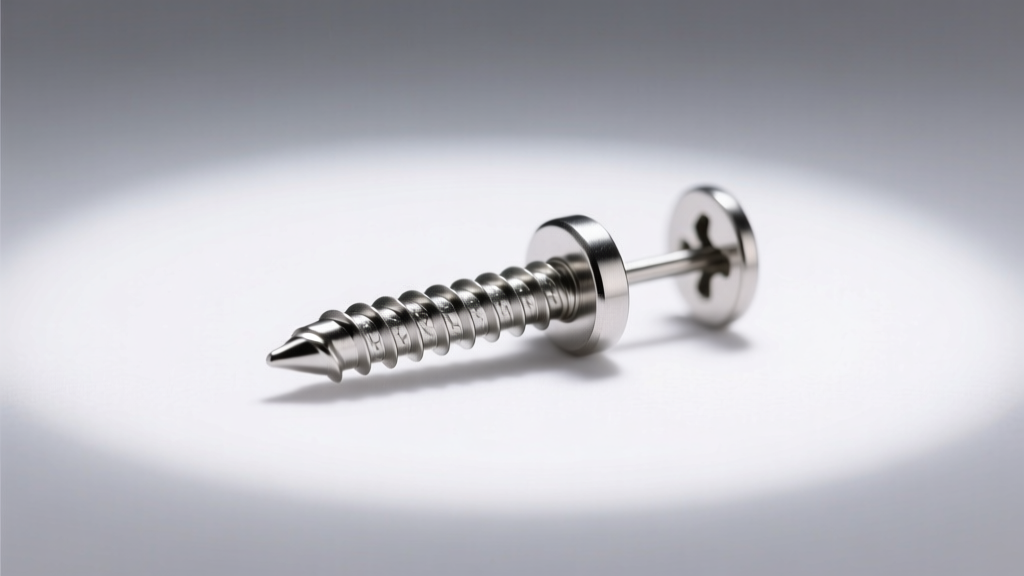
Screw backs represent a significant upgrade in security, utilizing mechanical threading rather than friction to retain the earring. Manufacturing a screw back requires precise CNC machining or thread rolling to cut micro-threads into the earring post. The standard thread pitch for fine jewelry screw backs typically ranges from 0.25mm to 0.30mm. This fine pitch ensures that the backing advances slowly, allowing the wearer to feel the exact moment the backing makes contact with the earlobe.
The Danger of Cross-Threading
The primary failure mode for screw backings is cross-threading, which occurs when the backing is forced onto the post at an improper angle. This is particularly catastrophic in high-karat gold (18k or 24k) due to the metal's malleability. Once the delicate 0.25mm threads are stripped, the post is rendered useless and must be replaced by a bench jeweler. To mitigate this, precision manufacturers chamfer the leading edge of the post and the internal threads of the backing to ensure smooth, aligned engagement. Furthermore, screw backs are highly recommended for diamond studs, as the loss of a high-value gemstone far outweighs the minor inconvenience of threading the backing daily.
Locking Mechanisms: Mechanical Advantage and Spring Tension
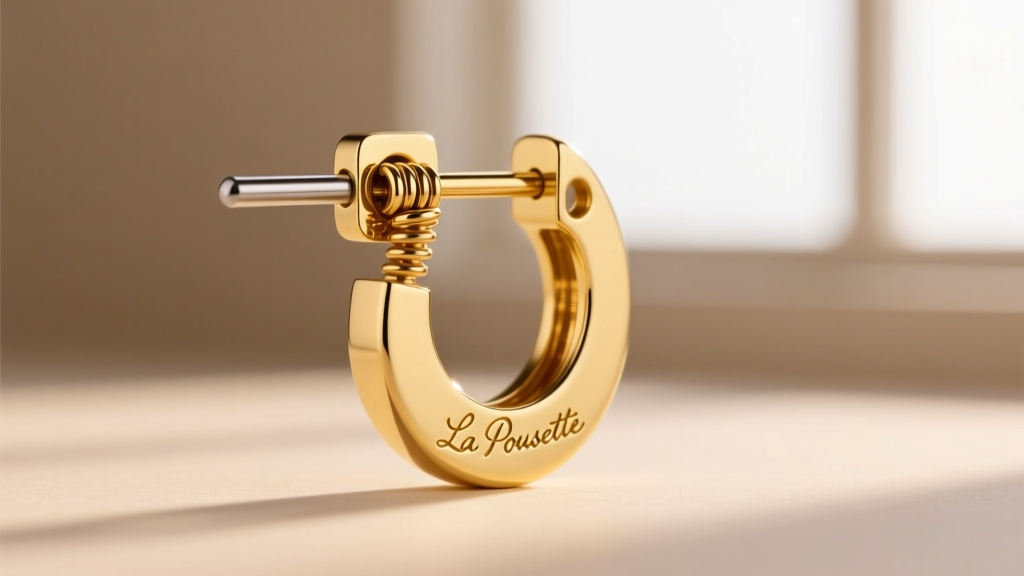
For maximum security, particularly in active lifestyles or for high-value heirloom pieces, mechanical locking backings are the superior choice. The most prestigious of these is the La Pousette (French for 'the push') backing. Unlike friction backs that rely on the metal's memory, the La Pousette utilizes an internal dual-leaf spring mechanism encased in a cylindrical sleeve. When the user pinches the two external nodes, the internal sleeve retracts, allowing the backing to slide freely over the post's notched grooves. Releasing the nodes engages the sleeve into the groove, creating a positive mechanical lock that cannot be dislodged by accidental pulling.
While La Pousette backings offer unparalleled security, they are expensive, often adding $60 to $120 to the retail price of a pair of earrings due to the complex micro-machining required. Another locking variant is the hinged snapback, commonly used for hoop earrings. These rely on a tensioned hinge and a precision-milled catch. The failure point in snapbacks is usually the hinge pin; if the pin is too thin (under 0.5mm), repeated opening and closing will cause shear stress, eventually snapping the hoop open.
Material Science: Hypoallergenic Backings and Contact Dermatitis
The backing is the component that maintains constant, high-pressure contact with the posterior skin of the earlobe. This makes material selection critical for preventing allergic contact dermatitis. According to the American Academy of Dermatology, nickel is the leading cause of jewelry-induced skin reactions. Even 'hypoallergenic' surgical steel can contain up to 10% nickel, which can leach into the skin when exposed to the slightly acidic pH of human sweat.
For patients with severe metal sensitivities, the gold standard is ASTM F-136 certified Ti-6Al-4V ELI (Extra Low Interstitial) titanium. As detailed in ASTM International's medical device standards, this specific grade of titanium is completely nickel-free and is the exact alloy used in surgical orthopedic implants. Alternatively, solid 14k or 18k nickel-free white gold (alloyed with palladium instead of nickel) provides a luxurious, non-reactive alternative, though at a significant premium over base metals.
Comparative Analysis: Security, Cost, and Application
| Backing Type | Security Level | Ideal Post Gauge | Avg. Replacement Cost | Primary Failure Mode |
|---|---|---|---|---|
| Friction (Butterfly) | Moderate | 20g - 18g | $2 - $8 | Scrollwork metal fatigue |
| Screw Back | High | 18g - 16g | $15 - $35 | Cross-threading / stripping |
| La Pousette (Locking) | Maximum | 18g - 16g | $60 - $120 | Internal spring corrosion |
| Hinged Snapback | High (Hoops) | N/A (Integrated) | $20 - $50 (repair) | Hinge pin shear stress |
| Silicone Bullet | Low-Moderate | 22g - 18g | $0.10 - $0.50 | Material degradation / tearing |
Troubleshooting Common Backing Failures
Even the most meticulously engineered earring backings types will experience wear. If your friction backs are slipping, do not immediately discard them. Using a pair of nylon-jaw jewelry pliers, you can gently squeeze the lateral wings of the scrollwork to restore the original clamping tension. Be careful not to over-compress, as this will make the backing impossible to remove by hand.
For screw backs that feel 'gritty' or difficult to turn, the issue is often a buildup of sebum, dead skin cells, and cosmetic residues in the micro-threads. Ultrasonic cleaners are highly effective here, but a simple soak in warm water with a drop of mild dish soap, followed by gentle agitation with a soft-bristled brass brush, will clear the threads without scratching precious metals. Never use steel brushes on gold or silver, as the Mohs hardness of steel will permanently mar the finish. By understanding the mechanical realities of these components, you can ensure your earrings remain secure, comfortable, and structurally sound for decades.
Pro-Tip: For heirloom diamond studs, always pair the earrings with a secondary silicone bullet backing behind the primary metal backing. This creates a redundant fail-safe system that prevents catastrophic loss if the primary mechanical backing fails.
Ultimately, selecting the right backing is an exercise in balancing security, comfort, and budget. Whether you opt for the traditional friction back or invest in the micro-machined precision of a La Pousette, understanding the technical specifications ensures your jewelry stays exactly where it belongs.


