Earring Backs Types: Style and Security Trends for 2026
Explore the evolution of earring backs types in 2026. Discover how secure mechanisms, material grades, and design trends are redefining ear styling.

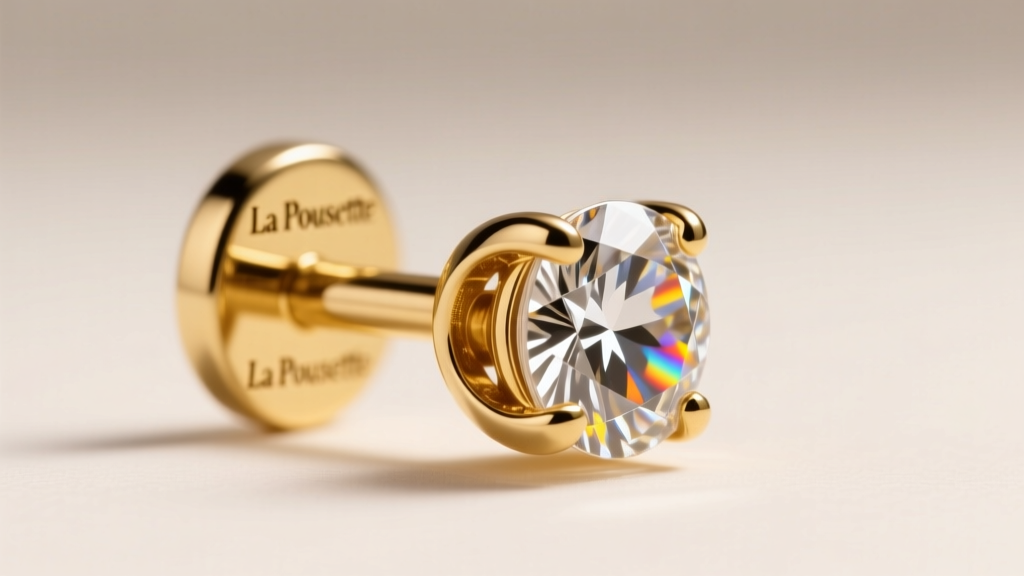
For decades, the front of the earring commanded all the attention, while the back was treated as a mere utilitarian afterthought. However, as we navigate the jewelry landscape of 2026, the narrative has fundamentally shifted. The modern "curated ear" movement, characterized by heavy, sculptural, and architecturally complex pieces, has elevated the importance of understanding different earring backs types. Today, the mechanism that secures your jewelry is just as critical to the overall aesthetic, comfort, and longevity of the piece as the gemstone or metalwork itself.
This comprehensive style and trend analysis dives deep into the engineering, metallurgy, and styling imperatives of modern earring backs. Whether you are styling a delicate 20-gauge lobe stud or a heavyweight 14-gauge cartilage shield, selecting the correct backing system is the ultimate hallmark of a true jewelry connoisseur.
The Engineering Shift: Why Earring Backs Types Matter More Than Ever
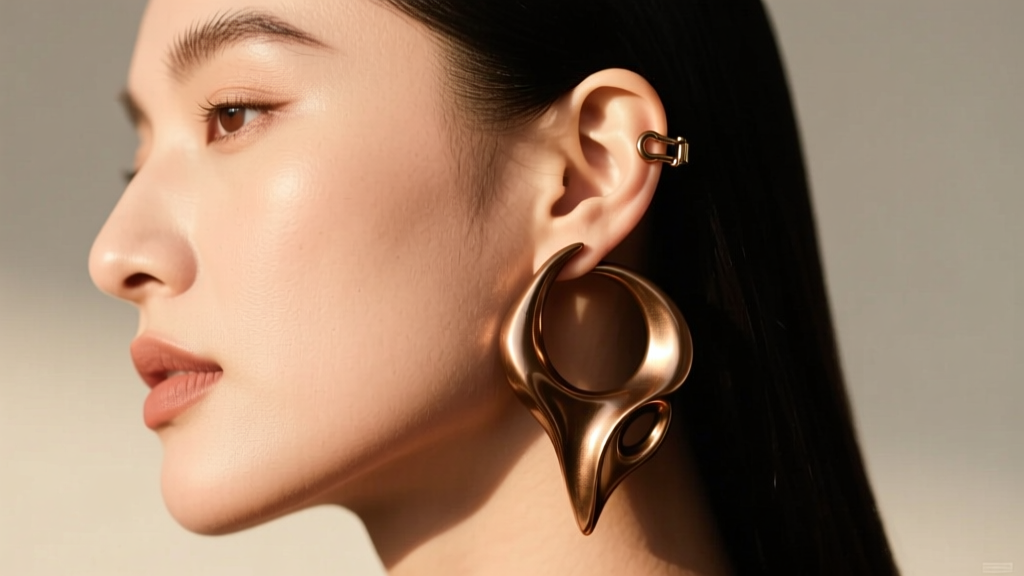
In 2026, jewelry designers are pushing the boundaries of scale and dimensionality. We are seeing a surge in 3D-printed titanium ear cuffs, oversized kinetic drop earrings, and multi-stone ear climbers that wrap around the helix. These designs introduce new variables regarding weight distribution and center of gravity. A standard push-back simply cannot support a 4-gram sculptural gold lobe piece without causing the earring to droop, which not only ruins the visual line but also places undue stress on the piercing fistula.
"The structural integrity of an earring is only as strong as its closure mechanism. In high-end contemporary design, we engineer the back to act as a counterweight, ensuring the piece sits flush and ergonomic against the anatomy." — Lead CAD Designer, Independent Fine Jewelry Studio
Furthermore, the rise of sensitive skin awareness has forced a reckoning with the materials used in these mechanisms. The market is rapidly moving away from nickel-containing white gold alloys and cheap brass, favoring implant-grade alternatives that prioritize long-term tissue health.
Technical Breakdown of Popular Earring Backs Types
To make informed styling and purchasing decisions, one must understand the mechanical nuances, failure modes, and ideal use cases for the primary earring backs types available on the market today.
1. Friction Push Backs (Butterfly Clutches)
The ubiquitous butterfly clutch relies on a metal scroll that grips the notched grooves of a standard 20-gauge (0.81mm) or 18-gauge (1.02mm) post. While cost-effective and universally compatible, they possess inherent flaws. Over time, the metal loops lose their tensile memory, leading to a loose grip. Additionally, the intricate crevices of the scroll trap sebum, dead skin cells, and hair products, creating a breeding ground for contact dermatitis. Best for: Lightweight, everyday studs under 1.5 grams.
2. Threadless (Push-Pin) Mechanisms
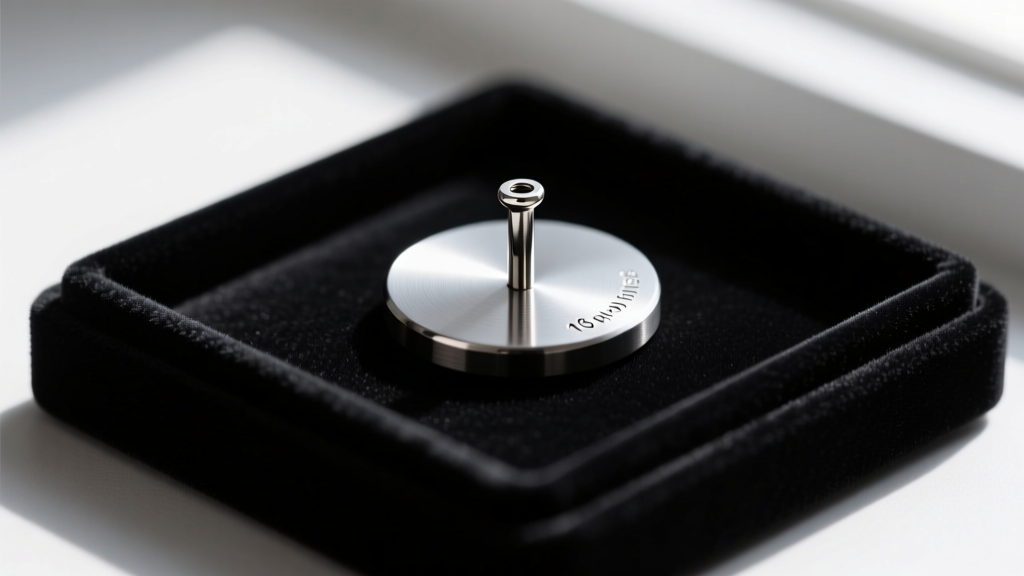
Pioneered by high-end body jewelry brands, threadless systems utilize a slightly bent pin that inserts into a hollow receiving tube. The tension created by the bend locks the jewelry securely in place. According to the Association of Professional Piercers (APP), threadless jewelry made from ASTM F136 implant-grade titanium is the gold standard for fresh and healed cartilage piercings because it eliminates the micro-tears caused by external threading. Best for: 16-gauge and 14-gauge cartilage placements, flat studs, and secure sleepers.
3. Internal Screw Backs
Screw backs offer unparalleled security for high-value pieces. The post features precision-machined threads that mate with a threaded backing. It is crucial to seek out internal threading (where the screw is on the back, and the post is smooth or has internal threads) rather than external threading, which can damage the piercing channel upon insertion. Best for: Diamond solitaires, heavy hoops, and active lifestyles.
4. La Pousette and Omega Clips
For fine jewelry and non-pierced options, the La Pousette mechanism is a marvel of micro-engineering. It features a spring-loaded dual-trigger system that slides onto a thick, dual-notched post, locking with an audible click. Omega clips, often found on vintage or heavy clip-on earrings, use a hinged, curved paddle that snaps against the earlobe, distributing pressure across a wider surface area to prevent pinching.
2026 Material Trends: Hypoallergenic Imperatives
The conversation surrounding earring backs types is incomplete without addressing metallurgy. In 2026, consumers are highly educated about metal sensitivities. The American Academy of Dermatology notes that nickel allergy remains the leading cause of allergic contact dermatitis, heavily impacting how jewelry is manufactured.
- ASTM F136 Titanium: The undisputed king of biocompatible backs. It is completely nickel-free, lightweight, and immune to tarnish. Expect to pay a 20-30% premium for genuine implant-grade titanium mechanisms.
- Nickel-Free 18k Gold: Traditional white gold is alloyed with nickel for whiteness and hardness. Modern luxury brands are pivoting to palladium-white gold or rhodium-plated nickel-free alloys for their earring backs, ensuring safety without sacrificing the bright white aesthetic.
- Niobium: An emerging trend for anodized, colorful earring backs that offer high biocompatibility at a lower price point than gold, often utilized in bespoke, artisan-crafted threadless ends.
The Decision Matrix: Matching Backs to Piercing Placements
Selecting the correct backing system requires a synthesis of anatomical placement, jewelry weight, and gauge size. Use the following framework to optimize your curated ear projects.
| Piercing Placement | Standard Gauge | Recommended Back Type | Weight Tolerance |
|---|---|---|---|
| Standard Lobe | 20g - 18g | La Pousette, Silicone Clutch, Friction | Low to High (up to 8g) |
| Helix / Flat | 16g - 14g | Threadless (Push-Pin), Internal Screw | Low to Medium (up to 3g) |
| Tragus / Conch | 16g | Flat-Back Threadless, Labret Screw | Low (flush profile required) |
| Ear Cuff (Non-Pierced) | N/A | Adjustable Omega Clip, Tension Wire | Medium (requires grip balance) |
Troubleshooting Common Back Failures
Even the most advanced earring backs types can fail if improperly maintained. Here is how to troubleshoot the most common mechanical issues encountered by collectors and stylists:
1. Stripped Screw Backs: This occurs when a user forces a threaded back at an angle, cross-threading the soft precious metal. The Fix: Never force a screw back. If it catches, reverse it immediately. If the threads are stripped, a jeweler must re-tap the backing or replace the post entirely.
2. Bent Threadless Pins: While threadless pins require a slight bend (about 10 to 15 degrees) to create tension, bending them too far or repeatedly straightening and re-bending them will cause metal fatigue and eventual snapping. The Fix: Use nylon-jaw pliers to make a single, smooth bend near the tip of the pin. If the pin snaps, replace the entire shaft.
3. Drooping Heavy Studs: If a heavy lobe stud continuously points downward, the post is likely too thin (20g) or the backing is too light to act as a counterweight. The Fix: Upgrade to an 18-gauge or 16-gauge post and utilize a jumbo friction back or a heavy solid-gold La Pousette back to shift the center of gravity backward, keeping the stud upright.
Conclusion: The Future of Ear Styling
As we look through the lens of 2026 trend analysis, it is clear that the jewelry industry is no longer compromising on the intersection of security and style. Understanding the intricacies of earring backs types empowers you to protect your investments, preserve your piercing health, and ensure that every piece in your curated ear sits exactly as the designer intended. The next time you invest in fine jewelry, look past the sparkle and examine the engineering holding it in place.


