Earring Card Punch Buying Guide: Budget & Value Assessment
Evaluate the true ROI of an earring card punch. Compare manual, lever, and custom die punches for jewelry businesses to maximize budget and efficiency.

The Hidden Costs of Hand-Punching Earring Cards
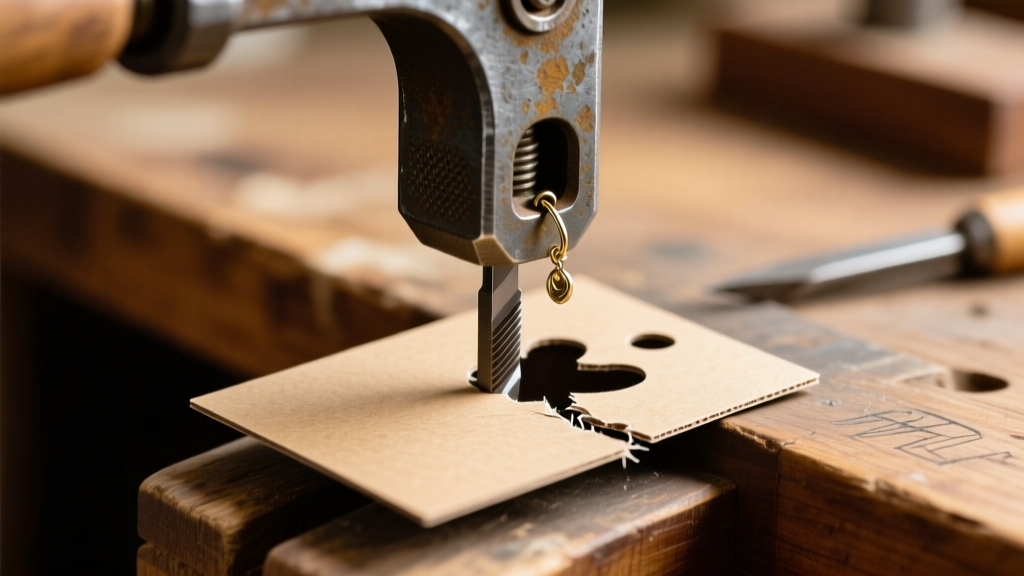
When scaling a handmade jewelry business in 2026, packaging efficiency directly impacts your bottom line. Many emerging jewelers start by using standard office hole punchers for their earring display cards. While the upfront cost is negligible, the hidden costs of hand-punching—ranging from repetitive strain injuries to ruined premium cardstock—can silently erode your profit margins. If you are fulfilling more than 50 orders a week, evaluating the true value of a dedicated earring card punch is no longer optional; it is a critical operational necessity.
The primary issue with generic office punches is shear force. Standard punches are engineered for 80gsm copy paper, not the 300gsm to 400gsm cotton or kraft cardstock required for luxury jewelry presentation. Forcing thick stock through an underpowered blade leads to micro-tears, misaligned holes, and crushed paper fibers. According to Shopify's ecommerce packaging guidelines, the unboxing experience is a primary driver of customer retention and brand perception. Crooked holes that cause your earrings to hang asymmetrically instantly cheapen the perceived value of your work.
Types of Earring Card Punches: A Budget Breakdown
To accurately assess value, we must categorize earring card punches by their mechanical action and production capacity. Each tier serves a distinct phase of business growth.
1. Manual Single-Hole Pliers (The Hobbyist Tier)
Priced between $15 and $35, manual plier-style punches rely entirely on hand grip strength. They are highly portable and excellent for pop-up markets where you might need to punch a custom card on the fly. However, they max out at around 250gsm paper weight. The value proposition here is strictly for hobbyists producing fewer than 30 pairs of earrings per week. Beyond that volume, the ergonomic toll on your wrist makes this a poor long-term investment.
2. Lever-Action Desktop Punches (The Scaling Tier)
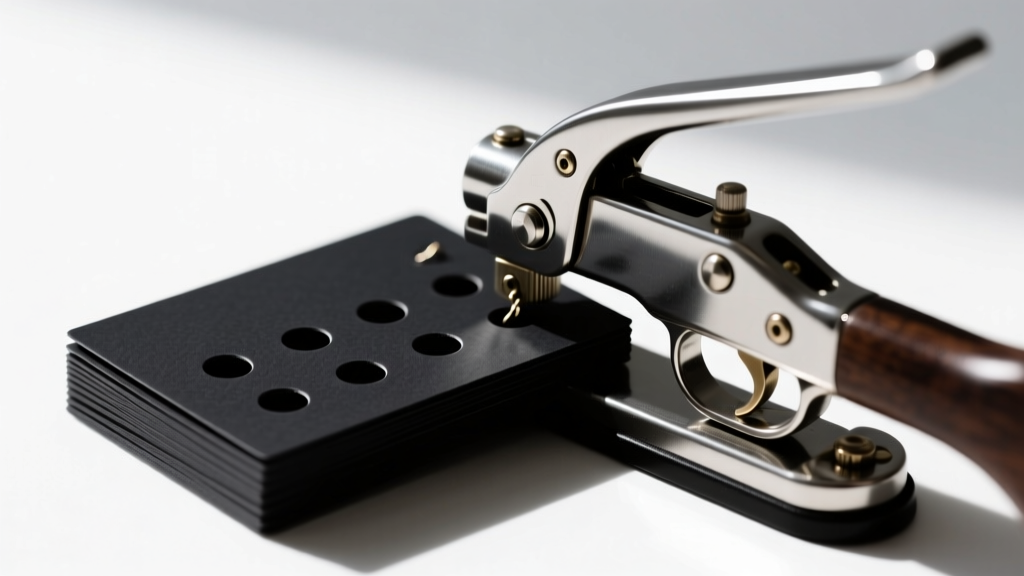
Ranging from $45 to $120, lever-action punches utilize a mechanical fulcrum to multiply your downward force. This allows you to cleanly shear through 16pt (350gsm) and even 18pt (400gsm) cardstock with minimal effort. Many specialized jewelry packaging suppliers offer lever punches with adjustable paper guides, ensuring that every hole is exactly 15mm or 20mm from the top edge. For businesses processing 100 to 500 orders weekly, this tier offers the highest immediate ROI, balancing moderate upfront cost with drastic time savings.
3. Arbor Press & Custom Die Setups (The Production Tier)
For high-volume production (1,000+ cards per week), the ultimate earring card punch setup involves a 1/2-ton or 1-ton arbor press paired with a custom steel rule die. The initial investment is steep—typically $150 to $250 for the press and $80 to $150 for a custom dual-hole die. However, this setup allows you to punch multiple cards simultaneously and guarantees flawless, identical hole placement every single time. The cost-per-hole drops to fractions of a penny, and the physical labor is reduced to pulling a lever.
Wire Gauge Compatibility: The Metric Most Buyers Ignore
A critical factor in assessing the value of an earring card punch is matching the punch diameter to your specific earring wire gauges. If the hole is too tight, you will bend your ear wires when inserting them; if it is too loose, the earrings will slide off the card during shipping. Experts at Rio Grande emphasize the importance of matching findings to packaging dimensions. Here is the definitive matrix for matching your punch size to standard ear wires:
| Ear Wire Gauge | Wire Diameter (mm) | Required Punch Size | Imperial Fraction | Best Punch Type |
|---|---|---|---|---|
| 22-Gauge | 0.64mm | 1.5mm - 2.0mm | 1/16" or 5/64" | Standard Lever Punch |
| 20-Gauge | 0.81mm | 2.0mm - 2.5mm | 5/64" or 3/32" | Heavy-Duty Lever / Die |
| 18-Gauge | 1.02mm | 2.5mm - 3.0mm | 3/32" or 1/8" | Custom Arbor Die |
Most generic craft store punches only offer a 1/4" (6.35mm) hole, which is far too large for standard 20-gauge ear wires, causing the cards to look unprofessional. Investing in a punch that specifically offers 1/16" or 3/32" dies is paramount for fine jewelry packaging.
ROI Calculation: When to Upgrade Your Equipment
To determine if an upgraded earring card punch is financially viable, calculate your "Misalignment Tax" and time cost. If you spend 45 seconds manually measuring and punching two holes on a batch of 200 cards, that is 2.5 hours of labor. At a conservative $25/hour valuation of your time, you are spending $62.50 per week on packaging prep. A $90 lever-action punch with a built-in sliding paper guide reduces this task to 15 minutes. The equipment pays for itself in less than two weeks, freeing up over two hours of labor that can be redirected to actual jewelry fabrication or marketing.
Material Compatibility & Failure Modes
Not all cardstock behaves the same way under a shearing blade. Understanding material failure modes will save you hundreds of dollars in ruined packaging inventory.
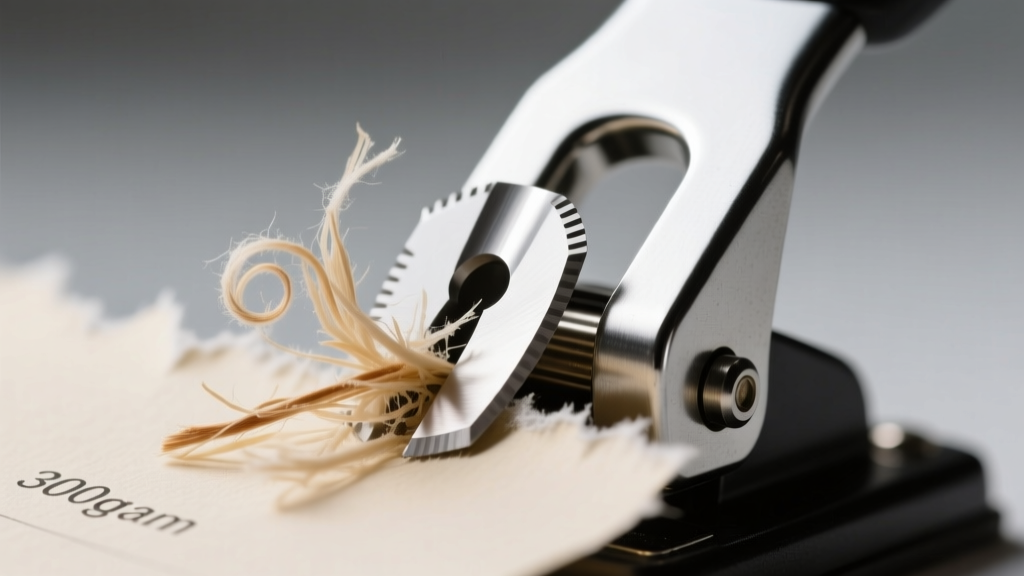
- Cotton Rag Paper (300gsm+): Highly fibrous and soft. Dull punch blades will tear the edges rather than shearing them, leaving a "fuzzy" halo around the hole. Requires frequent blade maintenance.
- Kraft Cardstock: Dense and rigid. Causes rapid wear on cheap, stamped-metal punch blades. Only use hardened steel or arbor dies for kraft paper.
- Synthetic/Plastic Cards (PVC): Never use a standard paper punch on synthetic earring cards. The material will shatter or jam the mechanism. You must use a specialized heavy-duty leather or plastic clicker press.
Top Maintenance Tips to Extend Punch Lifespan
To protect your investment and ensure clean cuts, implement these maintenance protocols:
- Wax Paper Lubrication: Punch through a sheet of wax paper every 100 uses. This coats the cutting cylinder in a micro-layer of wax, reducing friction and preventing paper dust from compacting inside the mechanism.
- Clear the Chad Chamber: Compressed paper "chads" are the number one cause of punch failure. Use a can of compressed air or a specialized cleaning brush to clear the ejection port weekly.
- Avoid Adhesive Contact: If you apply glue dots or double-sided tape to your cards before punching, the adhesive will coat the blade and cause immediate jamming. Always punch first, assemble second.
Final Verdict: Maximizing Your Packaging Budget
Assessing the budget and value of an earring card punch requires looking past the initial price tag. For beginners, a $30 plier punch is a necessary stepping stone. However, for serious jewelers aiming to elevate their brand presentation and reclaim their time, a $90 lever-action punch with an adjustable guide and a 3/32" die is the undisputed sweet spot for value. By matching your punch specifications to your exact wire gauges and cardstock weights, you ensure that your packaging operates as a seamless, professional extension of your jewelry.


