Understanding Earring Designs: A Beginner Anatomy Guide
Discover how to choose the best earring designs for your unique ear anatomy. Learn about gauge sizes, lobe vs cartilage, and metal grades.

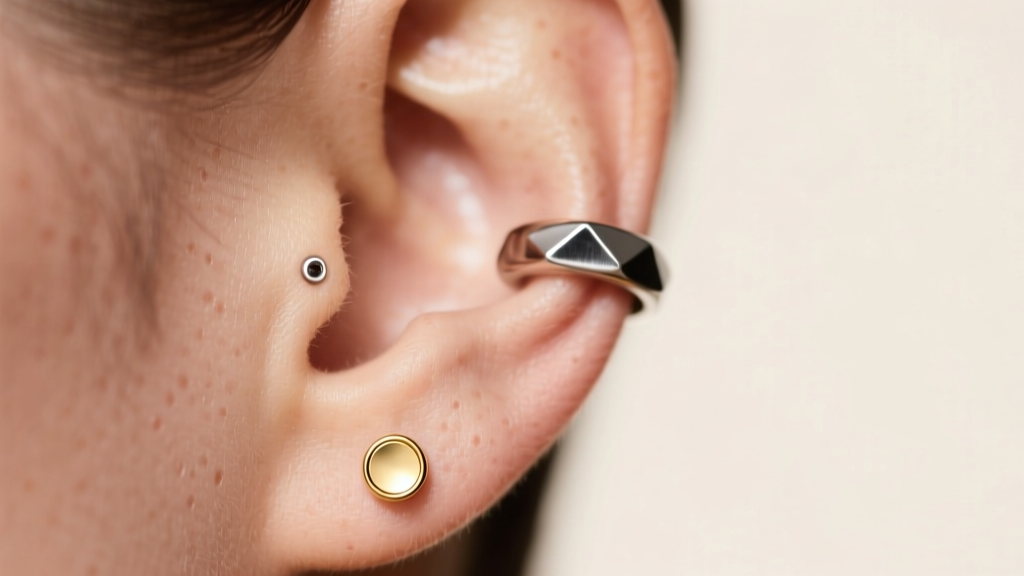
When you first start exploring the world of curated ears and fine jewelry, the sheer volume of earring designs can be overwhelming. From delicate threadless studs to bold, structured hoops, the aesthetic options are endless. However, choosing the right piece goes far beyond simply picking a shape that catches your eye. True expertise in jewelry styling requires a fundamental understanding of how specific earring designs interact with human anatomy, tissue healing rates, and metallurgical safety.
In this beginner-friendly explainer, we will decode the mechanics of ear anatomy, break down the critical differences in gauge sizing, and provide a practical framework for selecting earring designs that are both visually striking and biologically compatible with your body.
The Blueprint: Mapping Your Ear Anatomy for Earring Designs
The human ear is a complex landscape of soft tissue, dense cartilage, and intricate folds. Not all earring designs are universally compatible with every part of the ear. A design that sits perfectly in a fleshy lobe can cause severe irritation, migration, or hypertrophic scarring if forced into a cartilage piercing.
Lobe vs. Cartilage: Why Placement Dictates Design
The earlobe is composed of fibrofatty tissue with a robust vascular (blood) supply. Because it is soft and heals quickly, the lobe can accommodate a wide variety of earring designs, including heavy dangles, oversized hoops, and friction-backed studs. The tissue's elasticity allows it to support weight without immediate structural damage.
Cartilage, on the other hand, is dense, rigid connective tissue that is entirely avascular. It relies on the surrounding skin and perichondrium for nutrients, making it notoriously slow to heal (often taking 6 to 12 months). Cartilage piercings require earring designs that minimize movement and pressure. Flat-back labrets are the gold standard here, as their smooth, disc-shaped backing prevents the jewelry from pressing into the back of the ear while sleeping, which is a primary cause of irritation bumps.
Decoding Gauge Sizes and Post Thicknesses
One of the most confusing aspects for beginners is the gauge system. In jewelry, the gauge refers to the thickness of the metal post or wire. Counterintuitively, the higher the gauge number, the thinner the metal. Wearing an earring design with the incorrect gauge can lead to the 'cheese-cutter effect,' where a thin, heavy hoop slowly slices through the lobe tissue over time.
| Gauge Size | Millimeter (mm) | Common Placement | Ideal Earring Designs |
|---|---|---|---|
| 20G | 0.81mm | Standard Earlobe | Lightweight studs, thin wire huggies, delicate drop earrings. |
| 18G | 1.02mm | Earlobe, Nostril, Upper Lobe | Standard hoop earrings, small seamless rings, lightweight dangles. |
| 16G | 1.29mm | Helix, Tragus, Conch, Flat | Flat-back labrets, cartilage cuffs, sturdy clicker hoops. |
| 14G | 1.63mm | Industrial, Daith, Rook, Stretched Lobes | Barbells, heavy-gauge clickers, structural statement pieces. |
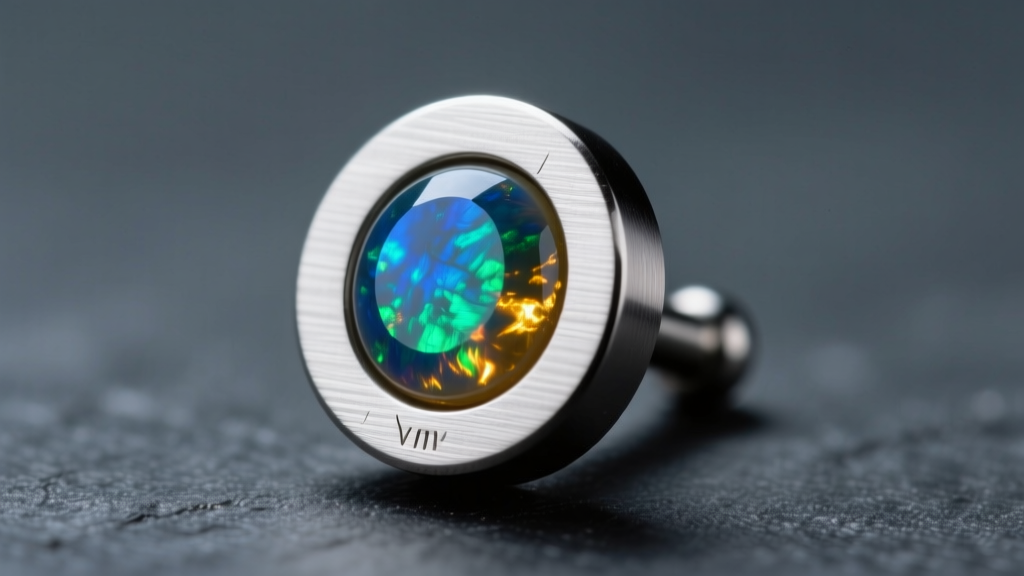 Pro Tip: If you are purchasing high-end cartilage jewelry from brands like BVLA or Anatometal, 16G and 14G are the industry standards. Always measure your existing jewelry with a digital caliper before ordering replacement ends.
Material Grades: What Touches Your Skin Matters
The most beautiful earring designs in the world are useless if the metal triggers an immune response. Many commercial jewelry brands use the term 'surgical steel' as a marketing catch-all. However, 'surgical steel' is not a regulated metallurgical term; it often refers to 316L stainless steel, which contains up to 10% nickel. According to the Mayo Clinic, nickel is one of the most common causes of allergic contact dermatitis, leading to redness, itching, and weeping piercings.
'For initial piercings and long-term wear in sensitive cartilage, the Association of Professional Piercers strongly recommends implant-grade materials that are entirely nickel-free or have a negligible nickel release rate.'
The Big Three: Titanium, Solid Gold, and Niobium
- ASTM F136 Implant-Grade Titanium: The undisputed king of biocompatible jewelry. It is lightweight, highly polished, and completely nickel-free. Expect to pay $25 to $60 for a high-quality titanium flat-back stud.
- 14k or 18k Solid Gold: Must be nickel-free and alloyed for biocompatibility (often using palladium or silver instead of zinc/nickel). Avoid gold-plated or gold-filled earring designs for unhealed or sensitive piercings, as the thin layer of gold will eventually wear off. Quality solid gold cartilage studs typically range from $150 to $400+.
- Niobium: A highly reactive metal that is naturally hypoallergenic and can be anodized into vibrant colors without using toxic dyes or plating. It is slightly heavier than titanium but an excellent alternative for those with extreme metal sensitivities.
Matching Earring Designs to Face Shapes
Beyond the anatomy of the ear itself, earring designs play a crucial role in framing the face. By understanding basic geometric balance, you can select pieces that highlight your best features. Here is a practical decision framework for matching earring silhouettes to face shapes:

- Round Faces: The goal is to create the illusion of length and structure. Opt for elongated drop earrings, geometric dangles, or long, narrow chains. Avoid large, perfectly round hoops or wide button studs, which will only emphasize the circularity of the face.
- Square Faces: Characterized by a strong, angular jawline. Soften these features with curved earring designs. Medium-sized hoops, teardrop shapes, and rounded huggies work beautifully to balance sharp angles.
- Oval Faces: The most versatile face shape, characterized by balanced proportions. Almost any earring design works, from bold, oversized sculptural pieces to delicate ear cuffs and studs.
- Heart Faces: Features a wider forehead and a narrow, pointed chin. Chandelier earrings, inverted triangles, and bottom-heavy teardrops help add visual width to the lower half of the face, creating harmony.
Troubleshooting Common Beginner Mistakes
Even with a solid understanding of anatomy and materials, beginners often fall into a few common traps when building their jewelry collections. According to the Association of Professional Piercers (APP), the hardware mechanism of the earring is just as important as the metal itself.
The 'Butterfly Back' Hazard
Standard friction-back earrings (commonly known as butterfly backs) are notorious for trapping dead skin cells, hair products, and bacteria against the back of the earlobe. The tight, grooved backing restricts airflow and can cause localized infections or foul odors. For everyday lobe wear, upgrade to threadless or internally threaded flat-back labrets. They offer a smooth, flush profile that is infinitely more hygienic and comfortable for sleeping.
Sleeping in Seamless Hoops
While it is tempting to leave your favorite 16G helix hoops in 24/7, sleeping in circular jewelry puts uneven pressure on the piercing channel. Over time, this can cause the piercing to migrate or heal at a harsh, crooked angle. Always swap to a flat-back stud for sleeping, especially in cartilage placements like the tragus, flat, or conch.
Final Thoughts on Building Your Curated Ear
Mastering earring designs is a journey that blends aesthetic vision with anatomical respect. By prioritizing implant-grade metals, respecting gauge thicknesses, and choosing silhouettes that complement both your ear structure and face shape, you elevate your jewelry from mere accessories to intentional, long-term body art. Start with high-quality foundational pieces, consult with an APP-certified piercer for placement mapping, and slowly build a curated ear that is as biologically healthy as it is visually stunning.


