Earring Heal Time: How Material Choices Impact Your Budget
Discover how jewelry materials and piercing methods affect your earring heal time. We break down the true costs of budget vs. premium options.

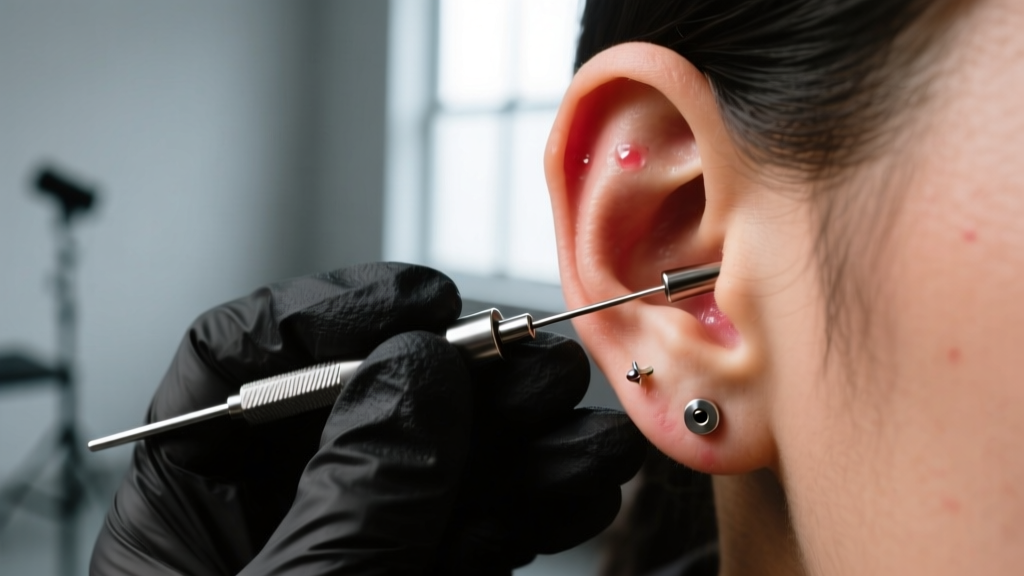
The True Cost of a "Cheap" Piercing
When budgeting for a new ear piercing, most consumers focus exclusively on the upfront price tag of the jewelry or the piercing service itself. However, from a long-term value assessment perspective, the initial cost is only a fraction of the financial equation. The single most critical variable in your overall budget is your earring heal time. A prolonged healing process—often the direct result of poor material choices, improper sterilization, or blunt-force trauma—can lead to expensive complications, lost jewelry, and even medical bills. In the world of body modification, trying to save $40 upfront frequently results in spending hundreds of dollars to fix avoidable mistakes.
Understanding the intersection of metallurgy, tissue trauma, and wound care is essential for making financially sound decisions. Whether you are opting for standard 18-gauge lobe studs or 16-gauge cartilage hoops, the quality of the metal touching your open wound dictates how your immune system responds. Let us break down the exact costs, material grades, and failure modes that dictate your earring heal time and your ultimate out-of-pocket expenses.
Material Grades and Their Effect on Earring Heal Time
The metal composition of your starter earrings is the primary biological variable in wound healing. The human immune system is highly reactive to foreign bodies, and specific alloys can trigger chronic inflammation, directly extending your earring heal time by months. According to the Association of Professional Piercers (APP), only a select few materials are considered safe for initial piercings due to their biocompatibility and lack of toxic leaching.
The most common culprit for delayed healing is 316L Surgical Steel. While marketed as "hypoallergenic," 316L steel contains between 8% and 10% nickel. The American Academy of Dermatology (AAD) notes that nickel allergy is the most common contact allergy worldwide. When a person with a nickel sensitivity wears surgical steel in an open wound, the body mounts an immune response resulting in contact dermatitis, weeping, swelling, and severe crusting. This chronic inflammation prevents the fistula (the tube of healed skin) from forming properly.
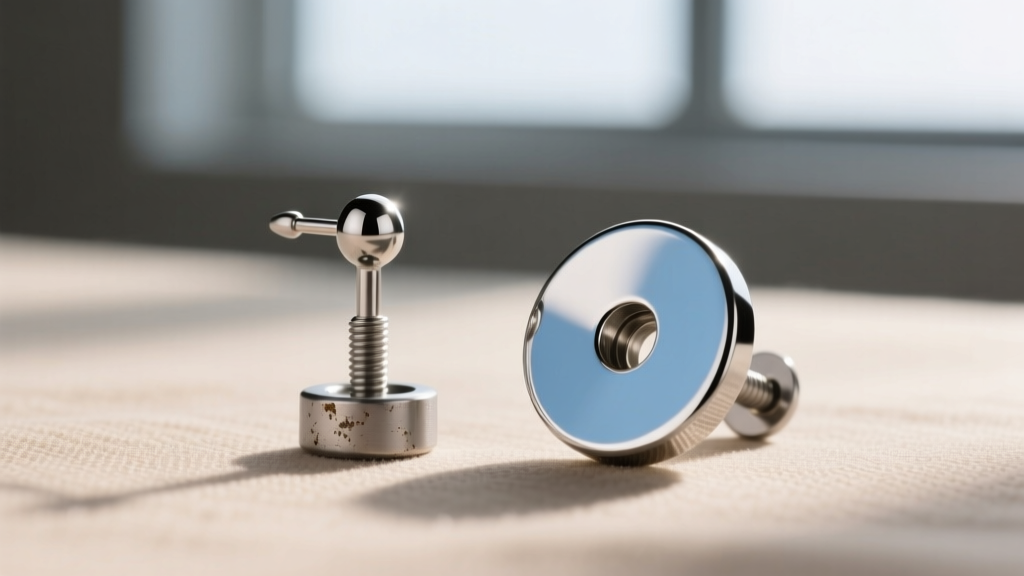
The Gold Standard: Implant-Grade Titanium
For the most predictable and efficient earring heal time, ASTM F136 Implant-Grade Titanium is the undisputed industry standard. This specific alloy is completely nickel-free and is the exact same material used in orthopedic joint replacements and pacemakers. Because the body does not recognize it as a threat, inflammation is minimized, allowing the tissue to heal cleanly and rapidly. While a titanium flat-back labret might cost $40 to $80 compared to a $15 steel alternative, the elimination of complication-related costs makes it the superior budget choice over a 12-month period.
| Material | Average Upfront Cost | Nickel Content | Expected Earring Heal Time | Complication Risk |
|---|---|---|---|---|
| ASTM F136 Titanium | $40 - $85 | 0% | 6-8 Weeks (Lobe) / 6-12 Months (Cartilage) | Very Low |
| 316L Surgical Steel | $15 - $30 | 8-10% | 2-4 Months (Lobe) / 12-18 Months (Cartilage) | Moderate to High |
| Mystery Metal / Alloy | $5 - $15 | Unknown | Unpredictable / Chronic Infection | Extremely High |
| 14k/18k Solid Gold | $60 - $200+ | 0% (if properly alloyed) | 6-8 Weeks (Lobe) / 6-12 Months (Cartilage) | Very Low |
Professional Piercers vs. Mall Kiosks: A Value Assessment
Beyond the jewelry itself, the method used to create the hole drastically alters your earring heal time. Mall kiosks typically use spring-loaded piercing guns, while professional studios use single-use, beveled hollow needles. The financial implications of this choice are profound.
A piercing gun forces a blunt stud through the tissue using sheer kinetic trauma. This crushes the cells, causes significant micro-fractures in cartilage, and leaves behind a jagged wound channel. The body must work overtime to clear away the dead, crushed tissue before it can even begin building new skin cells. Furthermore, piercing guns cannot be fully sterilized in an autoclave, increasing the risk of bacterial introduction. The resulting irritation bumps (hypertrophic scarring) and infections routinely add three to six months to your earring heal time.
Conversely, a hollow needle slices cleanly through the tissue, removing a microscopic crescent of flesh and leaving a smooth, clean channel. This precise trauma promotes rapid cellular regeneration and a vastly shortened earring heal time.
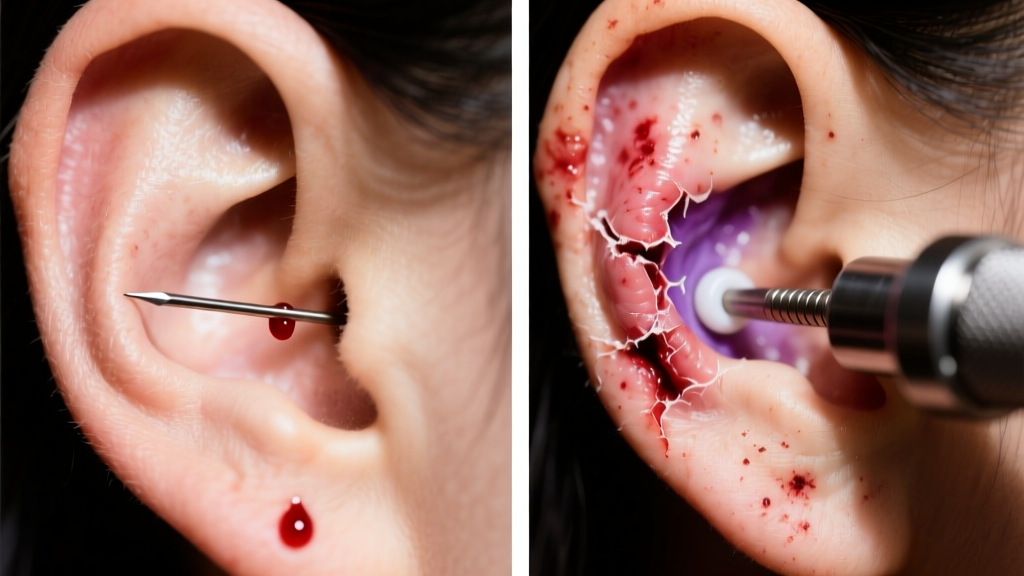
The Hidden Costs of Prolonged Healing
When assessing your budget, you must factor in the "failure costs" associated with extended healing and infections. If a mall kiosk piercing becomes infected or develops severe irritation bumps due to blunt force trauma and poor angles, your secondary costs will quickly eclipse the money saved on the initial service.
- Urgent Care / Doctor Visits: $100 - $250 per visit for professional evaluation of infected cartilage.
- Prescription Antibiotics: $20 - $50 for topical mupirocin or oral antibiotics like Cephalexin.
- Replacement Jewelry: $40 - $80 to swap out the infected, poorly designed mall stud for a sterile titanium implant.
- Piercing Removal and Re-piercing: If scar tissue forms improperly, you may need to let the hole close entirely and pay a professional to re-pierce it at the correct anatomical angle ($30 - $60 service fee).
Aftercare Budgeting: What Actually Works?
The aftercare market is saturated with overpriced, chemically harsh products that actively damage healing tissue and extend earring heal time. Many commercial "piercing sprays" contain benzalkonium chloride, tea tree oil, or alcohol. While these ingredients are great for sanitizing intact skin or cleaning household surfaces, they are cytotoxic to fragile, newly forming fistula cells. They literally kill the cells trying to heal your piercing.
The Budget-Friendly, Medically Sound Solution: The only aftercare product recommended by medical professionals and elite piercers is sterile, 0.9% sodium chloride saline wound wash. You can purchase a pressurized can of sterile saline at any pharmacy for roughly $5 to $8. It contains no preservatives, no alcohol, and no harsh chemicals. It simply flushes away dried lymph and debris without disrupting the cellular healing process. By sticking to basic sterile saline twice a day, you protect your earring heal time and keep your aftercare budget under $15 for the entire healing duration.
Final Verdict: Budgeting for Optimal Healing
When evaluating the cost of a new piercing, shift your mindset from "upfront expense" to "total cost of ownership." A budget-friendly approach to piercings does not mean buying the cheapest metal or using the cheapest service; it means making strategic investments that guarantee a smooth, predictable earring heal time.
The Value Framework: Spend $80–$120 upfront on an ASTM F136 titanium piece and a professional hollow-needle service. Save money on aftercare by using $5 sterile saline. Avoid the $300+ "hidden tax" of infections, doctor visits, and scar tissue corrections caused by cheap surgical steel and piercing guns.
By prioritizing biocompatible materials and precise anatomical placement, you ensure that your new earrings heal efficiently, allowing you to safely transition to high-quality gold or decorative hoops without the financial and physical burden of chronic wound complications.


