Simply Whispers Earrings: A Technical Deep Dive & Fit Guide
An expert metallurgical and structural analysis of Simply Whispers earrings, covering ASTM grades, gauge sizes, and clutch mechanics for sensitive ears.

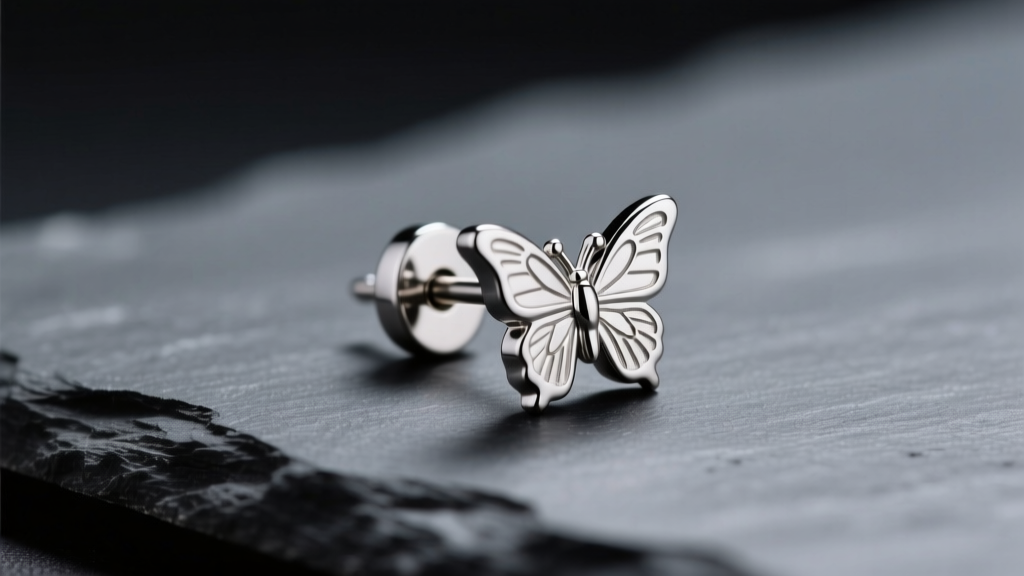
For individuals with severe contact dermatitis or metal sensitivities, finding reliable jewelry is less about aesthetics and more about metallurgical safety. As we navigate the 2026 jewelry market, the term 'hypoallergenic' remains largely unregulated, leaving consumers vulnerable to misleading marketing. Simply Whispers earrings have carved out a significant niche by specifically targeting the sensitive-ear demographic. But do their material claims hold up under strict metallurgical scrutiny? In this expert deep dive, we bypass the marketing fluff to analyze the exact alloy compositions, structural failure modes, and anatomical fit limitations of Simply Whispers jewelry.
The Metallurgy of 'Hypoallergenic': Decoding the Alloys
To understand why Simply Whispers earrings are frequently recommended by dermatologists, we must first examine their base metals. The brand primarily utilizes two materials for their posts: 316L Surgical Stainless Steel and ASTM F136 Titanium. It is a common misconception that 'surgical steel' is entirely nickel-free. In reality, 316L stainless steel contains between 8% and 10.5% nickel. The reason it does not trigger a reaction in most sensitive ears lies in the crystalline matrix of the alloy and the surface passivation process.
Nickel Release Rates vs. Total Nickel Content
The critical metric for sensitive ears is not whether nickel is present, but whether it can leach into the skin. According to the European Nickel Directive (EN 1811:2011), the safe limit for nickel release from post-assembly jewelry is 0.2 µg/cm²/week. Simply Whispers achieves compliance through high-grade polishing and a specialized passivation bath that creates a microscopic chromium-oxide layer on the steel, effectively trapping the nickel inside. However, for individuals with extreme hyper-reactivity, even this trace release can cause erythema. For these users, the brand's ASTM F136 Titanium line is the only viable option, as it contains exactly 0% nickel and is the implant-grade standard recognized by the Association of Professional Piercers (APP).
Structural Analysis: Post Gauges and Clutch Tension
The physical dimensions of an earring post dictate both its comfort and its structural integrity. Simply Whispers predominantly manufacturers their standard studs in 20-gauge (0.81mm) and 18-gauge (1.02mm) thicknesses. While 20G is the industry standard for fashion jewelry, it presents a mechanical vulnerability: the lower Vickers hardness of thin steel posts makes them prone to micro-scratches during insertion. These scratches can harbor bacterial biofilms over time.
| Specification | Standard Steel Line | Premium Titanium Line |
|---|---|---|
| Post Gauge | 20G (0.81mm) | 18G (1.02mm) / 20G (0.81mm) |
| Alloy Grade | 316L Surgical Steel | ASTM F136 Ti-6Al-4V |
| Clutch Type | Standard Butterfly Friction | Secure-Lock / La Pousette |
| Nickel Release | < 0.2 µg/cm²/week | 0.0 µg/cm²/week (Nil) |
| Surface Finish | Mirror Polish (Passivated) | Electropolished / PVD Coated |
The Mechanics of the Friction Back
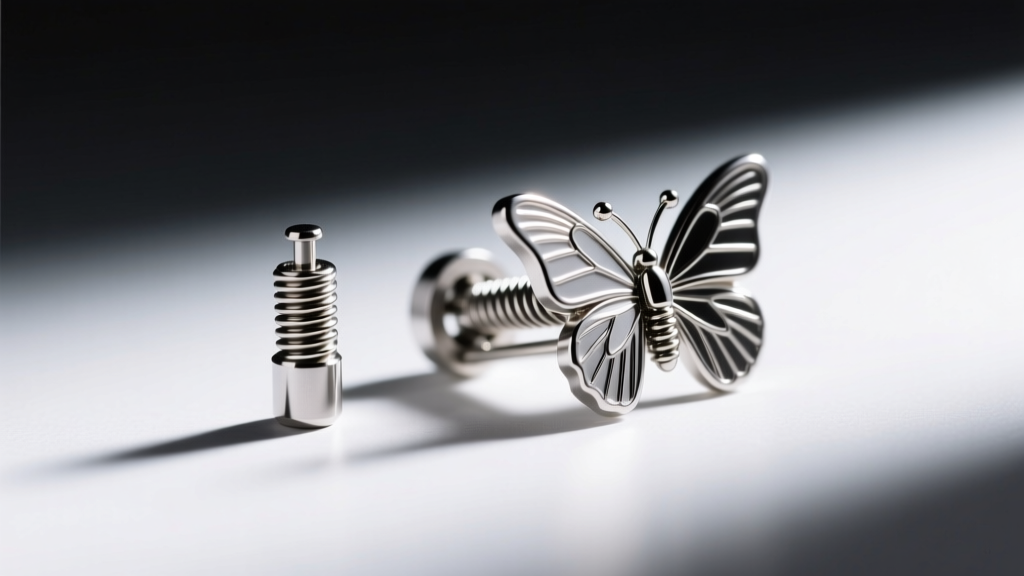
The standard butterfly clutch used on most Simply Whispers earrings relies on internal metal springs that grip the tension grooves of the post. While secure for the earlobe, this mechanism requires precise manufacturing tolerances. If the internal springs lose tension over 12 to 18 months of daily wear, the earring becomes prone to slipping off during sleep. Furthermore, the hollow cavities of the butterfly back are notorious for trapping sebum and dead skin cells, which can lead to localized localized odor and irritation if not cleaned weekly with an ultrasonic jewelry cleaner.
Failure Modes: When 'Nickel-Free' Isn't Enough
While Simply Whispers maintains rigorous quality control, users must understand the broader failure modes associated with sensitive-ear jewelry. A frequent issue in the wider market is the use of brass or copper alloys plated with a micro-layer of rhodium or gold. Once this plating wears away—often within 3 to 6 months of friction-heavy wear—the base metal is exposed, resulting in severe allergic contact dermatitis. A study published in the National Center for Biotechnology Information highlights that repeated exposure to leaching base metals can cause the immune system to develop new, compounding metal allergies over time.
Expert Insight: Always verify that the earring post is made of a solid alloy (like 316L or Titanium) rather than a plated base metal. Simply Whispers uses solid alloys, meaning the material is consistent from the surface down to the core, eliminating the risk of 'wear-through' allergic reactions.
Cartilage vs. Lobe: Application Limits
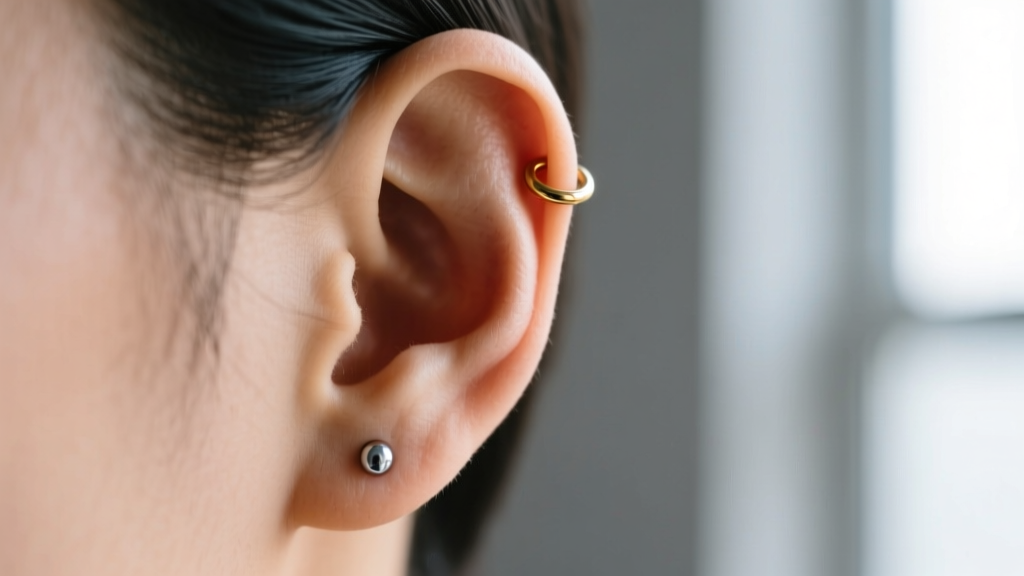
One of the most critical technical distinctions in jewelry fitting is the anatomical difference between vascular earlobes and avascular cartilage. Simply Whispers earrings are engineered primarily for the earlobe. Attempting to use their standard friction-back studs in cartilage piercings (such as the helix, conch, or tragus) introduces significant clinical risks.
Why Standard Friction Backs Fail in Helix Piercings
Cartilage tissue lacks its own direct blood supply, relying on the perichondrium for nutrients and immune response. When a standard butterfly back is pushed flush against the back of a cartilage piercing, it restricts airflow and traps moisture. This creates an anaerobic environment ideal for bacterial proliferation, potentially leading to perichondritis—a severe infection of the cartilage tissue. For cartilage piercings, the industry standard is a flat-back labret post (usually 16G or 18G) with an internally threaded or threadless end. Simply Whispers' traditional lineup is not recommended for fresh or healing cartilage piercings due to these structural limitations.
Pricing Tiers and Value Proposition
When evaluating the cost-to-benefit ratio of Simply Whispers earrings in 2026, it is helpful to segment their pricing by material tier:
- Surgical Steel Collection ($15 - $28): Ideal for individuals with mild sensitivities who want affordable, everyday studs. Excellent polish quality for the price point.
- Titanium & 14k Gold Collection ($45 - $85): Necessary for those with severe, clinically diagnosed nickel allergies. The premium pricing reflects the raw material cost of ASTM F136 titanium and the precision machining required for secure-lock clutches.
Final Verdict for Sensitive Ear Sufferers
From a metallurgical and structural standpoint, Simply Whispers earrings deliver on their core promise of minimizing allergic reactions. Their adherence to strict nickel-release thresholds and use of solid, non-plated alloys makes them a highly reliable choice for lobe piercings. However, consumers must match the specific alloy to their personal sensitivity threshold—opting for ASTM F136 Titanium if they possess extreme hyper-reactivity—and avoid using friction-back styles in cartilage placements. By understanding the technical realities of these materials, you can make informed, pain-free jewelry investments.


