How Long Does Earrings Take to Heal? Material Guide
Discover how long does earrings take to heal based on metal properties. Compare titanium, gold, and steel for faster lobe and cartilage recovery.

The Science of Piercing Recovery: Why Metal Matters
When navigating the complex journey of body modification, one of the most common questions asked in professional studios is: how long does earrings take to heal? The answer is never a simple number of weeks or months. Healing is a dynamic biological cascade involving hemostasis, inflammation, proliferation, and tissue remodeling. The speed and success of this process are inextricably linked to the metallurgical properties of the jewelry sitting inside the wound. In 2026, the shift away from mystery metals and toward certified biocompatible alloys has revolutionized aftercare, drastically reducing rejection rates and chronic irritation bumps.
The human immune system is highly reactive to foreign bodies. When a reactive metal is introduced into a fresh puncture, the body's macrophages attempt to break down the corroding surface ions. This triggers prolonged inflammation, delaying the proliferation phase where new collagen and epithelial cells form the fistula (the permanent tissue tube). Understanding material science is the ultimate cheat code for predicting and accelerating your healing timeline.
Baseline Healing Timelines: Lobe vs. Cartilage
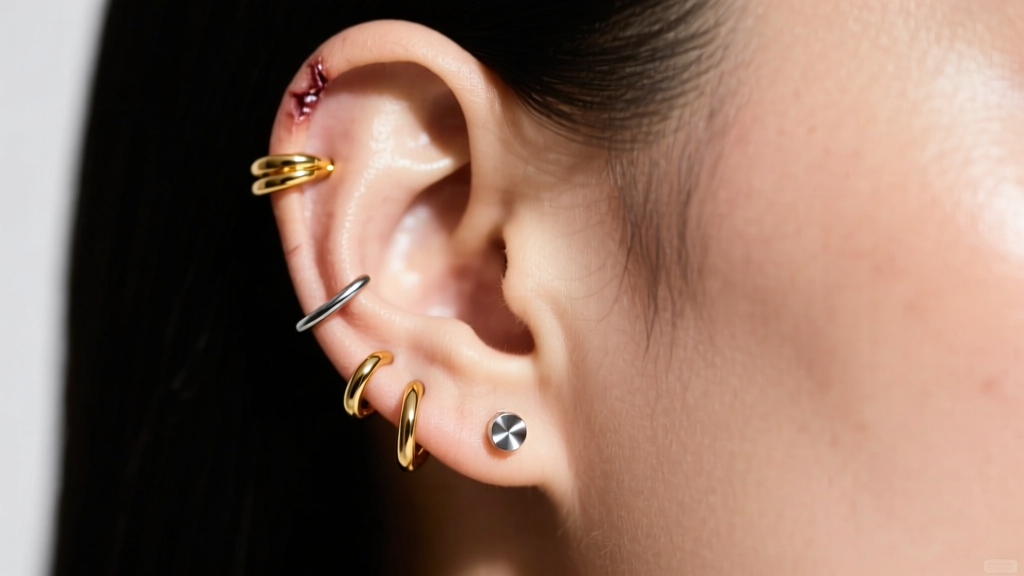
Before analyzing specific alloys, we must establish the anatomical baselines. Vascularization dictates the speed of cellular repair. Earlobes are highly vascularized soft tissue, whereas the upper ear consists of avascular cartilage that relies on surrounding perichondrium for nutrient delivery.
- Standard Earlobe Piercings: 6 to 10 weeks for initial stabilization; up to 6 months for full fistula maturation.
- Cartilage Piercings (Helix, Conch, Daith): 6 to 12 months for initial stabilization; up to 18 months for complete structural maturation.
- Industrial Piercings (Connected Cartilage): 9 to 18 months, heavily dependent on barbell stability and metal inertness.
Material Comparison: What Speeds Up (or Delays) Healing?
Not all metals are created equal. The Association of Professional Piercers (APP) strictly mandates specific material grades for initial piercings to prevent contact dermatitis and heavy metal toxicity. Below is a comprehensive breakdown of how different materials impact the healing timeline.
| Material Grade | Nickel Content | Best Application | Impact on Healing Time | Avg. Price Range (2026) |
|---|---|---|---|---|
| Implant-Grade Titanium (ASTM F136) | 0% | All fresh lobes & cartilage | Optimal; supports fastest cellular adherence | $35 - $85 |
| 14k / 18k Solid Gold (Nickel-Free) | 0% (Alloyed w/ Palladium) | Fresh lobes, healed cartilage | Excellent, provided surface is mirror-finished | $90 - $300+ |
| Surgical Steel (ASTM F138) | 8% - 12% | Healed lobes only | Delays healing; high risk of allergic reaction | $15 - $40 |
| Niobium (Unalloyed) | 0% | Fresh cartilage, rings | Very good, but softer metal can scratch | $40 - $75 |
| Bioplast / PTFE | 0% | MRI prep, sports, healed | Poor for initial healing; harbors bacteria | $10 - $25 |
The Gold Standard: Implant-Grade Titanium (ASTM F136)
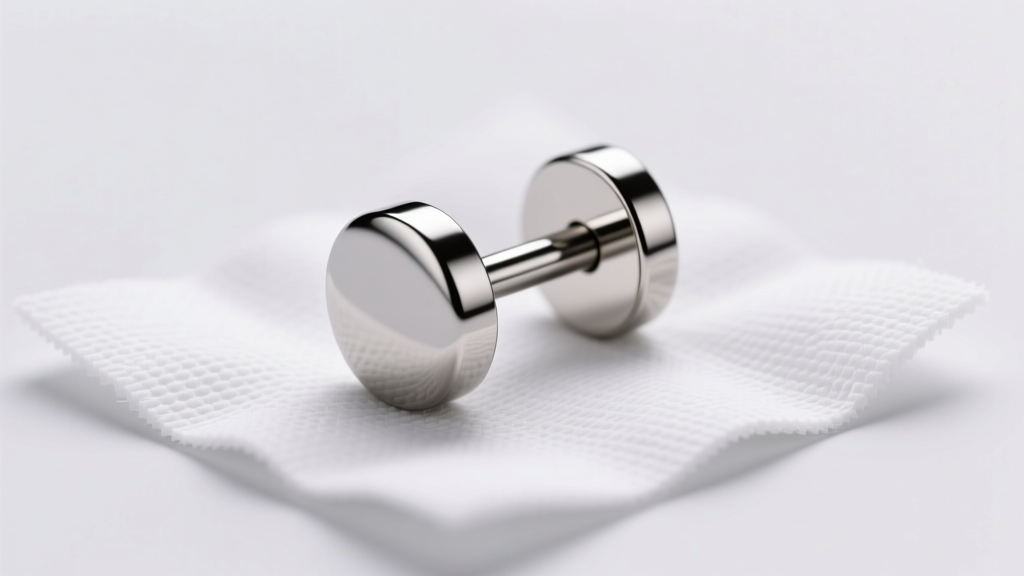
Implant-grade titanium is the undisputed champion of fresh piercings. Unlike commercial 'titanium-colored' steel, ASTM F136 titanium contains zero nickel and features a naturally occurring oxide layer that makes it entirely inert to human tissue. Because the body does not recognize it as a threat, the inflammation phase is shortened, allowing the fistula to form rapidly. Furthermore, titanium is incredibly lightweight, reducing the gravitational drag on fresh cartilage that often causes migration or rejection.
The Luxury Option: 14k and 18k Solid Gold
Gold is a premium choice, but it comes with strict caveats. For initial piercings, gold must be 14k or 18k and explicitly alloyed with palladium or silver rather than nickel. 24k gold is too soft and will easily scratch, creating microscopic grooves where anaerobic bacteria thrive. According to dermatological guidelines on metal hypersensitivity from the Cleveland Clinic, even trace amounts of nickel in white gold alloys can trigger severe localized eczema, turning a 6-week lobe healing process into a 6-month battle with chronic weeping and crusting.
The Trap: Surgical Stainless Steel
Often deceptively marketed as 'hypoallergenic,' surgical steel (ASTM F138) contains up to 12% nickel. While perfectly safe for a fully healed, mature fistula, inserting surgical steel into an open wound allows nickel ions to leach directly into the bloodstream and surrounding lymphatic tissue. This frequently results in the formation of hypertrophic scars (irritation bumps) and prolongs cartilage healing by several months.
Hidden Variables: Gauge Size and Surface Finish
Material composition is only half the battle; the physical geometry of the earring plays a massive role in how long does earrings take to heal. Two critical factors often overlooked by consumers are gauge thickness and surface polishing.
The 'Cheese Cutter' Effect
Standard fashion earrings are typically 20-gauge (0.81mm) or 18-gauge (1.0mm). However, professional piercers strongly advocate for 16-gauge (1.2mm) or 14-gauge (1.6mm) for cartilage piercings. A thicker gauge distributes mechanical stress over a wider surface area. If you sleep on a thin 18-gauge hoop in a fresh helix piercing, the wire acts like a cheese cutter, slicing through the delicate swelling tissue and causing severe trauma that resets the healing clock.
Mirror Finish vs. Matte Finish
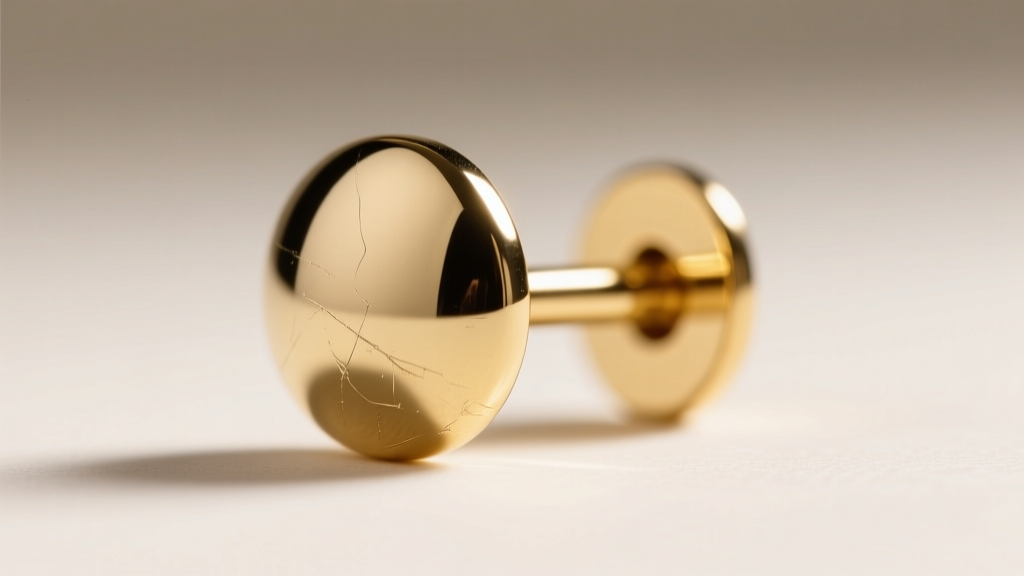
The surface texture of the metal dictates bacterial adhesion. A true mirror finish, achieved through rigorous mechanical polishing and electropolishing, leaves no microscopic valleys for biofilm to accumulate. Matte or textured finishes, while aesthetically pleasing, act as scaffolding for staphylococcus bacteria. For initial jewelry, always demand a high-polish mirror finish to ensure the smoothest possible tissue migration.
Threading Mechanics: Internal vs. Threadless
The mechanism by which the decorative end attaches to the post is a critical healing variable. Externally threaded jewelry (where the screw is on the post) forces sharp, jagged threads through the fresh wound upon insertion, tearing the newly formed epithelial cells. In 2026, reputable studios exclusively use internally threaded (the screw is on the gem) or threadless (push-pin tension fit) jewelry. Threadless titanium labrets are particularly favored for cartilage because their seamless, smooth posts glide through the fistula without causing micro-tears, preserving the integrity of the healing tissue.
Expert Aftercare Protocol to Accelerate Healing
Even the finest ASTM F136 titanium will fail if subjected to chemical trauma. The modern, evidence-based approach to aftercare focuses on mechanical cleaning rather than chemical disinfection.
- Sterile Saline Only: Use a sterile 0.9% sodium chloride wound wash twice daily. Avoid homemade sea salt soaks, which are often improperly ratioed and can dehydrate the healing cells.
- Avoid Essential Oils: Tea tree oil, lavender, and witch hazel are cytotoxic. They destroy the fragile fibroblasts attempting to build your fistula, severely delaying the maturation phase.
- Non-Woven Gauze: Never use cotton swabs or balls, which shed microscopic fibers that can become embedded in the healing wound. Use sterile non-woven gauze to gently wipe away softened lymph crusties.
- Leave It Alone: Rotating or twisting the jewelry was an outdated myth from the 1990s. Twisting tears the delicate healing tissue and introduces surface bacteria deep into the puncture channel.
Final Verdict: Choosing Your Initial Jewelry
Ultimately, how long does earrings take to heal is a question answered by your purchasing decisions. Investing in certified implant-grade titanium or palladium-alloyed 14k gold with a mirror finish and a threadless post is the most reliable way to ensure your body recognizes the jewelry as a safe, permanent fixture. By respecting the biology of the wound and the chemistry of the metal, you transform a potentially year-long ordeal into a smooth, predictable journey toward your perfect ear curation.


