Earring Hook Types: A Budget & Value Assessment Guide
Compare earring hook types for budget and value. Discover which ear wires offer the best security, material quality, and cost-efficiency for daily wear.

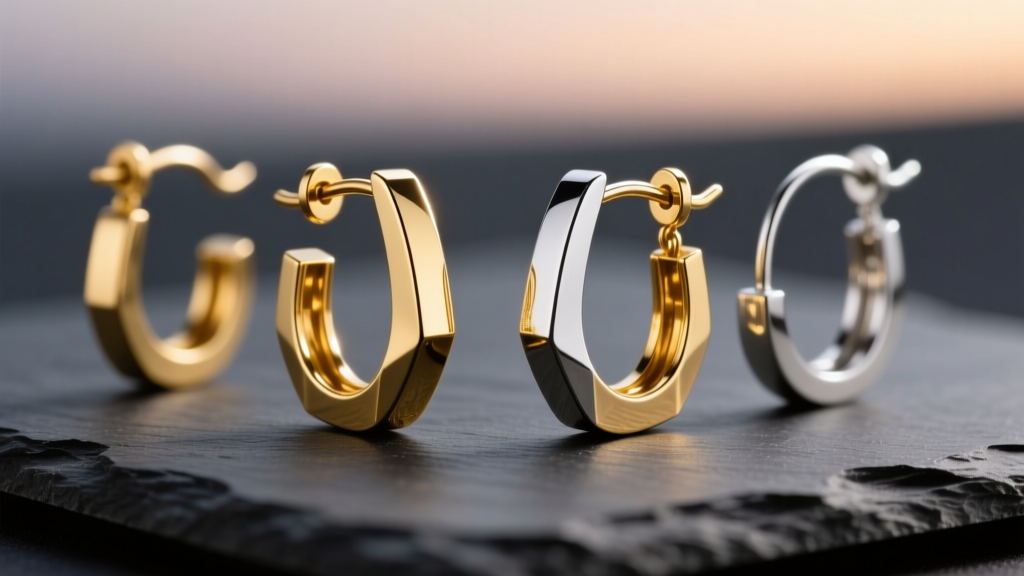
The Hidden Cost of Cheap Ear Wires
When evaluating fine jewelry, buyers obsess over the carat weight of a gemstone or the purity of a precious metal. Yet, the structural linchpin of any dangle or drop earring—the ear wire—is often an afterthought. This is a critical miscalculation in value assessment. Losing a $400 sapphire drop because it was suspended from a $0.12 brass French wire that bent out of shape is a catastrophic failure of budget allocation. Understanding the different earring hook types is not just a matter of comfort; it is an essential exercise in loss prevention and long-term value retention.
From a budget perspective, the initial savings of purchasing bulk, low-grade base metal hooks are quickly negated by replacement costs, allergic contact dermatitis treatments, and the sheer financial risk of dropped earrings. This guide breaks down the true cost-to-value ratio of popular earring hook types, analyzing gauge durability, material grades, and security mechanics to help you make financially sound jewelry decisions.
Breakdown of Common Earring Hook Types
Not all hooks are engineered equally. The mechanical design of the wire dictates its security, which directly correlates to the financial risk of losing the attached ornament.
French Wire (Shepherd Hook)
The French wire is the most ubiquitous and cost-effective hook on the market. It consists of a simple curved wire that passes through the piercing and hangs freely.
- Standard Gauge: 20g (0.81mm) or 22g (0.64mm).
- Average Cost: $0.15 - $0.50 per pair (depending on metal).
- Failure Mode: Metal fatigue at the curve. Repeated squeezing to 'close' the hook weakens the wire, leading to snaps. They also easily slide out during sleep or when removing clothing.
- Value Assessment: Low upfront cost, but high risk of loss. Best reserved for inexpensive, lightweight fashion jewelry or daytime wear where the wearer can monitor the earrings.
Leverback
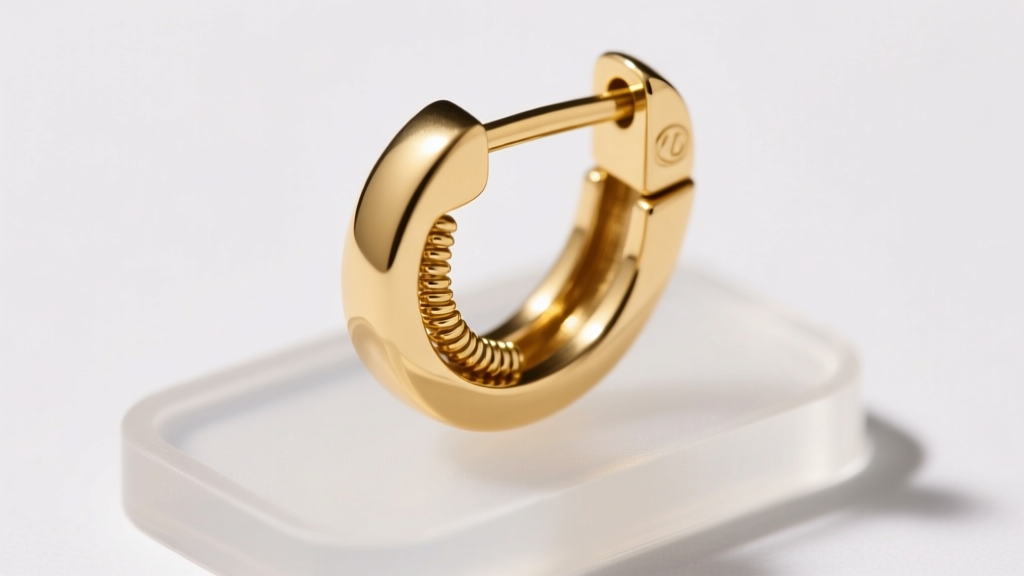
Leverbacks feature a hinged wire that snaps into a closed loop, creating a secure, continuous circle through the ear lobe.
- Standard Gauge: 18g (1.0mm) or 20g (0.81mm) to support the hinge mechanism.
- Average Cost: $1.50 - $6.00 per pair.
- Failure Mode: The microscopic spring inside the hinge can become clogged with sebum, lotion, or hairspray, causing the clasp to fail to close. The hinge pin can also shear under heavy lateral stress.
- Value Assessment: Excellent value for mid-to-high-tier jewelry. The 300% markup over French wires is entirely justified by the 95% reduction in accidental loss.
Kidney Wire
Shaped like a kidney bean, this wire features a loop that the straight end passes through and locks behind a slight bend in the wire.
- Standard Gauge: 20g (0.81mm).
- Average Cost: $0.80 - $2.00 per pair.
- Failure Mode: If the wire is stretched during insertion, it loses its tension and will no longer 'click' securely into place.
- Value Assessment: Highly secure and cheaper than leverbacks because there is no moving hinge to manufacture. Ideal for heavy gemstone drops where leverback hinges might fail under the weight.
Material Value Matrix: What Are You Paying For?
The design of the hook is only half the value equation; the metallurgy is the other. The Association of Professional Piercers (APP) strictly outlines which materials are safe for prolonged skin contact. Cheap alloys cause contact dermatitis, turning a $2 purchase into a medical liability.
| Material Grade | Cost Per Pair | Durability & Tarnish | Budget Value Verdict |
|---|---|---|---|
| Brass / Copper (Base) | $0.05 - $0.15 | Low. Tarnishes rapidly, high nickel/lead risk. | Poor. False economy. High allergy and replacement rates. |
| Surgical Steel (ASTM F138) | $0.20 - $0.60 | High. Tarnish-resistant, but contains trace nickel. | Good. Best ultra-budget option, provided the wearer is not highly nickel-sensitive. |
| Niobium (Reactive Metal) | $0.80 - $1.50 | Very High. Hypoallergenic, can be anodized to any color. | Excellent. The smartest budget alternative to titanium or solid gold for sensitive ears. |
| 14k Gold Filled (1/20 14k) | $1.50 - $3.50 | High. Thick mechanical bond of gold over brass core. | Superior. Offers the look and skin-safety of solid gold at 5% of the cost. |
| Solid 14k / 18k Gold | $15.00 - $45.00+ | Lifetime. Will not flake, peel, or cause base-metal allergies. | Premium. Mandatory for fine jewelry valued over $500. |
According to the Gemological Institute of America (GIA), understanding the difference between gold-plated (a microscopic flash that wears off in weeks) and gold-filled (a substantial, legally regulated layer of gold) is vital for buyers seeking long-term value without the solid gold premium.
Security vs. Price: The Loss Prevention Calculation
To truly assess the budget value of earring hook types, we must apply a basic risk-management formula: Total Value Risk = (Cost of Hook) + (Probability of Loss × Value of Dangle Component).
Example A: A $200 aquamarine briolette on a $0.10 brass French wire. The wire bends during a commute. The earring falls out. Total financial loss: $200.10.
Example B: The same $200 aquamarine briolette on a $4.00 solid 14k gold leverback. The hinge secures the wire. The earring is retained. Total financial loss: $0.
When the dangle component exceeds $50 in value, spending more than $2.00 on a secure hook (like a leverback or kidney wire) yields a massive positive return on investment. For earrings under $15, the cost of a leverback might exceed the value of the jewelry itself, making a 20g surgical steel French wire with a silicone friction back (clutch) the most economically sound choice.
Expert Verdict: Best Value Hooks by Budget Tier
Based on structural integrity, material safety, and cost-efficiency, here is the definitive value ranking for earring hooks:
Tier 1: Ultra-Budget (Fashion & Trend Jewelry under $20)
Winner: 20g ASTM F138 Surgical Steel French Wire with Silicone O-Rings.
Do not use 22g wire; it bends too easily. The addition of a $0.02 silicone O-ring stopper mitigates the primary flaw of the French wire (slipping out), creating a highly secure system for pennies.
Tier 2: Mid-Range & Artisan (Handmade & Semi-Precious $20 - $150)
Winner: 14k Gold-Filled Kidney Wire or Leverback.
Gold-filled wire provides the hypoallergenic benefits and rich color of solid gold. Kidney wires are preferred for heavy artisan beads because they lack a fragile hinge, while leverbacks are best for lighter, delicate chains.
Tier 3: Fine Jewelry (Precious Gems & Metals $150+)
Winner: Solid 14k or 18k Gold Leverback.
At this price point, base metals and gold-filled materials degrade the perceived and actual value of the piece. A solid gold leverback ensures lifetime durability, and the hinge mechanism guarantees that a high-value diamond or sapphire remains securely attached to the wearer.
Sourcing and Maintenance Tips for Longevity
Maximizing the value of your earring hooks requires proper maintenance. Leverback hinges are notorious for failing prematurely due to debris buildup. To maintain the mechanical value of your hooks, soak leverbacks in warm water with a drop of mild dish soap once a month, using a soft baby toothbrush to gently clear the hinge crevice. Never use ultrasonic cleaners on hinged ear wires, as the high-frequency vibrations can loosen the microscopic hinge pins.
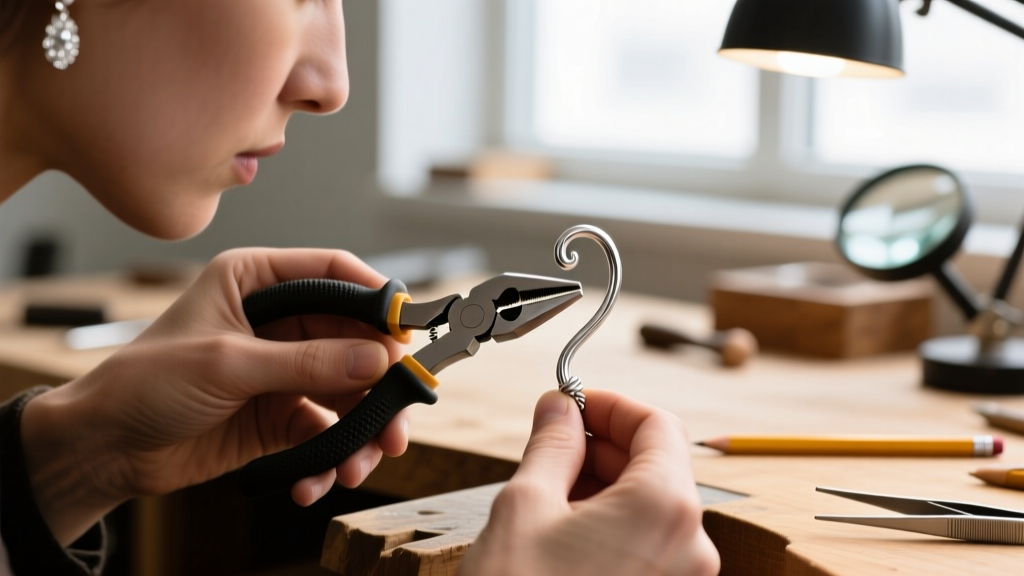
For French wires, metal fatigue is the enemy. If a shepherd hook becomes misshapen, do not use standard steel jewelry pliers to bend it back; the steel teeth will mar the soft metal (especially gold or silver) and create micro-fractures. Instead, invest in a pair of nylon jaw pliers to gently reshape the curve without compromising the wire's structural integrity. By understanding the mechanical and metallurgical realities of earring hook types, you can protect your jewelry investments and ensure your pieces remain secure, comfortable, and financially sound for years to come.


