The Earring Hoop Size Chart: Budget, Fit & Value Guide
Master the earring hoop size chart to maximize your jewelry budget. Compare diameters, gauge weights, and pricing to find the best value hoops.

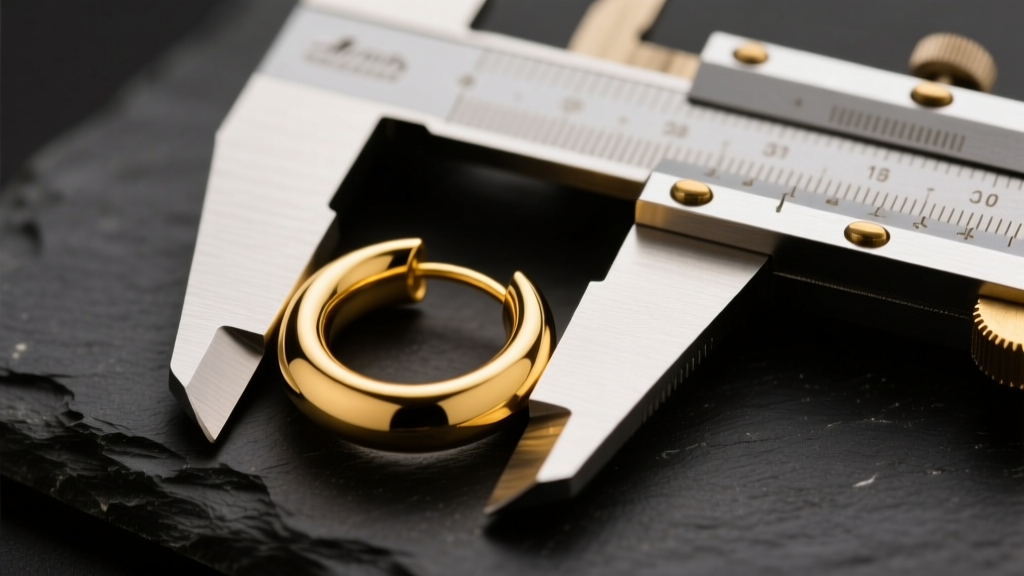
Why Hoop Sizing Dictates Your Jewelry Budget
When shopping for hoop earrings, relying on guesswork is the fastest way to waste your jewelry budget. A hoop that looks perfectly proportioned on a model might swallow your earlobe in real life, while a slightly smaller diameter might pinch your cartilage. Understanding how to read an earring hoop size chart is not just about aesthetics; it is a critical financial skill. As we navigate the precious metals market in 2026, the cost of gold and platinum has made every millimeter and gram a significant factor in the final retail price.
Buyer's remorse in the jewelry sector is overwhelmingly driven by sizing errors. Returning fine jewelry often incurs restocking fees, return shipping costs, and lost time. By mastering the relationship between inner diameter, outer diameter, wire gauge, and material weight, you can accurately assess the true value of a hoop before you click checkout. This guide will break down the exact metrics you need to evaluate hoop earrings from a strict budget and value perspective.
The Comprehensive Earring Hoop Size Chart
The table below serves as your primary decision-making framework. It correlates the Inner Diameter (ID) of the hoop with its ideal piercing placement, the visual impact, and the expected price multiplier based on material weight. Remember that Inner Diameter is the empty space inside the hoop, which dictates how it fits your ear, while the Outer Diameter (OD) includes the thickness of the metal itself.
| Inner Diameter (ID) | Best Piercing Placement | Visual Profile | Weight Impact | Value Tier |
|---|---|---|---|---|
| 5mm - 8mm | Helix, Tragus, Snug | Huggie / Snug Fit | Low (0.5g - 1.2g) | High (Best ROI for solid gold) |
| 10mm - 15mm | Lobe, Conch, Rook | Small / Classic | Medium (1.5g - 2.5g) | High (Versatile, cost-effective) |
| 20mm - 30mm | Standard Lobe | Medium / Statement | High (3.0g - 5.5g) | Medium (Price scales with gauge) |
| 35mm - 50mm | Standard Lobe (Stretched) | Large / Dramatic | Very High (6.0g+) | Low ROI (Consider hollow/gold-fill) |
| 60mm+ | Standard Lobe | Oversized / Editorial | Extreme (10g+) | Poor (High risk of lobe tearing) |
For maximum value retention, the 10mm to 20mm range offers the best intersection of wearability, material cost, and everyday versatility. Hoops in this range can transition from cartilage to lobe piercings, effectively giving you multiple uses from a single purchase.
Material Weight vs. Price: The Hidden Cost of Large Hoops
The most common mistake budget-conscious buyers make is assuming that price scales linearly with diameter. In reality, the price of solid gold hoops scales exponentially due to the volume of metal required to maintain structural integrity at larger sizes. A 10mm solid 14k gold hoop might require 1.2 grams of gold, retailing around $90 to $130. However, a 40mm hoop of the exact same gauge thickness requires significantly more metal, pushing the weight to 4.5 grams and the price well past $350.
Hollow Tube vs. Solid Wire: A Value Assessment
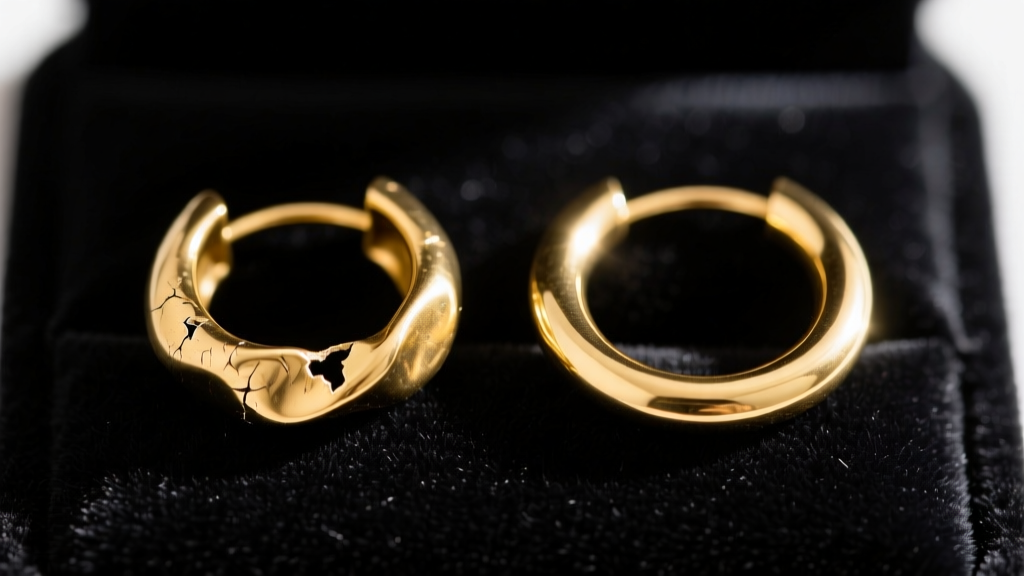
To combat the high cost of large solid hoops, many manufacturers produce hollow tubing hoops. These are created by wrapping a thin sheet of gold around a base metal core and then dissolving the core, or by using extremely thin gold-filled tubing. From a budget perspective, hollow hoops offer a massive upfront discount, often costing 60% less than their solid counterparts.
However, you must evaluate the failure modes. Hollow hoops suffer from compression failure. If you sleep in a 2mm hollow tube hoop, it will dent. Once the structural integrity of a hollow tube is compromised, it cannot be soldered or hammered back into a perfect circle without visible seams or weak points. It becomes trash. Solid wire hoops, on the other hand, suffer from tensile deformation (bending). A bent solid hoop can be easily reshaped by a jeweler using a steel mandrel. If you are buying hoops larger than 25mm on a budget, hollow tubes are acceptable for occasional wear, but solid wire remains the only true long-term investment.
Gauge Thickness and Value Retention
Gauge refers to the thickness of the wire or tubing that passes through your piercing. According to the Association of Professional Piercers, the standard for initial lobe piercings is usually 18g or 16g, while cartilage is typically pierced at 16g. Understanding gauge is vital for assessing value because a thicker gauge means more metal, which means a higher price.
- 20-Gauge (0.8mm): Extremely thin. Often found in cheap fashion jewelry. High risk of the wire bending, warping the piercing hole, or causing the 'cheese-cutter effect' where thin wire slowly migrates through the flesh. Poor value retention.
- 18-Gauge (1.0mm): The standard for delicate, budget-friendly lobe hoops. Good for lightweight, small-diameter hoops, but lacks the rigidity for larger sizes.
- 16-Gauge (1.2mm): The ultimate sweet spot for value and durability. Thick enough to hold a perfect circle in diameters up to 30mm, and universally compatible with most healed cartilage and lobe piercings.
- 14-Gauge (1.6mm): Heavy and durable. Necessary for hoops over 35mm to prevent warping, but significantly increases the gold weight and overall cost.
When evaluating an earring hoop size chart, always check the gauge. A cheap 30mm hoop might be 20-gauge, which will warp within a week. Paying a 20% premium for a 16-gauge version of the same hoop will yield a lifetime of wear.
How to Measure Your Piercing for the Perfect Fit
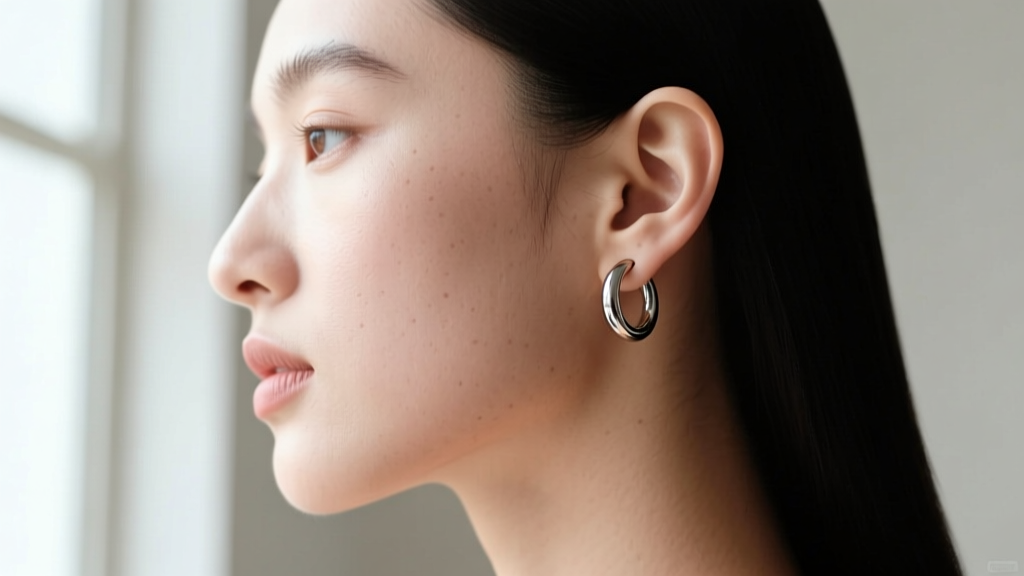
Do not rely on holding a ruler up to your ear. To accurately use a hoop size chart and protect your budget from costly returns, you need precise measurements. Invest in a cheap pair of digital calipers. Measure the distance from your piercing hole to the absolute edge of your earlobe or cartilage fold. This measurement is your maximum comfortable Inner Diameter.
If the distance from your lobe piercing to the bottom edge of your earlobe is 12mm, buying a 15mm hoop will result in the metal resting against your neck or collar, causing irritation and catching on clothing. For a snug 'huggie' fit in the helix or conch, subtract 1mm to 2mm from your caliper measurement to account for the curvature of the ear. For standard lobe hoops that dangle slightly, add 3mm to 5mm to your base measurement to allow for a comfortable drop that accommodates minor swelling or daily movement.
Budget-Friendly Brand Recommendations by Size
Finding value requires matching the right brand to the right size category. Here is how to allocate your budget based on the hoop size you are targeting:
Small Huggies (5mm - 12mm)
Because these require very little metal, you should never compromise on material quality to save money. Opt for solid 14k or 18k gold from specialized online retailers or Etsy artisans who cast to order. Brands like Maria Tash offer excellent engineering for their clicker huggies, though at a premium. For pure budget value, look for independent jewelers on platforms like Etsy who sell solid 14k gold seamless hoops in the $60 to $90 range. The low gram weight makes solid gold highly accessible here.
Medium Everyday Hoops (15mm - 25mm)
This is where mid-tier brands shine. Companies like Gorjana or Mejuri offer 14k gold-plated over brass or sterling silver options in the $40 to $80 range. While gold plating will eventually wear off, the structural integrity of a brass or silver core in a 20mm hoop is excellent. If you want solid gold in this size range, expect to pay between $180 and $300. The value proposition leans toward gold vermeil (thick gold plating over sterling silver) if you are strictly budget-bound, as noted by metal quality standards outlined by the Gemological Institute of America (GIA).
Large Statement Hoops (30mm+)
For large diameters, solid gold becomes a luxury investment. If your budget is under $150, you must pivot to high-quality gold-filled (GF) or titanium options. Gold-filled wire features a thick outer layer of 14k gold mechanically bonded to a brass core, offering decades of wear without flaking. Alternatively, implant-grade titanium hoops offer incredible durability, lightweight comfort, and a sleek silver aesthetic for under $50, making them the undisputed champions of budget value for oversized, heavy-gauge statement pieces.
Final Thoughts on Hoop Value
Mastering the earring hoop size chart transforms you from a passive consumer into an informed investor in your personal style. By prioritizing the correct inner diameter, demanding a minimum of 16-gauge thickness for structural integrity, and choosing solid metals for small sizes while leveraging gold-filled alternatives for large statement pieces, you can build a versatile, high-quality earring collection without overspending. Always measure twice with calipers, understand the hidden costs of metal weight, and buy for longevity rather than just the initial price tag.


