Gold Cameo Earrings: A Technical Guide to Carving & Gold Purity
Discover the technical anatomy of gold cameo earrings. Learn about shell vs. agate carving, gold purity grades, bezel settings, and post gauges.

The Substrate: Shell vs. Agate vs. Synthetic Resin
The foundation of any high-quality cameo earring is the substrate material. While the gold setting provides structural security, the carved medium dictates the piece's longevity, weight, and optical depth. In the modern lapidary market, gold cameo earrings are primarily carved from three distinct materials, each with unique Mohs hardness ratings and failure modes.
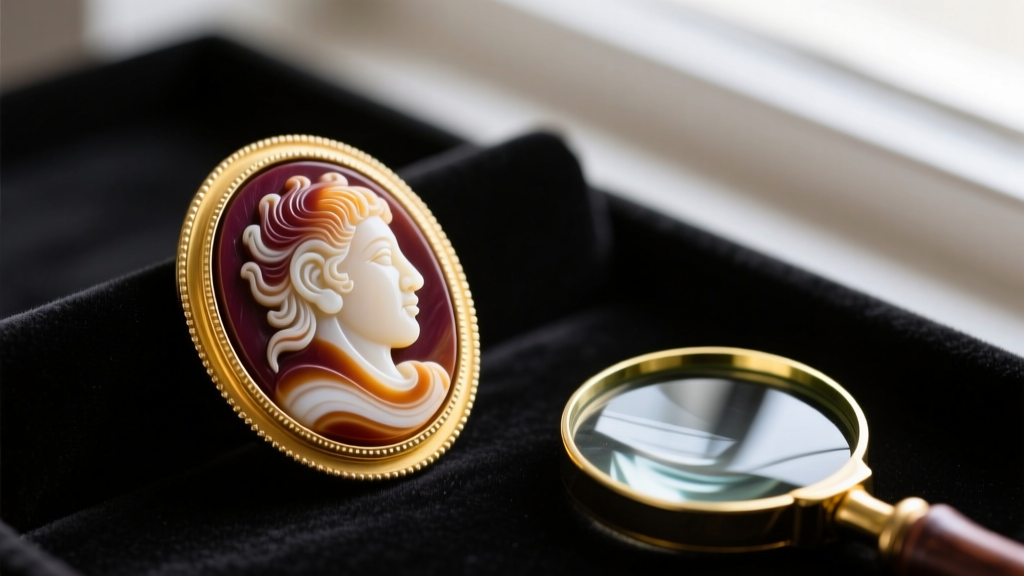
Cassis Cornuta (Helmet Shell): Sourced primarily from the Indo-Pacific region, helmet shell is prized for its natural banded coloration, typically featuring a white foreground against a brown or orange background. With a Mohs hardness of 2.5 to 3.0, shell is relatively soft. This allows for rapid hand-carving using traditional steel burrs, but it introduces a critical vulnerability: micro-chipping. If a jeweler applies excessive crimping pressure when securing the shell into a gold bezel, the substrate will fracture along its natural growth lines.
Sardonyx Agate: The gold standard for heirloom cameo earrings. Sardonyx is a banded variety of chalcedony with a Mohs hardness of 6.5 to 7.0. Carving agate requires diamond-tipped micro-burrs and significantly more time. Because agate is cryptocrystalline, it lacks the cleavage planes found in softer materials, making it highly resistant to chipping. However, its density means an agate cameo earring will weigh approximately 40% to 60% more than an identically sized shell cameo, directly impacting the required earring post gauge.
Synthetic Resin and Shell Paste: Frequently found in mass-market fashion jewelry, molded cameos are created by injecting resin or pulverized shell dust mixed with epoxy into silicone molds. While visually similar from a distance, these lack the optical translucency of natural stone and are highly susceptible to UV degradation and chemical breakdown from cosmetics.
Gold Purity and Alloy Metallurgy in Cameo Settings
The gold used to frame and secure the cameo is not merely decorative; it acts as a structural exoskeleton. The purity of the gold alloy directly influences the tensile strength of the setting.
14k vs. 18k Gold: Tensile Strength and Bezel Walls
14k gold (58.5% pure gold) is alloyed with higher percentages of copper, silver, or zinc. This results in a Vickers hardness of approximately 130-150 HV, making it highly rigid. For cameo earrings, 14k gold is ideal for delicate bezel settings because it can hold tension against the stone without warping.
Conversely, 18k gold (75% pure gold) is softer, with a Vickers hardness around 110-125 HV. When setting a heavy sardonyx agate cameo in 18k gold, the jeweler must design a wider bezel lip (minimum 0.8mm to 1.0mm thickness) to prevent the metal from pulling away from the stone during daily wear. If an 18k bezel is filed too thin, the natural weight of the earring will cause the gold to stretch, eventually releasing the cameo.
The Vermeil Standard
For buyers seeking the aesthetic of gold at a lower price point, gold vermeil is the only acceptable alternative to solid gold. According to the Federal Trade Commission (FTC), vermeil must consist of a sterling silver (925) base coated with a minimum of 2.5 microns of 10k or higher gold. However, for cameo earrings—which are often handled frequently and subjected to friction from hair—expert jewelers recommend seeking out pieces with 3.0 to 5.0 microns of plating to ensure the gold layer does not wear through to the silver substrate within the first year of use.
Bezel vs. Prong Settings: A Structural Comparison
Securing an asymmetric, hand-carved cameo requires specialized setting techniques. Below is a technical comparison of the two primary setting methods used in gold cameo earrings.
| Setting Type | Structural Security | Metal Stress Points | Best Substrate Match |
|---|---|---|---|
| Full Bezel | Maximum | Low (tension distributed evenly) | Agate, Shell |
| Partial Bezel | High | Medium (stress concentrated at terminals) | Agate |
| Prong (4 or 6) | Low to Medium | High (point-load stress on stone) | Agate only (never shell) |
Prong settings are exceptionally rare for authentic shell cameos. The point-load pressure exerted by a gold prong against a Mohs 2.5 shell will almost inevitably cause the material to crack or flake over time. Full bezel settings, where a continuous ribbon of gold is burnished over the cameo's edge, remain the industry standard for protecting the carved relief.

Post Gauge, Clutch Mechanics, and Weight Distribution
A frequently overlooked technical aspect of gold cameo earrings is the hardware that anchors them to the earlobe. A standard 20x15mm agate cameo set in solid 14k gold can weigh between 8 and 12 grams per earring. Standard earring hardware is fundamentally inadequate for this mass.
- Standard 20-Gauge Posts (0.81mm): Universally used for lightweight studs. Under the weight of an agate cameo, a 20-gauge post will bend, causing the earring to droop forward and placing uneven shear stress on the earlobe piercing.
- Heavy-Duty 18-Gauge Posts (1.02mm): The minimum acceptable gauge for solid gold cameo earrings. The increased cross-sectional area provides the rigidity needed to keep the cameo oriented correctly.
- 16-Gauge Posts (1.29mm): Required for oversized or double-cameo drop designs. Note that 16-gauge posts require stretched or naturally larger piercings and will not fit standard friction backs.
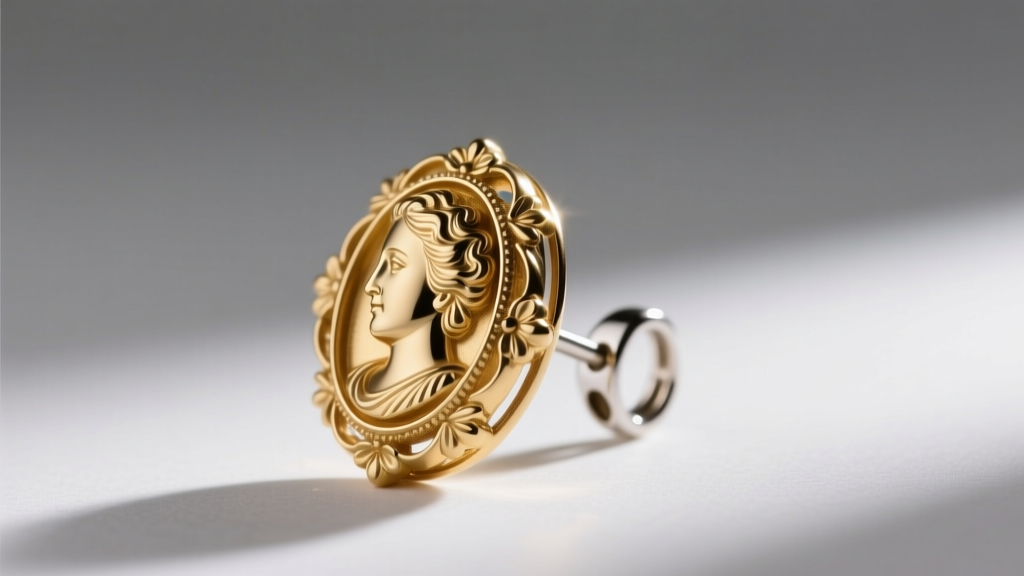
For heavy cameo earrings, standard friction clutches (butterfly backs) are a failure point. The tension spring inside a standard clutch will degrade, leading to lost earrings. Expert manufacturers utilize omega clips or screw-back mechanisms (such as La Pousette) which mechanically lock onto the post's threaded groove, ensuring the heavy gold setting remains secure.
Authentication: Identifying Hand-Carved vs. Molded Cameos
The secondary market is flooded with molded resin and shell-paste cameos misrepresented as hand-carved antiques. Authenticating gold cameo earrings requires examining the micro-topography of the carving using a 10x or 20x jeweler's loupe.
The Undercutting Test
Master cameo carvers utilize a technique called undercutting. This involves drilling and carving deeply beneath the foreground subject (usually a classical profile) to separate it entirely from the background layer. This creates deep, natural shadows and allows light to pass through the thinner edges of the stone, giving the profile a 3D, floating appearance. Molded cameos cannot feature undercutting; the sides of the relief must slope outward (draft angles) so the piece can be extracted from the silicone mold without tearing.
Tool Marks vs. Stippling
Under magnification, a hand-carved agate cameo will reveal microscopic, directional striations left by diamond burrs. The transitions between the hair, face, and background will be sharp and crisp. Conversely, molded cameos exhibit a uniform, slightly rounded stippling across all surfaces, and the edges of the profile will appear soft or melted. The Gemological Institute of America (GIA) frequently cites these microscopic surface textures as the definitive method for distinguishing lapidary art from mass production.
Maintenance and Environmental Degradation
Caring for gold cameo earrings requires an understanding of chemical interactions. The most common catastrophic failure in cameo maintenance is the use of ultrasonic cleaners.
"Never subject a banded shell or doublet cameo to ultrasonic cavitation. The high-frequency vibrations will exploit microscopic fissures in the shell, and the heat generated can melt the epoxy resins used to bond layered shell doublets, causing the cameo to delaminate instantly."
Safe Cleaning Protocol:
- Use a soft, natural-bristle brush (such as a baby toothbrush) dipped in a solution of warm distilled water and a single drop of pH-neutral dish soap.
- Gently agitate the carved crevices to remove sebum and cosmetic buildup.
- Rinse briefly under lukewarm running water.
- Pat dry with a microfiber cloth, ensuring no moisture is trapped between the gold bezel and the cameo substrate, which can lead to silver sulfide tarnish if the setting is vermeil.
By understanding the metallurgical and lapidary engineering behind these pieces, collectors and enthusiasts can confidently evaluate the true quality, structural integrity, and long-term viability of gold cameo earrings.