Earring Infection Guide: Prevention, Symptoms, and Safe Metals
Learn how to identify, treat, and prevent an earring infection. Discover the best hypoallergenic metals and aftercare routines for healing.

The Beginner’s Guide to Navigating Piercing Complications
Getting your ears pierced is a thrilling milestone, but the healing journey can sometimes take an unexpected turn. If you are experiencing redness, swelling, or discomfort, you might be dealing with an earring infection. However, before you panic and reach for the rubbing alcohol, it is crucial to understand that not all piercing complications are bacterial infections. In fact, the vast majority of what beginners perceive as an infection is actually contact dermatitis, mechanical irritation, or a localized allergic reaction. Understanding the difference is the first step toward proper healing. This comprehensive guide will break down the exact symptoms, the metallurgical reasons behind adverse reactions, and the step-by-step protocols to get your earlobes or cartilage back to perfect health.
Identifying an Earring Infection vs. Normal Healing
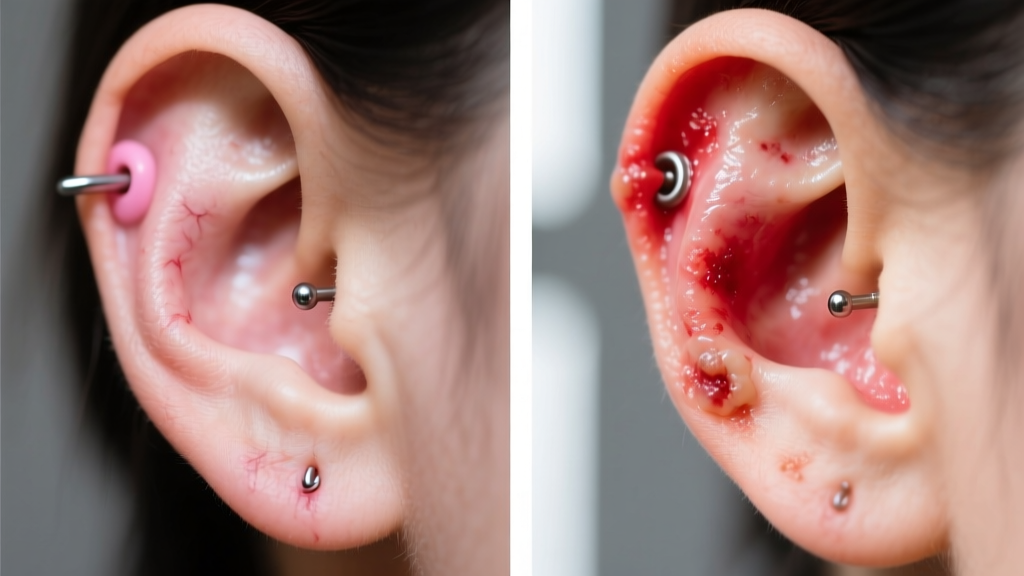
When a new piercing acts up, the immediate assumption is often a bacterial infection. However, the human body’s natural inflammatory response to a puncture wound can mimic infection symptoms. The fistula—the tube of skin that forms around your jewelry—requires a controlled inflammatory environment to heal. To accurately assess your situation, you must differentiate between normal healing, irritation, and a true medical infection. According to the Mayo Clinic, true infections are relatively rare when proper sterile techniques are used during the initial piercing, whereas irritation bumps and allergic reactions are incredibly common.
| Symptom | Normal Healing / Irritation | True Bacterial Infection |
|---|---|---|
| Redness | Localized directly around the puncture site; fades over weeks. | Spreading redness that radiates outward from the piercing; hot to the touch. |
| Discharge | Clear, white, or pale yellow lymph fluid that dries into crusties. | Thick, opaque green, dark yellow, or brown pus that may have a foul odor. |
| Pain Level | Mild tenderness, especially when touched or slept on. | Throbbing, severe, or escalating pain that persists even when untouched. |
| Swelling | Mild to moderate; peaks in the first 3-5 days then subsides. | Severe, rapid swelling that may begin to swallow the jewelry backing. |
| Systemic Signs | None. | Fever, chills, or swollen lymph nodes in the neck or jaw area. |
The Root Causes: Why Your Piercing Gets Infected or Irritated
To effectively treat and prevent an earring infection, you must identify the root cause. The three primary culprits are metallurgical incompatibility, mechanical trauma, and improper aftercare.
1. Metallurgical Incompatibility (Nickel Allergies)
The most common cause of an angry, weeping piercing is a nickel allergy. Many commercial earrings are made from 'surgical steel' or 'stainless steel.' While these terms sound medical, 316L surgical steel contains significant amounts of nickel. When nickel leaches into the puncture wound, it triggers allergic contact dermatitis. The American Academy of Dermatology notes that nickel allergy is one of the most common causes of allergic contact dermatitis worldwide, resulting in intense itching, redness, and blistering that is frequently misdiagnosed by beginners as a bacterial infection.
2. Mechanical Trauma and Pressure Necrosis
Sleeping on new earrings, snagging them on hairbrushes, or wearing jewelry that is too tight can cause micro-tears in the healing fistula. If a flat-back stud post is too short for the initial swelling, the jewelry will compress the tissue, cutting off blood circulation. This leads to pressure necrosis, where the tissue dies and becomes highly susceptible to bacterial invasion.
3. Harsh Aftercare Chemicals
Using rubbing alcohol, hydrogen peroxide, tea tree oil, or antibiotic ointments like Neosporin will actually destroy the fragile new cells forming your fistula. These chemicals are cytotoxic and delay healing, leaving the wound open longer and increasing the risk of a true earring infection.
The Best Metals to Prevent Earring Infections
Upgrading your jewelry is the single most effective way to resolve persistent irritation and prevent future complications. When shopping for healing or sensitive ears, ignore marketing buzzwords like 'hypoallergenic' and look for specific material grades and ASTM (American Society for Testing and Materials) certifications.
- Implant-Grade Titanium (ASTM F-136): This is the gold standard for fresh piercings and reactive ears. It is entirely nickel-free, lightweight, and highly biocompatible. It is the exact same metal used in medical joint replacements and pacemakers.
- Solid 14k or 18k Gold (Yellow or Rose): High-karat solid gold is generally well-tolerated, provided it is alloyed with biocompatible metals like silver or copper rather than nickel. Avoid white gold unless it is confirmed to be palladium-based, as traditional white gold is alloyed with nickel and plated with rhodium, which eventually wears off.
- Niobium: A highly inert, lightweight reactive metal that is completely nickel-free. It is an excellent, budget-friendly alternative to titanium, though it cannot be polished to a high mirror finish, which can sometimes harbor bacteria if the surface is scratched.
- Glass (Fused Quartz or Borosilicate): While not a metal, glass is completely inert and an excellent choice for retainers if you must hide a piercing or undergo an MRI.
Step-by-Step Treatment for an Infected or Irritated Piercing
If you have assessed your symptoms and suspect a complication, follow this strict protocol to encourage healing and avoid worsening the issue. The Association of Professional Piercers (APP) strongly advocates for a minimalist approach to piercing aftercare.
Step 1: Do NOT Remove the Jewelry
This is the most critical rule. If you have a true bacterial infection, removing the earring allows the surface of the puncture to heal over, trapping the infection inside the tissue and potentially forming an abscess. The jewelry acts as a drain. Leave it in unless a medical professional explicitly tells you to remove it.
Step 2: Switch to Sterile Saline
Discard all homemade sea salt soaks, which are often improperly proportioned and can dehydrate the tissue. Purchase a can of sterile 0.9% sodium chloride wound wash with no additives. Spray it gently on the front and back of the piercing twice a day. The mechanical action of the spray helps flush away lymph and debris without the need for harsh scrubbing.
Step 3: Apply Warm Compresses
If you are dealing with an irritation bump or localized swelling, soak a clean, non-woven gauze pad in warm (not hot) sterile saline and hold it against the ear for 5 to 10 minutes. This increases local blood flow, which brings white blood cells to the area to fight off potential bacteria and reduce inflammation.
Step 4: Evaluate Your Jewelry Fit
Visit a reputable, professional piercer (not a mall kiosk) to have the jewelry assessed. If the post is too tight, they will swap it for a longer titanium post to accommodate the swelling. If you are wearing a butterfly-back earring, they will upgrade you to a threadless or internally threaded flat-back labret, which eliminates the bacteria-harboring crevices of traditional push-in backs.
Cartilage vs. Lobe: Why Location Dictates Urgency
Not all ear piercings carry the same level of risk. The anatomical location of your earring infection dictates how aggressively it must be treated.
The Earlobe: Highly Vascular and Forgiving
Earlobes are composed of soft tissue with a robust blood supply. This high vascularity means that white blood cells can easily reach the site of an infection, and systemic antibiotics are highly effective if prescribed. Lobe piercings typically heal in 6 to 8 weeks and are relatively forgiving of minor aftercare mistakes.
The Cartilage: Avascular and High Risk
Cartilage piercings (such as the helix, tragus, conch, or rook) are entirely different. Cartilage is avascular, meaning it lacks its own direct blood supply. It relies on the surrounding skin and perichondrium for nutrients and immune response. If a cartilage piercing develops a true infection, it can rapidly progress to perichondritis—a severe infection of the tissue surrounding the cartilage. This condition can lead to permanent tissue death and cosmetic deformity (often called 'cauliflower ear'). If you experience spreading redness, intense throbbing, or systemic fever with a cartilage piercing, bypass the piercer and seek immediate medical attention from a physician.
Final Thoughts on Ear Health
Patience and precision are your best tools when navigating the healing process. By upgrading to implant-grade titanium, adopting a sterile saline-only cleaning routine, and leaving the jewelry alone, you can resolve the vast majority of piercing complications. Remember that an earring infection is a signal from your body that the environment is not optimal for healing. Listen to your body, respect the biology of the fistula, and consult a professional piercer or dermatologist when in doubt.


