Earring Luxury Trends 2026: Quiet Opulence and High Karat Gold
Discover 2026 earring luxury trends, from 18K gold metallurgy and traceable diamonds to asymmetric silhouettes and high-jewelry ear stacks.


The Shift from Logomania to Quiet Earring Luxury
The landscape of fine jewelry has undergone a radical transformation as we move through 2026. The era of overt branding and heavy, logo-encrusted accessories has firmly ceded ground to a more refined, material-first philosophy. Today, earring luxury is defined by 'quiet opulence'—a movement that prioritizes intrinsic material value, masterful metallurgy, and bespoke curation over recognizable brand motifs. High-net-worth collectors and style connoisseurs are no longer asking 'Who made this?' but rather 'What is the gold purity, and where was this stone mined?' This shift has forced heritage houses and independent high jewelers alike to elevate their craftsmanship, focusing on the microscopic details of post engineering, gemstone provenance, and ergonomic weight distribution.
Material Mastery: The Metallurgy of High-End Lobes
True earring luxury in 2026 is fundamentally rooted in metallurgical excellence. While 14-karat gold (58.5% pure gold) remains a staple for durable, everyday fashion-fine jewelry, the luxury tier has decisively moved toward 18-karat and, increasingly, 22-karat gold. Understanding the Vickers hardness scale is crucial for collectors. Standard 18K gold alloys possess a Vickers hardness of approximately 125 to 145, offering the perfect equilibrium between the rich, buttery luster of pure gold and the structural integrity required to hold heavy gemstone bezels.
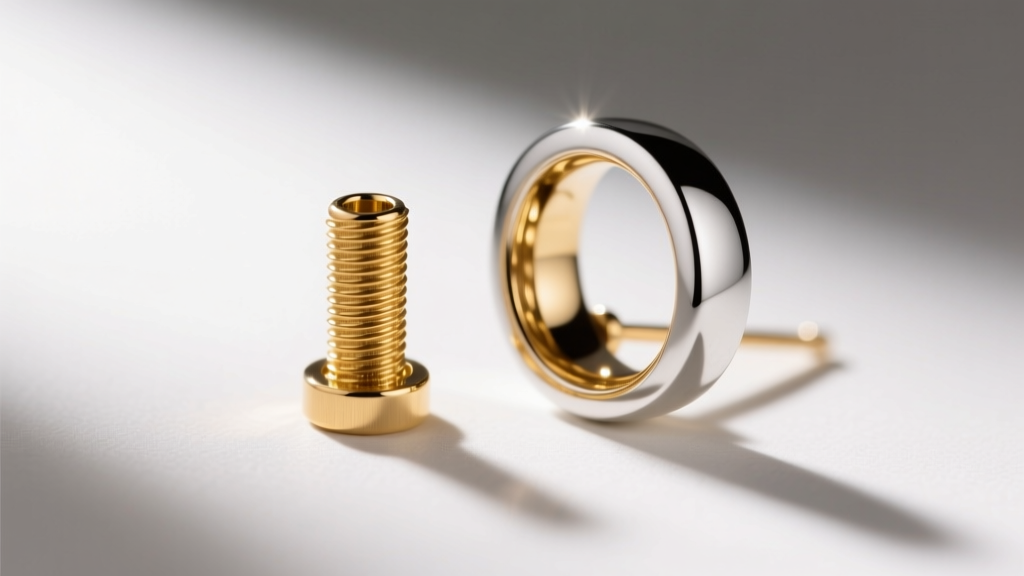
However, the most exclusive bespoke jewelers are now experimenting with 22-karat gold (91.6% purity). Because 22K gold is significantly softer (Vickers hardness around 70-90), it cannot be used in standard, thin 20-gauge (0.8mm) posts without bending. To accommodate this ultra-luxury material, master goldsmiths are engineering thicker 14-gauge (1.6mm) or 12-gauge (2.0mm) posts with internal threading. This not only prevents the post from warping under the weight of a heavy drop earring but also ensures a seamless, snag-free insertion that protects delicate piercing channels.
Gemstone Provenance and the Traceability Mandate
In the upper echelons of earring luxury, a flawless cut is no longer enough; the narrative of the stone is equally paramount. The modern luxury consumer demands absolute transparency. According to the Gemological Institute of America (GIA), the demand for Diamond Origin reports has surged, with collectors insisting on matching the physical stone to its specific mine of extraction, whether that is the Diavik mine in Canada or the Jwaneng mine in Botswana.
Furthermore, the melee diamonds (stones under 0.15 carats) used in luxury pavé and halo settings have seen a massive quality upgrade. Historically, brands would use lower-clarity melee (I1-I2) since the stones were too small to see inclusions with the naked eye. In 2026, high jewelry houses are exclusively utilizing F-G color and VS1-VS2 clarity melee to ensure the earring's overall light return is not compromised by cloudy accent stones. While lab-grown diamonds have captured the accessible luxury market, the ultra-luxury and high-jewelry sectors remain fiercely committed to rare, natural, earth-mined stones, viewing them as enduring stores of value.
The Engineering of Luxury Closures
A frequently overlooked aspect of earring luxury is the closure mechanism. Cheap friction backs (butterfly backs) are entirely absent in high jewelry. They exert uneven pressure on the earlobe and frequently fail, resulting in the loss of five-figure assets. Instead, 2026’s luxury standards dictate the use of precision-engineered closures:
- Internal Screw-Backs: The post itself is threaded, and the backing screws onto it. This requires precise 18-gauge or 16-gauge machining and ensures the earring cannot be pulled off accidentally.
- Articulated Omega Backs: Used primarily for heavy clip-ons or convertible drop earrings, the omega clip provides a broad, hinged surface area that grips the earlobe securely without pinching the tissue.
- Clicker Hinges with Micro-Tension: For luxury huggies and cartilage hoops, the clicker mechanism must feature a micro-tension latch that produces an audible, secure 'click' and sits entirely flush against the metal, eliminating the need for a visible clasp line.
2026 Silhouette Trends: Asymmetry and Sculptural Weight
Silhouettes this year are moving away from delicate, barely-there studs toward bold, architectural statements that interact dynamically with the anatomy of the ear. The asymmetric chandelier earring—worn as a single, dramatic piece on one side while the opposite ear features a curated stack of tight huggies—is the defining look of the season. However, designing a 15-gram chandelier earring requires rigorous attention to weight distribution to prevent earlobe tearing.
| Silhouette Style | Average Weight | Required Post Gauge | Recommended Closure |
|---|---|---|---|
| Sculptural Huggie | 3g - 5g | 16g (1.2mm) | Flush Clicker Hinge |
| Bezel Solitaire Stud | 1g - 3g | 18g (1.0mm) | Internal Screw-Back |
| Asymmetric Chandelier | 10g - 18g | 14g (1.6mm) | Omega Clip or Harness |
| Chain Ear Cuff Drape | 4g - 7g | N/A (Cuff) | Tension-Fitted C-Clamp |
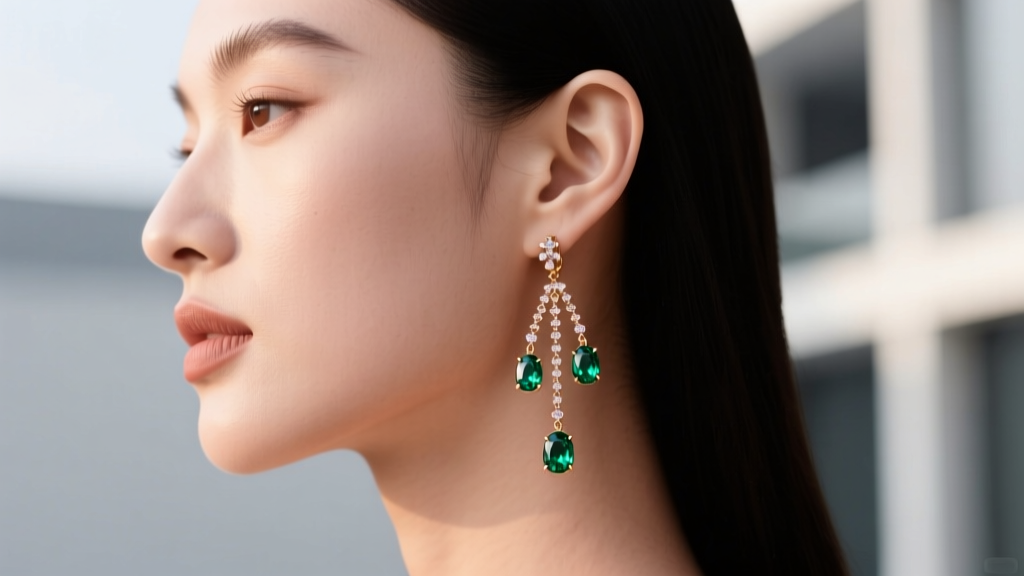
For pieces exceeding 12 grams, luxury designers are now incorporating 'ear harnesses'—delicate, 22-karat gold chains that loop over the apex of the ear and connect to the earring post, effectively transferring the weight from the soft lobe tissue to the sturdy upper cartilage.
Investment Pricing: Navigating the Luxury Tiers
Understanding the pricing architecture of earring luxury is essential for collectors looking to build a valuable portfolio. The market is distinctly segmented into three tiers in 2026:
1. Accessible High-Fine ($2,500 – $8,000)
Brands like Maria Tash and Anita Ko dominate this space. Pieces feature excellent 18K gold workmanship and high-quality natural diamonds, but rely on standardized, scalable designs. These are excellent entry points for luxury curation but do not typically hold secondary market value above their retail price.
2. Core High Jewelry ($15,000 – $60,000)
This tier includes heritage houses like Boucheron, Chaumet, and Chopard. Here, you are paying for exceptional, unheated gemstones (such as Burmese rubies or Colombian emeralds), complex articulated metalwork, and brand prestige. According to valuation experts at the Appraisers Association of America, signed pieces from these houses with original documentation maintain strong auction liquidity.
3. Bespoke and Archive ($80,000+)
The pinnacle of earring luxury. Independent masters like JAR (Joel Arthur Rosenthal) or Hemmerle create one-of-a-kind pieces using unconventional materials (like copper or iron) paired with museum-grade gemstones. These pieces are acquired via private waiting lists and frequently appreciate in value at major auction houses like Sotheby's and Christie's.
Curating a High-Jewelry Ear Stack: Rules of Engagement
Building a luxury ear stack is an exercise in spatial geometry and biological patience. The golden rule of spacing is maintaining exactly 6mm to 8mm of negative space between each piercing to allow the settings to catch the light without overlapping.
Never insert 18-karat or 22-karat gold into a fresh, unhealed cartilage piercing. The porosity of high-karat alloys can harbor bacteria during the 9-to-12-month healing window. Always heal with implant-grade titanium (ASTM F136), and upgrade to your luxury gold pieces only after the fistula is fully mature.
By prioritizing material integrity, demanding gemstone traceability, and respecting the anatomical limits of the ear, the modern collector elevates earring luxury from a mere fashion statement to a deeply personal, enduring wearable art form.


