The Earring Magic Ken Trend: 90s Circle Pendants Revived
Discover the history of the Earring Magic Ken circle pendant and learn how to style this iconic 90s single-ear trend with modern, skin-safe materials.

The Cultural Reset of Earring Magic Ken
When Mattel released Earring Magic Ken in 1993, they accidentally sparked a cultural revolution in men's and gender-neutral jewelry. Dressed in a sheer mesh shirt and a lavender faux-leather vest, this iteration of Barbie’s longtime boyfriend featured a single, unmistakable accessory: a silver hoop earring with a dangling translucent circle pendant in his left ear. While the doll was initially pulled from shelves after adults pointed out the accessory's resemblance to adult novelty items, the "Earring Magic Ken" aesthetic left an indelible mark on 90s pop culture.
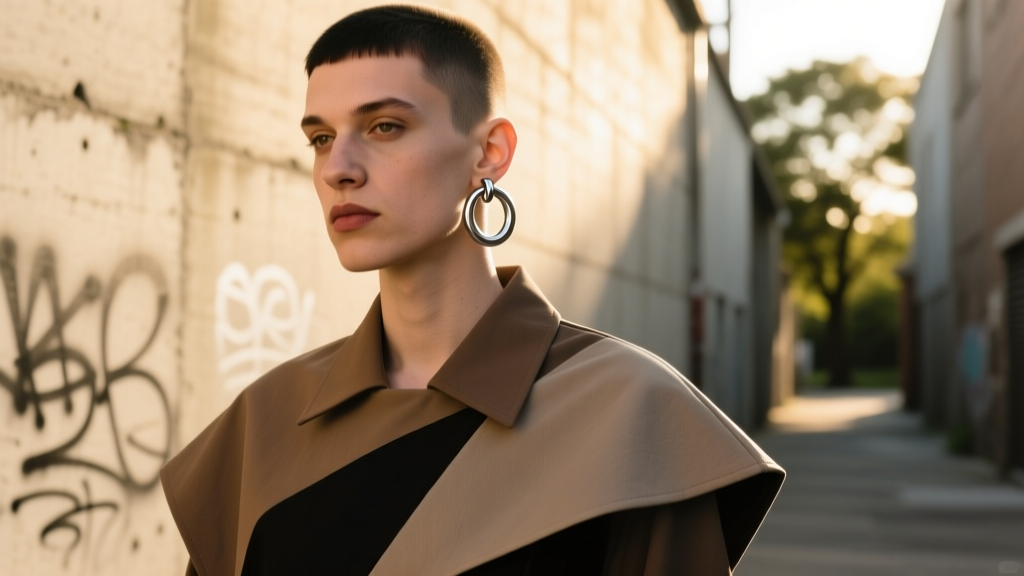
Today, as Y2K and 90s nostalgia continue to dominate 2026 fashion runways, the single-ear circle pendant is experiencing a massive renaissance. No longer confined to a controversial toy aisle, the earring magic ken trend has been reclaimed by gender-fluid fashionistas, streetwear enthusiasts, and vintage jewelry collectors. This beginner-friendly explainer breaks down the history, anatomy, and modern styling of this iconic earring, ensuring you can wear the trend safely and stylishly.
Anatomy of the Iconic Circle Pendant
To truly understand the earring magic ken aesthetic, you must look at the specific construction of the jewelry. The original 1993 accessory was a masterclass in minimalist geometry, consisting of three distinct components:
- The Primary Hoop: Typically a 10mm to 12mm diameter French wire or continuous hoop, designed to hug the earlobe without overwhelming it.
- The Jump Ring: A tiny 3mm to 4mm circular connector. In high-quality modern replicas, this is a soldered jump ring, which prevents the pendant from slipping off the hoop and getting lost.
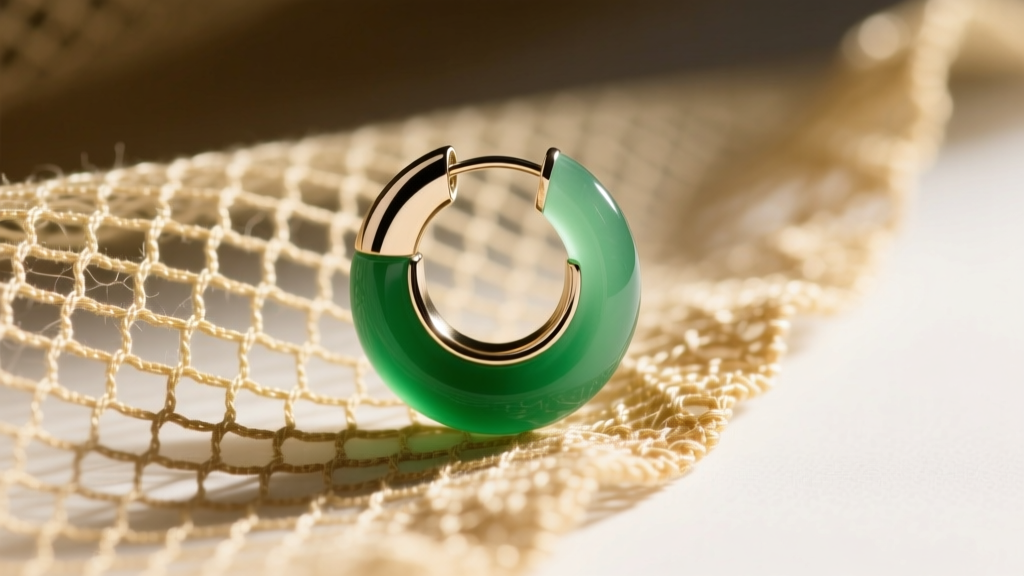
- The Circle Pendant: A 15mm to 20mm outer-diameter ring made of translucent material. The original Ken earring used a jade-green or clear acrylic resin, catching the light and creating a subtle halo effect around the face.
Sizing, Gauges, and Piercing Health
One of the biggest mistakes beginners make when adopting nostalgic jewelry trends is ignoring modern piercing health standards. In the 1990s, mass-market earrings were frequently crafted from cheap base metals plated with thin layers of silver or gold. These often contained high levels of nickel, leading to contact dermatitis and green-stained earlobes.
According to the Association of Professional Piercers (APP), modern body jewelry should prioritize biocompatibility. If you are sourcing an earring magic ken replica for a fresh or sensitive piercing, you must pay attention to both the gauge and the metal grade.
Standard Gauge Sizing
Standard lobe piercings are typically done at 20G (0.81mm) or 18G (1.02mm). Most vintage-style circle pendant earrings are manufactured at 20G to keep the overall weight of the dangle low. If your lobes were stretched or pierced with a heavy-duty gun, you might require an 18G or 16G wire. Always measure your current jewelry with a digital caliper before ordering a replica to ensure the hoop won't cause tearing or irritation.
Material Comparison Chart
| Material | Best For | Pros | Cons |
|---|---|---|---|
| ASTM F136 Titanium | Sensitive/Fresh Piercings | 100% Nickel-free, lightweight, hypoallergenic | More expensive, harder to find in vintage styles |
| 316L Surgical Steel | Healed, Non-Sensitive Lobes | Affordable, highly polished, durable | Contains trace nickel, can cause reactions |
| Sterling Silver (925) | Occasional Wear | Authentic 90s aesthetic, bright shine | Tarnishes easily, soft metal can bend |
| Niobium | Custom Anodized Colors | Hypoallergenic, can be colored black/gold | Heavier than titanium |
Face Shape Pairing for Dangle Earrings
The earring magic ken style is fundamentally a dangle earring. Because the circle pendant hangs below the earlobe, it draws the eye downward, which can dramatically alter the perceived proportions of your face. Here is how to style the single-ear circle pendant based on your face shape:
- Round Faces: Opt for a slightly elongated oval hoop with a smaller, 12mm circle pendant. This adds verticality and sharpens the jawline.
- Square Faces: The classic 18mm circular acrylic pendant is perfect. The soft, continuous curve of the circle contrasts beautifully with strong, angular jawlines.
- Heart-Shaped Faces: Choose a lightweight, clear lucite pendant. Heavy, dark jade pendants can draw too much attention to the lower half of the face, disrupting the natural balance of a wider forehead and narrow chin.
- Oval Faces: You have the ultimate versatility. Feel free to experiment with oversized 25mm resin rings for a bold, avant-garde streetwear look.
Material Guide: Authentic Jade vs. 90s Acrylic
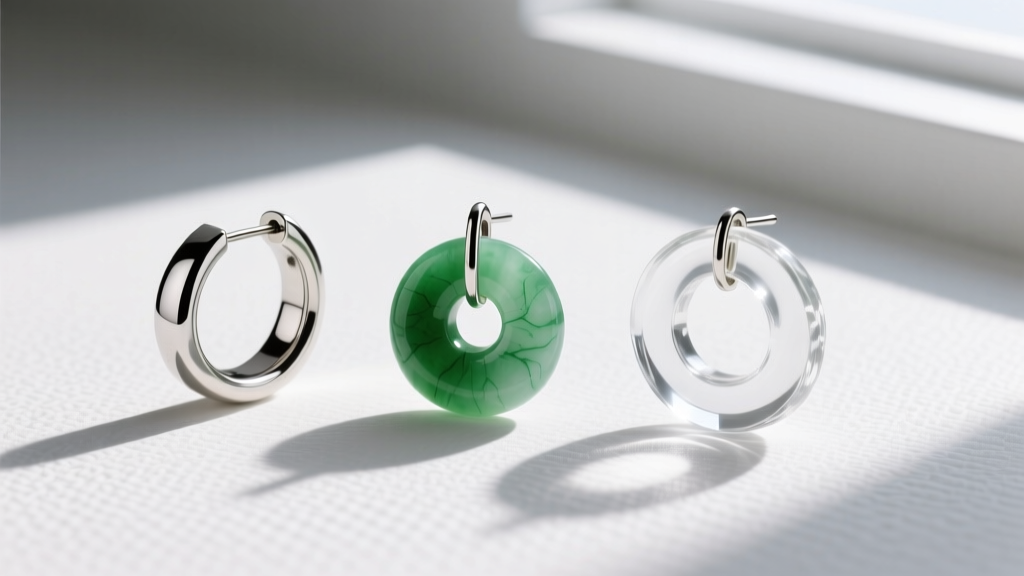
While the original doll's earring was made of cheap, injection-molded plastic, modern jewelers are elevating the earring magic ken trend using premium materials. When shopping for a high-end circle pendant, you will typically encounter two main options: authentic nephrite jade and modern cast acrylic.
According to the Gemological Institute of America (GIA), nephrite jade is incredibly tough and resistant to shattering, making it a viable option for jewelry. However, genuine jade is dense and heavy. A 20mm solid jade ring can weigh upwards of 4 grams, which will slowly stretch a standard 20G earlobe piercing over time.
For daily wear, high-grade cast acrylic or lucite is the superior choice. It mimics the translucent, milky-green glow of vintage jade but weighs a fraction of the amount, preserving the health of your earlobe while maintaining the authentic 1993 aesthetic.
Cleaning and Maintaining Vintage Acrylic
If you manage to source an original 1990s earring magic ken accessory from a vintage reseller, you must handle the acrylic with extreme care. Over three decades, vintage plastics undergo UV degradation, leading to a yellowed tint and micro-fractures.
"Never use alcohol-based cleaners or ultrasonic baths on vintage 90s acrylic jewelry. The harsh solvents will immediately cloud the plastic and cause structural cracking. Stick to lukewarm water and a mild, fragrance-free glycerin soap."
To clean your piece, simply soak it in a bowl of soapy water for three minutes, gently agitate the dirt from the jump ring crevices with a soft-bristled baby toothbrush, and pat dry with a microfiber cloth. Store the earring in a dark, velvet-lined box to prevent further UV yellowing.
Final Thoughts on Nostalgic Ear Styling
The earring magic ken phenomenon was never just about a piece of plastic jewelry; it was a cultural flashpoint that challenged rigid gender norms in mainstream retail. By adopting the single-ear circle pendant in 2026, you are participating in a rich lineage of fashion rebellion. Whether you choose a skin-safe titanium hoop with a lightweight jade-green resin dangle or a custom-forged sterling silver replica, the key to pulling off this look is confidence. Embrace the asymmetry, respect your piercing's gauge limits, and let the 90s nostalgia speak for itself.


