Earring mm Size Chart: Troubleshoot Sizing and Fit Issues
Use our earring mm size chart to troubleshoot fit issues. Learn exact conversions, gauge vs. diameter, and how to measure for perfect studs and hoops.

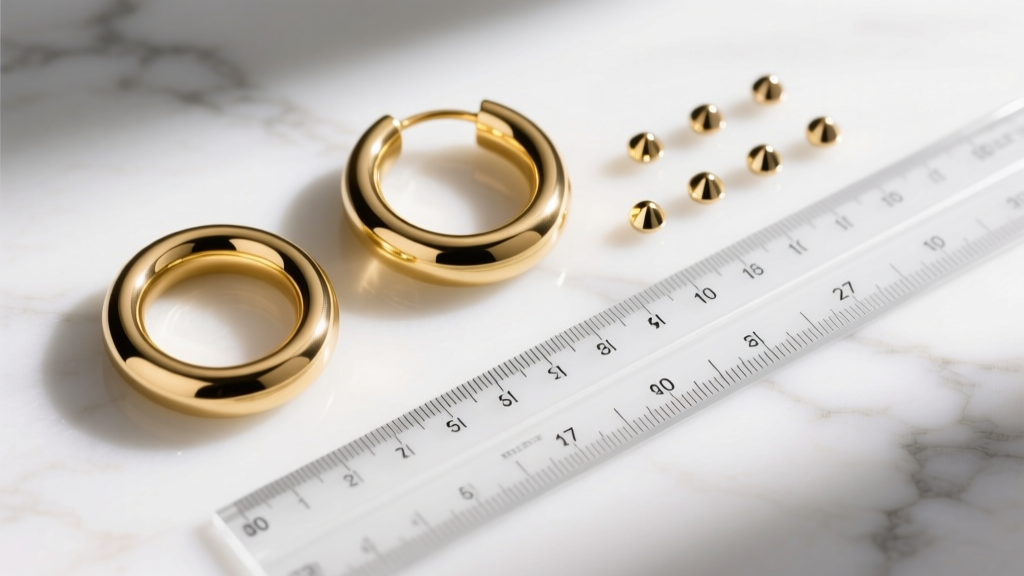
There is a universal frustration known to anyone who buys jewelry online: the "tiny earring" phenomenon. You order what the website describes as "medium statement hoops," only to open the box and find jewelry that looks like it belongs on a child. Conversely, you might order "delicate everyday studs" and receive heavy, oversized discs that drag your lobe down. According to e-commerce return data, sizing and proportion mismatches account for a massive percentage of online jewelry returns. The root of this problem is a fundamental misunderstanding of scale, screen distortion, and the lack of a reliable earring mm size chart during the browsing process.
This guide is designed as a troubleshooting manual. We will bypass the vague marketing terms like "dainty" or "chunky" and rely on exact millimeter (mm) measurements, gauge thicknesses, and anatomical averages to help you diagnose sizing disasters, understand why your current earrings fit poorly, and guarantee perfect proportions on your next purchase.
The Visual Illusion: Why Product Photos Lie
Before diving into the numbers, it is critical to understand why your eyes deceive you online. Macro photography is the enemy of scale. A 3mm diamond stud photographed at 5x magnification will look identical to a 10mm cubic zirconia stud photographed at 1x magnification. Furthermore, model proportions vary wildly; a 20mm hoop will look like a massive statement piece on a model with petite earlobes, but will read as a standard, conservative size on a model with larger, thicker lobes.
To troubleshoot this, you must ignore the model and look strictly at the technical specifications. If a retailer does not list the exact millimeter dimensions (both diameter and thickness), consider it a red flag. Reputable jewelers and professional body jewelry brands always provide precise metric measurements.
The Definitive Earring mm Size Chart
Use the chart below as your primary troubleshooting tool. Print it out or keep it on your phone while shopping. This chart translates abstract millimeter numbers into real-world visual anchors and identifies the best jewelry applications for each size.
| Millimeter (mm) | Inch Fraction | Real-World Visual Anchor | Best Jewelry Application |
|---|---|---|---|
| 3mm - 4mm | 1/8" | Grain of rice / Match head | Micro studs, nose screws, secondary lobe piercings |
| 5mm - 6mm | 3/16" - 1/4" | Standard pencil eraser | Classic everyday diamond/pearl studs, helix studs |
| 8mm - 9mm | 5/16" | Green pea | Large studs, small sleepers, cartilage hoops |
| 10mm - 12mm | 3/8" - 1/2" | Standard pencil width | Huggie hoops, small standard lobe hoops |
| 15mm - 20mm | 5/8" - 3/4" | US Dime to Nickel diameter | Medium everyday hoops, conch hoops |
| 25mm - 30mm | 1" - 1.2" | US Quarter diameter | Large statement hoops, classic daith rings |
| 40mm+ | 1.5"+ | Half-dollar / Golf ball | Oversized fashion hoops, runway statements |
Troubleshooting Common Sizing Disasters
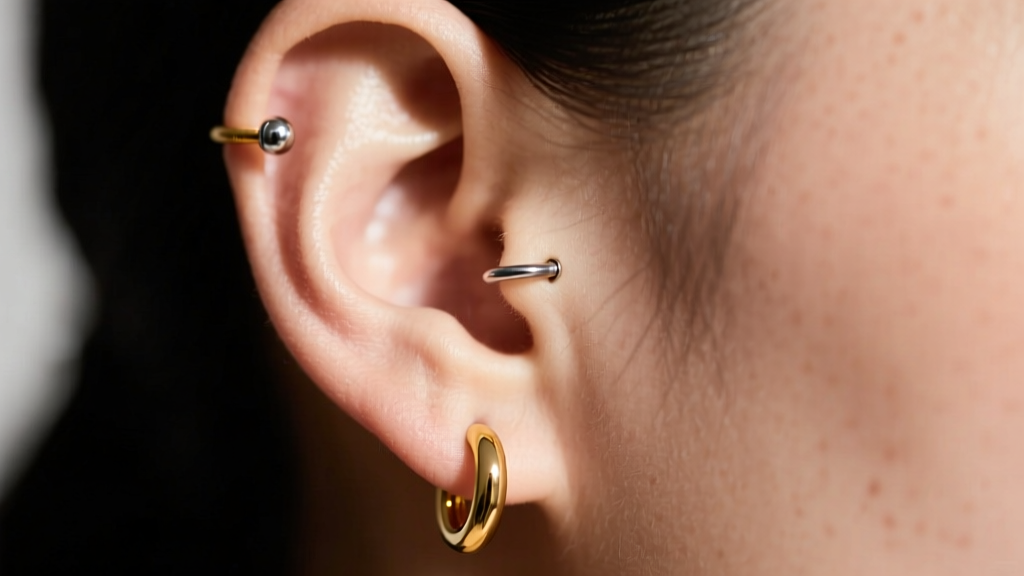
When an earring fits poorly, it is rarely a defect in the jewelry itself; it is a mismatch between the jewelry's geometry and your specific ear anatomy. Here is how to diagnose and fix the most common sizing complaints.
Disaster 1: The Hoop That Won't Close or Pulls the Lobe
The Symptom: You bought a 12mm hoop for your lobe, but it feels incredibly tight, pulls your piercing downward, or the clasp refuses to click shut without bending the metal.
The Diagnosis: You are confusing outer diameter with inner diameter. If a hoop has an outer diameter of 12mm, but the wire itself is a thick 2mm, the inner diameter (the actual space for your earlobe) is only 8mm. The average earlobe thickness is between 4mm and 6mm. An 8mm inner diameter leaves only 2mm of clearance, which will cause tension and pulling.
The Fix: Always calculate the inner diameter. For a comfortable standard lobe hoop that moves freely, you need an inner diameter of at least 10mm to 12mm. If you prefer thick wire (2mm+), you must size up to a 14mm or 16mm outer diameter.
Disaster 2: The "Disappearing" Stud or the Clunky Post
The Symptom: Your stud sinks into your earlobe, looking much smaller than expected, or the back of the earring constantly pokes the side of your neck.
The Diagnosis: This is a post-length and lobe-thickness mismatch. Standard friction-back earrings come with 6mm to 8mm posts. If you have thicker lobes (7mm+), a 6mm post will barely pass through the tissue, causing the butterfly back to squeeze the lobe, restricting blood flow and causing swelling. Conversely, if you have thin cartilage (3mm-4mm) and use an 8mm post, the excess metal will stick out and snag on hair.
The Fix: Switch to flat-back labret posts, which are sold in exact lengths (5mm, 6mm, 8mm, 10mm). According to the Association of Professional Piercers (APP), internally threaded or threadless flat backs are vastly superior for custom sizing because they eliminate the sharp post ends that irritate the skin behind the ear.
Thickness vs. Diameter: The Gauge Confusion
Another massive point of failure is confusing the diameter of the earring with the thickness of the wire, known as the gauge. If you try to force a 14-gauge earring into a standard 20-gauge piercing, you will cause micro-tears, scar tissue buildup, and potential infection.
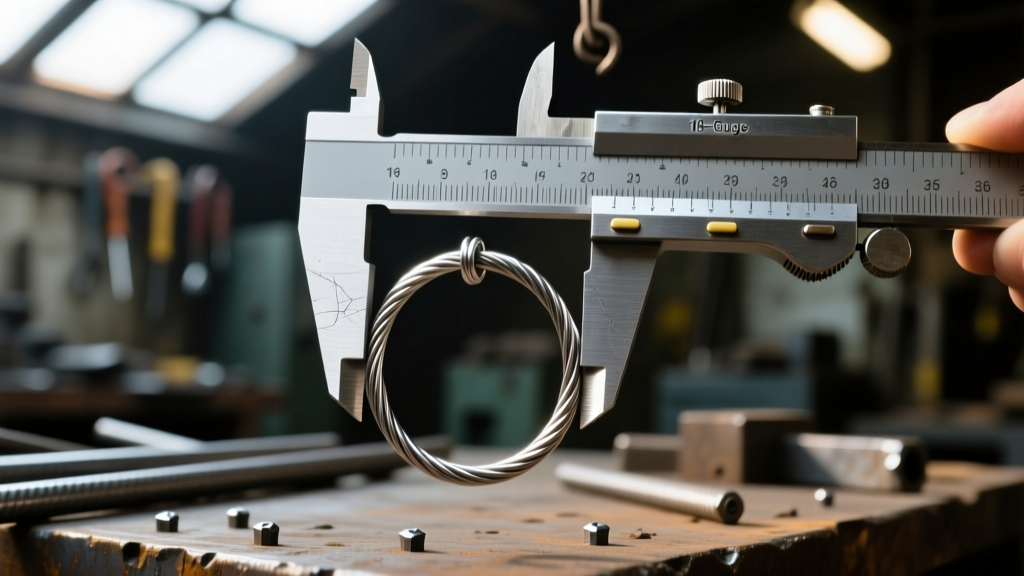
Use this quick troubleshooting key to verify your wire thickness before purchasing:
- 20 Gauge (0.81mm): The thinnest standard. Used for most mall-kiosk piercings, lightweight fashion earrings, and delicate nose rings.
- 18 Gauge (1.02mm): The standard for professional lobe piercings and most high-quality gold/diamond studs.
- 16 Gauge (1.29mm): The standard for cartilage (helix, tragus, conch) and septum piercings. If you are buying cartilage hoops, 16g is usually the safest bet.
- 14 Gauge (1.63mm): Used for heavier industrial bars, daith piercings, and stretched lobes.
Expert Tip: If you are unsure of your piercing gauge, never guess. Visit a local professional piercer who can measure your current jewelry with digital calipers in seconds.
How to Accurately Measure Your Ear at Home
To utilize an earring mm size chart effectively, you need to know your own dimensions. Do not rely on eyeballing it. Follow this precise measurement protocol:
- Invest in Digital Calipers: A standard school ruler is too imprecise for jewelry. A cheap set of digital calipers from a hardware store will give you exact measurements to the 0.01mm.
- Measure Lobe Thickness: Gently pinch your earlobe with the calipers. Record the thickness. If it reads 5.5mm, you know you need a post length of at least 7mm to allow for swelling and the backing mechanism.
- Measure Piercing Distance: If you are buying an ear cuff or a chain that connects a lobe stud to a helix stud, measure the exact distance between the two piercings while your ear is relaxed. Add 2mm to this measurement to allow for natural skin movement.
- The Coin Hack: If you lack calipers, use coins as a visual proxy. A US Dime is exactly 17.91mm in diameter. A US Penny is 19.05mm. Hold a dime up to your ear in the mirror to visualize how a 18mm hoop will actually sit on your face.
"The most common mistake consumers make is buying based on the face of the earring while ignoring the architecture of the back. A 10mm stud with a 4mm post is unwearable for 40% of the population. Always check the post length and the inner diameter of hoops." — Master Bench Jeweler & Piercing Consultant
Expert Tips for Buying Online Without Regret
When you are finally ready to check out, run your cart through this final troubleshooting checklist to ensure zero sizing regrets:
- Check the Metal Grade: Sizing issues often compound with metal allergies, causing swelling that makes previously well-fitting earrings suddenly feel too tight. Always opt for Implant-Grade Titanium (ASTM F-136) or solid 14k/18k gold for fresh or sensitive piercings. Avoid "gold-plated brass" for everyday wear, as the base metal can cause contact dermatitis that mimics a sizing issue.
- Verify the Clasp Type: For hoops in the 10mm-15mm range (huggies), look for clicker hinges or saddle-back clasps. Standard wire-and-catch clasps in these small sizes are notoriously difficult to close and often bend out of shape, altering the diameter.
- Read the "Dimensions" Tab, Not the Title: A product titled "Large Chunky Hoops" might actually be 20mm (which is only medium). Trust the millimeter numbers over the adjectives.
By shifting your mindset from visual estimation to precise metric analysis, you will eliminate the guesswork from online jewelry shopping. Keep this earring mm size chart bookmarked, measure your anatomy accurately, and you will never again receive a package of jewelry that fails to fit your unique proportions.
For more detailed information on standard body jewelry measurements and safe materials, refer to the educational resources provided by Jewelry Wise and your local APP-certified professional.


