Best Earring and Necklace Holder Materials Compared
Discover how your earring and necklace holder material impacts jewelry longevity. Compare acrylic, wood, and MDF for tarnish and scratch risks.

The Hidden Chemistry of Jewelry Storage
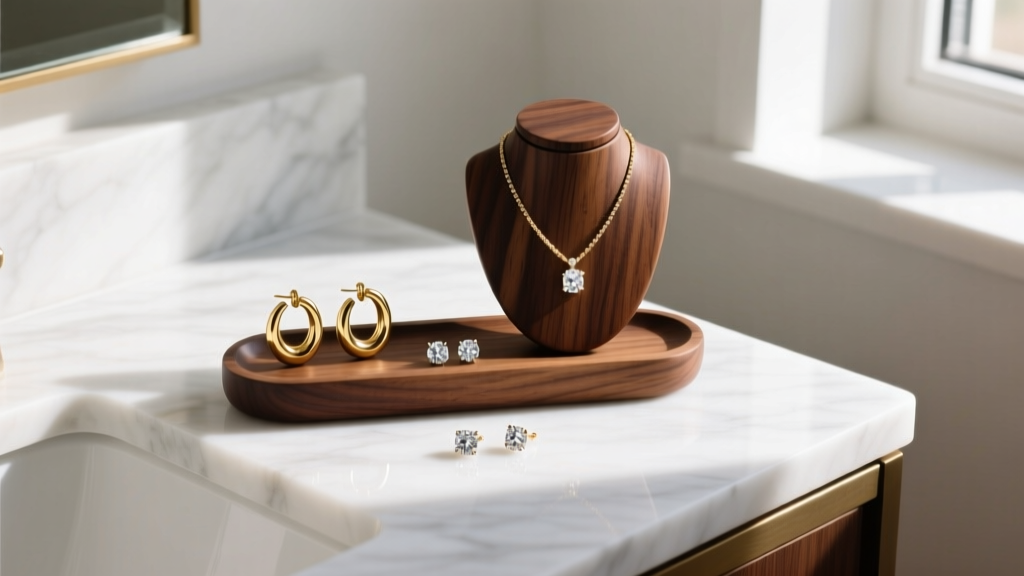
When selecting an earring and necklace holder, most consumers prioritize aesthetics, footprint, and capacity. However, from a metallurgical and gemological perspective, the material composition of your storage unit plays a critical role in the longevity of your jewelry. The wrong storage environment can accelerate silver sulfide tarnishing, induce micro-scratches on high-karat gold, or dehydrate porous gemstones. According to the Gemological Institute of America (GIA), improper storage is one of the leading causes of preventable jewelry degradation. This guide breaks down the material properties of popular jewelry organizers, helping you choose a solution that protects your investment.
Material Breakdown: What Your Organizer is Doing to Your Metals
Acrylic and Lucite Organizers
Acrylic (Polymethyl methacrylate or PMMA) is a popular choice for modern, minimalist earring and necklace holder designs due to its transparency and low cost. However, acrylic registers around 3 to 4 on the Mohs hardness scale. Because pure 24k gold has a Mohs hardness of roughly 2.5, and 18k gold is slightly harder but still vulnerable, dragging gold chains or soft gold earring posts across bare acrylic shelves will cause permanent micro-scratches. Furthermore, acrylic is highly prone to static electricity buildup. This static attracts microscopic dust and silica particles from the air, which can settle onto your jewelry and act as an abrasive when you eventually wipe the pieces clean.
Solid Wood vs. MDF Composites
Wooden organizers offer a luxurious, heavy feel, but the type of wood and its finish matter immensely. Solid hardwoods like walnut and oak contain natural tannins and acidic compounds. If unsealed, these acids can off-gas and react with the copper alloys in sterling silver or rose gold, leading to localized corrosion. Medium-Density Fiberboard (MDF) is a cheaper alternative, but it is bound together using urea-formaldehyde resins. These resins can release trace amounts of sulfur compounds over time. As the Smithsonian Institution notes, sulfur is the primary catalyst for silver tarnish, reacting with sterling silver to form black silver sulfide. If you choose an MDF or raw wood earring and necklace holder, it must be lined with a sulfur-neutralizing fabric or heavily sealed with a polyurethane topcoat.
Uncoated Metal Wire Trees
Brass or copper wire trees are classic staples for hanging necklaces and chandelier earrings. While structurally sound, uncoated brass will develop a patina (verdigris) when exposed to ambient humidity and the oils from your fingers. If porous gemstones like turquoise, opal, or malachite rest against oxidizing brass, the copper salts can leach into the stone's microscopic fissures, causing irreversible staining. Always opt for powder-coated or epoxy-sealed metal trees to create an inert barrier between the hanger and your jewelry.
Gemstone Porosity and Material Off-Gassing
Beyond metals, the material of your earring and necklace holder directly impacts organic and porous gemstones. Pearls, coral, and amber require a slightly humid environment to prevent cracking. Storing them in an airtight acrylic box or on a heated wooden display can cause them to dry out and crazing to occur. Conversely, opals are highly sensitive to sudden temperature shifts and chemical exposure. Storing opal earrings on a felt-lined MDF board that off-gasses formaldehyde can dull the stone's play-of-color over time. For these sensitive materials, a lined, solid wood box with a breathable, acid-free cotton interior is the gold standard.
The Tarnish & Scratch Risk Matrix
To help you evaluate your current or future storage setup, we have compiled a risk matrix comparing the most common earring and necklace holder materials based on their chemical and physical interactions with fine jewelry.
| Material | Mohs Hardness | Tarnish Accelerant Risk | Scratch Risk to Soft Metals | Best Used For |
|---|---|---|---|---|
| Bare Acrylic (PMMA) | 3.0 - 4.0 | Low (Inert) | High (Static + Hardness) | Costume jewelry, stainless steel |
| Sealed Solid Walnut | 1.5 - 2.0 | Low (If sealed) | Low | Heavy gold chains, pearl necklaces |
| Raw MDF / Particleboard | N/A | Very High (Sulfur glues) | Medium | None (Avoid for fine jewelry) |
| Powder-Coated Brass | 3.0 (Base metal) | None (Coating blocks) | Low | Chandelier earrings, long chains |
| Velvet-Lined Cardboard | N/A | Medium (Adhesives) | Very Low | Short-term travel storage |
Earring-Specific Storage Mechanics and Gauge Tolerances
While necklaces simply require adequate hanging clearance to prevent knotting, earrings demand precise mechanical tolerances from their storage units. The standard post for a fine jewelry stud earring is 20-gauge (0.81mm) or 18-gauge (1.02mm). Many mass-produced, laser-cut acrylic earring and necklace holder boards feature punched holes that are 1.5mm to 2.0mm in diameter. When a heavy gemstone stud with a thin 20-gauge post is placed into an oversized hole, the lack of lateral support causes the post to droop, eventually bending the wire and weakening the structural integrity of the earring back.
For French hook and leverback dangle earrings, the thickness of the holder's board is equally critical. If the MDF or acrylic board is thicker than 4mm, forcing the curved 20-gauge wire through a tight slit will stretch and warp the metal loop. Expert-level organizers utilize a beveled edge or a dual-slit system (a narrow entry slit that opens into a wider resting cavity) to accommodate the curve of the ear wire without applying lateral stress to the metal. When shopping for an earring and necklace holder, always check the board thickness and the width of the earring slits to ensure they accommodate standard 18g and 20g wires without friction.
Expert Verdict: Upgrading Your Current Setup
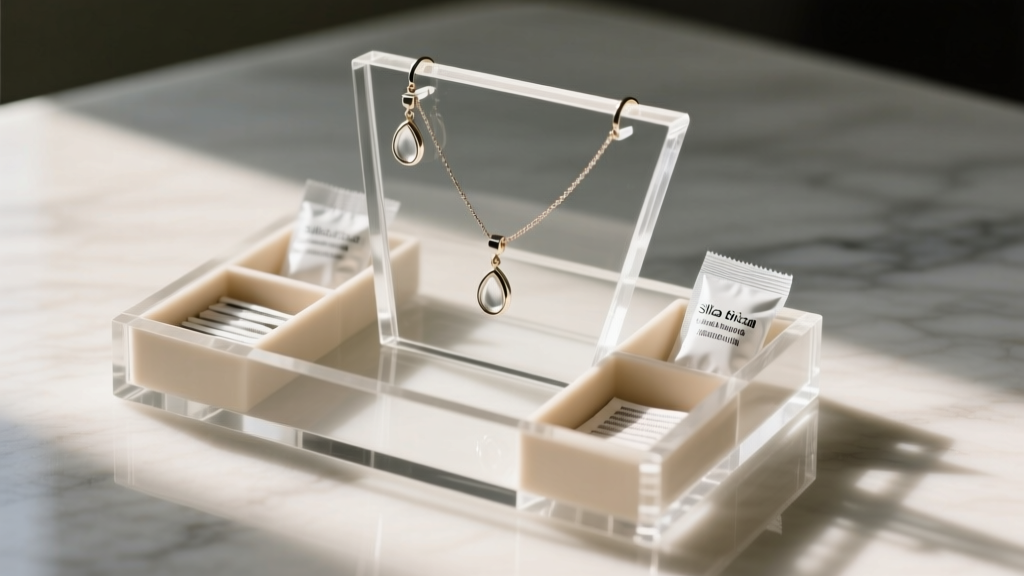
You do not necessarily need to throw away your existing earring and necklace holder if it is made of sub-optimal materials. You can neutralize chemical and physical risks with a few inexpensive, archivist-grade upgrades. If you own an acrylic organizer, line the shelves with acid-free, unbleached cotton muslin to prevent static buildup and scratching. For MDF or wooden boxes that may be off-gassing sulfur, place 3M anti-tarnish strips or Pacific Silvercloth squares into the compartments. These materials actively absorb airborne hydrogen sulfide before it can reach your sterling silver.
"The ideal jewelry storage environment maintains a relative humidity between 40% and 50%, blocks UV light to prevent gemstone fading, and utilizes inert, sulfur-free barriers between the jewelry and the structural housing."
Finally, control the micro-climate. Tossing a few small, indicating silica gel packets into the base of your earring and necklace holder will keep ambient moisture below the threshold required for galvanic corrosion and rapid silver oxidation. By treating your jewelry storage as a controlled conservation environment rather than a simple display stand, you ensure that your earrings and necklaces remain as pristine as the day they were crafted.


