Earring Organizers 2026: Material & Anti-Tarnish Comparison
Compare acrylic, velvet, wood, and metal earring organizers. Discover which materials prevent tarnish and protect your fine jewelry in 2026.

The Hidden Chemistry of Jewelry Storage
When investing in fine jewelry, most collectors focus heavily on the metallurgy of the pieces themselves—debating the merits of 14k versus 18k gold, or the durability of platinum versus palladium. Yet, the environment in which these pieces rest for 90% of their lifespan is often an afterthought. In 2026, the market for earring organizers has expanded dramatically, but not all storage solutions are created equal. The material composition of your organizer dictates the micro-climate your earrings endure, directly influencing oxidation rates, moisture retention, and structural integrity.
Tarnish on sterling silver is primarily caused by hydrogen sulfide in the air reacting with the copper alloyed in 925 silver. However, the accelerator is often the storage material itself. Volatile organic compounds (VOCs), off-gassing adhesives, and trapped ambient humidity can turn a beautiful jewelry box into a corrosion chamber. Understanding the material science behind earring organizers is the first step in building a preservation-grade storage ecosystem.
Material Breakdown: Pros, Cons, and Chemical Properties
Acrylic and Polycarbonate (The Inert Choice)
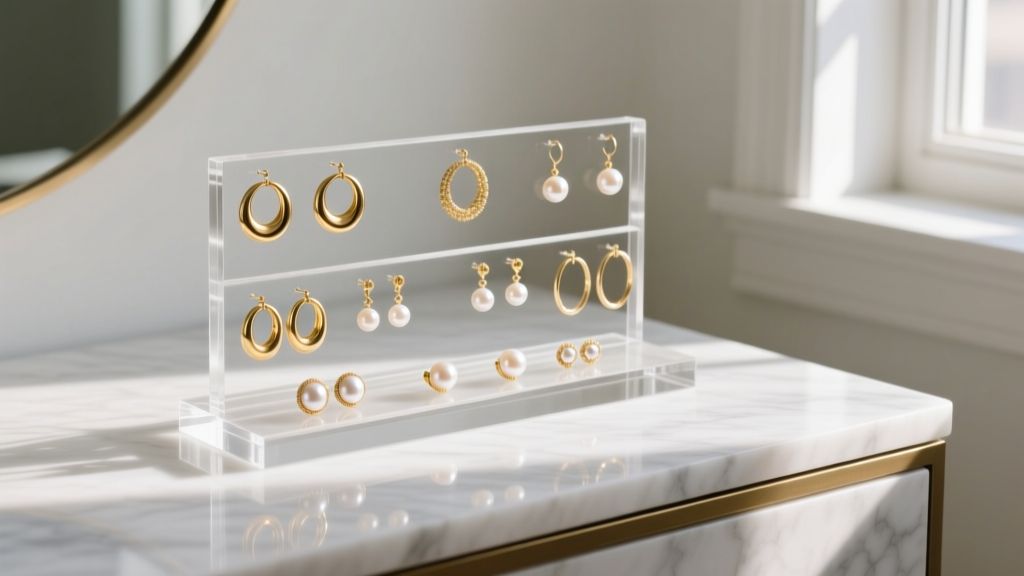
Cast acrylic (Polymethyl methacrylate, or PMMA) is the gold standard for inert jewelry storage. Unlike extruded acrylic, which can harbor internal stresses and minor chemical inconsistencies, cast acrylic is chemically stable and exhibits virtually zero off-gassing. This makes it an ideal environment for highly reactive metals like raw brass or unrhodium-plated sterling silver.
- Pros: Non-porous, zero VOC emissions, excellent visibility, easy to clean with isopropyl alcohol.
- Cons: Completely airtight environments can be detrimental to organic gems. Hard surfaces can cause micro-scratches on high-polish 24k gold if pieces are slid roughly across the base.
- Best For: Diamond studs, platinum hoops, and costume jewelry prone to air-borne oxidation.
Velvet, Suede, and Treated Felt (The Moisture Variables)
Textile-lined organizers offer a luxurious feel and protect against physical scratching, but they introduce significant chemical variables. Standard rayon or cotton velvets are highly hygroscopic, meaning they absorb and trap ambient moisture—sometimes holding up to 8-10% of their weight in water. In humid climates, a velvet-lined wooden box can become a localized humidity trap, accelerating silver sulfide formation.
To counter this, high-end textile organizers in 2026 utilize Pacific Silvercloth or zinc-carbonate-impregnated flannel. These materials actively intercept and neutralize hydrogen sulfide gases before they reach the metal. However, the nap of velvet can easily catch on the delicate chains of threader earrings or the micro-prongs of pavé diamond drops, posing a physical snag risk.
Solid Wood vs. MDF (The Acidic Off-Gassing Risk)
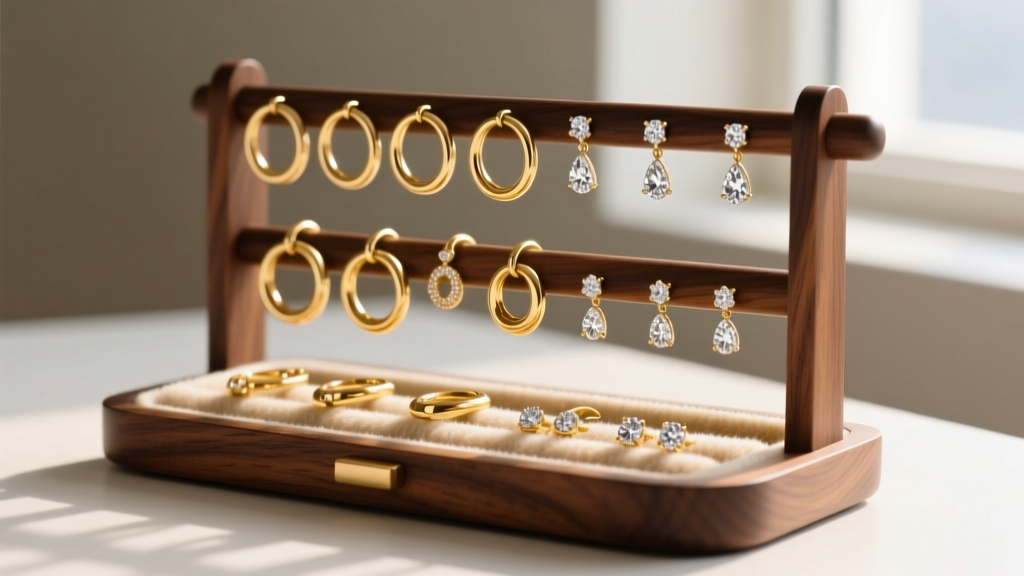
Wooden earring organizers are aesthetically pleasing but chemically hostile to precious metals. Woods like oak and cedar contain high levels of tannins and emit acetic acid and formaldehyde as they age. Medium-Density Fiberboard (MDF) is even more problematic due to the urea-formaldehyde resins used to bind the wood fibers. Museum conservators use the Oddy test to evaluate materials for off-gassing, and raw or poorly sealed wood consistently fails, causing severe corrosion on silver and copper alloys.
If you prefer the warmth of wood, ensure the organizer is sealed with a fully cured, water-based polyurethane or lined with an inert barrier. Never store bare sterling silver directly against unfinished walnut or mahogany.
Powder-Coated Metals (The Galvanic Corrosion Threat)
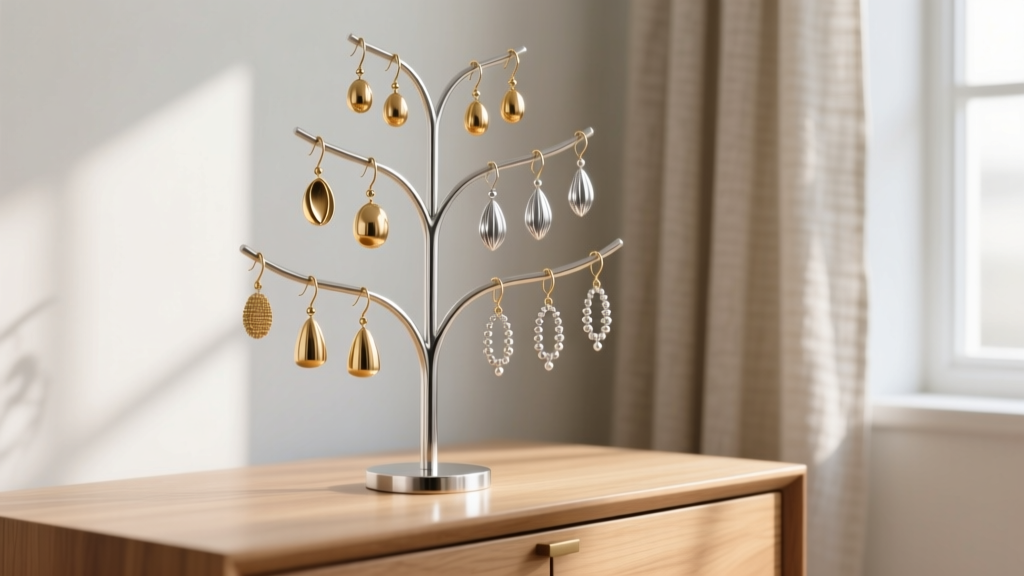
Metal earring trees and wire-mesh organizers are incredibly durable, but they introduce the risk of galvanic corrosion. If a bare steel or iron organizer comes into contact with sterling silver or gold in the presence of an electrolyte (like high ambient humidity), the less noble metal (the organizer) will corrode, but the friction point can still cause localized pitting or discoloration on your earring posts.
Modern metal organizers mitigate this through powder-coating or anodization. Anodized aluminum is exceptionally safe, as the anodized layer is chemically inert and physically integrated into the metal, meaning it won't chip and expose a reactive base metal underneath.
Earring Type to Organizer Material Matrix
Matching the specific material of your earrings to the correct storage environment is critical. What preserves a diamond stud might destroy a strand of pearls. Use the matrix below to optimize your storage strategy.
| Earring Type / Material | Ideal Organizer Material | Materials to Avoid | Scientific Rationale |
|---|---|---|---|
| Sterling Silver (925) Hoops & Studs | Zinc-treated flannel, Airtight Acrylic | Raw Wood, MDF, Standard Velvet | Silver reacts to sulfur and acetic acid; treated flannel neutralizes sulfides, while raw wood emits corrosive VOCs. |
| Cultured Freshwater & Saltwater Pearls | Soft Cotton, Breathable Wood | Airtight Acrylic, Plastic Bags | Pearls are organic (conchiolin) and require slight moisture. Airtight acrylic dehydrates them, leading to irreversible crazing and cracking. |
| 14k/18k Gold & Platinum Dangles | Acrylic, Anodized Aluminum | Abrasive Textiles, Bare Steel | Noble metals do not tarnish easily but scratch. Smooth acrylic prevents micro-marring on high-polish finishes. |
| Costume & Base Metal (Brass/Copper) | Sealed Acrylic with Silica Packets | Velvet, Unsealed Wood | Base metals oxidize rapidly in the presence of moisture. Airtight environments with desiccants halt the oxidation process. |
Anti-Tarnish Upgrades and Lining Specifications
If you already own an earring organizer made from a sub-optimal material, you can retrofit it using modern conservation techniques. The Smithsonian Museum Conservation Institute recommends utilizing intercept technology for long-term silver storage. You can purchase 3M anti-tarnish strips or activated charcoal sachets and place them discreetly in the corners of your wooden or velvet organizers.
For organizers with deep drawers, consider cutting custom inserts from polyethylene foam (Ethafoam). Unlike polyurethane foams, which break down over time and emit harmful peroxides, polyethylene is completely inert and safe for direct contact with all precious metals and gemstones. Simply use a craft knife to carve precise slots for your earring posts, ensuring the decorative faces do not touch the bottom of the drawer.
Structural Considerations: Posts, Hinges, and Weight Distribution
Beyond chemical properties, the physical design of the organizer must accommodate the mechanics of modern earring styles. Heavy geometric brass dangles require organizers with reinforced bases to prevent tipping. Conversely, delicate huggie hoops with hidden hinges can be damaged if forced into tightly spaced, rigid acrylic holes.
When evaluating the physical layout of an organizer, look for varying hole diameters. Standard earring posts are typically 20-gauge (0.8mm) or 18-gauge (1.0mm), but heavy statement pieces may use thicker 16-gauge (1.2mm) wires. An organizer with uniform, laser-cut 0.8mm holes will bend the posts of your heavier earrings upon insertion. Opt for organizers with slightly oversized, beveled holes or flexible silicone insertion mats that accommodate variable wire thicknesses without stressing the metal.
Final Verdict: Building a Safe Storage Ecosystem
The perfect earring organizer does not exist in a single material; rather, it exists in a layered approach. For everyday visibility and inert protection, a cast acrylic display on your vanity is unmatched. However, for long-term storage of reactive sterling silver and organic pearls, a climate-controlled drawer lined with zinc-impregnated flannel is non-negotiable.
Expert Maintenance Tip: Anti-tarnish linings and charcoal strips have a finite lifespan. In a standard bedroom environment, zinc-carbonate flannel loses its efficacy after 12 to 18 months. If your silver hoops begin to yellow despite being stored in a treated organizer, it is time to replace the lining or add fresh anti-tarnish intercept strips to your storage ecosystem.
By aligning the chemical properties of your storage materials with the specific metallurgical needs of your jewelry, you transition from merely organizing your collection to actively preserving its structural and financial value for decades to come.


