Earring Retainers: A Technical Guide to Materials, Gauges, and Safety
Master earring retainers with our expert technical guide. Compare PTFE, glass, and BioFlex materials, gauge dynamics, and MRI safety protocols.


When a freshly healed or mature piercing faces the threat of closure due to surgery, pregnancy, or occupational hazards, the humble earring retainer becomes a critical piece of biomedical hardware. Far too often, consumers default to cheap, gas-station plastic tapers, unknowingly introducing porosity, bacterial harborage, and mechanical failure risks into their fistulas. As a domain expert in body jewelry engineering, I am breaking down the exact material science, gauge physics, and clinical protocols required to select the correct earring retainers for long-term tissue health.
Material Science: Beyond Basic Bioplast
The term "retainer" is frequently misused as a catch-all for any clear jewelry. However, true retainers fall into four distinct material categories, each with specific biological and mechanical properties. Understanding these differences is paramount for preventing contact dermatitis, fistula rejection, and imaging artifacts.
Borosilicate Glass (Pyrex)
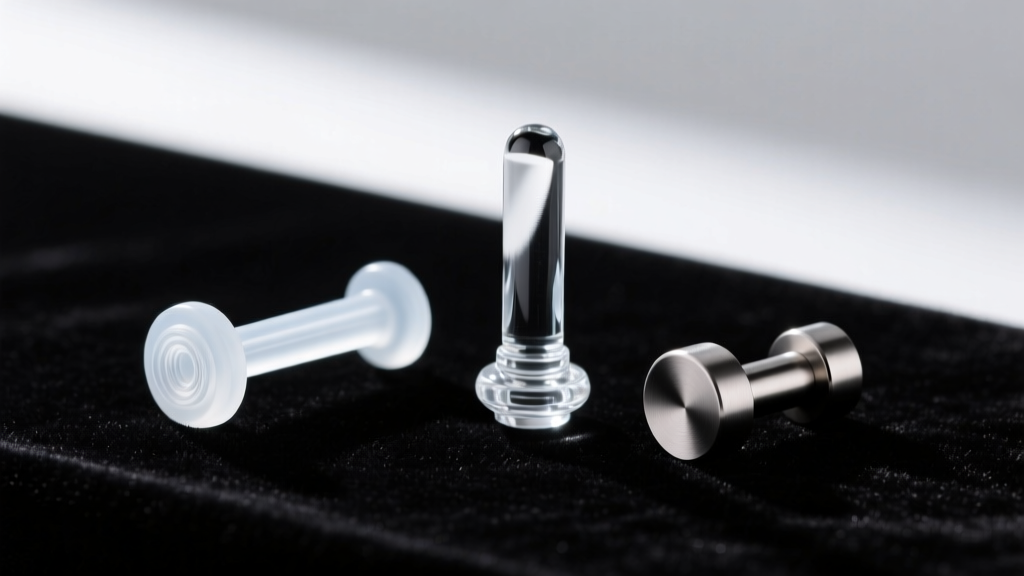
Borosilicate glass is the gold standard for clinical retention. It is entirely non-porous, can be sterilized in an autoclave at 270°F (132°C), and is 100% MRI-safe without causing imaging artifacts. The primary drawback is its rigidity and weight; a solid glass plug in a 10-gauge or larger stretching can exert downward gravitational pressure on a healing lobe.
PTFE (Polytetrafluoroethylene)
Often sold under the brand name Teflon, PTFE is a highly flexible, biocompatible fluoropolymer. It is excellent for retaining piercings during pregnancy or acute swelling phases because it bends with the tissue. However, PTFE is prone to warping under prolonged tension and can absorb sebum and odors if not cleaned with enzymatic solutions regularly.
BioFlex and Medical-Grade Acrylics
BioFlex is a flexible, PVC-based medical acrylic. While it is hypoallergenic and inexpensive, it is not autoclave safe. The high heat and pressure of a steam sterilizer will melt and deform BioFlex. Furthermore, acrylics degrade under UV exposure and can develop micro-fractures that harbor Staphylococcus aureus.
Matte-Finish Implant Titanium
For occupational environments that ban "shiny" jewelry but allow metal, ASTM F-138 implant-grade titanium with a matte or anodized dark grey finish is the ultimate solution. It provides the structural integrity of metal without the reflective glare.
| Material | Porosity | Autoclave Safe | MRI Artifact | Flexibility |
|---|---|---|---|---|
| Borosilicate Glass | None | Yes | None | Rigid |
| PTFE (Teflon) | Ultra-Low | Yes | None | High |
| BioFlex (Acrylic) | Low | No | None | Medium |
| Matte Titanium | None | Yes | Severe | Rigid |
Gauge Sizing and Fistula Dynamics
A common clinical failure mode is the use of improperly sized earring retainers, leading to the "cheese cutter effect." This biomechanical phenomenon occurs when a thin wire (typically 20-gauge or 0.8mm) bears the weight of a heavy earlobe or experiences repetitive friction. The thin metal or plastic slowly migrates through the tissue, slicing the fistula open.
Minimum Gauge Recommendations
- Standard Earlobes: Never use a retainer thinner than 18-gauge (1.0mm). For long-term wear, 16-gauge (1.2mm) or 14-gauge (1.6mm) is highly recommended to distribute pressure evenly across the fistula wall.
- Cartilage (Helix/Tragus): 16-gauge is the standard. Cartilage is highly susceptible to hypertrophic scarring if subjected to the micro-movements caused by thin, flexible retainers.
- Stretched Lobes (8g to 00g): Always use solid glass or single-flare PTFE plugs. Hollow acrylic tunnels can collapse under the compressive force of heavy tissue.
According to the Association of Professional Piercers (APP), internally threaded or threadless (push-pin) jewelry is vastly superior to externally threaded retainers. External threads act like a file, tearing the delicate epithelial lining of the fistula during insertion and removal.
Clinical Scenarios: Surgery, MRIs, and Trauma
Hospitals and surgical centers routinely mandate the removal of metallic jewelry to prevent galvanic burns from electrosurgical units (ESUs) and to avoid image distortion during Magnetic Resonance Imaging. The FDA's guidelines on MRI safety explicitly note that ferromagnetic objects pose severe projectile and thermal risks, but even non-ferromagnetic metals can cause localized radiofrequency (RF) heating.
The MRI Protocol
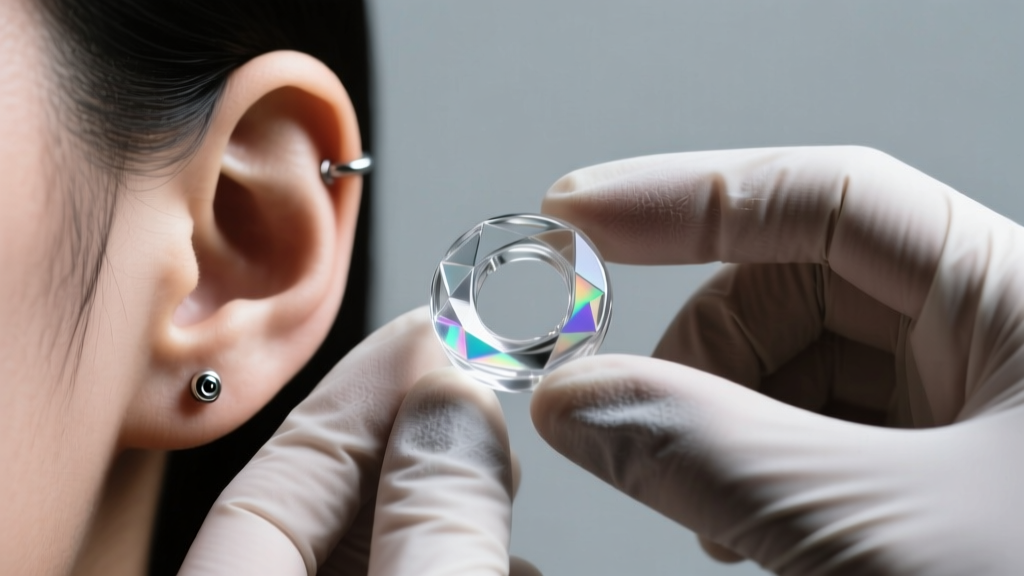
If you are scheduled for an MRI, borosilicate glass is the only acceptable retainer material. While PTFE and BioFlex are technically non-metallic, they can sometimes contain trace manufacturing impurities or cause slight susceptibility artifacts. Glass guarantees zero interference with the magnetic field.
The Electrosurgery (Bovie) Protocol
If your surgeon is using a Bovie pen (electrocautery) near your head or neck, PTFE and acrylics can melt if they come into contact with the active electrode or the grounding pad's return current path. In these specific surgical scenarios, removing the jewelry entirely and using a sterile taper to re-insert the jewelry immediately post-surgery is the safest protocol.
"Tissue swelling during pregnancy or systemic trauma can increase earlobe volume by up to 30%. Rigid retainers will cause pressure necrosis. Flexible PTFE or properly sized BioFlex labrets are required to accommodate this volumetric expansion without compromising blood flow." — Clinical Body Modification Guidelines
Troubleshooting Common Retainer Failure Modes
Even the best materials fail if the mechanical components are neglected. Here are the most frequent points of failure and how to engineer around them:
- O-Ring Degradation: Standard silicone O-rings degrade rapidly when exposed to human sebum, sweat, and friction. They become brittle and snap, resulting in lost jewelry. Upgrade to EPDM rubber O-rings or, preferably, use threadless push-pin ends that rely on tension rather than friction rings.
- Acrylic Thread Stripping: BioFlex and acrylic retainers often feature internal threads molded directly into the plastic. Over-tightening the end piece will strip these threads instantly. Always use a thread-locking compound designed for bioplastics, or switch to glass.
- PTFE Creep: PTFE exhibits "cold flow" or creep, meaning it permanently deforms under constant mechanical stress. If you use a PTFE barbell, you must replace it every 6 to 12 months, as the bar will eventually thin and warp.
Expert Sourcing and Pricing Tiers
Avoid generic multi-packs from unverified online marketplaces, as these frequently use industrial-grade acrylics containing phthalates and heavy metal dyes. Invest in retainers from certified body jewelry manufacturers.
- Glasswear Studios ($8 - $18): The premier source for borosilicate glass retainers, available in single-flare, double-flare, and threaded variations. Ideal for MRI prep and stretched lobes.
- Industrial Strength ($12 - $25): Known for their PTFE and BioFlex labrets. Their threadless BioFlex options are excellent for cartilage retention during sports.
- Anatometal ($35 - $60+): If you need a matte-finish ASTM F-138 titanium labret stud to bypass corporate dress codes, Anatometal's anodized dark grey ends are unmatched in precision and finish quality.
Selecting the correct earring retainers is not merely a cosmetic choice; it is a localized medical decision. By matching the material's biomechanical properties to your specific physiological and clinical needs, you ensure your piercings survive whatever life, or the operating room, throws at them.


