Earring Rhinestone Buying Guide: Quality & Settings
Discover what to look for in an earring rhinestone. Compare crystal types, prong settings, and hypoallergenic metals in our expert buying guide.

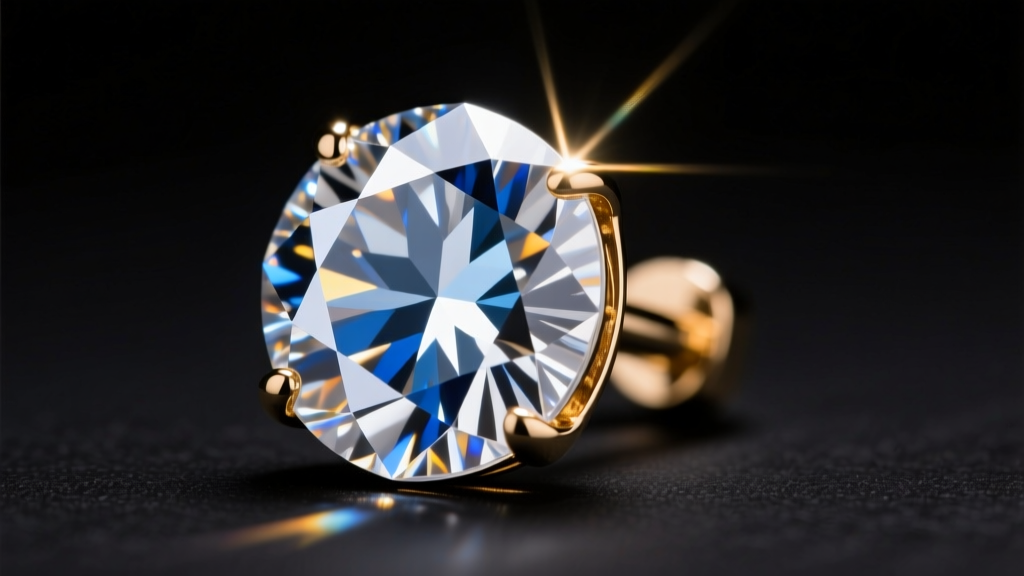
The Anatomy of an Earring Rhinestone
When shopping for an earring rhinestone, the untrained eye might only see sparkle. However, as a jewelry specialist, I evaluate these pieces based on optical physics, structural integrity, and dermatological safety. The term "rhinestone" originally referred to quartz pebbles found in the Rhine River, but today it encompasses a wide spectrum of simulated gemstones. In 2026, the market is dominated by precision-cut lead-free crystals, high-index glass, and advanced acrylic resins. Understanding the refractive index (RI) and the cut of the stone is the first step in separating luxury-grade earrings from fast-fashion disposables.
Glass vs. Crystal vs. Acrylic
The brilliance of any earring rhinestone is dictated by its material composition and how it bends light. Acrylic stones are molded, resulting in soft, rounded facet edges that dull quickly. Glass stones are pressed and polished, offering better clarity. True lead-free crystals, such as those produced by Preciosa, are machine-cut with mathematical precision to maximize light return. According to the GIA Gem Encyclopedia, the refractive index is the primary metric for a gemstone's brilliance. Higher RI means more light is reflected back to the viewer rather than passing through the stone.
| Material | Refractive Index (RI) | Durability | Typical Price Range |
|---|---|---|---|
| Acrylic (Resin) | ~1.49 | Low (Scratches easily) | $5 - $20 |
| Czech Glass | ~1.52 | Medium | $15 - $45 |
| Lead-Free Crystal | ~1.54+ | High | $40 - $120 |
| Cubic Zirconia | ~2.15 | Very High | $80 - $300+ |
The Secret to Sparkle: Foil Backing vs. Unbacked Stones
Not all rhinestones are created equal beneath the surface. Many glass and crystal rhinestones rely on a metallic foil backing—often silver or an Aurora Borealis (AB) coating—to reflect light back through the top facets. While this creates a stunning mirror-like effect, it introduces a critical vulnerability. If moisture penetrates the setting, the foil will oxidize, turning black and killing the stone's sparkle. When buying an earring rhinestone for daily wear, look for "unbacked" or "transparent" chaton stones that rely purely on their cut for brilliance, or ensure the setting features a sealed, waterproof bezel to protect the foil layer.
Decoding the Setting: Prong vs. Glue
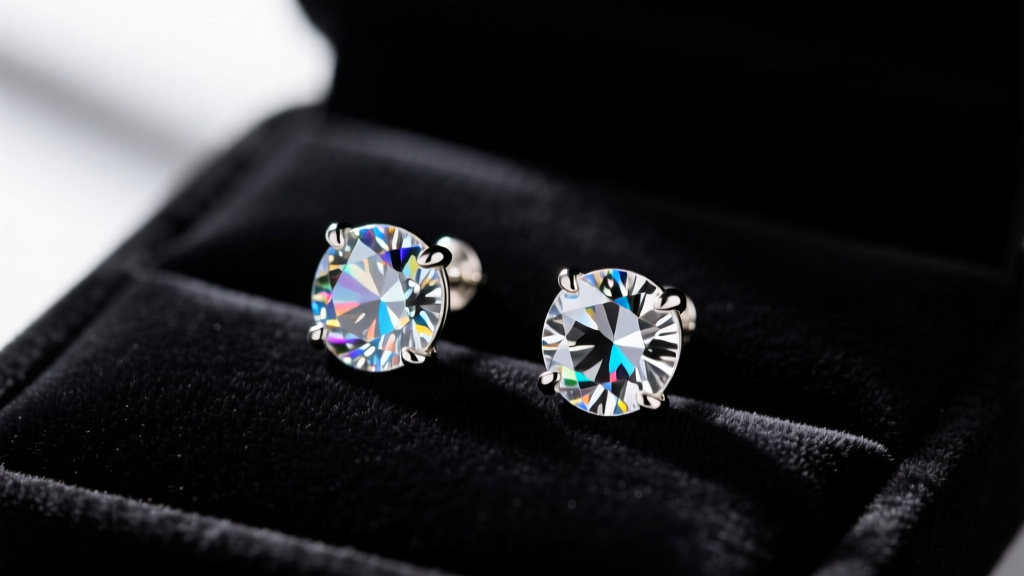
The setting is arguably more important than the stone itself. Fast-fashion brands frequently use flatback rhinestones adhered with industrial adhesives. This is a structural failure waiting to happen. Human skin naturally produces sebum and heat, both of which degrade jewelry glue over time, causing stones to pop out unexpectedly.
For longevity, always seek out prong-set chatons. A chaton is a rhinestone with a pointed, conical back that sinks deeply into a metal basket. The metal prongs are physically bent over the stone's girdle, locking it in place. For high-end pavé styles, ensure the micro-prongs are cast in solid metal rather than glued over a wax mold. A well-crafted prong setting will outlive the earring's metal plating and can even be re-tipped by a jeweler if a prong snags on clothing.
The Hidden Variable: Base Metals and Post Gauges
A stunning earring rhinestone is useless if it causes contact dermatitis. The base metal holding the rhinestone basket is often a cheap zinc alloy or brass, which can leach nickel and copper into the skin. The American Academy of Dermatology identifies nickel as the leading cause of allergic contact dermatitis. To avoid the dreaded "green ear" or itchy lobes, scrutinize the product specifications for the post material.
- ASTM F-136 Titanium: The gold standard for sensitive ears and fresh piercings. Completely nickel-free and biocompatible.
- 316L Surgical Steel: Contains trace amounts of nickel, but it is tightly bound in the alloy. Safe for most, but avoid if you have a severe nickel allergy.
- Solid 14k/18k Gold: Hypoallergenic, but ensure it is solid gold, not gold-plated over brass, which will eventually wear down.
Additionally, pay attention to the post gauge. Standard lobe earrings are typically 20-gauge (0.8mm) or 22-gauge (0.6mm). However, if you are buying rhinestone huggies or cartilage studs, you will need a thicker 18-gauge (1.0mm) or 16-gauge (1.2mm) post to prevent the "cheese-cutter effect," where a thin wire slowly migrates through the cartilage tissue.
Face Shape and Rhinestone Scale
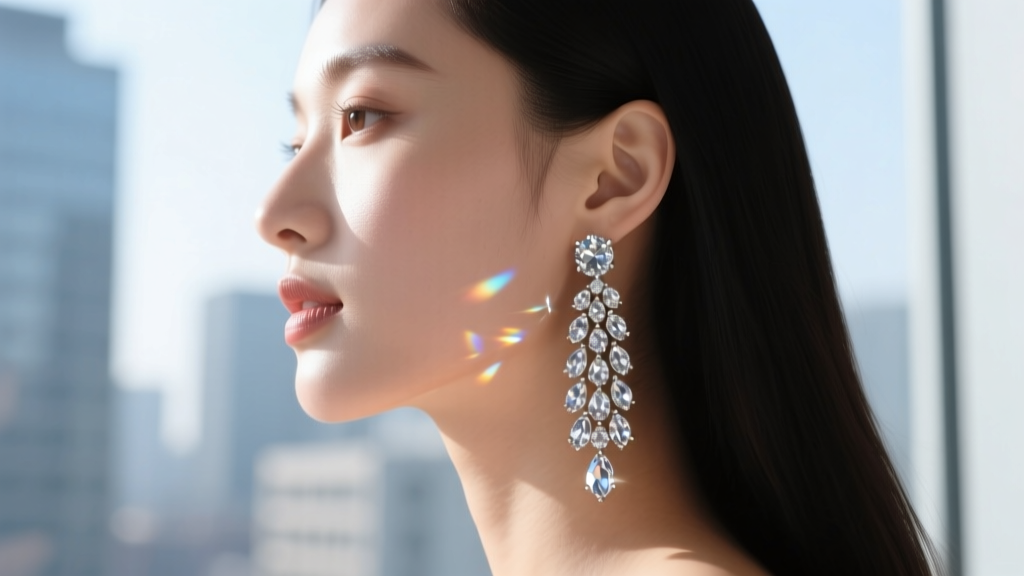
The scale and geometry of your earring rhinestone should complement your facial structure. Because rhinestones draw immediate visual attention due to their high light return, they act as focal points that can alter the perceived proportions of your face.
- Round Faces: Avoid large, circular rhinestone clusters or wide hoops, which emphasize width. Instead, opt for linear, angular rhinestone drop earrings (40mm to 60mm in length) to create a vertical elongating effect.
- Square Faces: Soften a strong jawline with curved rhinestone arrangements. Oval pavé hoops or teardrop-shaped rhinestone dangles work beautifully to introduce softness.
- Heart-Shaped Faces: Balance a narrower chin with chandelier-style rhinestone earrings that are wider at the bottom than at the stud base.
- Oval Faces: The most versatile shape. You can pull off everything from subtle 4mm rhinestone studs to dramatic, oversized rhinestone ear cuffs.
Maintenance: Keeping the Brilliance Alive
Proper maintenance is critical for preserving the optical clarity of your rhinestones. A common and devastating mistake is placing rhinestone jewelry in an ultrasonic cleaner. The high-frequency cavitation bubbles generated by these machines can easily strip the delicate metallic foil backing off the stones, leaving them looking cloudy and gray.
Instead, create a gentle cleaning solution using warm distilled water and a single drop of pH-neutral dish soap. Use a soft, clean makeup brush (like an eyeshadow blending brush) to gently agitate the dirt and skin oils trapped beneath the prongs and around the stone's girdle. Rinse with distilled water to prevent hard water spots, and dry immediately with a lint-free microfiber cloth. Store your rhinestone earrings in individual soft pouches; because glass and crystal are harder than most metal alloys, loose earrings tumbling together in a jewelry box will result in the stones scratching the metal settings of their neighbors.
Final Verdict: What to Buy
When investing in an earring rhinestone design, prioritize the intersection of optical quality and structural safety. Demand prong-set, lead-free crystals or high-RI cubic zirconia, and never compromise on the post material. By focusing on ASTM F-136 titanium or solid gold posts paired with precision-cut stones, you secure a piece of jewelry that offers diamond-like brilliance without the dermatological risks or the disposable lifespan of fast-fashion alternatives.


