Jack O Lantern Earrings: 2026 Budget & Value Guide
Discover if jack o lantern earrings are worth the investment. Our 2026 budget and value guide compares materials, pricing tiers, and cost-per-wear.

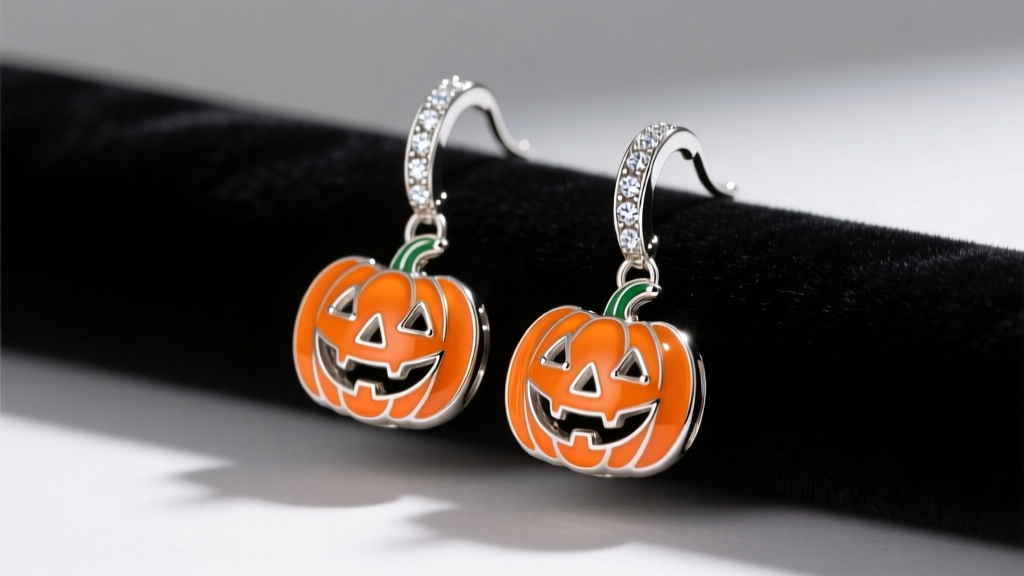
As October approaches, the demand for seasonal jewelry spikes, and jack o lantern earrings consistently rank among the most searched festive accessories. However, the market is heavily saturated with low-quality costume pieces that tarnish within days, alongside high-end artisan interpretations that command premium prices. For the discerning jewelry buyer, navigating this seasonal niche requires a critical eye for metallurgy, material longevity, and ergonomic design.
In this comprehensive 2026 budget and value assessment, we dissect the true cost of pumpkin-themed earrings. We will evaluate base metals, enamel durability, gauge thickness, and the ultimate cost-per-wear (CPW) to help you determine whether to save on mass-market novelties or invest in heirloom-quality seasonal staples.
The Halloween Jewelry Trap: Why Material Matters More Than Price
The most common failure point in budget-friendly Halloween jewelry is the base metal. Mass-market jack o lantern earrings are frequently cast from Zamak (a zinc alloy containing aluminum, magnesium, and copper) and plated with a microscopic layer of gold or silver. While initially shiny, this plating wears off rapidly against the skin's natural pH, exposing the underlying alloy.
The Nickel Allergy Risk
Zamak and cheap brass alloys often contain nickel as a hardening agent or as part of the under-plating process. According to the Mayo Clinic, nickel allergy is one of the most common causes of allergic contact dermatitis. When you wear heavy, cheap dangle earrings for a full Halloween weekend, the combination of friction, sweat, and nickel exposure can lead to severe lobe irritation, weeping, and swelling.
Expert Rule of Thumb: If the product description does not explicitly state "Nickel-Free," "925 Sterling Silver," "Implant-Grade Titanium (ASTM F136)," or "Niobium," assume the ear wire contains nickel. For seasonal dangles that pull on the piercing, hypoallergenic wires are non-negotiable.
2026 Pricing Tiers: What You Actually Get for Your Money
To accurately assess value, we must segment the market into three distinct pricing tiers. This table breaks down the material reality of what you are purchasing at each price point in the current market.
| Tier | Price Range | Base Metal | "Orange" Material | Expected Longevity |
|---|---|---|---|---|
| Mass Market | $5 - $18 | Zinc Alloy / Brass | Cold Enamel / Paint | 1 Season (High tarnish risk) |
| Artisan / Boutique | $35 - $85 | 925 Sterling Silver | Vitreous Enamel / Resin | 5+ Years (With proper care) |
| Fine Jewelry | $150 - $400+ | 14k/18k Gold | Spessartite Garnet / Citrine | Lifetime (Heirloom quality) |
The Value Sweet Spot
For most buyers, the Artisan / Boutique tier ($35 - $85) offers the highest return on investment. At this level, you are paying for solid 925 sterling silver, which can be easily polished if it oxidizes, and higher-quality color applications that will not chip after a single wear.
Enamel vs. Resin vs. Gemstones: Evaluating the "Orange" Factor
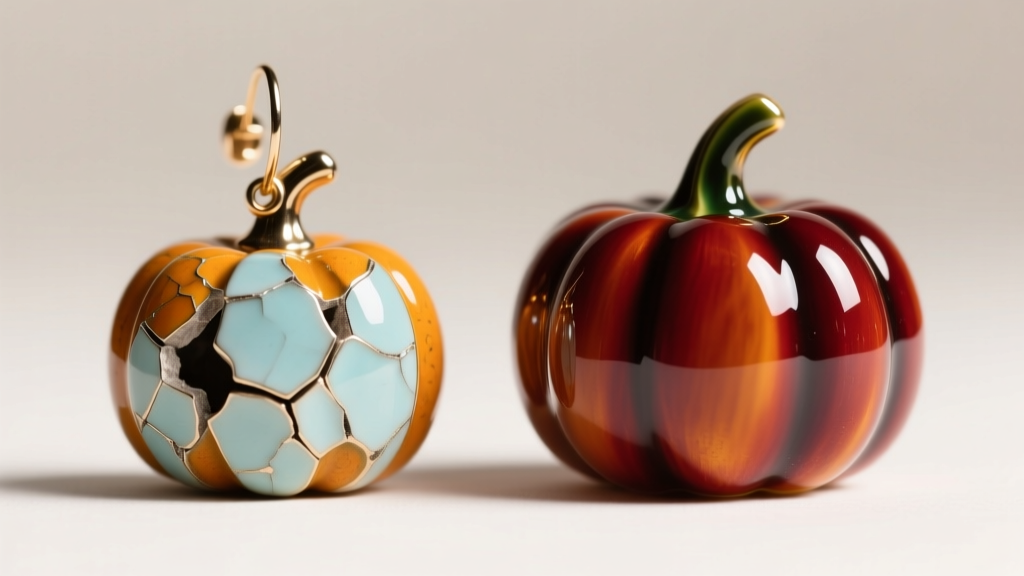
The defining feature of jack o lantern earrings is their vibrant orange hue. How that color is achieved drastically impacts both the price and the lifespan of the piece.
Cold Enamel (Epoxy Resin)
Found almost exclusively in the sub-$20 tier, cold enamel is essentially a two-part epoxy resin poured into metal recesses. While it can be brightly colored, it is highly susceptible to scratching, chipping, and UV yellowing. If you leave resin pumpkin earrings in a sunlit jewelry box for a year, the orange will likely fade to a murky yellow-brown.
Vitreous Enamel (Fired Glass)
Used by boutique jewelers, vitreous enamel involves fusing powdered glass to metal at temperatures exceeding 1,400°F (760°C). The result is a gem-like, scratch-resistant surface that will never yellow or fade. According to educational resources from the Gemological Institute of America (GIA), vitreous enamel has been used for centuries precisely because of its archival color stability. If you want your jack o lantern earrings to look identical in 2030 as they do in 2026, vitreous enamel is mandatory.
Natural Gemstones
In the fine jewelry tier, orange is achieved through precision-cut gemstones. Spessartite garnet offers a deep, fiery, natural orange that requires no heat treatment. Citrine is a more budget-friendly fine jewelry alternative, though buyers should be aware that most commercial citrine is actually heat-treated amethyst. Both offer exceptional brilliance that enamel simply cannot replicate.
Weight, Gauge, and Ergonomics: Preventing Lobe Damage
A critical, often overlooked aspect of value assessment is ergonomics. Jack o lantern motifs are inherently wide and volumetric, which can translate to heavy dangle earrings. Heavy earrings paired with thin wires are a recipe for stretched piercings and lobe tearing.
- 20-Gauge (0.81mm): Standard for lightweight studs and small hoops. If a pumpkin dangle is 20g, it must weigh less than 4 grams to avoid pulling on the lobe.
- 18-Gauge (1.02mm): The ideal standard for medium-weight dangles. An 18g sterling silver ear wire provides enough structural integrity to support a 1-inch vitreous enamel pumpkin without bending.
- 16-Gauge (1.29mm): Necessary for oversized, statement-making drop earrings. If you are buying heavy brass or solid silver pumpkins exceeding 8 grams, ensure the wire is at least 16g to distribute the weight safely.
Pro-Tip for Heavy Dangles: If you already own heavy seasonal dangles with thin wires, invest in silicone earring backs or "earring support patches" (like BlingDots). These adhesive patches distribute the weight across a wider area of the earlobe, preventing the "cheese-cutter effect" where thin wires slice through the piercing hole.
Face Shape and Proportion Matching
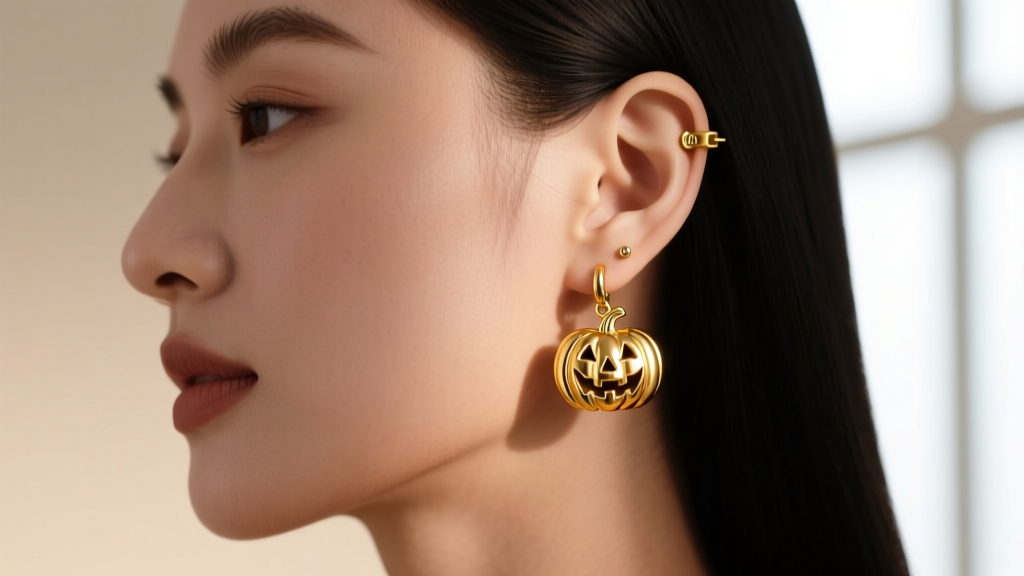
Value is also determined by how often you will actually wear the piece. If the silhouette of the earring clashes with your face shape, it will sit in your jewelry box. Here is how to choose the right pumpkin geometry:
Round and Oval Faces
Avoid perfectly spherical, bulbous pumpkin studs or hoops, as they will exaggerate the roundness of your face. Instead, look for geometric or angular jack o lantern designs—think Art Deco-inspired pumpkins with sharp lines, or elongated teardrop silhouettes that incorporate a subtle pumpkin motif at the bottom. Dangles that hang below the jawline will help elongate your profile.
Square and Heart-Shaped Faces
You can easily pull off the classic, wide, and rounded jack o lantern silhouettes. Huggie hoops featuring enameled pumpkin charms, or wide, circular pumpkin studs, will soften the sharp angles of a square jawline or balance the narrower chin of a heart-shaped face.
Final Verdict: The Cost-Per-Wear (CPW) Calculation
To definitively answer whether premium jack o lantern earrings are worth the investment, we apply the Cost-Per-Wear formula: Total Price ÷ (Estimated Wears Per Year × Years Kept).
Let us compare a $12 mass-market pair versus a $65 artisan sterling silver pair with vitreous enamel:
- The $12 Pair: Worn 4 times in one October. The plating tarnishes, and the resin chips. It is discarded after year one. CPW = $3.00 per wear.
- The $65 Pair: Worn 8 times a year (Halloween parties, autumn festivals, themed office days) for 5 years. The sterling silver is easily polished, and the glass enamel remains pristine. CPW = $1.62 per wear.
Ultimately, the artisan piece delivers superior financial value, alongside the health benefits of hypoallergenic metals and the aesthetic superiority of fired glass. If you only plan to wear pumpkin jewelry for a single photo shoot, the budget tier suffices. But if you celebrate the autumn season with enthusiasm year after year, investing in the $35–$85 boutique tier is the smartest move for your wallet, your earlobes, and your personal style.


