The Ultimate Earring Sizes Chart: Gauge, Diameter & Length Guide
Master your piercing jewelry with our comprehensive earring sizes chart. Learn exact gauge, diameter, and length specs for lobe and cartilage piercings.

The Science of Piercing Metrics: Why Standard Sizing Fails
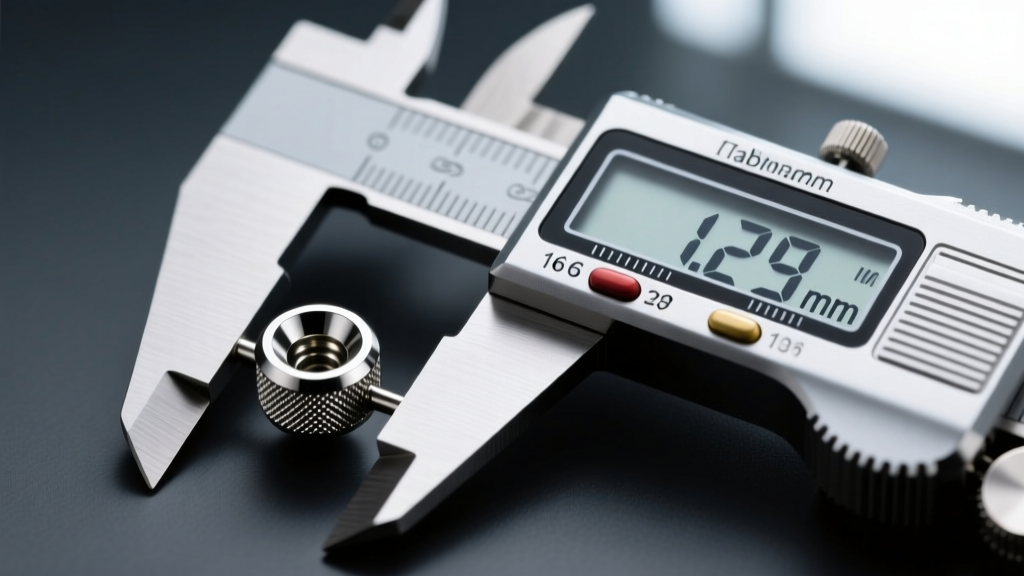
When navigating the world of fine body jewelry, relying on generic 'standard' sizes is the fastest route to embedding, migration, and cartilage blowouts. The human ear is not a monolith; cartilage thickness, lobe density, and fistula angles vary wildly from person to person. An earring sizes chart is not just a helpful suggestion—it is a critical diagnostic tool for ensuring tissue health, proper drainage, and long-term piercing stability. In this expert deep dive, we dismantle the vague sizing conventions of commercial jewelry and replace them with exact millimeter conversions, metallurgical considerations, and anatomical troubleshooting frameworks used by elite piercers.
The Core Earring Sizes Chart: Gauge to Millimeter Conversions
The gauge system is an archaic wire measurement standard where the higher the number, the thinner the jewelry. While mall kiosks routinely pierce with 20G or 18G needles to minimize immediate pain, professional studios adhere to stricter structural minimums to prevent the 'cheese-cutter effect'—a phenomenon where thin jewelry slowly migrates through the tissue under the weight of gravity or accidental snags.
| Gauge (G) | Millimeter (mm) | Inch (Decimal) | Primary Applications & Tissue Notes |
|---|---|---|---|
| 20G | 0.81mm | 0.032' | Standard commercial lobe earrings. High migration risk in cartilage. |
| 18G | 1.02mm | 0.040' | Nose piercings, thin helixes, and standard earlobe wires. |
| 16G | 1.29mm | 0.051' | The gold standard for cartilage (helix, conch, tragus, flat). Provides excellent structural stability. |
| 14G | 1.63mm | 0.064' | Industrial bars, thick lobes, and daith piercings. Minimizes rejection risk. |
| 12G | 2.05mm | 0.081' | Stretched lobes and specialized scaffold piercings. |
According to the Association of Professional Piercers (APP), initial cartilage piercings should never be performed at a gauge thinner than 16G. The increased surface area of a 1.29mm post distributes pressure evenly across the fistula, drastically reducing the chance of angular migration during the 6-to-12-month healing window.
Hoop & Huggie Diameters: Inner vs. Outer Measurements
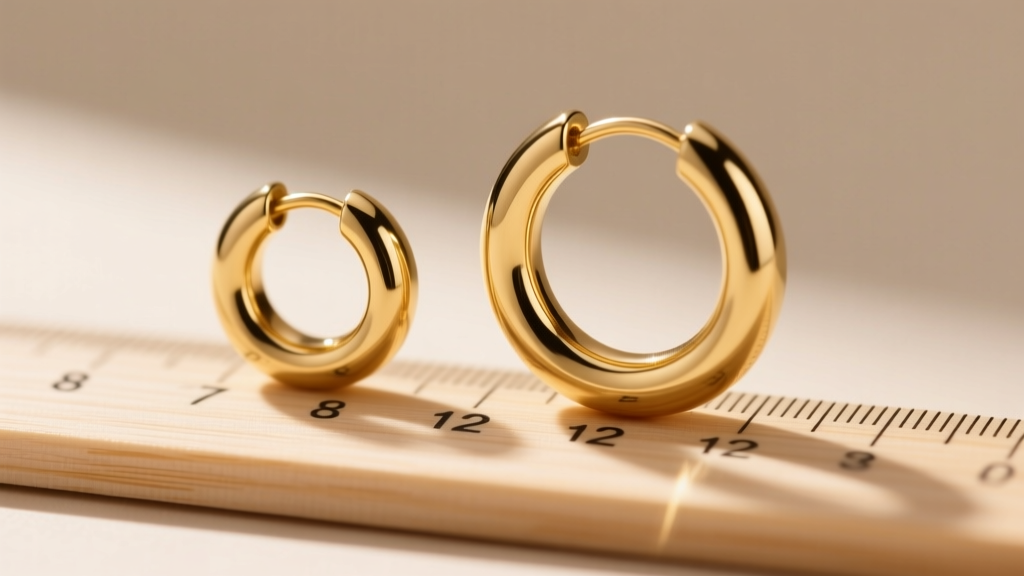
One of the most frequent errors in online jewelry purchasing is confusing Inner Diameter (ID) with Outer Diameter (OD). When consulting an earring sizes chart for hoops, huggies, or captive bead rings (CBRs), the only metric that matters for anatomical fit is the ID. The ID dictates how much space the jewelry leaves for the tissue itself.
Snug Fit vs. Dangle: Calculating the Drop
- Huggies (8mm - 10mm ID): Designed to 'hug' the earlobe or helix. An 8mm ID is typically required for a snug fit on a standard lobe, while 10mm accommodates thicker lobes or leaves a deliberate 1-2mm gap for a micro-dangle effect.
- Standard Seamless Hoops (12mm - 15mm ID): The universal standard for healed lobes and outer conch piercings. A 12mm hoop will generally clear a standard lobe without resting on the shoulder of the neck.
- Daith & Rook Specifics (10mm - 12mm ID): The daith passes through the crus of the helix. Because this tissue fold is thick, a 10mm ID CBR is usually required to prevent the jewelry from compressing the tissue, which can cause hypertrophic scarring.
Post Lengths, Threading Types, and the 'Wearable Length' Trap
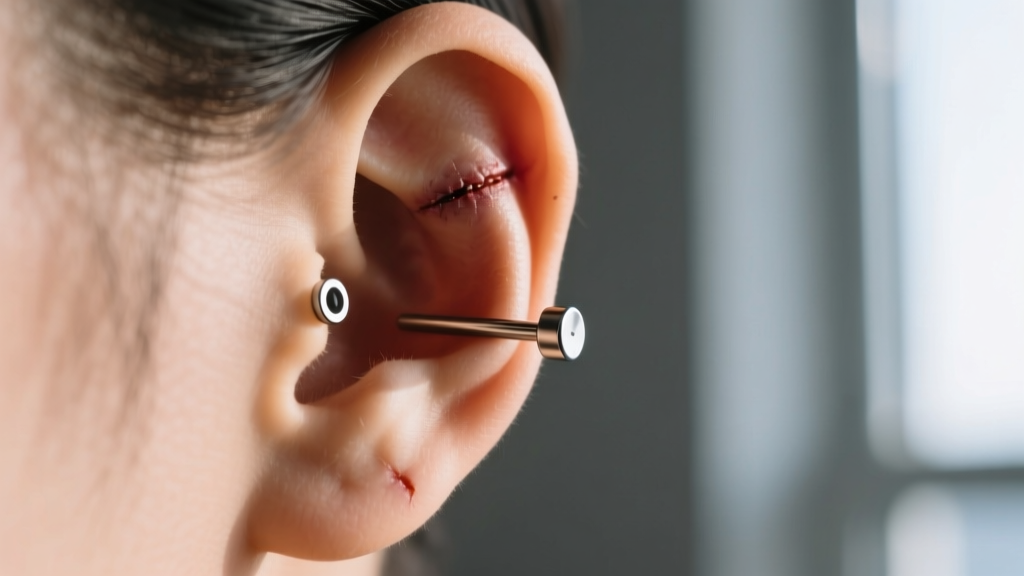
Labret studs and flat-back earrings are the workhorses of modern cartilage jewelry. However, post length is where consumers face the most deceptive marketing. You must understand the difference between 'Total Length' and 'Wearable Length'.
Threadless vs. Internally Threaded
Premium brands like NeoMetal and BVLA utilize threadless (press-fit) or internally threaded mechanisms. In high-end jewelry, a listed 6mm post refers to the wearable length—the exact distance between the flat back disc and the setting of the front gemstone. Conversely, budget brands often list total length, which includes the threading or the pin insertion depth. A budget '6mm' post might only yield 4.5mm of actual wearable space, leading to immediate embedding in a freshly pierced helix.
Anatomical Post Length Guidelines
- Standard Healed Lobe: 5mm - 6mm wearable length.
- Thick / Meaty Lobe: 8mm - 10mm wearable length.
- Standard Healed Helix/Conch: 6mm - 8mm wearable length.
- Tragus: 5mm - 6mm (tragus tissue is notoriously thin, but the angle of the fistula often requires a 6mm post to sit flush without the back pressing into the ear canal).
'Initial jewelry must accommodate swelling. A professional piercer will typically use an 8mm or 10mm post for a fresh helix, downsizing to a 6mm post only after the 4-to-8-week swelling period has subsided.' — APP Aftercare Guidelines
Material Grades: When Thickness Meets Metallurgy
An earring sizes chart is incomplete without addressing material density and biocompatibility. The thickness of your jewelry interacts directly with the cellular environment of the fistula.
For any piercing that is healing, or for individuals with nickel sensitivities, ASTM F136 Implant-Grade Titanium (Ti-6Al-4V ELI) is non-negotiable. This specific alloy is extra-low interstitial, meaning it has been vacuum-melted to remove impurities that cause tissue rejection. It is also highly polishable to a mirror finish (typically 8000-grit or higher), which prevents bacteria from harboring in microscopic surface scratches.
Conversely, 316L Surgical Steel, while acceptable for fully healed piercings in non-sensitive individuals, contains up to 14% nickel. When a 316L post is subjected to the saline environment of a healing cartilage wound, the nickel ions can leach, causing contact dermatitis that mimics an infection. Furthermore, 316L is softer than F136 titanium; a 16G steel post is more prone to micro-bending than a 16G titanium post, which can alter the angle of the fistula over time.
Troubleshooting Fit Issues: Real-World Failure Modes
Even with a perfect earring sizes chart, anatomical anomalies occur. Here is how to diagnose and correct common fit failures:
1. The 'Cheese-Cutter' Migration
Symptom: The piercing hole is slowly elongating downward, and the jewelry sits lower than it did six months ago.
Cause: Wearing a 20G or 18G hoop in a cartilage piercing. The thin wire acts like a cheese cutter under the weight of gravity or sleeping pressure.
Solution: Retire the thin hoop. Consult a piercer to assess if the fistula can be repierced at 16G or 14G with a flat-back labret to stabilize the tissue.
2. Hypertrophic Scarring (The 'Piercing Bump')
Symptom: A localized, fleshy bump adjacent to the exit hole of the jewelry.
Cause: Often caused by a post that is too long (allowing the jewelry to flip and irritate the exit) or a hoop with an ID that is too small, creating angular pressure on the fistula.
Solution: Downsize the post length to achieve a flush fit, or increase the hoop ID by 2mm to relieve angular stress. Treat with sterile saline compresses; avoid topical oils which can trap bacteria.
3. The Embedded Flat-Back
Symptom: The front gemstone is sinking into the tissue, and the back disc cannot be felt or seen.
Cause: Failure to downsize initial jewelry after the swelling phase, or wearing a fixed-length stud in a highly vascular area that experiences secondary swelling (e.g., from sleeping on the ear).
Solution: This is a medical urgency. If the jewelry cannot be safely removed at home using hemostats and a taper, visit a professional piercer or urgent care immediately to have the post cut out and replaced with a longer, internally threaded titanium labret.
Conclusion
Mastering your personal earring sizes chart requires moving beyond aesthetic preferences and embracing the biomechanics of body modification. By prioritizing 16G or 14G thicknesses for cartilage, understanding the critical difference between inner and outer diameters, and insisting on accurate wearable lengths in ASTM F136 titanium, you transform your jewelry collection from a source of chronic irritation into a lifetime of stable, flawless wear. Always consult with an APP-certified professional when transitioning between sizes or addressing fit anomalies.


