Earring Stick Metallurgy: Gauges, Alloys, and Friction Fits
Explore the technical anatomy of the earring stick. We break down gauge sizes, implant-grade alloys, notch mechanics, and friction-fit tolerances.

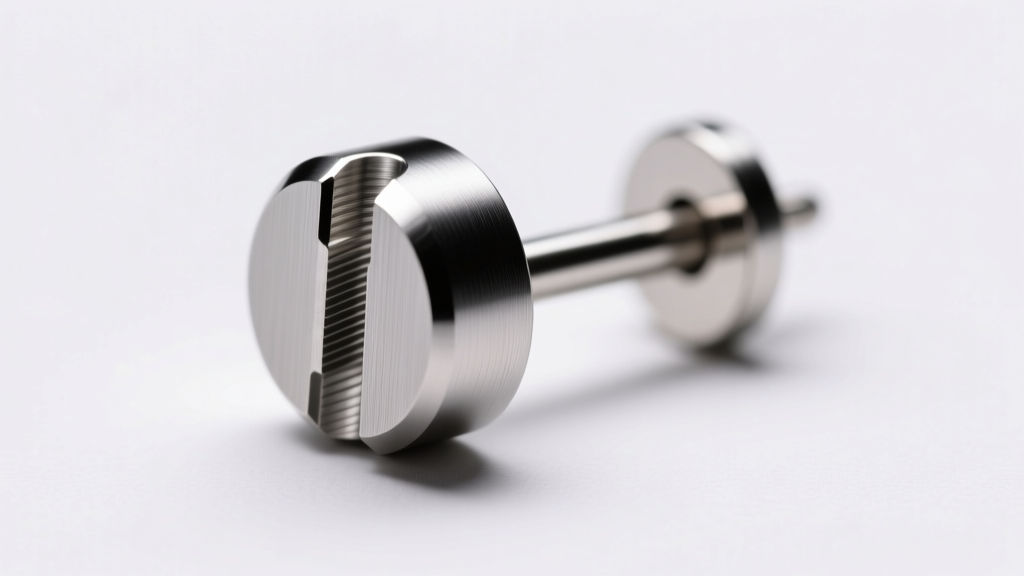
The Anatomy of the Earring Stick: Beyond the Surface
In the jewelry industry, the term "earring stick" is commonly used by consumers and retail buyers to describe the post or stem of a stud earring. However, for bench jewelers, metallurgists, and professional piercers, the earring stick is a highly engineered structural component. It serves as the primary biological interface between the human body and the decorative assembly. As we move through 2026, advancements in micro-machining and biocompatible alloy formulations have drastically shifted the standards for what constitutes a high-quality earring stick.
A poorly manufactured earring stick can lead to a cascade of failures: allergic contact dermatitis, piercing migration, micro-tearing of the fistula (the piercing channel), and catastrophic loss of expensive gemstone settings. Understanding the exact gauge tolerances, metallurgical grades, and mechanical notch geometries is essential for anyone designing, manufacturing, or curating fine jewelry.
This deep dive explores the technical specifications that separate commercial-grade costume jewelry from heirloom-quality and implant-grade body jewelry.
Standard Gauge Dimensions and Tensile Realities
The thickness of the earring stick, measured in gauges, dictates not only which piercings it can accommodate but also its structural yield strength. The wire drawing process used to create these posts work-hardens the metal, meaning smaller gauges are inherently more prone to bending under lateral stress.
| Gauge Size | Diameter (mm) | Yield Strength Profile | Primary Application & Technical Notes |
|---|---|---|---|
| 22-Gauge | 0.64 mm | Low / High Flex | Lightweight commercial studs. Highly prone to bending; requires soft friction backs. Not recommended for fresh piercings. |
| 20-Gauge | 0.81 mm | Moderate | The standard for mass-market fine jewelry. Adequate for healed lobes but can warp if heavy gemstone settings are used. |
| 18-Gauge | 1.02 mm | High / Rigid | Standard for high-end fine jewelry and initial lobe piercings. Excellent balance of comfort and structural rigidity. |
| 16-Gauge | 1.29 mm | Very High / Maximum | Required for cartilage, tragus, and heavy diamond solitaires. Minimizes the "cheese-cutter" effect in thin tissue. |
When designing an earring stick for a heavy gemstone (e.g., a 2-carat diamond solitaire), an 18-gauge or 16-gauge post is mandatory. The leverage exerted by a heavy crown setting on a 20-gauge stick will eventually cause metal fatigue at the solder joint where the stick meets the cup or bezel.
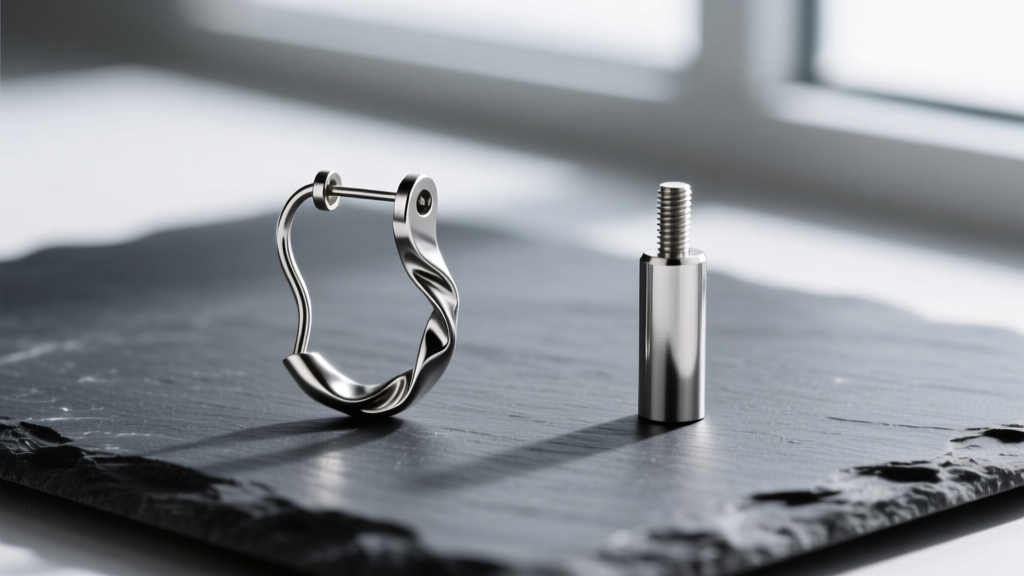
Metallurgy and Biocompatibility Standards
The material composition of the earring stick is the most critical factor in preventing adverse tissue reactions. The fistula is a mucosal-like environment that is highly sensitive to ion leaching, particularly when exposed to the slightly acidic pH of human sebum and sweat.
Implant-Grade Titanium (ASTM F136)
The gold standard for modern earring sticks, especially for fresh piercings or hypersensitive individuals, is Ti-6Al-4V ELI (Extra Low Interstitial), compliant with ASTM F136 standards. This alloy contains aluminum and vanadium but zero nickel. The surface of ASTM F136 titanium naturally forms a passive oxide layer that prevents corrosion and ion release. According to the Association of Professional Piercers, this specific alloy is universally accepted for initial piercings due to its proven biocompatibility and MRI safety.
The "Surgical Steel" Myth and Nickel Sensitization
Many commercial manufacturers market their earring sticks as "surgical steel" or "stainless steel" (typically 316L). While 316L is used in surgical tools, it contains 8% to 10% nickel. Under the EU REACH regulation (EN 1811 standard), post assemblies inserted into pierced parts of the human body must not release nickel at a rate greater than 0.2 µg/cm²/week. Uncoated 316L earring sticks frequently exceed this threshold once the polished surface micro-abrades inside the piercing channel.
"Nickel allergy remains the most common cause of allergic contact dermatitis worldwide. Once sensitization occurs via prolonged exposure to leaching earring posts, the immune system's reaction becomes permanent, necessitating a lifetime avoidance of nickel-bearing alloys." — National Center for Biotechnology Information (NCBI)
Niobium and Karat Gold Alloys
Niobium is an elemental metal (not an alloy) that is highly inert and can be anodized to create vibrant colors without using surface coatings that might flake off inside a piercing. For gold earring sticks, only 14k or 18k alloys that are specifically formulated to be nickel-free (using palladium or silver as the bleaching agent instead of nickel) should be utilized. White gold earring sticks from legacy manufacturers often contain nickel and must be avoided by sensitive wearers.
The Mechanics of the Friction Fit and Notching
An earring stick is useless if it cannot securely retain the backing (clutch). The retention mechanism relies on a precision-machined groove, or notch, near the distal end of the post. The geometry of this notch dictates the holding power and the wear-rate of the backing.
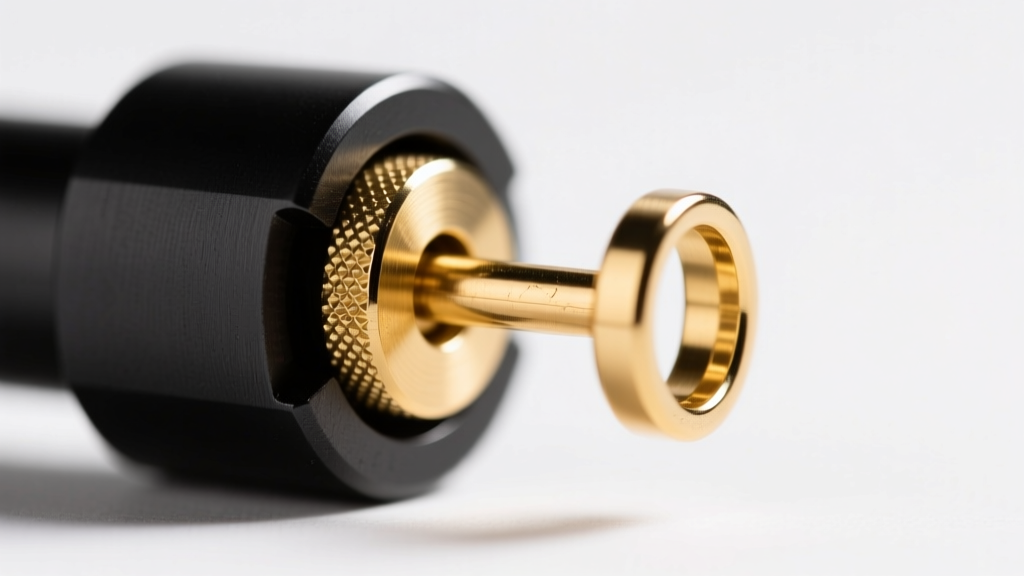
- Standard V-Notch: The most common cut, created by a simple lathe tool. It provides a sharp edge for the butterfly clutch to grip. However, the sharp V-shape acts as a stress concentrator, making the earring stick prone to snapping exactly at the notch if bent.
- U-Groove (Radius Notch): A superior machining technique where the groove has a rounded bottom. This distributes lateral stress more evenly along the post, significantly reducing the risk of catastrophic shear failure at the retention point.
- Threaded Sticks: Instead of a friction notch, the distal end of the earring stick is threaded (usually M0.8 or M1.0 metric threads) to accept a screw-on backing or a threaded gemstone end. This eliminates the need for a stress-concentrating groove entirely and is the standard for high-end internal-thread body jewelry.
Troubleshooting Common Earring Stick Failures
Even with premium materials, mechanical and environmental failures can occur. Identifying the root cause of these failures requires a technical understanding of jewelry mechanics.
Clutch Slippage and Notch Wear
If a butterfly backing continually slides off an earring stick, the issue is rarely the backing itself; it is usually notch wear. Over time, the repeated friction of pushing a metal clutch over a softer gold or silver post will burnish the notch, effectively smoothing out the groove. The solution is to use a harder backing material (like titanium) on softer posts, or to upgrade to a screw-on threading system.
Galvanic Corrosion in Mixed-Metal Assemblies
When an 18k gold earring stick is paired with a sterling silver backing, and both are exposed to the electrolyte of human sweat, a microscopic galvanic cell is formed. The less noble metal (silver) will act as an anode and corrode rapidly, leaving a dark, oxidized residue on the earlobe and degrading the clutch tension. Always ensure the earring stick and the backing are of the same metallurgical family, or use inert materials like PTFE (Teflon) O-rings as intermediate buffers.
Solder Joint Fatigue
The point where the earring stick solders to the earring head (the cup or bezel) is the weakest structural link. If a laser welder is not used, traditional torch soldering can anneal (soften) the work-hardened wire immediately adjacent to the joint. Modern manufacturers use induction soldering or laser welding to keep the heat-affected zone (HAZ) under 0.5mm, preserving the tensile rigidity of the earring stick right up to the base.
Conclusion
The earring stick is far more than a simple wire; it is a complex intersection of metallurgy, biomechanics, and precision machining. By prioritizing ASTM F136 titanium or nickel-free gold alloys, selecting appropriate gauge thicknesses for the specific anatomical placement, and utilizing U-groove or threaded retention systems, jewelers can eliminate the most common points of failure. For the consumer and the collector, understanding these technical specifications ensures that the jewelry worn against the skin is as safe and enduring as it is beautiful.


