Earring Studs Meaning: A Buyer's Guide to Symbolism & Style
Discover the earring studs meaning behind popular gemstones and shapes. Our buying guide covers symbolism, material grades, and how to choose your pair.

The Historical and Cultural Earring Studs Meaning
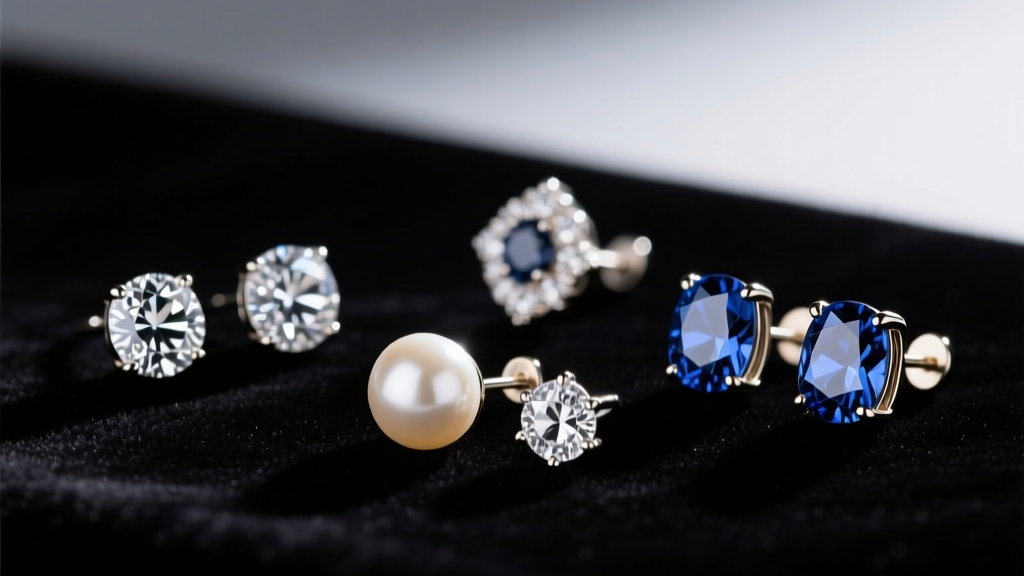
When modern buyers search for the earring studs meaning, they are usually looking for more than just a functional piece of jewelry; they are seeking a talisman, a personal milestone marker, or a subtle expression of identity. While hoops and dangles often dominate trend cycles, the stud earring remains the bedrock of fine jewelry. Historically, studs were not merely decorative. In ancient Egypt and Rome, tightly fitted ear studs carved from lapis lazuli or gold denoted high social rank and were believed to protect the wearer from malevolent spirits entering through the ear canal.
Today, the meaning of a stud earring is deeply tied to its material, gemstone, and placement. As we navigate the 2026 jewelry landscape, consumers are increasingly prioritizing intentionality over fast fashion. Understanding the symbolic weight and material specifications of your earrings transforms a simple purchase into a curated investment. This guide breaks down the exact specifications, grading standards, and symbolic meanings you need to know before buying your next pair of studs.
Gemstone Symbolism: What Your Stone Says (And How to Buy It)
The gemstone you choose carries centuries of lore. However, a meaningful stone is only as good as its cut and clarity. According to the Gemological Institute of America (GIA), understanding the 4Cs is critical even for small melee stones used in stud earrings.
Diamond Studs: The Eternal Standard
Meaning: Invincibility, eternal love, and clarity of mind. The word diamond derives from the Greek adamas, meaning unconquerable.
Buying Specs: For diamond studs, prioritize Cut over Clarity. An Excellent or Ideal cut will mask slight inclusions (SI1-SI2) that are invisible to the naked eye in a small stud setting. Avoid 'Clarity Enhanced' or fracture-filled diamonds, as the treatments can degrade over time or be damaged by ultrasonic cleaners. Expect to pay between $400 and $800 for a high-quality 0.50 carat total weight (ctw) pair in 14k gold.
Pearl Studs: Wisdom and Purity
Meaning: Wisdom gained through experience, calmness, and integrity.
Buying Specs: Not all pearls are created equal. Akoya pearls offer a mirror-like luster and perfect roundness, typically ranging from 6mm to 8mm, priced between $200 and $600. Freshwater pearls are more budget-friendly ($50 to $150) but often exhibit an off-round 'potato' shape unless you specifically seek 'Edison' or high-grade round freshwater varieties. Always check the nacre thickness; thin nacre will peel and flake within a few years of daily wear.
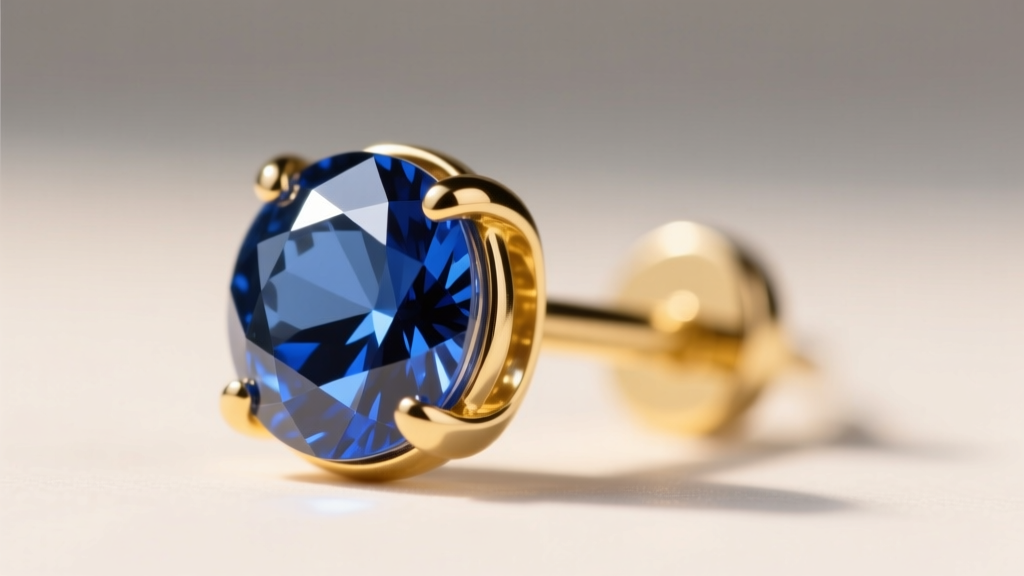
Sapphire and Ruby: Royalty and Passion
Meaning: Sapphires represent loyalty and nobility, while rubies symbolize vitality and passion.
Buying Specs: Both are corundum (ranking 9 on the Mohs scale, making them excellent for daily-wear studs). When buying, look for 'eye-clean' stones. Be aware that 95% of rubies and sapphires on the market are heat-treated to improve color—this is an accepted industry standard. However, avoid 'glass-filled' rubies, which are structurally compromised and hold little intrinsic value.
Decoding Shapes: Geometric vs. Organic Meanings
Beyond the stone, the physical silhouette of the stud communicates a distinct psychological message. When selecting a shape, consider both the symbolic meaning and how it interacts with your facial geometry.
- Round / Solitaire: Represents unity, wholeness, and infinity. Round studs soften angular jawlines and square face shapes, providing a balancing visual anchor.
- Square / Princess Cut: Symbolizes stability, order, and groundedness. Square studs complement round or oval faces by introducing structural contrast and sharp lines.
- Triangle / Trillion Cut: Denotes direction, ambition, and dynamic energy. These are striking on heart-shaped faces, drawing the eye upward and accentuating the cheekbones.
- Organic / Raw Uncut: Reflects authenticity, nature, and unpolished truth. Raw crystal studs have surged in popularity for buyers seeking a bohemian, non-traditional aesthetic.
The Metal Matrix: Material Meanings and Skin Safety
The metal holding your meaningful gemstone is just as critical as the stone itself. The Association of Professional Piercers (APP) strictly advises against vague terms like 'surgical steel' for sensitive ears, as many commercial stainless steels contain up to 10% nickel, a primary trigger for contact dermatitis.
| Metal Type | Symbolic Meaning | Safety & Grade Specs | Avg. Price Range (Studs) |
|---|---|---|---|
| Implant-Grade Titanium | Resilience, Modernity | ASTM F136. 100% Nickel-free. Best for fresh piercings and hyper-sensitive lobes. | $40 - $120 |
| 14k Solid Gold | Tradition, Wealth | 58.5% pure gold. Ensure it is nickel-free (alloyed with silver/copper). Durable for daily wear. | $150 - $500+ |
| 18k Solid Gold | Luxury, Purity | 75% pure gold. Softer than 14k; prongs may bend if snagged. Richer yellow hue. | $250 - $800+ |
| Platinum | Eternity, Strength | 95% pure. Hypoallergenic, extremely dense. Prongs will not wear down over decades. | $600 - $2,000+ |
Pro-Tip: If you are buying for newly pierced ears or sensitive cartilage, always verify that the post is internally threaded or threadless (push-pin). Externally threaded posts have microscopic ridges that tear the delicate fistula (the skin tube inside the piercing) upon insertion.
Placement Meaning: Lobe vs. Cartilage Studs
Where you place the stud alters its cultural resonance and requires different jewelry specifications.
The Standard Lobe (20G to 18G)
Lobe studs are the universal baseline of ear adornment. A single diamond or pearl stud in the primary lobe piercing is globally recognized as a marker of classic elegance. Standard lobe posts are typically 20-gauge (0.8mm) or 18-gauge (1.0mm) with a standard butterfly backing. Failure mode: Heavy gemstones with thin posts will droop forward, causing the earring to face the floor rather than sitting flush against the ear.
The Cartilage / Helix (16G to 18G)
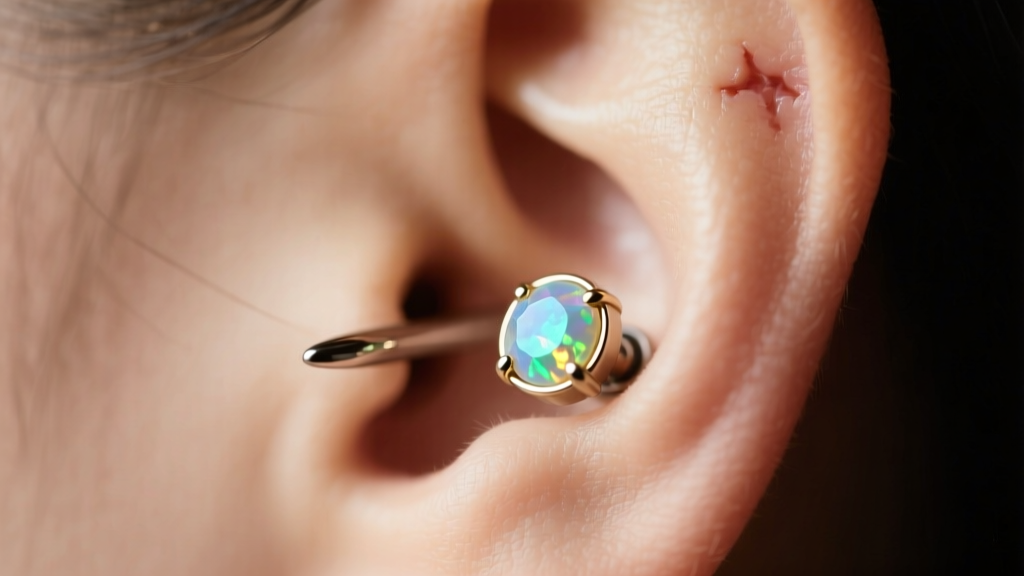
Cartilage studs carry a more rebellious, contemporary meaning. A constellation of tiny diamond studs trailing up the helix represents individuality and a departure from traditional symmetry. Cartilage is thicker and heals much slower than the lobe (often taking 6 to 12 months).
Never use a standard butterfly-back earring in a cartilage piercing. The post is usually too short to accommodate cartilage thickness and swelling, and the backing traps bacteria. Always opt for a flat-back labret stud in 16-gauge (1.2mm) with a 6mm or 8mm post length.
Final Checklist for the Conscious Buyer
Before finalizing your purchase, run through this rapid E-E-A-T checklist to ensure your earrings are both meaningful and structurally sound:
- Verify the Metal: Look for 'ASTM F136' for titanium or 'Nickel-Free 14k/18k' for gold. Avoid 'gold-plated' or 'vermeil' for daily-wear studs, as the plating will inevitably wear off, exposing base metals to your skin.
- Check the Prongs: If buying gemstone studs, inspect the prong setting. Bezels are safer for active lifestyles as they won't snag on hair or clothing, while 4-prong settings allow more light to enter the stone for maximum sparkle.
- Match the Gauge: Ensure the post thickness matches your piercing. Forcing a thick 16G post into a delicate 20G lobe hole will cause micro-tears and scar tissue buildup.
- Assess the Backing: Upgrade from standard push-backs to secure screw-backs or silicone O-rings, especially for valuable diamond or sapphire studs, to prevent catastrophic loss.
Ultimately, the true earring studs meaning is the one you assign to it. Whether you are choosing a birthstone to commemorate a child, a sapphire to mark a career milestone, or a simple titanium sphere for your first cartilage piercing, understanding the material science and historical context ensures your chosen studs will endure as a lasting, meaningful artifact.


