The Ultimate Guide to Styling Silver Bow Earrings for Beginners
Discover how to choose, style, and care for sterling silver bow earrings. Our beginner guide covers sizing, metal grades, and face-shape matching.

The Anatomy of a Silver Bow Earring: Materials and Mechanics
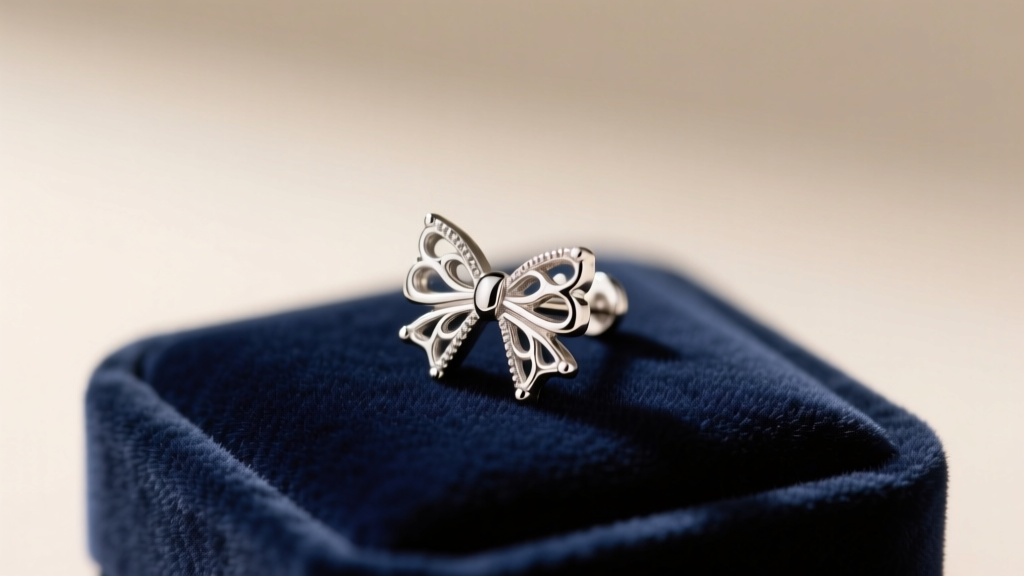
When building a versatile jewelry collection, silver bow earrings offer a perfect blend of classic femininity and modern edge. However, not all silver is created equal, and understanding the metallurgy behind your jewelry is the first step to making a smart purchase. Pure silver (999 fine silver) is exceptionally soft and malleable. While this makes it highly resistant to tarnish, it is entirely unsuitable for the intricate loops, knots, and ribbon folds of a bow design. The structural integrity required to keep a bow shape from bending or warping during daily wear necessitates an alloy.
925 Sterling vs. Argentium Silver
The industry standard for high-quality silver jewelry is 925 sterling silver, which consists of 92.5% pure silver and 7.5% copper. According to the Gemological Institute of America (GIA), this copper addition provides the necessary durability for intricate designs. However, copper is also the culprit behind tarnish, as it reacts with sulfur and moisture in the air to form silver sulfide (the black patina that dulls your jewelry).
For beginners seeking a lower-maintenance option, Argentium silver is a superior, albeit slightly more expensive, alternative. Argentium replaces a portion of the copper with germanium. This creates a transparent germanium oxide layer on the surface that makes the metal highly tarnish-resistant and hypoallergenic. If you plan to wear your silver bow earrings daily without frequent polishing, Argentium is a worthwhile investment.
Post Types and Gauge Sizes
The hardware that secures the earring to your ear is just as critical as the bow itself. Standard lobe piercings are typically done at 20-gauge (0.81mm) or 18-gauge (1.02mm). Most silver bow studs designed for the lobe will feature a 20g post with a standard butterfly friction back. While convenient, butterfly backs can trap moisture and bacteria against the earlobe.
For cartilage placements, the rules change entirely. The Association of Professional Piercers (APP) strongly recommends against using standard butterfly backs in cartilage piercings due to the risk of embedding and irritation. If you are placing a silver bow on your helix or flat, you must opt for a 16-gauge (1.29mm) flat-back labret post with a threadless or internally threaded end. This ensures the backing sits flush against the back of the ear, preventing sleep discomfort and promoting tissue health.
Sizing and Proportions: Matching Bows to Face Shapes
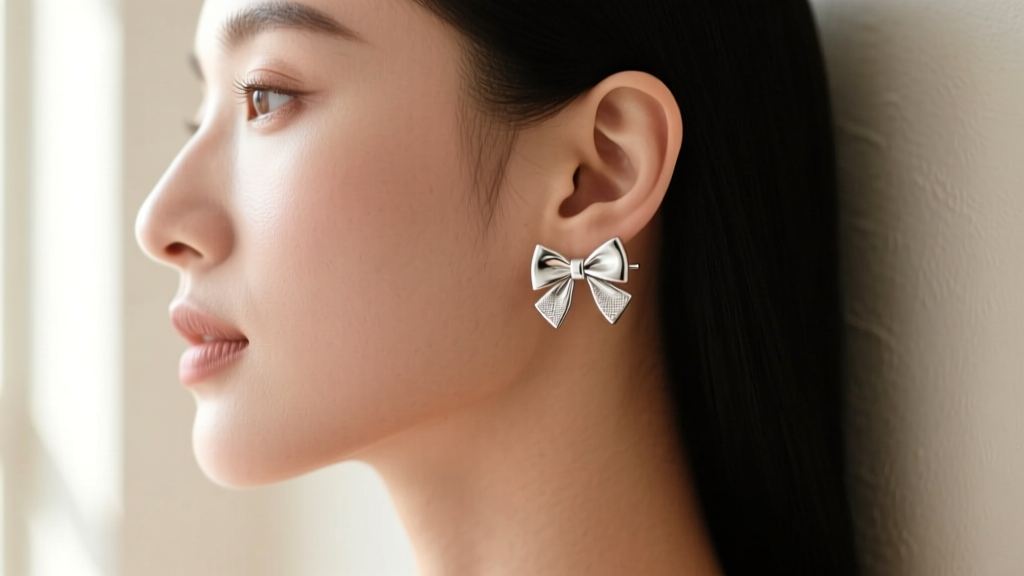
A common mistake beginners make is choosing a silver bow earring based solely on the design, ignoring how the scale and silhouette interact with their facial geometry. Bows inherently add visual width and draw the eye horizontally or diagonally, depending on their orientation. Here is a data-driven framework to help you select the most flattering proportions.
| Face Shape | Ideal Bow Style | Recommended Dimensions | Styling Rationale |
|---|---|---|---|
| Oval | Asymmetrical or Medium Drop | 10mm - 15mm drop | Oval faces possess balanced proportions and can pull off almost any style. Drop bows add elegant vertical movement without elongating the face excessively. |
| Round | Angular or Elongated Drop | 15mm - 25mm drop | Long, dangling silver bow earrings create an optical illusion of length, drawing the eye downward and counteracting the width of the cheekbones. |
| Square | Soft, Rounded Micro Studs | 4mm - 8mm width | Delicate, rounded bows soften a strong jawline. Avoid oversized, blocky bow hoops, which can exaggerate the angularity of the lower face. |
| Heart | Teardrop or Bottom-Heavy Bow | 12mm - 18mm drop | Bows that are slightly wider or more detailed at the bottom add visual weight to the lower half of the face, balancing a narrower chin. |
Placement Guide: Lobe vs. Cartilage Styling
Silver bow earrings are remarkably versatile when it comes to ear curation. The key to a successful placement lies in scaling the jewelry to the specific anatomy of the ear region.
- The Standard Lobe (8mm - 12mm): This is the most forgiving canvas. A medium-sized silver bow stud (around 10mm wide) sits perfectly in the center of the lobe without overhanging the edges. For a more dramatic look, opt for a bow that incorporates a small cubic zirconia or moissanite accent at the center knot.
- The Upper Helix (4mm - 6mm): Cartilage real estate is limited. A micro silver bow (4mm to 6mm) on a flat-back labret post adds a subtle, coquette-inspired touch to the upper ear. Ensure the bow is oriented horizontally to follow the natural curve of the helix rim.
- The Flat / Conch (10mm - 14mm): If you have a larger conch or flat piercing, a slightly oversized, intricate silver bow with deep ribbon folds can serve as a stunning focal point. Because this area is flush against the skull, you can wear larger, heavier pieces here without the risk of them catching on hair or clothing as easily as helix jewelry.
The Beginner’s Tarnish Prevention Protocol
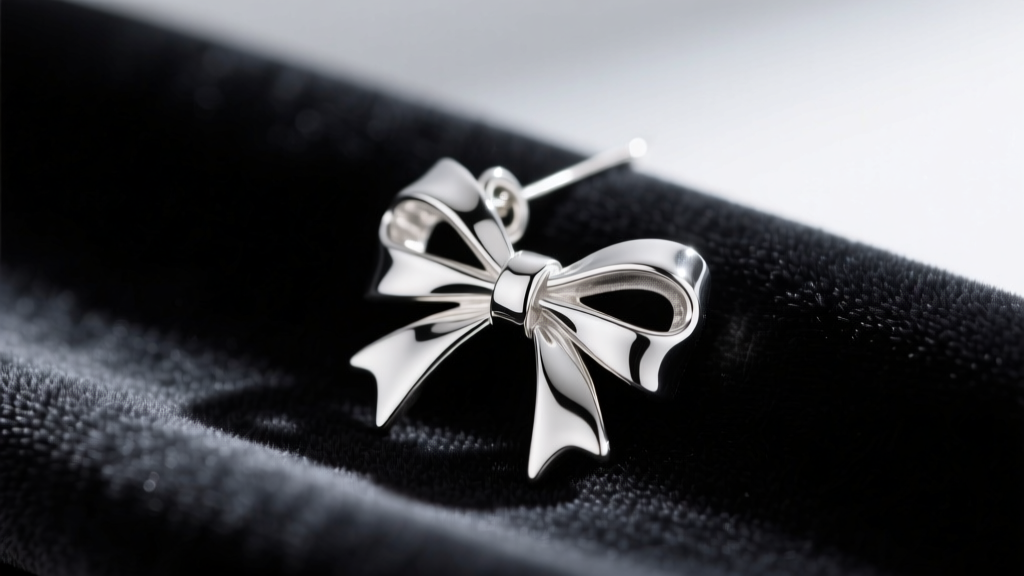
Because 925 sterling silver contains copper, your silver bow earrings will inevitably tarnish if exposed to humidity, sweat, and airborne sulfur. Rather than relying on harsh commercial silver dips—which can strip the metal's natural patina and damage any oxidized detailing in the bow's crevices—adopt this gentle, science-backed cleaning protocol.
"The electrochemical reduction of silver sulfide using aluminum and baking soda is a highly effective, non-abrasive method for restoring sterling silver. It reverses the tarnish reaction without removing microscopic layers of the precious metal." — Materials Science Jewelry Conservation Guidelines
Step-by-Step Electrochemical Cleaning
- Prepare the Bath: Line a glass or ceramic bowl with aluminum foil, ensuring the shiny side faces up. The aluminum will act as a sacrificial anode.
- Add the Catalysts: Sprinkle 1 tablespoon of baking soda and a half-teaspoon of sea salt over the foil.
- Activate with Heat: Pour boiling water into the bowl. You will immediately see bubbles and smell a faint sulfur (rotten egg) odor as the chemical reaction begins.
- Submerge and Wait: Using plastic or wooden tongs (never metal, as it can scratch the silver), submerge your silver bow earrings completely. Ensure the silver is physically touching the aluminum foil. Leave them for 3 to 5 minutes.
- Rinse and Polish: Remove the earrings, rinse them thoroughly under cool distilled water, and gently pat them dry with a microfiber cloth. Use a soft-bristled baby toothbrush to gently dislodge any remaining residue from the intricate folds of the bow.
Price Expectations and Brand Spotlights
Understanding the pricing tiers of silver bow earrings will help you avoid overpaying for plated metals or underestimating the value of artisan craftsmanship.
- Tier 1: Fast Fashion & Plated ($10 - $25): These are typically brass or copper bases with a microscopic flash-plating of silver. The bow designs are often mass-produced via casting, resulting in blurred details. The plating will wear off within months, exposing the base metal and potentially causing contact dermatitis.
- Tier 2: Solid 925 Artisan & Boutique ($35 - $85): This is the sweet spot for beginners. Brands in this tier use solid 925 sterling silver, often with hand-polished finishes and crisp, well-defined ribbon folds. You will find secure soldered posts and high-quality friction backs or threadless ends for cartilage.
- Tier 3: Designer & Argentium ($90 - $250+): At this level, you are paying for premium alloys like Argentium, patented clasp mechanisms, or the integration of ethically sourced gemstones (like diamonds or sapphires) into the bow's center knot. These pieces are built for generational wear and often come with lifetime polishing warranties.
Final Thoughts on Building Your Collection
Silver bow earrings are far more than a fleeting trend; they are a versatile staple that bridges the gap between vintage romance and contemporary minimalism. By prioritizing solid 925 or Argentium silver, respecting the anatomical requirements of your piercings with correct gauge sizing, and implementing a proper electrochemical cleaning routine, your silver bows will maintain their brilliant shine and structural integrity for decades. Start with a classic 8mm lobe stud to test your personal style, and gradually expand into cartilage micro-bows and dramatic drops as your curation evolves.


